The Chinese word for soy sauce is jiangyou, literally ‘jiang oil’, or oil of fermented paste. It is not chemically an oil, but it probably struck the early users as oily.
If we were to conduct a survey in any European city and ask people what they see as the most typical ingredient of Chinese food, the top substance on the list of answer will definitely be soy sauce. Soy sauce indeed originates from China, where it is an important element if the Five Flavour model of traditional Chinese cooking. It is first mentioned in texts from the Northern Wei Dynasty (AD 220 – 265). Early recipe books indicate that it was at first mainly used to season salads, cold cuts and other cold dishes Chinese typically start a dinner with. The use in various ways of cooking pops up in the 12th Century.
Soy sauce is the most important processed seasoning product in Chinese cuisine. The following table shows the historic and estimated future development of the Chinese seasoning market.
Typology
Current Chinese commercial texts distinguish 4 types of soy sauce:
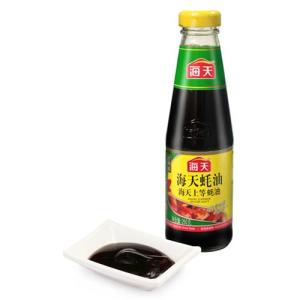
Cantonese soy sauce: represented by Haitian and Zhimeiyuan; based on solid fermentation (see below).
Shanghai soy sauce: represented by Amoy and Laocai; mainly using liquid fermentation.
Foreign soy sauce: represented by Maggi, Kikkoman, Lee Kum Kee, Wadakan; foreign invested, mainly using liquid fermentation.
Local soy sauces: e.g. Jinshi (Beijing), Zhenji (Shijiazhuang), Tianli (Tianjin), etc.; small plants or even workshops using proprietary processes.
Most Chinese households have a regular stock of two types of soy sauce in their kitchen: light and dark. Light soy sauce is the original product, while the dark version is produced by adding additional caramel, which also makes the sauce a little thicker. Dark soy sauce is mostly used to flavour and colour meat.
Production
There are various ways to produced soy sauce. The main raw materials are always (soy) beans and cereals. The main distinction is between natural fermentation and the chemical process. The latter is obviously not a traditional process, but a cheap and quick way to cut the long chains of the proteins and starches in the raw materials. Chemical soy sauce is nowadays regarded as inferior. All major brands employ some kind of fermentation.
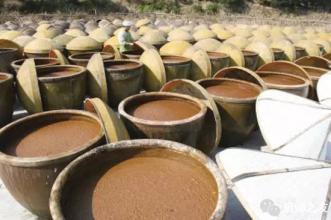
The earliest fermentation process used so called ‘solid fermentation’, in which a relatively thick broth was inoculated with the moulds to start the fermentation. After the fermentation, salty water was added and after a second period of fermentation the sauce was ready to be packed. The first part of this process resembles that introduced in my earlier post on jiang, fermented pastes, and explains why soy sauce is called jiang sauce in Chinese. A number of local plants still use a variety of the traditional process, often adding their own proprietary mix of ingredients to produce an original local product.
Many top brands use the ‘wet fermentation’ process in which the main ingredients: beans, cereals and salt are processed into a liquid that is then fermented. This process leads to a very fragrant sauce that preserves the nutrients of the ingredients. It also has a much higher yield than the traditional process. However, it is considerably longer and can take up to 6 months.
Industry structure
China has produced 7.781 mln mt of soy sauce in 2021; up 11.39%. The country imported 14,000 mt and exported 148,000 mt in 2019.
As many traditional Chinese food products, the soy sauce industry consists of a large number of very small manufacturers. China’s top producer is Haitian (Foshan, Guangdong), which is approximately good for 2% of the national output. Haitian is known for the fact that it has scaled the traditional solid fermentation process up to modern industrial proportions. This results in top quality soy sauce, but the output cannot be easily increased. Perhaps this is a good in thing in the long run. While China has not (yet) produced a Kikkoman, Chinese soy sauce has a much richer flavour than the generic Japanese product. Haitian has generated a turnover of RMB 17.086 billion in the first 3 months of 2020; up 15.26%.
Top 10 soy sauce brands 2016
The following list has been compiled on the basis of the opinion of Chinese consumers. However, the most popular brand is also the top producer in volume.
Rank
brand
region
1
Haitian
Guangdong
2
Lee Kum Kee
Hong Kong
3
Chubang
Guangdong
4
Jiajia
Hunan
5
Amoy
Shanghai
6
Master
Guangdong
7
Shinho
Shandong
8
Kikkoman
Japan
9
Donggu
Shandong
10
Totole
Shanghai
Haitian generated a turnover of RMB 11.6 billion in the first half of 2020, up 14.12%.
Guangdong also here stands out as the top region with 3 companies; 4 if we also regard Hong Kong as de facto part of Guangdong. Shanghai and Shandong are the runners up with 2 each. Haitian is doing well. The following table show the increase of its market share in the period 2015 – 2018.
Year
Share (%)
2015
13.2
2016
14.9
2017
19.4
2018
33.3
Derived products
A number of variations on soy sauce have appeared in recent years. An earlier variety is oyster sauce, which is soy sauce flavoured with ground oysters to give it a fishy flavour. Other flavours include mushroom and chilli. Some companies produce soy sauces for special applications like soy sauce for meat, soy sauce for mixing salads, or table top soy sauce for dipping cold cuts or dumplings.
Innovation
In line with the trend towards low fat, low salt, low sugar foods, a number of Chinese soy sauce manufacturers have developed low salt varieties. In the course of 2017, Cuiwei Food (Sichuan) launched a salt-free soy sauce, produced by natural fermentation. While salt reduction is a positive development, soy sauce has always been a fypical savoury seasoning product, so completely salt-free soy sauce can only succeed when marketed as a new type of ingredient, a flavouring agent rather than a savoury ingredient.
Clean label
The clean label movement is also affecting the Chinese food industry. Haitian has launched a kind of clean label soy sauce late 2020. It was announced as a product with a simple formulation:
water, soybeans, wheat, salt and sugar.
The brand name reflects this: Jijian ‘It’s Simple’.
Eurasia Consult has detailed information about many top soy sauce producers
Soy sauce as flavour
Soy sauce has become a representative of ‘typical’ Chinese flavour. Xianshi Soy Sauce (Sichuan) launched innovative products such as soy sauce-flavoured ice cream, coffee and beer in 2025.
Other posts about processed traditional Chinese seasoning products in this blog:
Vinegar, i.e. the Chinese cereals-based vinegar, has been an important ingredient in Chinese cuisine for ages. A famous application is vinegar-based dipping for dumplings.
Vinegar is a growth product in China, although only 30% of the output is branded vinegar with the remaining 70% workshop-style factories. China has produced 4.61 mln mt of vinegar in 2022; up 3.83%.
A traditionally important vinegar region is Shanxi province. Qingxu county in Shanxi is often referred to as the ‘vinegar capital‘ of China.
However, it was not regarded as something for direct consumption by most Chinese, who preferred their snacks and soft drinks sweet, sweeter, sweetest. Until recently, that is. The past 2 – 3 years have seen a surge in so called ‘vinegar beverages’ (cuyinliao). These are mildly acid drinks made of naturally acidified fruit juice (apple vinegar is the top product in this category) or drinks produced by mixing vinegar with other ingredients. These products are advertised as healthier choices than the traditional sugary drinks.
This product group has grown so rapidly, that China’s top vinegar producer, Hengshun, with 83.8% market share in 2018, has organised a competition for students of food science in various Chinese universities to design new types of drinks, but also foods, based on vinegar. The various products the next generation of Chinese food scientists came up with is so interesting, that I will list the top products in this post.
First prize
Apple Vinegar drink
As introduced above, this is not a new type of drink, but the jury still awarded it the first prize due its innovative production process. Apples are first baked to the pectin of the apples in small active molecules and increase flavour through the maillard reaction. The juice is then fermented twice.
Second prizes
Cuxian-xian (literally: Vinegar Fibre – Fibre)
Arrowroot starch is fermented with Acetobacter xylinus to obtain a high fibre refreshing drink.
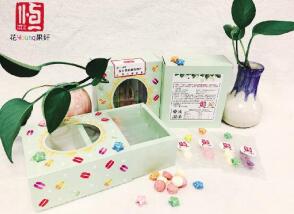
Hua Young fruit fibre and probiotics effervescent tablets
These are ascribed a medicinal function: increasing appetite and relieving bowel and stomach trouble.
Water melon double vinegar
This drink consists of two varieties made from the flesh and skin of water melon, hence the two colours.
Green plums (qingmei) are fermented and flavoured with cranberries, resulting in a refreshing sweet and sour beverage.
Konjac vinegar jelly
Fruit jelly has been a favourite snack all over Asia for the past few years, and this product adds an innovative new member to the already extended family of fruit jellies.
Vinegar love
Fruit juice is mixed with white vinegar and flavoured with flower petals, resulting in romantic colours.
Hengshun crispy bones
Crispy bones are soaked in Hengshun vinegar giving the bones a sweet and sour taste. It is chewy and rich in calcium.
Most innovative prizes
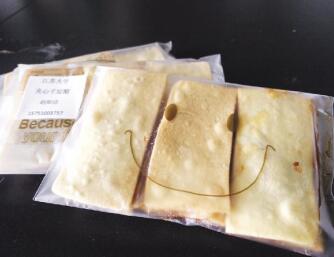
Filled thousand layer vinegar
Crackers are filled with a combination of jam and Hengshun vinegar. It is positioned as a healthy snack.
Lactobacillus in vinegar
Lactobacillus is added to traditional vinegar. The strain is acid and heat resistant. It enhances the antioxidant activity of the vinegar.
Soft sweet lotus pod is flavour with a mixture of sardines and Hengshun vinegar and a touch of chili sauce, producing sweet & sour crispy fish balls.
Best marketing prize
Xiaoxixi (laugh hi hi) vinegar milk
Formulated milk drinks are already popular in China. Milk is mixed with pineapple vinegar, creating a kind of yoghurt with a unique flavour.
Not all of these products will make it to the shelves of Chinese supermarkets, but this list provides a rare glimpse into the perception of young Chinese food scientists.
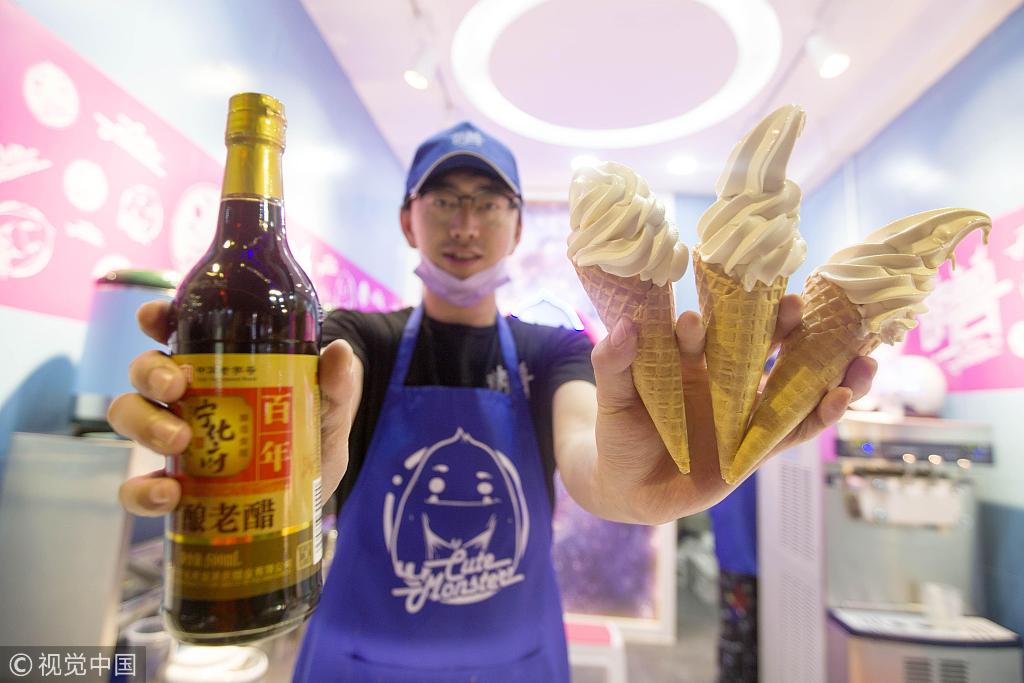
Apart from this contest, vinegar-flavoured icecream has appeared in China as well in the course of 2018. This photo has been taken in Taiyuan (Shanxi).
The life of a farmer is not usually regarded in terms of wealth creation. Even though farmers can be regarded as mankind’s first entrepreneurs, tilling the soil and tending to plants seven days a week until fruits or vegetables can be harvested is hard work that rarely leads to high profits. However, trading traditional crops for plants with a higher added value can mean a lot for a poor farmer or backward farming region. This applies even more to many of China’s national minorities.
Most ethnic minorities in China inhabit the less fertile regions, like deserts, or mountains whose slopes are not easy to tend. Farmers in those regions have been living on the verge of poverty for generations. The governments of various levels have been generous in providing all kind of subsidies or aid to alleviate the worst problems, but these measures are often more like a medicine to battle the symptoms, rather than a cure for the disease.
Fortunately, a number of minority farmers with an entrepreneurial spirit have taken the initiative to learn about more interesting crops and techniques to grow them on their own land. One such farmer-entrepreneur is Mr. Wang Minggang. In modern Chinese parlance, Mr Wang is a ‘rural migrant worker returned to the countryside (fanxiang chuangye nongmingong)’. He went to the big city at an early age to find his fortune. However, he found something much more valuable: techniques to make a fortune for himself and his fellow villagers. He learned about grape growing and developed the idea to grow grapes in his home region, Pengshui county of Chongqing, a minority region inhabited by Miao and Tujia people. Although Pengshui’s soil is fertile, it is a mountainous region that until recently was a few days travelling away from the nearest city. The government has greatly improved Pengshui’s accessibility by building an impressive web of roads, but that did not provide the minority farmers with a higher income.
Wang Minggang started growing grapes and strawberries in his home region, the Ayi River Region of Pengshui. However, his own plot was insufficient to yield a substantial crop. He then proposed to all his neighbours to lease their land, thus increasing his vineyard considerably. In that way, his fellow villagers had a steady income and he could reach a profitable volume.
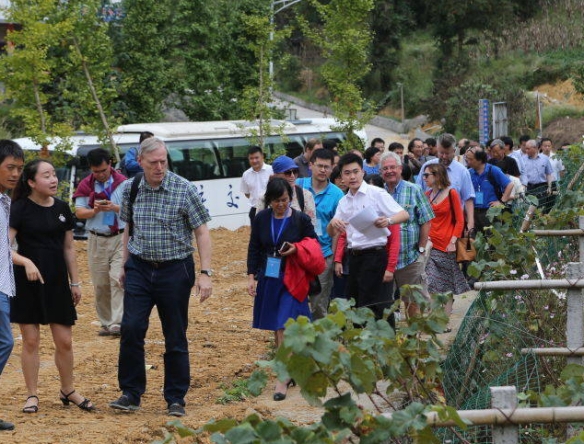
Another great idea was to start growing ecologically from the beginning. Biological fruits can be sold for a higher price, now that the urban Chinese are starting to recognise biological produce. Wang had some problems with adapting the things he had learned in northern China to the climate of his home region, but now the grapes are hanging proudly on the vines, when the harvest time is nearing. I personally visited Boxi Vineyard on September 27. The grapes were already gone, but the sight of the vines was impressive.
Many villagers rebuilt their homes, adding guest rooms that can be rented to city people who like to experience rural life for a few days. Those that choose the Ayi River Area at the time the grapes are ripe can pick a certain quantity of grapes themselves and take them home. While having fun, those urbanites can get an idea how the fruits that only knew from the way they were sold in supermarkets are actually grown by the farmers. Even though the project is still relatively young, its effect on the villagers’ lives is evident.
An interesting side effect of this enterprise is that it has introduced crops to the Pengshui region that have never been grown there before. It has contributed to the biodiversity of the region. This story so interesting, that I will post of more these stories on this blog.
If you ask people outside China what they believe to be the most typical of traditional Chinese food and drink, one of the top replies will be tea.
Tea remains to be popular in China as well, even among the young, who have discarded so many other traditional things Chinese as old fashioned.
Tea has been a flavour inspiration for a number of recent food launches. Tea combines flavour with nutrition. Tea is said to help lose weight and the flavones (tea polyphenol) in tea are strong anti-oxidants, which help rid the body of free radicals. Finally, tea’s tannic acid creates a specific ‘dry’ mouthfeel.
I would like to introduce a few tea flavoured foods in this post.
Tea flavoured biscuits
These biscuits are marketed by Tianfu, one of China’s earliest nationwide tea chains. The add promises ‘a mouthful of milk flavour without a fatty taste’. As posted earlier, Chinese appreciated milk’s nutrition, but many still have problem with its creamy taste.
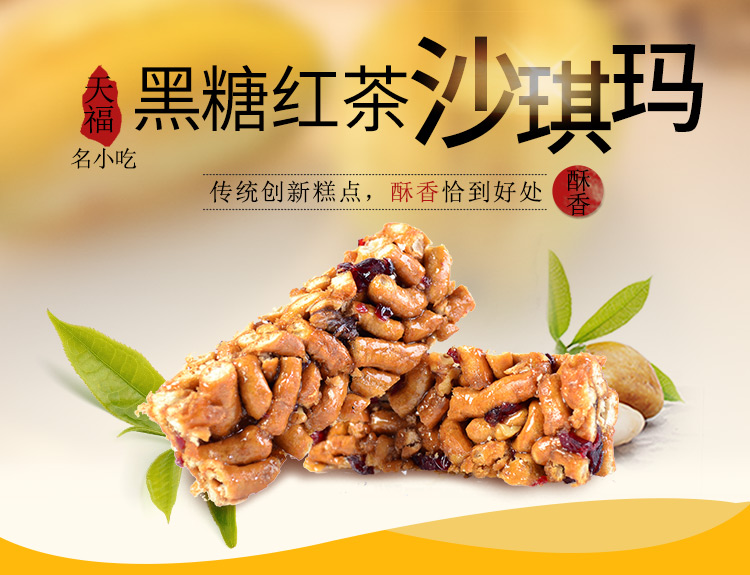
This is another Tianfu product. For an introduction on saqima, see my earlier post.
Ingredients: egg, shortening, maltose syrup, flour, walnut, cranberry, sugar, brown sugar, vegetable oil, cream, starch, black tea, salt.
Tea flavoured mushrooms
These shiitake mushrooms are produced in Zhangzhou (Fujian) and flavoured with white tea.
Ingredients: shiitake, vegetable oil, salt, Sichuan pepper salt, white tea.
Tea throat tablets
A number of of manufacturers have developed throat tablets with tea as a major ingredient. Users, including singers, praise them on social media as very refreshing.
All-tea banquet
Lianghe county of Yunnan province has created an all-tea banquet, including many dishes made from Huilong tea, a local tea from Lianghe. Here is a look of what the menu of such a banquet may look like:
Local chicken raised in the Huilong tea garden infused with Huilong tea.
Locally caught percocypris pingi, a kind of carp found in East Asia, garnished with pickled Chinese cabbage and Huilong tea.
Quail eggs boiled with Huilong tea and other seasonings.
Minced pork meatball with Huilong tea powder.
Huilong tea and local eggs wrapped in pea flour and deep fried.
Peeled black soya bean tofu stewed with minced meat, black fungus and a stock of Huilong tea.
Visitors can take a bus from Lianghe county town to the tea garden to watch the tea processing and taste the all-tea meal.
The leading port of export of canned food from China is Zhangzhou – China’s Canned Food Capital (Chinese news source, 19/7/2016)
I have yet to find out when the first city in China started calling itself ‘the capital of . . .’, where … is a slot for a certain product (group), one of which that city is a national production centre. However, it now has become so important for the local economy, that it has almost become an official designation, bestowed by an industrial association.
Icons are an important aspect of the construction of social identity in Chinese culture. Chinese like to identify a famous person who they would like to become. More than a few Chinese start-up cyber-entrepreneurs are dreaming of becoming China’s Steve Jobs. Some even go as far as to try to emulate their hero’s behaviour, clothing, and speech.
In an analogous fashion, Chinese cities that are leading in a certain industry have started picking a similar foreign city, calling themselves ‘China’s …’ A city with a major car maker may call itself ‘China’s Detroit’. Unfortunately, there are several cities in China that are the home of a major automobile manufacturer, resulting in almost as many ‘Detroits of China’. So far, this has not led to conflicts between the various local governments. Detroit doesn’t care either. The city has lost most of its car-related industry and virtually turned into a ghost town.
Several posts of this blog are introducing the growing importance Chinese local governments attach to their local culinary specialties. A representative post is that about Jinhua ham. Jinhua ham is so typical for that region, that Jinhua has applied for DOC status for this product, meaning that only ham producers of Jinhua are allowed to market their ham as ‘Jinhua Ham’.
A city with a DOC-status food is likely to have a relatively large number of manufacturers of that product, and/or the top producer in that business. Instead of finding its icon elsewhere, such cities endeavour to become an icon themselves, by calling themselves ‘China’s Capital of <their typical product>’. Unlike in the case of China’s multiple Detroits, this has been a cause for chauvinist strive. As societal harmony is a top priority in China, the government has started to regulate such designation through the various sector associations. The most famous issue was giving Huhhot, the capital of Inner Mongolia the status of ‘China’s Dairy Capital’. It was initiated by Mengniu, a well-known company for the regular readers of this blog. Mengniu want Huhhot to be the first city to apply for that status, lest another city would be the first to do so. Huhhot itself was not too keen at first, but gave in at the end. Once the Dairy Association of China had recognised Huhhot as China’s Dairy Capital, no other city in China was allowed to refer to itself in that way. I am not sure if there actually is a penalty for violating this rule, but so far no other city has tried. To mark its status of China’s dairy capital, a large monument was put up in Huhhot.
In the remaining part of this post, I will list a few of the major Chinese food capitals. This list is by no means exhaustive and I will keep adding cities, whenever I encounter them in my scanning of the Chinese information streams. Some of these have a more or less official status, i.e. they are bestowed by the relevant sector association. However, most still seem to be self-assigned. This is probably why there are several capitals for some products.
This list may turn out quite useful. If you want to know quickly were a certain food is produced in China, this list can guide you directly to a/the major region. You will have to look further (e.g. using this blog’s search engine), but this is a good start.
In an earlier post, I already introduced the Chinese eating habits on their long train rides. Food plays an even more important role in the lives of holiday makers than it is for people in their everyday lives. The most exciting things to do in foreign places is seeing unfamiliar landscapes or buildings, meeting people with different habits than yours, and enjoy the novel flavours and textures of the local food.
In recent times, gastro-economic tourism has become one of the most interesting and fastest-growing types of holidays. Moreover, it also enjoys increasing interest of researchers. Tasting local food is often considered as both cultural activity and entertainment, a necessary part of tourism experience. In addition, tasting local foods has become an important way to enjoy the local culture.
However, local foods can also be an impediment to tourist experience. Some local foods can only be accepted by mass tourists when adapted to tourists’ taste. Two natural tendencies are diametrically opposed to each other in the acceptance of novel food: fear for the new and longing for something new. The former people long to try new or unfamiliar food. Local food at a destination can bring tourists physical, cultural, social and prestige experience. Local food consumption can be seen as a supporting experience and even as a peak experience for tourists.
On the contrary, people who are afraid of unfamiliar food tend to look out for international chains or eateries offering international cuisine.
This poses challenges to popular holiday designations as regards the presentation of the local food as an attraction at the risk of potential impediment. To make local food an important attraction requires in-depth understanding of food psychology and tourists’ food preferences. It is especially important to please the palate of even the most conservative tourist.
Gastronomic tourism
The apex of experience new foods during your holiday is the gastronomic holiday, trips specially undertaken to experience the flavours of all foods and beverages a destination has to offer. Gastronomic or culinary tourism can be defined as an activity in which people participate in “other” food culture, including the preparation of food. Also, and perhaps especially, for those tourists, regions need to standardise their traditional foods, so that hotels, restaurants, travel agents and other organisations involved can introduce them properly in their promotion campaigns, ensuring that participating tourists get what they pay for. In other words, if a region decides to make its local cuisine a major tourist attraction, it needs to study that local tradition, inventorise and standardise it. To give a Chinese example: if you want to advertise dandan noodles as a representative Sichuan snack, then you cannot just serve the tourists any bowl of dandan noodles as served by a random vendor on a Chengdu street. It has to be that dandan noodles as shown in the brochures and websites, lest the finicky tourists will complain that they are not being served ‘the real thing’.
However, critical sounds can also be heard. Some people warn about downgrading local culinary traditions, in particular those of national minorities, to stereotypes, sometimes referred to as the disneyfication of minority foods. The following picture shows Han Chinese enjoying minority food and dancing in a rather stereotypic ambiance.
The reverse process
The other side of this development will be a change in that very local tradition. Once the local tourism planners have crafted standard description of the most typical local dishes, and hotels and restaurants catering to tourists from other regions have adopted those recipes, the local consumers are bound to be affected by this. Now if you feel like a proud Sichuan person, you do not just make dandan noodles at home like your mother taught you. No, you put in an effort to make the real thing, the genuine dandan noodles. The same applies to gongbao chicken, yuxiang pork, and other Sichuan dishes. Those dishes are also served by restaurants elsewhere in China and Chinese restaurants all over the world, using more or less standard recipes.
The industry follows suit
The developments described above create a market for producers of seasonings and condiments. I have reported about this in previous posts. The modern Chinese consumer is not willing anymore to spend hours in the kitchen preparing breakfast, lunch and dinner. One way to save time is using ready to use sauces bought in your local supermarket. The R&D Departments of seasoning makers can concoct a dry or wet mix of ingredients to prepare an instant dandan sauce in your own kitchen, when you wish to reproduce that great dish that you had during your holiday in Sichuan. You only have to cook the noodles and perhaps add a little of whatever you like in your noodles (for me that would be minced pork), and you can enjoy a bowl of ‘genuine’ dandan noodles in no time with no hassle of finding and mixing all those spices. Here is a randomly chosen example of such sauce.
Interestingly, the producer also tells potential buyers that this sauce can be used to spice up other dishes as well, like dumplings.
Agricultural tourism as marketing
Near Shijiazhuang (Hebei) an industrial city more commonly associated with chronic pollution problems than clean dairy — lies Junlebao Dairy Industrial Tourism Park. The sprawling collection of fields and buildings was opened in 2012 by Shijiazhuang Junlebao Dairy Co. Ltd., to teach Chinese consumers about milk. The attractions — marked with bilingual English and Chinese signage — show visitors how cows are milked and fed, and there’s also a museum devoted to dairy science. “[The park] is the world for cows. It is also the paradise for cows,” one sign reads in English. Claire Lee, a 25-year-old tour guide at the park, says it’s important to rebuild consumers’ trust following the 2008 scandal. “People can come here to see what they drink every day, and they will have faith again,” she says. The site was awarded the second-highest grade in the national tourism administration’s ranking system for attractions, and it has drawn around 500,000 people over the past two years — but it’s also a working farm with 4,500 cows.
Food tourism as poverty relief
This post describes the relationship between tourism and food industry in about any region of the world, but China, with it rich culinary diversity is the best region to serve as an example. The rapid development of domestic tourism is also facilitating this development. Some of what used to be the poorer agricultural counties of Beijing, like Changping or Miyun, have developed agricultural day or weekend trips for the more affluent city dwellers, as a new source of income. Food is a major ingredient of such a ‘day at the farmer’ experience. Those tourists as well come with expectations as strong as those of foreign tourists. They want to experience the humble food of the countryside, but not necessarily like the farmers’ daily grub. So as a result, ‘Farmers’ Food of Miyun’ has to be designed, just like the dandan noodle for tourists.
It’s OK. The farmers in Miyun may like this new traditional foods so much, that they start eating them too, thus making it real farmers’ food. It is social constructionism at its best, and simultaneously a pleasure for the taste buds.
Food scare as driver for self-farming
I have already introduced the interest of Chinese urban dwellers in growing their own food on roof tops and balconies as a result of the food safety incidents of the past few years. Another development triggered by the food scare is the rise of self-farming. More and more urban residents rent a patch of land of suburban farm to grow their own fruits and vegetables. However, this is a not a completely economic endeavour. Taking the whole family out to your own mini-farm is also fun, and in the long run less expensive that taking the kids to an amusement park. Spending a day in the countryside, where the air is cleaner is also a bonus for the body. This has been discovered by the expat community as well, witness this picture of an outing organised by a foreign school in Beijing.
Not all such farms have been successful in transforming into tourist farms, but there are cases of these farms being turned into thriving ventures. One such is Yifendi Farm, a cooperative run by Nanyuan Village in the Fengtai district of Beijing, set up in 2009. The farm covers more than 90,000 square meters, divided into 500 allotments of 66 square meters for renting. In 2011 it established another area of more than 100,000 square meters that was given the name Little Town Farm, divided into 400 allotments of 36 square meters each. Apart from a restaurant, the farm has also built dozens of wooden houses for people to stay over, and game centres where children can play with farm animals, including peacocks, chickens and horses.
Eggs are one of the oldest ingredients of food in China, witness the 2800-year old eggs on exhibition in Nanjing.
China has produced 33,089,800 mt of eggs in 2019; up 5.78%.
Chinese cuisine includes many dishes with eggs as the main ingredient; fried tomatoes with eggs probably being the simplest as well as the best known. Don’t forget to add a little sugar en chopped garlic, just before turning of the heat.
Eggs can also be used as a minor ingredient to add bulk and texture to a variety of dishes, sometimes as a replacement for meat.
Fresh eggs have special meaning to the Chinese. Eggs are auspicious food, a symbol of fertility, of longevity, of new life. The birth of a child is celebrated with the delivery of hard-boiled eggs to friends and relatives, often dyed a brilliant red in honour of the occasion. Eggs are also a part of the bride’s dowry, sent by her family on the wedding day to her husband’s home as a sign of her potential fertility. They reciprocate with a gift of live chickens.
Birthdays are also marked with noodles and eggs all over China, and even as an ethnic Chinese growing up abroad, I remember my grandmother making a bowl of vermicelli for me with a large egg on top, dyed bright red, of course.
However, eggs are a perishable product, which is why many rural families still keep chickens so they have a steady supply. Chinese have developed a few ways to preserve their shelf life. I am introducing three of these in this post
Pidan – 1000-year eggs
First, let’s set straight the myth hidden in that Western term. They have not lain forgotten for 1000 years, despite the name. Instead, pidan, as they are known in Chinese, are carefully cured for several weeks to several months so that the albumen solidifies into a dark, transparent, gel-like semisolid while the yolk hardens slightly on the outside but remains molten in the centre. There are strict culinary standards on what makes a pidan a gourmet experience.
Pidan are always eaten with condiments. They may be served with sweet slices of pink pickled ginger, doused in sesame oil and vinegar, or smothered in minced garlic or chopped cilantro leaves.
The most common raw ingredient for pidan is duck eggs, valued for the size of the yolks and the generosity of the egg white. However, chicken or quail eggs are also used, but more for novelty rather than need. A good century egg often has a snowflake pattern on the outside of the white, an indication of a well-cured egg. Its fearsome colour is the result of a chemical reaction with the curing mix usually wood ash, salt and rice husks mixed with clay or lime.
Pidan as export product
Pidan can even become a lucrative export product. The Shiqian region of Guizhou has been producing pidan for over 600 years. The local government has realised its potential value and supported modern industrial production of its traditional pidan in 1993. The state owned enterprise was dissolved in 1995, but its manager continued the production as a private entrepreneur. The company currently produces more than 10 mln eggs p.a. Shiqian pidan were already exported to other Asian countries, in particular Malaysia, but more recently exports to the US and Canada, with their growing Chinese population, have also increased.
Another popular staple is the salted egg, a pure white delight that is as visually attractive as its cousin is not.
Eggs from either chicken or duck are carefully wiped clean with Chinese liquor and placed in bottles of saturated brine. After a month to several weeks, the whites would have thoroughly absorbed the salt, and the yolks hardened into little golden globes.
Salted eggs are most often boiled and then split and eaten straight from the shell. They are also used for cooking. The salted egg yolks are vital ingredients in many seasonal foods, including the rice dumplings eaten during the Dragon Boat Festival and the sweet moon cakes during Mid-Autumn festival.
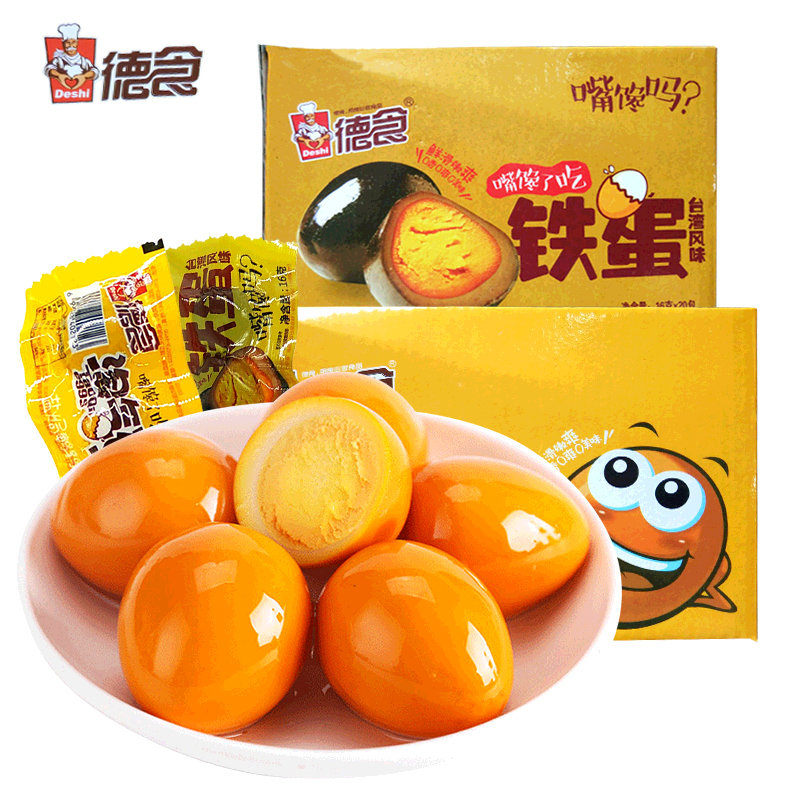
Here is a salted version of quail eggs produced by Deshi.
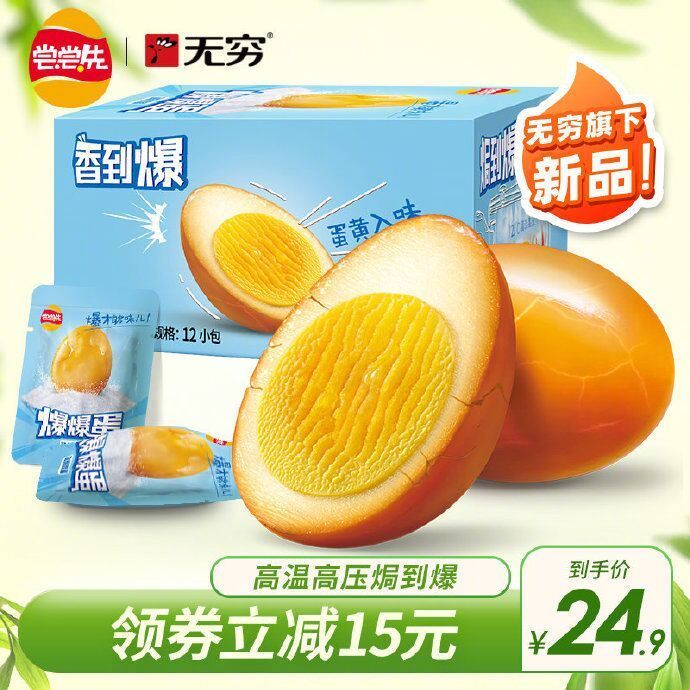
Wuqiong has launched individually packed salted eggs in 2021, under the Changchangpian brand. The ad states that the seasoning has entered into the yolk due to a process of high temperature and high pressure.
Chayedan – tea eggs
Tea eggs are usually prepared at home. Brew a pot of tea. You can use any Chinese tea, but a dark tea like Pu’er will taste stronger than green tea. Place the tea and tea leaves in a pot, add a piece of star anise, a stick of cinnamon and either some cloves or cardamom. Add soy sauce and enough water for the liquid to come halfway up the pot.
Wash about 10 eggs and place them in the pot to boil. After 15 minutes, remove the eggs and gently tap them to crack the shells. Turn off the heat and return them to the infusion. You want a marbled effect. The flavours and colours improve if you also break the membranes so the tea infusion can penetrate. Then wait, to allow the eggs to soak in the tea sauce for a few hours, preferably overnight. You’ll be rewarded for your patience with the most flavourful hard-cooked eggs you have ever eaten.
You can reuse the tea sauce to cook more eggs when the first batch is finished, but remember to either add more tea or soy sauce to adjust the seasoning.
Free range eggs redefined
Innovation in food is one of the core themes of this blog. A Chinese organic farmer in Taiyuan (Shanxi) has redefined the concept of ‘natural’ eggs, better known in the Western world as ‘free range eggs’. His term is ‘original eggs (tujidan)’, which he defines as ‘eggs resulting from natural insemination of the hen by a cock’. This is even more humane that simply allowing chickens to walk around freely.
The yolk of the resulting eggs is brighter yellow than those of mass-produced eggs and are said to be lower in cholesterol. Strictly speaking, this is not really innovation, but simply going back to basics. Still, it is a development worth pointing out.
Dried eggs – a novel product
The general trend in the Chinese food industry towards more convenient products has also affect this sector. Recently, Master Shen Food (Anhui) launched a ready to eat egg product: dried eggs. This is a truly innovative product. It imitates traditional Chinese dried bean curd, but is made from eggs, making it a more nutritious product. The ingredients:
The brand name is also partly imitation: Master Shen is obviously alluding to the Master Kong brand instant noodles.
Eggs as snack
Singly packed eggs are becoming a favourite snack in China since 2024. Here is a picture I took in a store in Beijing in June 2025. It shows a wide range of egg snacks.
Co-branding eggs and tomatoes
In 2024, egg brand Huangtiane started cobranding its eggs with Heinz’ tomato products, The marketing campaign was based on the famous Chinese home dish tomatoes fried with eggs.
Export
China exports some of its egg products as well. Hubei province was China’s top exporter of for the 10th consecutive year in 2019, generating an income of USD 90 mln.
Clean eggs
Concepts like Clean Label have also reached China and started to get serious around 2022. However, the Chinese interpretation of ‘clean’ seems to be broader or lest strict than the Western. Here is an example of ready-to-eat egg from Eurasia Consult’s database that is advertised as ‘zero additives’ site in China.
Amid concerns over antibiotic usage in some market eggs, Fook Convenience Store has started selling zero-antibiotic eggs in 2023. The have become a top-selling item for many consumers.
By now, the new motto of the Chinese government, the Belt and Road Initiative (BRI) aka One Belt One Road (OBOR), is known all over the world. Not only the national government, but also local governments in China, enterprises, and universities are rephrasing their goals and strategies in terms of OBOR. The Chinese food industry cannot escape this trend either, witness a conference held in October, 2018.
I have already posted a number of stories featuring wheat flour in this blog, including texts focusing on flour improvers, bread, and steamed bread (mantou). This is certainly not overkill. China has been the world’s largest importer of wheat for a number of years. The import volume in the 2015-16 season is estimated at 2 mln mt, an increase of almost a third compared to the previous season.
An important reason for that increase is the growing consumption of bread in China. Chinese domestic wheat is relatively low in gluten, which is fine for traditional Chinese products like steamed bread, dumplings or noodles. Bread, however, requires wheat with a higher gluten content. China used to import such wheat from Australia, the USA and Canada, but an emerging source of high gluten wheat for China is Kazakhstan. Chinese wheat imports from Kazakhstan increased from 40,000 mt in 2010 to 250,000 mt in 2014.
The fact that China and Kazakhstan are neighbours makes them more obvious trading partners than those faraway Western nations. However, the story is more complicated, more related products are involved, in particular another essential ingredient of bread: yeast. The favourite staple of Central Asia, the nan, is also a baked product using yeast.
Yeast feeds on molasses and Xinjiang, the Chinese border region with Kazakhstan, is an important sugar region in China with 14 sugar plants producing 250,000 mt of molasses p.a. Along the region’s Uighur majority, Xinjiang is also the home of a considerable Kazakh minority. Moreover, Kazakhs and Uighurs share the same Muslim religion, so there is a mutual understanding regarding Halal food regulations. This motivated China’s top yeast producer Angel (Yichang, Hubei) to establish a subsidiary in Yining, a city in Xinjiang close the border with Kazakhstan. A considerable part of the produce of that plant is exported to Kazakhstan. According to one source, ‘Chinese yeast is a famous in Kazakhstan as Coca Cola or Marlborough’.
Meanwhile, China has started investing in the continuous supply of high gluten wheat from Kazakhstan through an intensive aid program. The country’s wheat output in 2011 was 26.9 mln mt, but was almost halved in the following year, due to severe drought. The average wheat output per hectare in Kazakhstan is about 1/5 of that in China. The Chinese authorities have organized a number of government agencies and companies to combine their expertise in helping Kazakhs to improve their wheat production. One tractor maker in Shandong has developed tractors specially geared to the conditions in Kazakhstan. Chinese experts believe that this development aid can unlock the potential of another 20 mln mt of high gluten wheat p.a. And yes, much of that will find its way to China.
Oil from Kazakhstan – from buying to producing
The Aiju Grain and Oil Industry Group (Xi’an, Shaanxi) imports cooking oil, wheat and flour from Kazakhstan. Aiju’s Chairman noted during his visit of a trade fair in Almaty in 2015 that a considerable acreage of rich arable land is left unused in Kazakhstan. Aiju is now building two factories in the region, which will process up to 1000 mt of wheat and 1000 mt of sunflower oil a day, as well as a base to plant wheat and sunflower seeds over 33 hectares. The base will be finished by 2020 and create 300 jobs. Aiju intends to bring high-efficiency planting and processing technologies to Kazakhstan, which will help with local economic development. The company also plans to start importing beef, mutton, honey and milk from Central Asia too. This includes other countries besides Kazakhstan. Bai Qinbin, deputy director of port management for the Xi’an International Trade and Logistics Park, said the city’s large transportation network can help boost trade and investment between China and countries involved in the Belt and Road Initiative. “We are working on starting a service between Xi’an to Teheran this year, as the Middle East is in great need of Chinese goods, especially food and commodities for daily use.” Xi’an is one of the most important multimodal infrastructure hubs in China.
Tomatoes and more
The role of Xinjiang in the development of Kazakhstan’s food industry does not stop at wheat and yeast. Xinjiang is already the world’s largest supplier of tomato paste. One of these companies has invested in a tomato processing plant in Almaty. Chinese companies have so far offered to invest USD 1.9 bn to upgrade Kazakh food processing industry with 19 projects such as tomato, chicken and meat processing plants. According to Gulmira Isayeva, Kazakhstan’s deputy agriculture minister, Beijing’s USD 40 bn Silk Road Fund is planning investments in three projects, including one to move three tomato processing plants from China to Kazakhstan. Investments under consideration in Kazakhstan’s agriculture sector include USD 1.2 bn by Zhongfu Investment Group into oilseed processing; USD 200 mln into beef, lamb and horsemeat production by Rifa Investment; and USD 80 mln into the production of tomatoes and tomato paste by COFCO, China’s state agriculture conglomerate.
OBOR as milky way
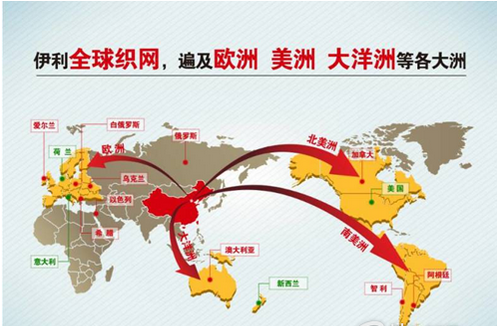
Yili (Huhhot, Inner Mongolia; aka China’s Dairy Capital) has broken into the ranks of the world’s top 10 dairy makers in 2016, ranking 8th. The company is advertising its global strategy in terms of OBOR.
So OBOR really can create win-win situations.
Jiangnan University joins in
A founding ceremony of the was held by Jiangnan University in Wuxi, East China’s Jiangsu province on Nov 16, 2018. Hong Liu, deputy director of the Jiangsu Provincial Department of Education, Liu Xia, deputy mayor of Wuxi, as well as presidents, experts and scholars from 49 universities in 27 countries involved in the Belt and Road Initiative (BRI) attended the ceremony (including the University of California, Davis (UC Davis), the University of Queensland, the University of Reading, Massey University and the National University of Singapore). During the ceremony, general secretary of the alliance, Liu Yuanfa announced the Taihu Lake Declaration, aiming to pool together the wisdom and strengths of the member universities to strengthen strategic communication and coordination in the food industry.
Shared Chinese and Kazakh interests in the agri-food industry
In May 2016, Gulmira Isayeva, Kazakhstan’s deputy agriculture minister, announced that Chinese companies were in talks to invest USD 1.9 billion in 19 agricultural projects as part of the BRI. According to a list of prospective investments that Isayeva showed to the Financial Times and statements from the project planners, agricultural investments under consideration include: USD 1.2 billion by Zhongfu Investment Group in oilseed processing; USD 200 million in beef, lamb, and horsemeat production by Rifa Investment; USD 80 million in the production of tomatoes and tomato paste by Chinese agriculture conglomerate COFCO and Evraziya Agroholding; and USD 58 million in a grain processing venture between China’s Aiji and Kazakhstan’s Total Imepx in northern Kazakhstan. Other projects include the establishment of feed lots and broiler poultry farms by CITIC and Kazakhstan’s Baiterek and an approximately USD 500 million investment by a finance group from Hong-Kong Oriental Patron in the development of “Kazexportastyk” for deep processing of agricultural products in Kazakhstan for export to the Chinese market.
In the future, Kazakhstan might also become a platform for certification and export of Central Asian agricultural products to China. According to Isayeva, laboratories are currently being established in the East Kazakhstan and Almaty oblasts. These labs will have technical equipment that meets the requirements of the General Administration of Quality Supervision, Inspection and Quarantine of China, a Chinese government body that will have the final say over whether or not to accredit enterprises. Using these laboratories, farmers from across Central Asia will be able to certify their products to be exported to China. China will trust the laboratory test results and will not re-examine the goods. Between December 14, 2015 and June 8, 2017, the Ministry of Agriculture of Kazakhstan and the General Administration of Quality Supervision, Inspection and Quarantine of China signed 6 protocols on phytosanitary requirements for export of wheat, horses, soy beans, wheat bran, honey, and the frozen meat of small cattle from Kazakhstan to China.
On July 11, 2017, Kazakhstan and China signed seven agreements worth a total of USD 160 mln at the Kazakh-Chinese Agriculture Investment Forum in Astana. Kazakhstan’s National Company Food Contract Corporation signed agreements with Xi’an Aijugrain & Oil Industry Group Co Ltd, Xinjiang Zhaofenghe Bio-technology Co., LTD, and Zhongxinjian LLC to supply 200,000 mt of grain and 100,000 mt of oil-producing crops to China, as well as construct a grain and oil-producing crops terminal at the Kazakh-Chinese border. Furthermore, Zhannur-Astana and Tianyang Yinhai Seed Co. agreed on the establishment of a seed cluster with a full grain processing cycle, including the transfer of advanced practices in seed production. The two countries also signed a memorandum of understanding aimed at the establishment of a model zone of agricultural cooperation on the basis of the National Agricultural Research and Education Centre, which will contribute to the establishment of joint processing plants and the introduction of new innovations in agricultural production.
Finally, Kazakh Agro-Technical University signed an agreement with China’s Northwest University of Agriculture and Forestry to create a joint agricultural technology park and with Chinese potato company XISEN on a joint experimental demonstration lab for growing potatoes.
BRI and Halal
Among the 65 BRI countries, 31 are Muslim countries, and Muslims account for more than half of the total population of BRI nations. Halal food is therefore an important factor in the relationship between BRI and the Chinese food industry. China has advanced technology and huge capacity to produce Halal food on a large scale, but this potential is far from being developed. In 2019, the world’s Halal food sales reached USD 3.2 trillion, while China’s export value was only USD 100 million. There are great opportunities for future development.
China and the EU have signed an agreement on cooperation on, and protection of, geographical indications late 2020, including two products from Yantai: Yantai apple and Yantai wine.
.
Regional marketing: ‘Hospitable Shandong’
Shandong province is often referred to as China’s fruit and vegetable garden. Shandong was China’s top vegetable production region in 2019 with 11.65% of the national output. Yantai, a coastal city in Shandong, is committed to building a brand for itself as “China’s food city”. Geographically, Yantai is situated close to the Liaodong peninsula of Liaoning province, another important food production region, with a quick ferry service with Dalian, a major industrial and port city on that peninsula.
Watch this video to look at various aspects of Yantai through the eyes of foreign expats.
According to the mayor of Yantai, “We are working to boost the city’s food sector by promoting food diversity and security, aiming to develop the city into a heavyweight in both China and the overseas food market”.
The food sector has always been one of Yantai’s competitive industries. The China Food Industry Association recognised Yantai as a well-known Chinese food city in 2009.
Statistics from the local government show that in 2017 revenue generated from the city’s food industry hit RMB 194.87 billion, an increase of 11.9% from the previous year. This figure was 13.8% of the total industrial turnover of the region and 11.9% of the turnover of the provincial food industry. A recent survey comparing the GDP of major Chinese cities with that of nations in other parts of the world, revealed that the economy of Yantai is roughly comparable to that of Belarus.
There are more than 500 major enterprises doing business in the city’s food industry. These include Changyu Pioneer Wine Co., cooking oil producer Shandong Luhua Co., Shandong Longda Meat Foodstuff Co., and Shandong Oriental Ocean Sci-tech Co.; the company annually produces 1,500,000 mt of edible oil in 33 factories around the nation, benefiting more than 10 mln peanut farmers.
Yantai has a competitive edge in 16 food sectors including fruit and vegetables, oil, meat, aquatic products, rice noodles (fensi), cake, candy, instant foods, dairy products and condiments. The Yantai authorities have started awarding DOC status to local products. Longkou rice noodles obtained that status in September 2020.
A noteworthy product is the cherry. The cherries from Yantai are the best in China. The following illustration is a promotional picture indicating the nutrients in cherries.
The city has 27 nationally famous trademarks and 96 leading provincial trademarks in the food sector. Three brands – Changyu, Luhua and Longda – were named among China’s top 500 most valuable brands in 2014.
Food products made in Yantai are exported to more than 80 countries and regions including Russia, the United States and South Korea. According to the city’s plans, revenue generated from the food industry will reach RMB 300 billion by the end of 2017.
Yantai’s industrial sector generated more revenue and profits in the first half of 2017 than that of any other city in Shandong province, according to data from Yantai’s municipal commission of economy and information technology. The city’s total industrial revenues reached RMB 931 billion in the first half of 2017, leading to total profits of RMB 66 billion, the statistics state.
In 2021, Yantai was home to 44 A-share listed enterprises, ranking first in Shandong province in terms of total number.
Home of fruits
With its favorable climate conditions and geographical location, Yantai has become one of China’s most important fruit planting, processing and exporting bases”.
The city is known as China’s hometown of fruit. Fruits produced in Yantai, such as apples, cherries, pears and grapes, are known far and wide.
Yantai apples, which were given geographic indication status by the State Quality Supervision and Inspection and Quarantine Administration in 2002, have become one of the things the city is renowned for. An important centre for apple growing is Qixia, a town Southeast of Yantai.
With a cultivating history of more than 140 years. The city has 186,660 hectares of apple orchards, which produce 5.6 mln mt of apples every year. About 600,000 mt of Yantai apples are sold in 82 countries and regions every year, including Southeast Asia, the European Union and the United States, according to official figures.
The city has more than 200 varieties of apples. The brand Yantai Apple has a value of RMB 10.59 billion, the leading amount in China’s fruit industry for seven consecutive years.
With a bright color and sweet taste, Yantai apples are exported to more than 60 countries and regions with an annual export volume of 600,000 mt, accounting for one-fourth of the country’s total apple exports.
Twenty-one tons of Yantai apples were shipped from Yantai to the United States again on Nov 9, 2015. It was the first time for Yantai apples to enter the US market. As a country with strict inspection and quarantine measures, the US had previously forbidden apple imports from China for 17 years.
“As the price in the US is twice the price in Asian countries, expanding to the US market will surely promote the apple industry in Yantai and increase locals’ income,” said Bai Guoqiang, head of Yantai Agriculture Bureau.
Cherries are another well-known fruit from Yantai, where cherry trees have grown for 130 years. More than 25,000 hectares of cherry trees produce about 190,000 mt of the fruit a year. The cherries are exported to more than 60 countries and regions, including South Korea, Germany and the US.
Fruit juice
With such a variety of fruits, it is not a surprise that Yantai and the surrounding regions are a centre of fruit juice production in China. One of the country’s leading producers of apple juice concentrate, Andre, is located in Mouping, just East of Yantai.
North Andre Juice Co. Ltd. was established in 1996. The company’s products include: juice concentrate, pureed and preserved fruit, fruit essences, and pectin. Since its establishment, the company has invested more than 3 billion RMB and set up 9 modern juice concentrate production bases in Shandong, Shaanxi, Jiangsu, Liaoning and Shanxi. Andre operates a total of 14 juice concentrate processing lines, 2 pectin production lines, 1 puree processing line and 1 dried fruit production line. The designed annual fruit processing products is more than 2 mln mt, and the annual juice concentrate production 340,000 mt, the annual pectin production 4000 mt and the annual puree production 10000 mt. In April 2003, Andre Juice Company went public on the Hong Kong Stock Exchange, becoming the first listed company in juice concentrate industry in China.
China’s Bordeaux
At almost the same latitude as Bordeaux in France, Yantai is also considered one of the world’s top seven coastal grape-growing areas. It was named the only “international grape and wine city” in Asia by the International Office of Vine and Wine in 1987.
The city now has more than 18,000 hectares of vineyards, 11,000 hectares of which provide grapes for winemaking. It is home to more than 20 international wine businesses and a large number of domestic vintners, including the brands Changyu, Great Wall (owned by the COFCO Group) and Dynasty. Chateau Lafite Rothschild selected Penglai, a county-level city of Yantai, to develop its first vineyard and chateau in China. Penglai established a sister relationship with Australia’s Barossa, one of the world’s finest wine producing regions, on March 25. Yantai has a similar relationship with Tauranga in New Zealand.
Changyu Wine Co. is China’s oldest and largest winery. The company was founded in 1892 by Zhang Bishi. The company’s name is formed from his surname Zhang (Chang) and the Chinese character meaning prosperity. In 2002, the company entered into cooperation with Castel group in France to establish the first professional chateau in China. In 2006, the company cooperated with a Canadian company to build the largest ice wine chateau in the world near Huanlong Lake of Liaoning province. It has also expanded overseas, building Chateau Changyu Kely in New Zealand. Changyu Pioneer Wine Company is now among the ten largest wine companies in the world, producing more than 900,000 hls of wine p.a.
Changyu is constructing a Wine City, with help from the Italian wine company Illva Saronno Holding Spa. It will include a European style chateau and a Wine Research Institute. The facility has been referred to as a Disney World for Wine in a Bloomberg report.
A more recent company is Domaine de Longdai, located in the Penglai region close to Yantai. The soil and climate of Qiushan valley are conducive to the cultivation of grapes and wine making. The French general manager praises Yantai for being supportive to the winery in production and commercial distribution. Combining the traditional Bordeaux brewing techniques with local grape planting, the winery brews wine with Yantai characteristics, relying on the unique natural conditions of Qiushan valley. The Domaine de Long Dai is the eighth winery of the Rothschild family in the world.
Yantai Wine has meanwhile been registered as a regional trade mark. Its value was estimated at at RMB 81.687 billion in 2024.
International food expo
To further boost its food industry, Yantai holds a series of international food trade fairs and trade fairs every year.
Fruit & Vegetable Food Fair
During the 16th Fruit, Vegetable and Food Fair held in the city last month, thousands of participants from more than 10 countries and regions including Japan, South Korea and Italy came to Yantai in search of business opportunities.
The four-day event attracted organizations and companies from home and abroad to display fruits, vegetables, seedlings, food processing equipment and agricultural machinery at nearly 900 booths.
Six overseas organizations and delegations including the Japan Consul General in Qingdao participated in the fair and brought their latest developments in fruit and vegetable production and related equipment manufacturing.
Some high-tech products at the expo were particularly interesting, including irrigation equipment from Israel, Italy’s agriculture testing machines, apple-planting technology from Japan and unmanned plant protection helicopters from Shandong.
Held in Yantai every year since 1999, the event has become one of China’s most influential expos in the fruit, vegetable and food industry. It provides a sound exchange and cooperation platform for Chinese and foreign companies in the sector.
The fair’s organizers said that the event has attracted more than 1.7 million delegates from across the world during the past 15 years. This year’s event alone attracted 58,000 visitors and the trade volume hit RMB 230 million.
East Asia International Food Trade Fair
The 12th East Asia International Food Trade Fair was held in Yantai June 2 – 5, 2017. resulted in the signing of cooperation agreements worth RMB 1.60 billion. With the theme of “Green, Innovation, Cooperation and Development” attracted more than 900 enterprises from home and abroad. They brought more than 13,000 food products covering 16 categories, from imported food to time-honored Chinese products. The fair was also regarded as lucrative by enterprises from other Chinese regions. More than 100 food enterprises from Sichuan brought their products to the fair, including local liquors, pigs, tea, pickles, condiments and snacks. Exhibitors from Jilin also made appearances as a group, presenting, among other products, ginseng, forest frog’s oviducts and pilose antler, known as the “three treasures in Northeast China”. Enterprises in Harbin offered Qing’an rice, time-honoured Harbin sausages and other specialties. Co-organised to the food fair, Yantai also hosted a trade fair for Jiangxi specialties and an expo of imported maternal and child products.
Scottish Chambers of Commerce opens trade office in Yantai
The Scottish Chambers of Commerce opened an international trade office in Yantai, a Chinese port city in Shandong province May 16, 2017. The formal opening ceremony was hosted by Zhang Bo, vice-mayor of the city, together with senior officials from Yantai municipal government. The Scottish delegation was led by SCC’s new president, Tim Allan, and chief executive Liz Cameron. The Scottish Chambers of Commerce identified robotics, bioscience, manufacturing, engineering and smart technologies, agriculture, food and drink and soccer management as being areas of key interest.
Dutch university opens branch in Yantai
The University of Groningen, The Netherlands, in collaboration with China Agricultural University, plans to establish a presence on a campus in the city of Yantai. In Yantai the university plans to offer Bachelor’s, Master’s and PhD programmes that incorporate significant research activities and collaboration with the business sector. TheYantai campus is located in the middle of a high-tech zone covering 38 km². It is the home of many high-end industries, companies and research institutes, providing good opportunities for top sector jobs and cooperation in the area of research. In addition, as one of China’s greenest cities. Yantai is situated in the province of Shandong, whose 97 million inhabitants offer great potential in attracting future students. However, the Board of Groningen University ran into trouble early 2018, when a majority in the University Council voted against the project. The Board is now trying to reformulate the cooperation.
Bioscience Innovation Demonstration Zone
Yantai will see rapid development in its medical and health industry as authorities are mulling over building an international bioscience innovation demonstration zone. Based on the rapid development of its medical industry, the zone will consist of seven industrial parks including biomedicine industrial park, traditional Chinese medicine and precision healthcare industrial park, which will be built during the 13th Five Year Plan (2016-20) period, according to Li Wei, head of Yantai Food and Drug Administration.
By the end of 2020, the projected prime operating revenues of Yantai’s medical and health industry will exceed RMB 100 bln, achieving year-on-year growth of 15%. Yantai is home to many key national laboratories and boasts high innovation capabilities and potential.
Yantai will introduce supportive policies to encourage research and development, and attract and nurture leading enterprises and high-caliber talents in sectors such as medicine and medical equipment. Yantai has set up a special fund of RMB 200 mln to build platforms providing technological support. To boost the profile and competitiveness of Yantai’s medical industry, Yantai will host the first international conference on medical innovation and development from Sept 16 to 17, 2017.
Yantai specialties served at BRICS Summit
Three Yantai-based food brands made their way onto the dining tables of the 9th BRICS Summit, which was held in Xiamen, Fujian province on Sept 3-5, 2017. Leaders from Brazil, Russia, India, China and South Africa were served up apples, condiments and Longkou fensi (a kind of vermicelli made from bean starch) from Yantai during the summit. Fruit supplier Yantai Lianlei Foods was given the green light to provide its apples for the summit in April. Lianlei apples first went on sale in Xiamen six years ago, and they have become hugely popular in the coastal city, their sales volume rising from just a few tons to more than 1000 mt. The company’s apples are also exported to Japan and several countries in Europe and America. Longkou fensi (see above) produced by Shuangta Foods was also selected as a designated food for the Xiamen summit by the China Food and Drug Administration. Shuangta is a world-leading producer of fensi, pea starch, and plant protein (the main raw material for plant-based meat), and it has a total value of RMB 4.3 billion. The company was listed on the Shenzhen Stock Exchange in 2010. Shinho Group also hit the headlines after becoming the official supplier of eight condiments including bean paste, soy sauce, vinegar and pepper to the summit.
Yantai, Stavanger sign ‘sister city’ intent
Yantai and the Norwegian port city of Stavanger are on their way to establishing official friendship ties. Zhang Dailing, vice mayor of Yantai extended a warm welcome to a Norwegian delegation headed by John Peter Hernes, vice mayor of Stavanger, on Oct 19, 2017. The purpose of the delegation is to strengthen cooperation on marine fishery and heavy industrial equipment between the two cities and sign a letter of intent to become sister cities. Other foreign sister cities of Yantai are: San Diego, Omaha (USA), Beppu, Miyako (Japan), Tauranga (New Zealand), Vladivostok (Russia), Gunsan, Wonju, Ulsan, Incheon, Ansan (South Korea), Phuket (Thailand), Angus (UK), Orebro (Sweden), Burgas (Bulgaria), Campel, Ange (France), Szombathely, Miskolc (Hungary), MacKay, Iscah, Wendendy (Australia), Enalesburg (Spain), Lahore (Pakistan).
Producers of food ingredients will be very familiar with the general applications of their ingredients in foods and beverages. However, what do you know about their application in traditional Chinese foods, or novel foods based on traditional recipes? The transformation of the production processes and formulations of traditional Chinese foods into large scale commercial production is probably the most interesting challenge to suppliers of food ingredients worldwide.
Eurasia Consult has been active in the Chinese market for food ingredients since 1985, and in the course of our activities we have built up a substantial database of industrial recipes. This information can be used in market research, but also constitutes a mine of information for international suppliers of food ingredients to broaden the scope of existing ingredients and develop new products.
In this post, I am providing a few examples of the most promising application areas: novel foods, in particular those based on local products, traditional foods adapted for modern industrial production and ingredients based on traditional Chinese medicinal herbs.
The recipes are provided as found in the various sources. They are not ready to reproduce recipes, but provide insight in the perception of food formulation in China.
Novel
The Chinese love experimenting, as you can see on the Trends section of this blog. A consequence of this trial and error mentality for product innovation is that the route between idea and prototype is usually considerably shorter in China than in Europe. Novel products are often tested by throwing them on the market to see how consumers react.
Combined with other traits of Chinese culture, like playfulness, curiosity, etc., makes that more peculiar products are launched in China than in any other market in the world. Our favourite is still this one: ‘yoghurt to cure hangovers’. However, in this post I prefer to show a more common product.
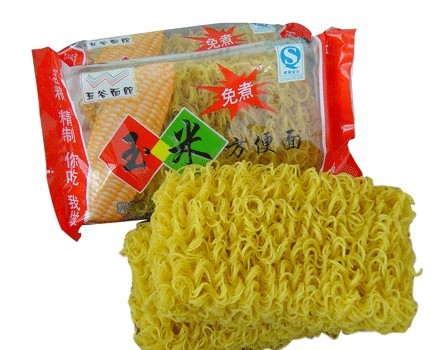
Instant maize noodles
Ingredient
ratio(%)
Maize flour
75 – 90
Modified potato starch
10 – 25
Gluten powder
1 – 3
Monoglyceride ester
0.4 – 1
Xanthan
0.3 – 0.7
Traditional
In several earliers posts, I introduced the transformation of traditional Chinese foods into products manufactured at an economical scale. Chinese food designers have grown very apt in creating new variations adding extra value to such traditional products. A related trend is to create new foods from typical locally cultivated fruits, vegetables, etc. Local food specialties used to be a source of pride in China, but in the course of the ‘modernisation’ these traditions became rather suppressed.
Local governments have regained interest in these products recently and many of them are even applying a kind of DOC status for their typical local specialties, prohibiting manufacturers from other regions using that product name, like the term ‘champagne’ in France.
Mantou used to be made at home, using a piece of the previous dough to start the fermentation process. Mantou have started to be produced on an industrial scale recently, which has created a demand for specialized flour improvers for this application, with enzymes as the main active ingredients.
Food and medicine have never been as closely separated in China as in the Western tradition. Virtually all food and food ingredients are attributed certain medicinal activities in Traditional Chinese Medicine (TCM). Against this background, it is not so hard to imagine why the notion ‘functional food’ was accepted so quickly and smoothly in China: it was not really a novel concept for the Chinese. Actually, a number of fashionable functional foods in Europe, like Gingko, originate from Asia. As soon as ‘functional ingredients’ established themselves as a separate and lucrative category, medicine companies started to promote extracts from TCMs as food ingredients.























 Peverelli on Chinese food and culture