China’s Growing Chocolate Market: Trends and Insights

Chocolate is one the most appreciated gifts to friends in East Asia

The confectionery industry is a sweet line of business by itself, but it can be even sweeter in China, where market potential and a growing confectionery culture is leading to a new bonanza of sweets and chocolates. Even the Chinese army is producing specially packed chocolate for its soldiers.

According to data from Statista Market Insights, China’s chocolate market reached a total value of US$3.65 billion in 2023, a slight increase of 0.6% from 2022, and is estimated to reach US$4.76 billion by 2030, growing at a CAGR of 4.52% during the forecast period (2024-2030).

China has become such an important market for chocolate suppliers, that Barry Callebaut had chosen Shanghai as the place to introduce its inhouse-developed ruby chocolate to the world in September 2017. Barry has further opened a new Chocolate Academy in Beijing in 2019 – the company’s 22nd globally – to meet demand and better serve the Chinese market. Barry announced to open a fourth office and the third Chocolate Academy Centre in Shenzhen, China in November 2020.

High-end market

Sales of China’s chocolate and confectionery boomed over the past five years after a handful of Western brands began entering the country in the 1980s. The maturing chocolate culture has prompted Chinese consumers to begin asking for a greater variety of premier products. China’s chocolate consumption is increasing 10% to 15% a year, as living standards rise and there is a growing acceptance of Western lifestyle.

So far, the top 20 chocolate makers have already presented themselves in the market. In a common supermarket in Shanghai, you can easily find over 70 brands of chocolate. Most of them are foreign brands. The big four (biggest four companies in China chocolate market: Dove, Ferrero, Cadbury and Leconte) have taken over 70% of the market. Of these, only Leconte is a local brand (Owned by COFCO, possibly Nestlé’s main international challenger). Among the three foreign brands, Dove alone has taken one-third of the market. Dove has charmed Chinese consumers by its special taste. Secondly, Dove chocolate has nice packaging with a neat wrap which leaves a deep impression of delicious and good quality in the consumers’ mind. In addition, Dove always produces new products with special packaging which propose meaningful designs. Chinese consumers care about the packaging of a product, because chocolate is also a good choice to buy as a present. How the chocolate appearance has been the most vital factor for the purchasing decision as a gift.

Foreign players go into lengths to ensure the quality of their products on the Chinese market. E.g., Hershey’s indicates on its packaging that it uses 100% imported milk.

HersheyImpMilk

Don’t think that this market is only accessible to the big multinationals. Belgian chocolatier Filip Esprit runs a chocolate shop in Weihai, Shandong province. This is good location, close to China’s unofficial Food Capital Yantai.

Major potential

China’s current per capita chocolate consumption is very low at about 100 grams a person, compared with more than 10 kilograms in Europe. Even in Japan and South Korea, the figure is close to 2 kg. However, by 2016, 340 million Chinese will be middle class – more than the population of Western Europe – creating a huge market. Greater purchasing power – and the growth of large foreign retail chains – will boost consumption. This leaves plenty of room for business growth in China.

Insiders estimate the total value of chocolate sales in Chinese retail in 2019 at RMB 22.4 billion; up 4.4%. The further expect an annual growth of 3.5% for the coming 5 years.

Milk chocolate is still the favourite flavour with Chinese consumers. However, in some developed regions of China, such as in the east, sophisticated customers are more likely to choose dark chocolate as it has an image of being healthier. This flavor’s share of retail value has more than quadrupled in five years to 34% in 2013. Of all the chocolate fillings, nuts are the most popular.

Selling Points of Chocolate

What are the factors to getting Chinese people buying chocolate ? A report shows that the No.1 factor Chinese consumers consider is the taste (30%), following by brand (18%) and price (7%).

  1. Taste

It’s true that in China, taste is the most important factor, but compared to western consumers, Chinese consumers don’t care about the taste nearly as much. A report shows 66% western consumers put taste as the most important factor, while only 30% of Chinese consumers think it’s the top factor.

  1. Brand

When chocolate came to China’s market, it was branded as an exotic food product which is an added extra value. And now the brand has become even more important. First of all, a big part of imported chocolates purchased in China are for gifts or ceremonial use like wedding candy.

For young Chinese men, chocolates, especially luxurious delicately packed chocolates have become a must to show their love to their girlfriends. During the Chinese Valentines’ Day this year, half of the top 10 items sold online were chocolates. That’s why imported chocolates are sold as high class food product.

Apart from their fancy look, imported chocolates also enjoys a fame of high class ingredients. With the growing concern for health and food safety, consumers are becoming more careful about the ingredients of chocolates and imported chocolate are trusted for containing more coco or milk.

  1. Price

When chocolate first appeared in China, the price for a box of imported chocolates was sky-high. Today, chocolate has become a common food product that most people can afford. But some chocolate brands are still famous for their high price such as Ferrero because Ferrero targets on high class chocolate market where price is an important tool to show its value.

A Chinese consumer can easily find reasons to buy a box of imported chocolate for its taste, brand and price. And what chocolate makers need to do is to produce nice chocolate, promote its brand and label with a suitable price. The following picture from a 2023 market study shows the factors influencing chocolate purchasing by Chinese consumers.

Local players

Local competitors are still finding it hard to set up a premier brand recognition among Chinese consumers and adopted cheaper compounds to secure price competitiveness. The 415 producers active in 2018 produced a total of 2.9 mln mt of chocolate products. Almost 75% of that volume was produced in Fujian, Guangdong, Hunan, Hubei and Anhui.

LeConte holds 6.7% market share and another local company, Golden Monkey (Shanghai), with 1.5% market, was acquired by Hershey in 2015 (after acquiring an 80% stake in the previous year). However, Hershey sold the Chinese subsidiary again in July 2018 to a local party Yuxiang Food Technology (Henan), a company co-founded by Xizang Cangying (literally: Tibet Goshawk) Investment Management Company and Henan-based Youshi Foods, which has become one of the biggest bakeries in central China.

LeConteMCGM-mchoc

Ingredients listed on the packaging of domestic chocolates:

  • LeConte milk chocolate: sugar, cocoa butter, whole milk powder, cocoa mass, skimmed milk powder, lactose, food additives (soybean lecithin, food flavour), cocoa butter 35% min., cocoa solids 40% min., milk solids 26% min. The cocoa beans are imported from Ecuador.
  • Golden Monkey milk chocolate (cocoa butter alternatives):sugar, hydrogenated vegetable oil, cocoa powder, milk powder, whey powder, salt, food additives (lecithin, polyglycerol ricinoleic acid ester), food flavour.

On the other hand, the higher prices of global players also scare away Chinese customers, who do not have the purchasing power of their Western counterparts. There is still room for growth in second-tier cities dominated by these lower-end products. This applies particularly to China’s vast rural population. The challenge for domestic players is to develop affordable chocolate products that apply to the various local tastes and habits.

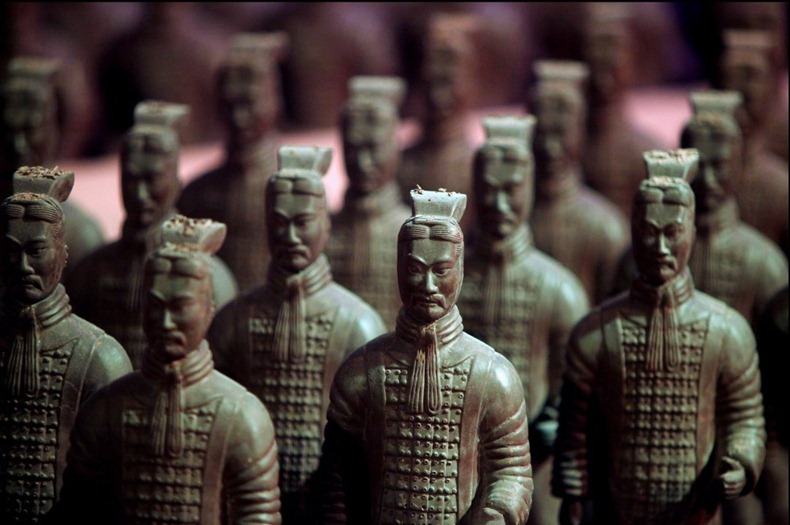
Perhaps foreign tourists can be charmed into buying chocolate replicas of the famous terra cotta soldiers from Xi’an.

chocolateWarriors

Russian chocolate making progress

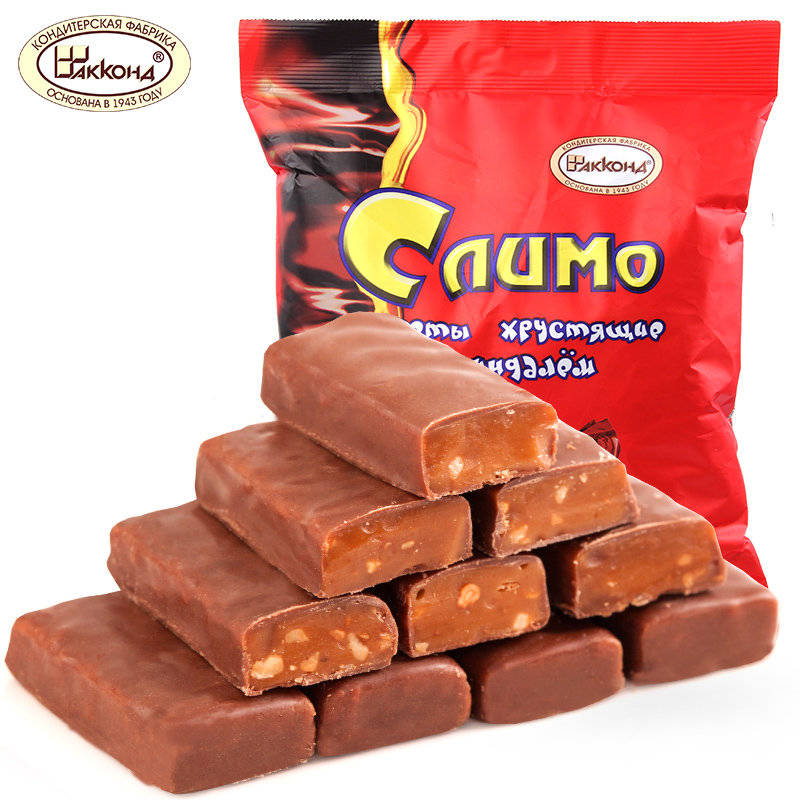
Chinese imports of foods and beverages from Russia have been rising during the past few years and chocolate is one of the favourite categories. One Russian chocolate, Krokant, chocolate filled with toffee crunch, is hard on the way to become the most popular chocolate in China. Chinese refer to it as ‘Purple Candy’ due to its purple wrapper. Similar Russian products are also available.

China imported 64,000 mt of chocolate from Russia in 2020; up 30%.

Chocolate as a healthy snack

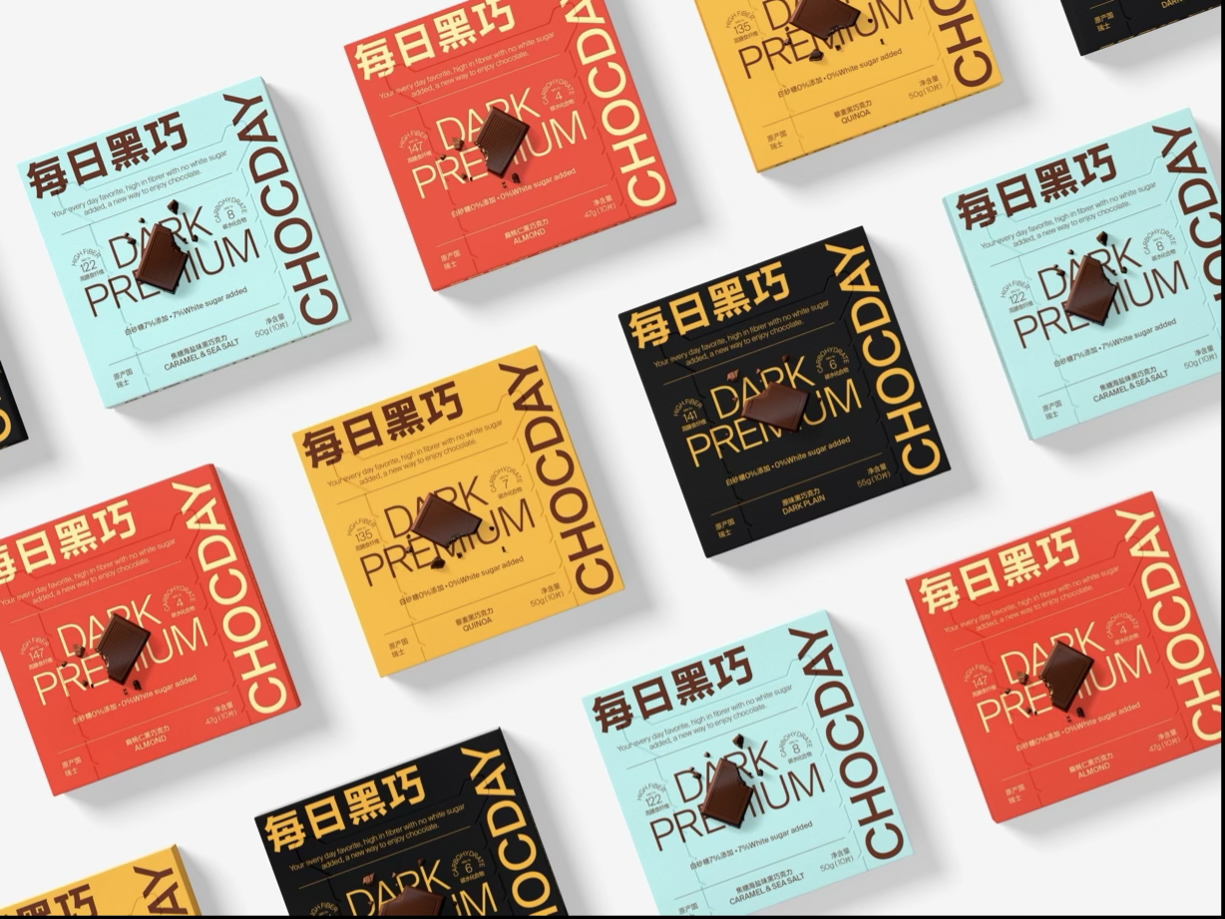
Many Chinese prefer dark chocolate, because milk chocolate often tastes too creamy. A newcomer used that fact as a basis for a new healthy chocolate concept in the 2020s: Daily Black Chocolate (Meiri Heiqiao). With its unsweetened, dark chocolate product, the brand surpassed RMB 100 million in revenue within one year of its launch. The brand’s founding product is a 98% cocoa dark chocolate with zero added sugar and high dietary fiber (derived from cereals). This starkly contrasts with the traditional perception of chocolate as a high-sugar treat. Recognising the need for varied taste preferences, Daily Black Chocolate expanded its offerings to include 52%, 66.6%, and 98% cocoa content, allowing consumers to choose based on their bitterness tolerance.

Peter Peverelli is active in and with China since 1975 and regularly travels to the remotest corners of that vast nation.

What on earth are . . . saqima?

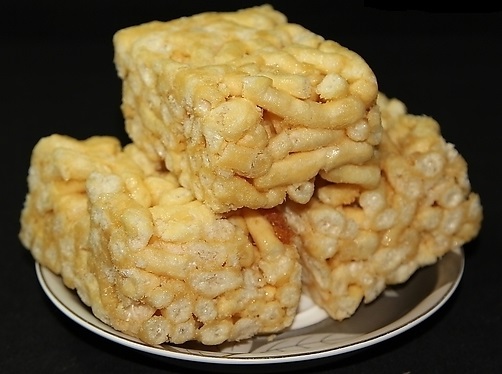
Saqima is a kind of pastry adored by Manchu people of northeast China. They were originally made for sacrificial offerings. After the imperial court of the Qing Dynasty (the emperors of that dynasty were from the Manchu nationality) moved its capital to Beijing, a large number of Manchus settled in this city. This facilitated the spread of Saqima among Han Chinese. it soon became recognised as a Beijing treat and currently as a general Chinese pastry. It is available in China supermarkets in every part of the world with a considerable Chinese community.

Saqima

Basic recipe

The basic recipe is as follows: first mix the flour and egg into noodles, fry them and then blend them with sugar syrup. The next step is to put the sweetened noodles in moulds to form a big block, which is then cut into small square or oblong pieces. Proper saqima taste sweet but not greasy, and should be crisp.

Industrial production

As all traditional Chinese foods, saqima need to go through the process of adaptation to industrial production, to survive in the modern consumption environment. Points for attention for food formulators are: the crispy mouth feel and the flavour and fragrance that should be rich but not greasy. This video shows an industrial production line for saqima.

Help from Nestlé

Hsu Fu Chi (already featuring in a number of other posts in this blog; use the search function to surf to those posts) is one of the more important industrial producers of saqima. Nestlé has a 60% stake in this company and has assisted in developing a recipe and process to increase crispiness in Saqima to draw in younger consumers. The new recipe comprises fried dough, syrup and flavorings – the latter of which could be anything from cheese, seaweed, mango or chocolate. Importantly, it said the fried dough should represent 55-72 wt% (percentage of total product weight); syrup 22-35wt% and flavoring 1.5-5.5wt%. The fried dough is made using high gluten flour and baking powder as a leavening agent and the syrup using brown sugar, sweeteners or a mix. The final syrup has to be made using certain ratios – sugar (10-25wt%); 65-80wt% glucose syrup; 0.21wt% salt and 5 – 12% water.

This is a picture of one of the packaging and the ingredients list as provided by the manufacturer.

Glucose syrup, wheat flour, palm oil, eggs, crystal sugar, milk powder, sesame seed, salt, food additives (sodium bi-carbonate, disodium dihydrogen pyrophosphate, TBHQ).

XFJsaqima

Other innovative producers sometimes add currents or preserved fruit pieces before pressing the blocks to create more variety in flavours and textures. The pictures shows a saqima made from black rice and also containing peanuts.

BlackSaqima

In another post of this blog tea as flavouring I am introducing a tea flavoured saqima.

Saqima with a Western touch: cheese saqima

Hsu Fu Chi has launched another innovative variety of saqima in 2021: cheese saqima, flavoured with Danish cheese.

CheeseSaqima

Specially formulated ingredients

One sign of the maturation of the industrial production of saqima is that a number of food ingredients producers have started developing products specially formulated for this application. One Chinese enzyme producer is marketing a compound enzyme to improve flour for the production of saqima, improving the crispiness of that first bite that is so defining for a good old fashioned (though industrially produced) saqima.

A number of flour mills are supplying wheat flour with a high gluten content for saqima producers.

SaqimaFlour

Peter Peverelli is active in and with China since 1975 and regularly travels to the remotest corners of that vast nation.

What on earth are . . . zongzi?

It has been a while since I posted a ‘What on earth . . .’ blog introducing a traditional Chinese food. So here is a new one.

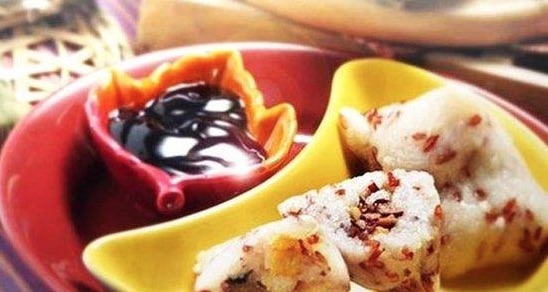
In essence, zongzi are pyramids of glutinous rice with various types of fillings, wrapped in bamboo, reed, or other large flat leaves.

Traditional sticky rice dumplings are eaten during the Dragon Boat Festival, which falls on the fifth day of the fifth month of the lunar calendar (approximately late-May to mid-June).

According to popular belief, eating zongzi commemorates the death of Qu Yuan, a famous Chinese poet from the state of Chu during the Warring States period (5th century B.C.). Known for his patriotism, Qu Yuan tried unsuccessfully to warn his king and countrymen against the expansionism of their Qin neighbors. When the Qin general Bai Qi took Yingdu, the Chu capital, in 278 BC, Qu Yuan’s grief was so intense that he drowned himself in the Miluo river after writing the Lament for Ying. According to legend, packets of rice were thrown into the river to prevent the fish from eating the poet’s body.

Many Chinese still prepare zongzi at home, but it is more convenient for the modern city dweller to buy them from a professional street vendor.

Street

Zongzi are currently produced by machines, though they still cannot be produced completely automatically. To cope with the enormous demand during the season, zongzi makers simply hire more people to make them, as is shown in this video recorded at Wufangzhai (see below).

Standard recipe

Makes 20 zongzi

Ingredients

  • 40 large dried bamboo leaves (2 for each zongzi)
  • 20 long strings (for binding leaves)
  • 1 kg long grain sticky rice
  • 2 kg pork belly, sliced into 3 cm cubes
  • 10 salted duck’s egg yolks
  • 40 small dried shiitake (black) mushrooms
  • 20 dried, shelled chestnuts
  • 10 spring onions, cut up into 1 cm lengths
  • 500 g dried radish
  • 100 g very small dried shrimp
  • 200 g raw, shelled peanuts (with skins)
  • 1/2 cup soy sauce
  • 1/4 cup rice wine
  • Vegetable oil
  • 5 cloves of garlic, roughly crushed
  • 1 teaspoon black pepper
  • 1-1/2 teaspoons sugar
  • 2 star anise
  • 1 teaspoon five spice powder

Procedure

Preparing the ingredients

  • Soak rice in water for three hours, drain.
  • Stir-fry pork for a few minutes. Add chestnuts, soy sauce, rice wine, ground pepper, 1 teaspoon of sugar, star anise and five spice powder, bring to a boil, cover and simmer for 1 hour. Remove pork and chestnuts from liquid and set aside.
  • Boil peanuts until tender (30 minutes to 1 hour).
  • Soak mushrooms until soft. Clean and trim stalks. Cut into 2 or 3 pieces. Stir-fry with a little liquid from pork stew.
  • Halve duck egg yolks.
  • Chop up dried radish finely and stir-fry with 1/2 teaspoon sugar and garlic.
  • Stir-fry spring onions until fragrant.
  • Stir-fry shrimp for a few minutes.
  • To a large wok or bowl, add rice, peanuts, radish, shrimp, spring onions, a little liquid from the stew mixture and 2 tablespoons of oil. Mix well.

Wrapping

  • Soak bamboo leaves in warm water for 5 minutes to tenderise, before washing thoroughly in cold water.
  • Wet strings to make them more pliable.
  • Take 2 leaves with leaf stem or spine facing out. Overlap them lengthwise in inverse directions (pointed end of one leaf facing the rounded end of the other).
  • With both hands hold leaves about 2/3rds of the way along their length. At that point bend them so that they are parallel lengthwise and also overlap. This should produce a leaf pouch that you cup firmly in one hand.
  • Add a small amount of rice mixture, compressing with a spoon.
  • Add 1 piece each of pork, chestnut, mushroom, duck egg yoke.
  • Add more rice until you have nearly a full pouch. Compress firmly with a spoon.
  • Fold leaves over the open top of zongzi, then around to side until zongzi is firmly wrapped. Zongzi should be pyramid shaped with sharp edges and pointed ends. Trim off any excess leaf with scissors.
  • Tie up zongzi tightly just like shoes laces with a double knot. Normally they are tied to a bunch of zongzi.
  • Steam for 1 hour, unwrap and serve.

Diverse flavours

Traditionally, types of zongzi are divided into savoury and sweet.

  • Sweet zongzi flavours include plain zongzi, red bean zongzi, horse bean zongzi, date zongzi, rose zongzi, melon zongzi, red bean and lard zongzi, and date paste and lard zongzi.
  • Savoury zongzi flavours include salted pork fat zongzi, sausage zongzi, ham zongzi, dried shrimp zongzi, and diced meat zongzi.

Then there the many regional varieties.

Guangdong

Generally, Guangdong zongzi are large in size and have special shapes. They are either sweet with walnuts, dates, or bean paste as a filling, or savory with ham, egg, meat, or roast chicken as a filling.

Fujian

Roast pork zongzi and soda zongzi from Xiamen and Quanzhou are famous as two typical types of Fujian zongzi. To make roast pork zongzi, use top-grade glutinous rice and fill with roast pork, mushrooms, dried shrimp, lotus seeds, or braised pork soup. Locals often eat these zongzi with garlic, mustard, red chili sauce, and other condiments. Soda zongzi are made of glutinous rice and soda lye. After steaming for several hours, they are best cooled and refrigerated. When eating soda zongzi, people often add honey and syrup. Bean zongzi, very popular in Quanzhou, have a mixture of beans and glutinous rice as a filling.

Zhejiang

Ningbo zongzi, in the shape of a quadrangle, include many varieties, such as soda zongzi, red bean paste zongzi, and date paste zongzi. The most famous are soda zongzi, made of glutinous rice soaked in soda water, then wrapped in yellow reed leaves.

Jiaxing zongzi, in the shape of a triangular pyramid, use fresh meat, red bean paste, or eight treasures (choice ingredients of certain special dishes) as fillings. When wrapping this kind of zongzi, people put a small piece of fatty meat into the glutinous rice.

Sweet tea zongzi use stewed sweet tea to soak the glutinous rice. This type of zongzi have a bright color, a soft taste, and a sweet flavor. Generation after generation of people in the western mountainous area of Zhejiang Province have followed the custom of boiling zongzi with sweet tea, boiling rice with sweet tea, and cooking rice porridge with sweet tea. Even in the famous novel, Dream of Red Mansions (one of the four most famous classical literature works of China), sweet tea zongzi and rice are mentioned several times.

Beijing

Beijing Zongzi, a representative type of zongzi in north China, are small and rectangular. In the countryside people are accustomed to making zongzi using jujube (date) and sweet bean paste as fillings.

Guangxi

People in Guangxi prepare zongzi in the shape of a big pillow, each one weighing over half a kilogram. People in the Guilin region prefer small, pillow-shaped zongzi. People in northern Guilin make zongzi in the shape of a dog’s head. Also the fillings used differ from one place to another. People around Guilin city often add a little baking soda to the filling to make the zongzi tastier, while people in Quanzhou County (northeast Guilin Prefecture) like to soak the glutinous rice in straw-ash water for additional flavoring.

Shanghai

Shanghai zongzi have a variety of shapes and fillings. Vegetarian zongzi made by Gongdelin Vegetarian Restaurant include mushroom zongzi, broad bean zongzi, and red bean zongzi. Some types of Muslim zongzi are offered by the Muslim restaurant Hongchangxing. Its beef zongzi are the most popular among locals.

Fashionable zongzi

Just like the moon cakes, zongzi have been adopted by many hotels and restaurants a prestige products, which innovative fillings and nice gift packaging. Many of Beijing’s five-star hotels offer a mixture of traditional and innovative versions of zongzi. There are traditional red jujube and mashed bean fillings, along with fresh pork and egg yolk, and five-spice beef stuffing. Creative combinations include milk and eggs, and shiitake mushrooms with chestnuts. Rice in the dumplings is supplemented with yellow rice, taro and “eight treasures” (babao, as in babao porridge), referring to a mixture of healthy seeds and fruits. The pictures show two types of such signature zongzi.

Zongzi1Zongzi2

Cashing in on the vegetarian trend

Snack maker Bee & Cheery (Baicaowei) entered the zongzi market with zongzi containing plant-based meat in April 2020. This launch fitted in the booming interest in artificial meat at that moment.

The industrial age

Zongzi do not want to lag behind other traditional foods like dumplings, moon cakes or mantou in entering the age of industrial production. A special feature of industrial zongzi is that the state regulations forbid using any additive like preservatives or colorants.

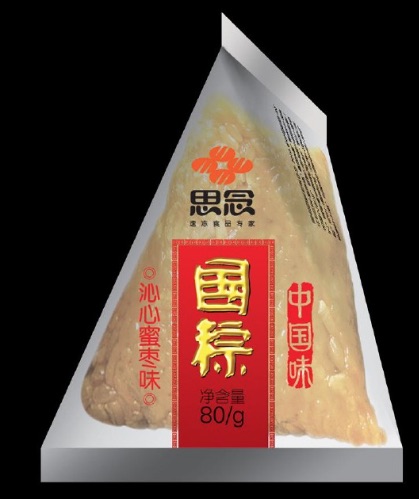
A pioneer producer is Sinian (Zhengzhou, Henan) that has already been reported on in several of my posts (please use the search function of this blog). Sinian has introduced the term ‘national zongzi’ (guozong). This may sound quite pretentious, but so far no one has challenged that designation. Its packaging also carries the phrase ‘Chinese flavour (zhonguo wei)’. As Sinian is not allowed to work with texturisers and artificial flavours, or sweeteners, the company using selecting the best natural ingredients as its main means of innovation.

SinianZongzi

In spite of the above mentioned regulation, ‘zongzi improvers’ are available in China. The producers are not liberal in revealing the ingredients of their compounds, restricting themselves to generic substances:

Emulsifiers, edible gum, phosphates, modified corn starch

The following table shows an industrial recipe for ‘eight treasure (babao) zongzi.

Ingredient Parts
Glutinous rice 1000
Water 15
Improver 3
Sugar 70
Candied green beans 20
Candied black beans 20
Candied peas 20
Candied white beans 40
Candied red beans 100

The beans and peas are all candied versions. Interestingly, this recipe is much simpler than the above mentioned DIY recipe. The source of this recipe may have held back some flavouring ingredients, but this may indicate the effect of the improver.

Another innovator is Shurongbang, also located in Zhengzhou. Shurongbang has developed sausage shaped zongzi, packed in metal foil, that can be baked in the same way (and using the same equipment) as hot dog sausages. The main raw material used by this company is sweet potato.

SRBbaking SRBopened

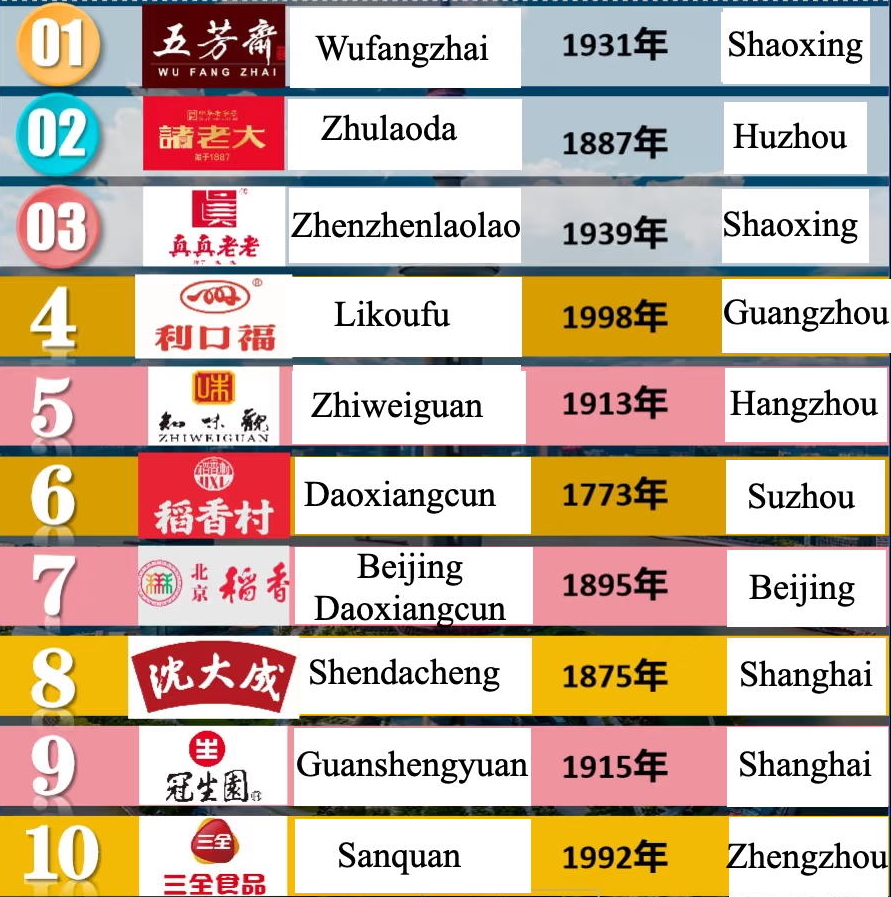
Top 10 Zongzi of 2025

The following table lists the top 10 most popular zongzi of 2025 selected by the industry.

Among these brands, Sanquan appears in several posts of this blog (use the Search function of this site) as top producers of frozen snacks. Daoxiangcun in the one on mooncakes. The locations indicate that zongzi are a product of the central and southern coastal regions. Beijing Daoxiangcu is a spin-off of the older mother company.

China’s top producer of snack food Sanquan (Zhengzhou, Henan) has launched a series of zongzi of its own in 2018, adding several novel flavours for this traditional food, including coffee, pineapple, coconut, and grapefruit.

Fashionable zongzi


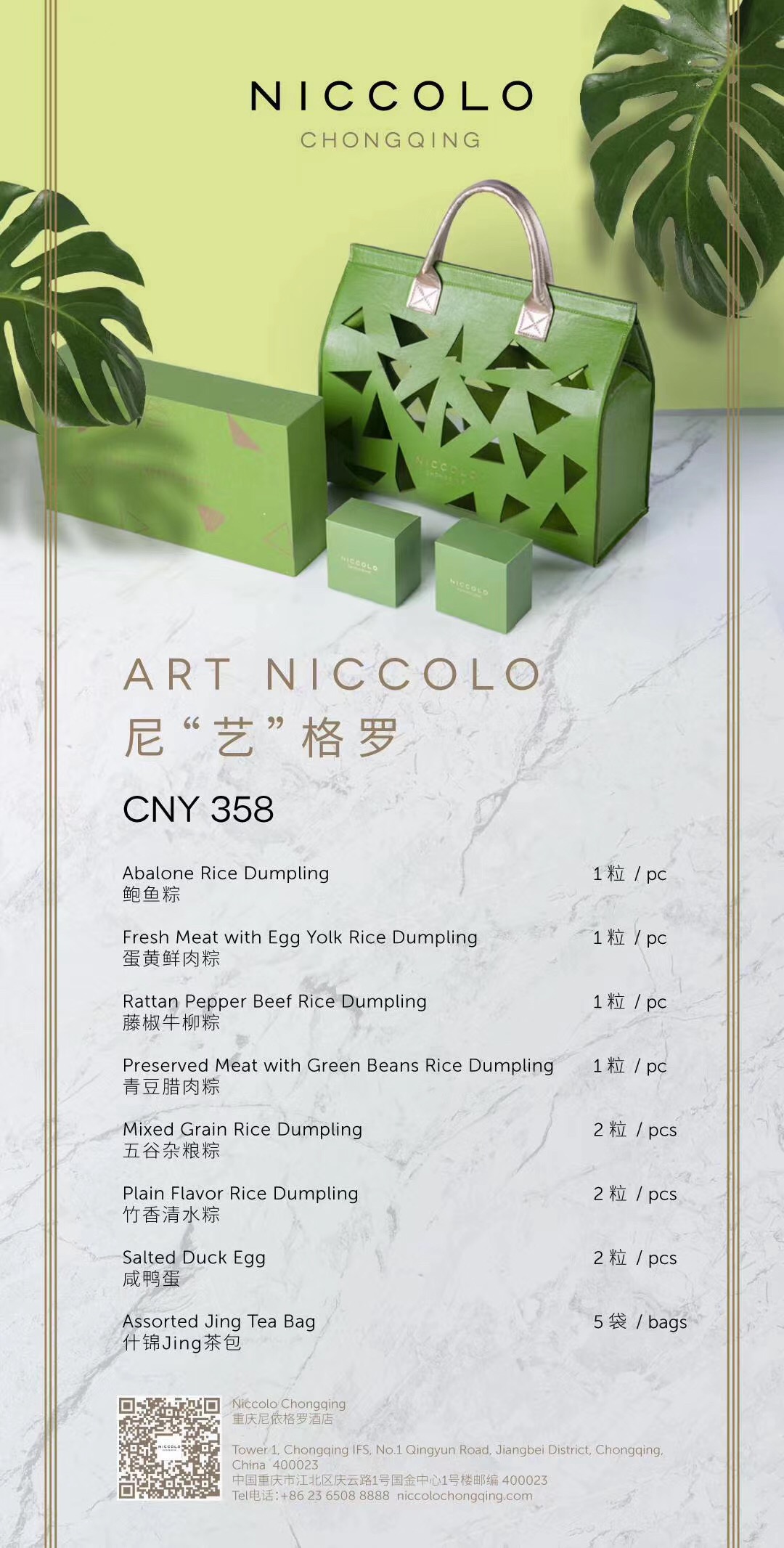
It is interesting to see how traditional Chinese culture is regaining recognition, also in areas where people used to look down on things of the past. High end fashion stores, selling brands like Prada, started in China by positioning themselves as part of a modern, i.e. Western, life style. The Chinese affluent still like to show off their branded clothes and accessories, but are getting proud again of being Chinese. The high-end Niccolo Hotel, in the mountain city of Chongqing has started selling its own fancy zongzi in 2020. Interestingly, Niccolo is translating the product as ‘dumpling’ in English, a term reserved for another traditional Chinese food.

Famous brand looking for robot

Wu Fang Zhai, a time-honored brand of zongzi, is based in Jiaxing of Zhejiang province. Founded in 1921 with a small workshop, the enterprise now produces over 1.8 million zongzi each day at peak times during the Duanwu Festival.

The custom of eating zongzi during the festival in Jiaxing dates back to the Ming Dynasty (1368-1644). As the technique for making zongzi in Jiaxing gradually developed, zongzi produced here became more popular around the country, especially meat zongzi. The technique for making of Wu Fang Zhai zongzi was placed on the list of national intangible cultural heritage in 2011. While an automated assembly line has replaced much of the manual work, the part of wrapping zongzi is still done by hand. Recently, the company announced that it is looking to spend RMB 10 million to develop robots that can replace humans to make zongzi. The materials for making zongzi are specially chosen from high-quality sources. The rice is from Northeast China’s Heilongjiang province, the leaves wrapped around the zongzi are from high mountains in Jiangxi province, and the meat filling is made of selected pork hindquarters from exclusive pig farms in Henan and Zhejiang provinces.

Instant zongzi

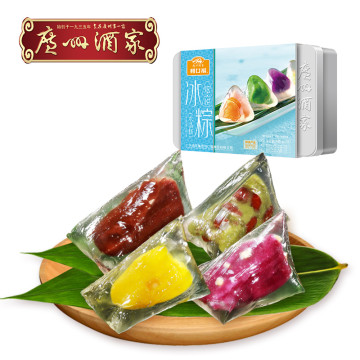
Likoufu, a subsidiary of the Guangzhou Restaurant Group, has developed an instant type of zongzi. It needs to be stored at -5 to 0 degrees. Consumers can eat it immediately after buying. Chinese consumers will need some time to get used to eating zongzi cold, but in the subtropical climate of Guangzhou, instant zongzi can be perceived as an alternative for

Big business online

Zongzi have also entered the cybershelves of the various online retail platforms. 2018 was a top year in that respect. Tmall has sold 108 mln zongzi during around the 2018 Duanwu Festival. Online business facilitates compiling statistics. Competitor Jingdong reports that meat-flavoured zongzi made up 56% of the zongzi it sold, date-flavoured 23%, bean-flavoured 13% and chestnut-flavoured 6%.

Combine them with other traditional foods

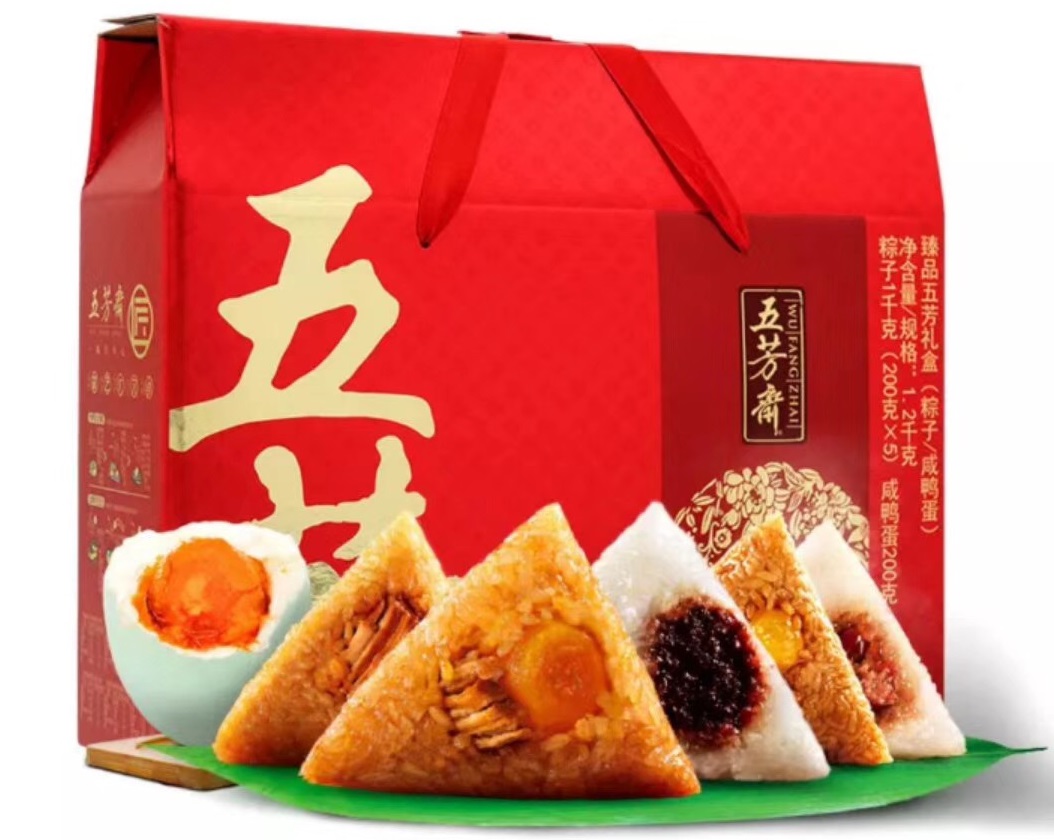
Wufangzhai (Jiaxing, Zhejiang) has launched a zongzi pack in 2018 that contains 10 zongzi and 4 salty duck eggs. I am not sure if this will help sell more zongzi, but at least it is innovative.

Peter Peverelli is active in and with China since 1975 and regularly travels to the remotest corners of that vast nation.

Exploring China’s Traditional Snack Foods

Earlier in this blog I posted an item about leisure food, a typical food group in Chinese food industry statistics. This is a very broad range of foods that Chinese eat while on holiday, sitting in their favourite chair in front of the TV, in the stadium watching their team play, and virtually all other occasions that they are not eating a proper meal.

The Chinese do have their own traditional snacks, which is a subset of the leisure foods. In the light of the over general nationalist trend in China after President Xi and his new crew rose to power, Chinese are also getting more aware of ‘their own’ traditional snacks.

However, the same applies to those snack foods as I reported earlier about a food like instant noodles, or steamed bread (mantou): they need to be packed in pocket-sized easy to carry and ready to eat portions, while preserving the original texture, taste and flavour.

That is a major challenge for the Chinese food R&D community, but it is worth the effort. The production of traditional Chinese snack food has increased from approximately 1.93 million mt in 2004 to almost 3.88 million mt in 2014. The market value rose from RMB 54.008 billion to RMB 387.532 billion.

In the remainder of this post, I will list the categories of traditional Chinese snack food as usual distinguished in Chinese statistics.

Nuts, seeds and other roasted goods

Nuts do not need further explanation. Roasted goods (chaohuo) are melon seeds, pine seeds, peanuts, and other plant seeds that are roasted to increase flavour and digestibility. The value of this market segment is expected to reach RMB 105.3 billion in 2020.

NutsSeeds

China has produced a total of 4,506,500 mt of seeds in 2018; broken down in the following table.

Type volume
Sunflower seeds 3,250,000
White melon seeds 711,500
Sweet melon seeds 545,000

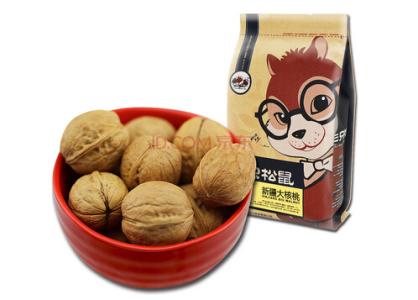
An interesting company to watch in this business is Three Squirrels (Sanzhisongshu). Three Squirrels is the pin-up kid in China’s snacking segment. Launching in 2012, it took just 65 days to become the top nut seller on Tmall and today it’s China’s best-selling food brand online. The company’s turnover has grown from RMB 924.473 mln in 2014, RMB and 2.043 bln in 2015 to RMB 4.42 bln in 2016. Most of this success is due to its online sales and its vast network of region distribution centres. It has achieved this all while charging a premium above most of its competitors.

Three Squirrels plays to Chinese consumers’ love of cute furry animals by cleverly incorporating its cartoon mascots into everything it does, from branding to customer service. Images and videos of the squirrels attract engagement rates far beyond most of its competitors online. It has created an army of advocates who earn social credit filling their WeChat feeds with images of their mascots, selfies with their products and even positive experiences with customer care. Three Squirrels also transforms consumption into an experience providing nutcrackers and a suite of other add-ons.


The latest stunt by Three Squirrels is linking up with Monlot, a Bordeau-based vinyard acquired by the Chinese movie star Vicky Zhao. Check out this picture of Monlot Three Squirrels. It is an interesting ruse to embed a Chinese-owned foreign vinyard in the local food industry.

Three Squirrels has set up a plant in Cambodia in 2025.

Some nuts are assigned medicinal qualities in traditional Chinese medicine. An example is the wild almond (Semen Armeniacae Vulgaris; ‘shanxingren (mountain almond)’ in Chinese). They are said to have antipyretic functions and help bowel movements. A noted producer of wild almonds is Fangxu Food (Beijing).

A recent trend in the Chinese nut market is small packagings. more “one day pack” nuts have appeared in the market since 2016, and accounted for 25% of the market size in 2018. First tier and second tier cities made up nearly 45% of the entire “one day pack” nuts consumer market of 2018. and consumers born between 1990 and 1995 formed the bulk of the consumers.

Preserved fruits

I already dedicated a post one of them: huamei. Preserved fruits fall under foods that have been invented in times that there was no cooled storage or other way to preserve fruits. They have become part of the local diet particularly in North China, with its cold winters. The northern preserved fruits are drier; those in south stickier. The value of this market segment rose from RMB 17.014 billion in 2004 to RMB 105.066 billion in 2014.

PresFruits

Dried and preserved meat

The top product in this group is beef jerky, although shredded pork (rousong) could be almost as big. The latest invention in this range is a series of duck products (tongues, feed, necks, gizzards, hearts) that I introduced in my post on Peking Duck. The value of this market segment rose from RMB 7.763 billion in 2004 to RMB 45.289 billion in 2014.

DriedMeat

Bean products

Chinese love to chew on all kinds of dried and roasted beans, so it has become a separate category of snack foods. The most famous are the fennel flavoured beans (huixiangdou) that have been eternalised by Lu Xun’s short story Kong Yiji. They are small green soy beans toasted with cinnamon, fennel and other spices. On the basis of huixiangdou, a Shanghai shopkeeper invented a new variety called wuxiangdou ‘five spice beans’. They are broad beans with a firmer texture, a white skin, and white pulp. They are roasted with five ingredients: fennel, citrus, cinnamon, sugar and essence, to reach a unique mix of flavours. The value of this market segment rose from RMB 5.890 billion in 2004 to RMB 46.204 billion in 2014.

ProcBeans

Other

The bulk of the remaining traditional snacks are dried or wet pickled or preserved vegetables. The typical way to preserve vegetables is by fermentation. An example, zhacai, has been introduced in an earlier post.

DriedVegFrt

Motivation to buy snacks and pastries

The following graph shows the various motivations Chinese consumers gave for buying snacks and pastries (d.d. 2024).

Snack as fast food

Here is a table that shows the development of the Chinese snack fast food market for the period 2019 – 2025; 2025 being an estimate.

Peter Peverelli is active in and with China since 1975 and regularly travels to the remotest corners of that vast nation.

The Rise of Slow Food Movement in China

The news about China in the Western media is dominated by stories of rapid growth and lightening-speed developments. When you return to China after you last visit, that was half a month ago, you will already notice changes, in particular in the country’s first and second tier cities.

This has not been a totally positive development and that is especially evident in the food industry. Plagued by food safety incidents, Chinese consumers, many of whom change cell phones every half year, to keep up with the latest fashion, are getting nostalgic for the days that all food was safe to eat, that you could only buy fresh fruits and vegetables of the season.

In a previous post, I have collated a number of reports on Community Supported Agriculture in China. This week’s post is a continuation of this theme, focussing on Slow Food.

Slow down, Shanghai

In recent decades, speed has been the name of the game in Shanghai, whether for business, buildings, fashion and food. At the launch of Slow Food Shanghai in December 2011, through presentations from more than 20 farms, restaurants and producers, it was clear Shanghai is increasingly making sustainability a priority.

In some ways, the metropolis is starting to see things slow down. ‘When I was in school, my teacher told me, ‘We have a big country, and we can’t waste things,’‘ recalls Frank Wang, the training manager for all chefs at the Grand Hyatt Shanghai.

Once again, however, Wang sees people starting to save resources. In his classes, he teaches students to use resources very carefully. For example, cooks can save parts of ingredients that don’t look good or are too tough to the touch for use in stocks. ‘Whether Chinese or Western cooking, this is common in both,’ he says.

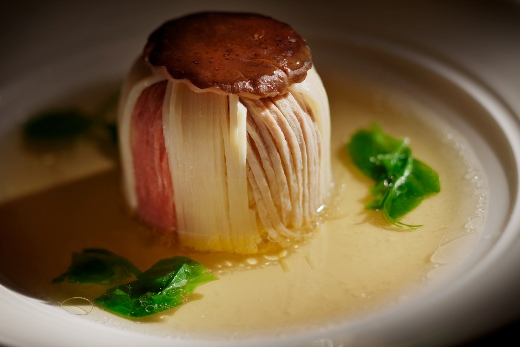
Fang Chao, the chef at Le Sheng, a contemporary Shanghai restaurant that opened in November 2011, said he is considering his cooking approach more than he did 10 years ago. He has become concerned about the conservation of wildlife, and though it is common to sell shark’s fin in a restaurant serving a traditional Shanghai menu, he and David Laris, the chef behind the concept, have eliminated the dish from their menus. Fang tries to produce food that feels ‘lighter, cleaner and in some cases, a bit more delicate,’ while keeping dishes and flavors authentic. He cuts back on oil, salt and sugar, even though these are ingredients that have long-defined the local cuisine.

Vegetarian alternatives, like fake gluten-based crab meat or the rarely-seen vegetarian dumplings, are included on the menu. Braised crab meat and fish belly, a traditional dish, has been re-imagined. The original cooking method called for soaking the ingredients in oil followed by low-temperature frying. ‘I now prefer to soak [them] in water to avoid this dish being too greasy,’ he said.

At the Grand Hyatt, Wang trains staff to be frugal and conservative with energy and materials. ‘If they leave the kitchen, they need to turn off the light, the fire, the water,’ he said.

For the most part, these chefs believe the sudden flood of attention on green food in Shanghai is a response to food safety scares in recent years. ‘This made the average person more aware and caused more people to at least wonder where the food they are eating may come from,’ Fang said.

After the Slow Food Shanghai chapter was organized, initial research showed that the majority of focus group respondents agreed that they would make a real effort to obtain good, clean and fair food. As Chinese disposable incomes increase along with these trends, people are willing to spend more money being picky with what they consume.

China’s globalization has exposed its citizens to concepts already popular in other parts of the world. These chefs work in cosmopolitan environments and are exposed to the growing awareness of sustainability.

Restaurant Kush aims to use this experience as an opportunity for cross-cultural exchange and helping people understand that we’re all living on this world and must learn to work together. The all-Chinese team tries every new dish that is added to the menu, and even those that are not vegetarian care less about cooking with meat or not.

In a country that has experienced unheard-of upheaval and change in a short period of time, these chefs face the future with open minds. Fang thinks it’s possible to cook classic Chinese dishes in new ways because the idea of what is ‘classic’ is also always evolving.

SlowFoodDish

Fast food notion under attack

Pushing for more sustainable, healthy, organic food, and pushing away from an imported, urban fast-food culture is not easy in Beijing.

But recently, three events have at least signalled the start of the movement: The setting up of the Beijing chapter of Slow Food, the commemoration of Jamie Oliver’s Food Revolution Day and the inclusion of a ‘Best Sustainable Restaurant’ category in city guide magazine Time Out Beijing‘s annual food awards.

Kerstin Bergmann, a co-leader of the Slow Food Convivium in Beijing, says that since milk scandal of 2008, the demand for clean organic food in Beijing has been growing and that more people are interested in what they are putting into their mouths.

Originally from Italy, the Slow Food movement stands for three things – good clean food sold at a fair price for both consumer and producer and a push towards eating local, all of which is finding empathy in China.

Zhang Zhimin, a local legend of organic sustainable food in China, says one of the biggest reasons why she started a farm was her own concern about food safety. ‘I was getting sick from this chemical that was used in produce,’ says Zhang. ‘So I figured I would try to grow some of my own food.’ Zhang started her farm, God’s Grace Garden, in 2001. The original concept was to grow her own food, but she started giving away extra crops to friends and family. Zhang says her friends and family kept prompting her to start selling, telling her she could make money with her vegetables.

Unwilling to convert her project into a business, Zhang decided to turn her farm into a membership co-share model. Members pay monthly dues and get a share of the produce but are required to take an active role in production.

Dannan Hodge, the Jamie Oliver’s Food Revolution ambassador in Beijing, also works with the Beijing farmer’s market association. ‘The organic revolution here is in its infancy stage but it’s growing quite quickly. It’s still predominantly marketed to locals, so part of what we’re trying to do here is to bring in farmers and vendors capable of providing an English-speaking service to foreigners.’ The Beijing farmers market association has over 300,000 fans.

The main problem is spreading the message. The proponents of Slow Food all point out that the most important thing in getting people involved is education. In the past, people used to spend 90% of their income on food, but now it’s become 9% on food. When they buy things like cell phones, they are willing to spend. People are willing to pay more when it’s convenient.

To Zhang and Hodge, the most important step moving forward is to continue educating consumers and making them co-producers of their food, holding individuals accountable for what they eat.

SlowLunch

Slow and steady, the Chinese way

It is not a strange innovation imported from abroad. It is the natural Chinese way to eat local, eat slow and eat seasonal. What has changed is the recent waves of intra-provincial migration as labor demands and geographical dislocation move people around.

But Chinese chefs are confident that all these will have little impact on the preservation of regional and traditional cuisines.

‘Most Chinese, when they move to work and live in another city, try to locate places where they can get a taste of home,’ says Fu Yang, general manager and executive chef of Le Quai, a Chinese fusion restaurant based in Beijing.

‘In Beijing, for example, there are less and less real ‘local’ Beijingers. But people still look for traditional Beijing foods.’ Fu’s restaurant became a member of the Slow Food Movement in 2004.

He says that while expatriate and foreign customers recognize that status, many Chinese diners do not understand the meaning of the snail logo on the eatery’s facade. He admits, though, that the restaurant’s Slow Food member status has helped create media awareness and good publicity.

Some chefs think the influx of migrants from other provinces help diversify the culinary scene. ‘Restaurants have become increasingly fusion now,’ says Qu Hao, China’s national level cuisine master. ‘In Beijing, for example, there used to be mostly Shandong cuisine, but now there are Sichuan and many other food styles.’

Qu runs a training academy for chefs in China and is schooled in traditional Shandong cuisine, the mother lode for Imperial style dishes. But his experiences include a range of other cuisines, including most of the major culinary styles in China. For example, Qu says, the crisp celery from Shandong’s Majiagou and ‘iron pole’ Chinese yam from Henan province are two vegetables that have caught the attention of chefs in Beijing, and this has helped value and productivity.

Fu says his restaurant buys most ingredients from local producers, and at least a third are organic. ‘Food safety concerns have made me even more determined not to use any dubious ingredients, and trade only with major suppliers,’ says Fu.

At a recent event at the Beijing Organic Farmers’ Market, local gourmet Shu Qiao stressed the importance of preserving heirloom food and produce that face gradual extinction. The media is also playing its part in pushing this awareness.

Qu says the Slow Food Movement may attract a certain target group, but most young Chinese face pressures at work and demands on time. For them, a quick meal is the answer and many eat out instead of taking the time to cook at home. For that reason, the Slow Food Movement as it is interpreted in the West may take longer to establish its foundations here.

Slow Food Festival in Chengdu, September 2017

Chengdu (Sichuan) will host the seventh Slow Food International Congress Meeting this September, expecting to draw the public’s attention to the sustainable food industry and to eating healthily. Lorenzo Berlenghis, vice-president of Slow Food International, said it is the first time the festival, which takes place every four years, has chosen an Asian city for its venue, after careful evaluation. Chinese philosophy says that food is the first essential of human life, and the same rule applies across the world, Berlenghis said. “Slow Food International has always respected the endeavor Chengdu has made in preserving Chinese culinary culture and local ingredients,” he said.

During the event, 600 delegates from over 90 countries and regions, including experts from global enterprises, as well as other leading figures and scholars, will bring their experience to Chengdu, holding mindful conversation and dialogues on slow food and to shed more light into how to push the industry forwards. “Food is a vital part in economic innovation,” said Yin Jianzai, deputy head of Chengdu Commission of Commerce. “We will spare no effort to help the Slow Food International Association to hold this event in Chengdu, and I believe the city will bring new perspectives to the slow food festival.” Yin said at the same time, the city will hold its food and travel festival to give guests a better understanding and experience of the local food and culture.

“I have been to Chengdu twice and I love it very much,” said Huang Yongyue, vice-consul general of the Chinese Consulate General in Milan, Italy. “I remembered when I was there in 1990 and I sat in the tea house with a pot for the whole afternoon. It was really nice.” Huang added that Chengdu has a perfect combination of fast development and a slow lifestyle, and he would love to come back to the city, walk down its streets and try its famous foods. He also wished that Chengdu can play an important role in the Belt and Road Initiative, and lead western China to open up to the rest of the world.

Agreement with China to make way for the red ecolabel

During his current visit to China, Danish Minister for Environment and Food, Esben Lunde Larsen, signed a five-year cooperation agreement in Beijing on control of organic products early May, 2017. The goal of the agreement is to pave the way for the Chinese to recognise the Danish government control and inspection concept. The costs of flying Chinese experts to Denmark and of managing the large numbers of technical certificates are a huge burden on small and medium-sized Danish companies. They represent a barrier to exports to China. However, it is hoped that now that the deal has been signed, Danish organic exports will now meet fewer obstacles. Under the agreement, Denmark and China will also be exchanging knowledge and experience. Furthermore, experts will be training each other’s personnel to establish a mutual understanding of the two countries’ approach to producing organic food products and effective control of organic products to avoid duplicate controls by both Danish and Chinese authorities in the future.

Accelerating new projects

A food tech accelerator hopes to help tackle the new challenges in agriculture in China. Matilda Ho founded of Bits x Bites in Shanghai in 2017. Ho, originally from Taiwan, worked as a consultant for BCG and Ideo on Chinese food projects before launching her own food startup, Yimishiji, in 2015. The startup is an online farmers’ market that connects Shanghai consumers with chemical-free produce delivered by electric bikes.

One as-yet-unnamed startup in the accelerator now is developing noodles and other foods made from silkworm flour. The worms are a byproduct of the silk industry–making a pound of silk can require as many as 3,000 cocoons with insects inside. These are occasionally served in restaurants, but most of them are simply discarded. However, they can also be a healthy source of protein.

Another startup, Frugee, is making cold-pressed, high-pressure pasteurized juice from fruits and vegetables, which it markets as an alternative to eating salad. Chinese prefer prepared food, preferably hot, but at least marinated or pickled, and still find it hard to get used to the Western habit of eating raw vegetables In fact, such juices are currently very popular in Japan, where young busy people seem to drink more vegetables that they eat them. Better to drink vegetables than not getting enough of them. Many Western nutritionist may frown when reading this, but it is a discussion similar to that about public nutrition introduced in another post of this blog.

The third startup, Alesca Life, produces hydroponic farms in shipping containers and the software to run them and is already installing systems in both Beijing and Dubai, focusing first on hotels that want to grow produce for their restaurants. Hydroponic and aeroponic farming is becoming more common in some regions of China, and Ho thinks it will quickly grow–partly because China has to feed around 20% of the world’s population with only 7% of the arable land. Interestingly, this also seems to follow a trend that has started earlier in Japan.

Ho is hoping that as more food tech companies around the world hear about the accelerator, they’ll be interested in bringing their own solutions to China. She also hopes to begin to change the food industry as a whole. Already, major Chinese food companies are visiting the startup each week, exploring ways to start their own food incubators or work on projects in the space. But Ho says that much greater participation is needed.

Slow food in Sichuan

The International Slow Food Movement has signed a partnership agreement with Sichuan University in 2017. It makes a lot of sense for the Movement to use the region of origin of China’s most famous regional cuisine as its foothold in the region. It is the best choice for this type of activity as Sichuan people take food very seriously and eat their meals slowly to increase the time of enjoyment.

1000 ‘Slow Food Villages’ within five years

The head of the China branch of Slow Food International plans for the development of 1000 “Slow Food Villages” across the country over the next five years. “In recent years, China has shifted towards a greener, environmental and ecological model of growth so the conditions are now right for us to get more involved in Slow Food,” Sun Qun, secretary general of Slow Food Great China, said after the close of the annual Slow Food International Congress, which was held in Chengdu, capital of southwestern China’s Sichuan province, from September 29 to October 1, 2017. As a country, China has been involved in the movement for just two years, but the local branch has big plans for the future. Sun said the concept of the Slow Food Village would be a first for China, and the community of Anren, in Dayi county near Chengdu, had been selected as the pilot for the scheme. Detailed plans for the development of Anren would be released before the end of this year, Sun said.

Peter Peverelli is active in and with China since 1975 and regularly travels to the remotest corners of that vast nation.

Ready-to-Drink Coffee in China: A Disruptive Trend

Coffee has been reported on before in my post on Pu’er. People have been talking about the Chinese market for ready to drink coffee a lot since then. Apparently it is a topic that is on people’s minds, so I have bundled their remarks in this dedicated post.

Coffee vs tea beverages

The following table shows the turnover of tea beverages and coffee beverages in China in the period 2019 – 2024, also indicating the ratio between the two. It is clear that coffee is slowly but definitely winning this battle. However, these data also show that the total market of ready-to-drink tea and coffee is growing steadily.

An emerging coffee nation

China is gradually emerging as a coffee producing nation. The country’s current annual production is approximately 100,000 mt, 98% of which takes place in Yunnan, the home province of Pu’er, and the remaining the island province of Hainan.

By the end of 2010, China had 135 coffee processing companies, the geographic distribution of which is can be found in the following table.

Region companies
Shanghai 37
Guangdong 26
Yunnan 18
Beijing 17
Hainan 11
Other 26

This shows that the processing still mainly takes place in the most developed regions and not in the locations where the coffee is grown. However, the Pu’er post shows that the main multinational players have set up shop in Yunnan.

The Chinese have never acquired a habit of brewing coffee at home, which creates a fertile ground for two types of products: coffee shops where you can enjoy your favourite brew (see my post on that market), and Ready To Drink (RTD) coffee products, introduced in this post.

Applying the Chinese instant tea model to instant coffee

Between 2008 and 2013, instant tea has been the driving force in the Chinese tea market, increasing sales by USD 1.7 billion. To date, the popularity of instant tea is almost entirely a Chinese phenomenon, as China accounted for 92% of Asia-Pacific’s instant tea sales in 2013. Instant coffee on the other hand, is immensely popular throughout the region, with China accounting for just 15% of the overall market in 2013. As instant coffee shares many of the attributes that have driven the success of instant tea in China, namely the replication of foodservice options, flavour malleability, convenience, and a young consumer base, applying the innovative packaging of instant tea to coffee may spell further success for Asia’s already booming instant coffee market.

Instant tea in China is composed almost entirely of instant ‘milk teas’ that aim to replicate the sweet flavours of popular street stall/kiosk and café operators like Happy Lemon, Jack Hut, and ChaTime. Popular flavours include red bean and jasmine green, while some also include bobas (tapioca pearls found in bubble tea) for added texture. To make the beverage accessible through retail channels, manufacturers use single-serve packaging of on-the-go paper cups filled with a sealed pouch of instant tea and a straw.

The sweet flavour profile of these milk teas, and economical price tag compared to their on-trade equivalents, makes them particularly popular with younger Chinese consumers. The accessible format and price of instant tea enables young consumers to partake, albeit indirectly, in fashionable foodservice.

Aware of the influence of younger demographics, Chinese manufacturers including the Guangdong Strong and Zhejiang Xiangpiaopiao (2023 turnover: RMB 362.5 billion) are deliberate in their marketing, positioning the products specifically to Chinese youth, through fun packaging, and celebrity endorsements. Xiangpiaopiao is awaiting approval for its IPO before the end of 2015.

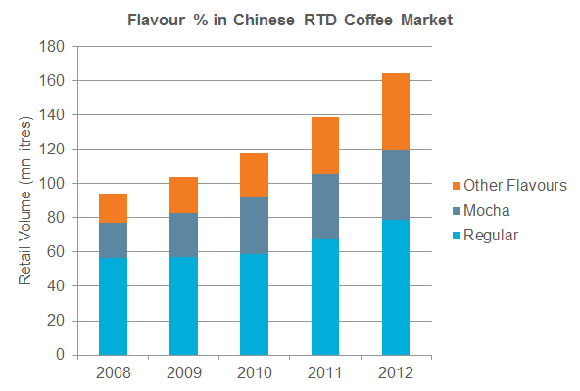
ChineseRTDcoffee

Is China the future for instant coffee?

In the past decade, the instant coffee market has actually expanded at rates of 7 to 10% a year, according to the Global Coffee Report; the International Coffee Organization projects a 4% global volume growth between 2012 and 2017.

The country that historically drank about two cups of coffee per year per person is now the fourth-largest global market for ready to drink coffee in terms of volume. The reason? Convenience. A 2012 poll found that 70% of Chinese workers said they were overworked and more than 40% stated they had less leisure time than previous years. Plus, most new buyers are used to boiling water to make tea, often owning just a teapot and not the appliances needed to make a fresh pot of coffee. By 2017, the Chinese RTD coffee market is projected to increase by 129% in volume. A recent study estimates that the value of the Chinese RTD coffee market will be RMB 18.6 bln by 2020.

Like many food innovations, the origin of instant coffee has several claimants.

Instant coffee is tapping into a new market: tea drinkers. As of 2013 in Great Britain, tea bag sales dropped 17.3% while sales of Nescafé instant coffee went up in supermarkets by more than 6.3%. The country known for it’s tea and crumpets may be making a similar transition to China’s tea-drinking population.

Nestlé SA led the Chinese market with 70.8% share in 2017, followed by Suntory at 4.9%, Uni-President at 3.3%, and Starbucks at 3.1%. Coca-Cola re-entered the category with its Georgia brand. Its marketing has improved the brand image and the product’s visibility. Nestlé’s Nescafé, a strong category leader, hired Chinese actress Angela baby for TV advertisements, which boosted sales. Starbucks and Ting Hsin (PepsiCo’s local distributor and bottler) agreed to jointly produce and distribute RTD coffee. Suntory and Huiyuan also set up a joint venture to market RTD coffee and RTD tea. In 2015, Hui Yuan was the largest local player in off-trade volume sales terms.

In terms of flavor, the most popular one is latte, accounting for over 54% of off-trade volume sales in 2015.

Coffee as ingredient

Europeans still mainly think of coffee as a beverage made by infusing ground coffee beans with boiling water. The real coffee lovers drink it black, hot and bitter. Those who find that a little too intimidating can dilute it with milk. As most Chinese still have a problem with pure coffee, even with the heavily diluted americanos served by Starbucks or Costa Coffee, a number of coffee flavoured beverages have appeared on the Chinese market. The most recent one Maoyuan Coffee by Wahaha (Hangzhou, Zhejiang).

Multinationals follow suit

A recent development in this market is a strategic alliance between Starbucks and Tingyi. Tingyi, a leading food and beverage producer, has signed an agreement with  Starbucks to manufacture and distribute the latter’s RTD products on the Chinese mainland. Tingyi is a well-known supplier of instant noodles and biscuits. According to the agreement, Starbucks will help Tingyi, which makes the well-known Master Kong brand of instant noodles, with coffee expertise, brand development and future product innovation. Tingyi will manufacture and sell the Starbucks RTD portfolio in China, said a statement from Starbucks.

But it will take a lot more than a fancy Starbucks product to convince Americans to drink products like this one sold in China: Nestlé’s instant coffee with jelly.

Coffeebev

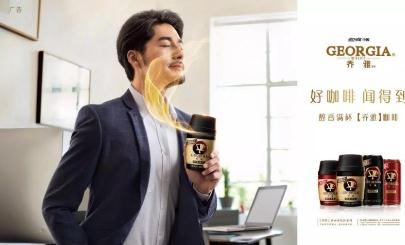
A multinational like Coca Cola cannot afford to miss out on the popularity of tea beverages in China. The company is marketing its RTD coffee brand Georgia in China.

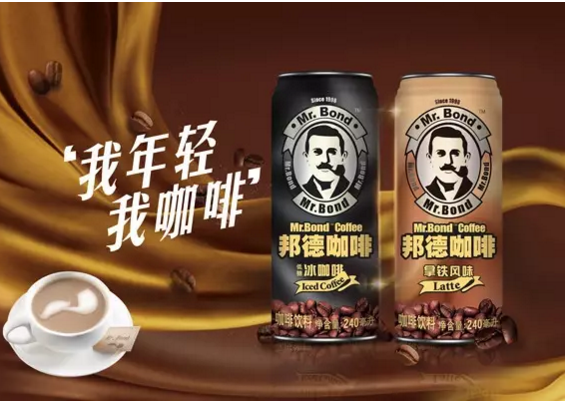
Taiwan-based manufacturer of snack food, Want Want, had already started looking for divesting opportunities in the beverage industry, when it launched its own RTD coffee brand ‘Mr. Bond’ in 2018. When I am writing this (June 2018), it is still too early to judge the success of this product.

Costa has to follow suit

Costa Coffee could not afford to neglect this market and launched a range of ready-to-drink coffee beverages in China late March 2020.

Jingdong Top 5

China’s leading online store Jingdong keeps track of the top selling brands of any product type the platform has on offer. The following list are the 5 best selling ready to drink coffee brands in 2020

Rank Brand
1 Nestlé
2 Starbucks
3 Nongfu Spring
4 Coca Cola (Costa)
5 Chef Kong

Three of the top 5 are international brands, which indicates that it still is a relatively foreign product group. Nongfu Spring is China’s top bottled water brand, but has been expanding to other types of beverage in recent years. Nongfu launched a new type of RTD coffee, branded Yirgacheffee (Tanbing) in 2022 (see the next photo). Chef Kong is the leading instant noodle brand, but has also diversified into beverages a few years ago.

Peter Peverelli is active in and with China since 1975 and regularly travels to the remotest corners of that vast nation.

Urban Farming: A Response to China’s Food Safety Crisis

Numerous food safety problems that have occurred and stubbornly re-occurred in China during the past few years. The loss of confidence in the domestic food industry has triggered a number of responses among Chinese consumers. One is growing your own food at home, on your roof or balcony, another is Community Supported Agriculture (CSA).

Dispossessed farmers

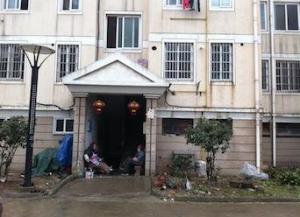
Before moving to the real CSA, I need to introduced a typical Chinese problem: the issue of dispossessed farmers, i.e. farmers whose land has been repossessed for urban expansion. On the financial side, those farmers are usually well compensated. They are offered modern apartments to live in and allocated jobs that do not require (intensive) educations, like: janitors, cleaners, security guards, etc. However, having been weaned with agriculture, most of the dispossessed farmers long develop nostalgic thoughts about their previous lives. Some of them engage in illegal intra-urban farming, using decorative urban greenery to grow vegetables or even raise small animals like chickens. The number of dispossessed farmers is growing with 2.5 – 3 mln per year. Their number for 2017 is estimated at 70 mln. This type of urban farming is still regarded as illegal in China, but there are considerable regional differences in the extent to which it is tolerated. If used well, these people can become a genuine human resource, a driving force behind Chinese urban agriculture.

      

Balcony farmers are taking root

With growing wealth, concerns about food safety and the fever for online shopping, more urbanites are taking to farming on their own terms. Zheng Jinran reports in Beijing.

The perfect storm of two major trends in China – online shopping and growing concerns about food safety – has given birth to a generation of urban farmers.

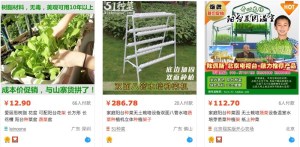
More urban residents, many of whom are young people between the ages of 25 to 35 living in metropolises such as Beijing, are growing vegetables and herbs on their balconies or rented farmland in the suburbs, and turning to Taobao, a major online shopping service provider in China, to start their apartment gardens. Online searches for vegetable seeds at Taobao has increased by 280% over the past year, according to the company.
Taobao

“That means, every day, more than 6000 people went to online shops at Taobao expecting to buy seeds and tools that can convert their balconies into a small vegetable garden,” says Lu Qi, a public relations officer from Taobao.

Xue Ling, 26, has been planting vegetables on the balcony of her apartment in Jinan, capital of Shandong province, since 2010. “It’s the only way to keep my food, at least the vegetables, clean and safe,” she says.

“Then I found out that many of my friends have realized the importance of eating vegetables. They have been busy planting this year and asked for my help to get tools for them,” says Xue, who opened a shop for vegetable seeds in April because of the demand. “The sales in my shop are much higher than I expected. More than 2000 bags of seeds have been sold since then,” she says. “They plant vegetables not to save money but to guarantee food safety,” Lu says.

A number of food scandals have rocked the nation in recent years, including the discovery that cucumbers were found with contraceptives and another incident where leeks were found filled with toxic pesticides. The latest crop to join the list of tainted foods is the Yantai apple, which were found wrapped in paper bags containing chemicals.

Xu Jian, 36, an urban farmer in Hangzhou, Zhejiang province, spent about RMB 1000 in seeds and organic fertilizer on farmland he rented. He paid RMB 3560 to rent the 30-square-meter farmland for two years. But the move did not come without its consequences: His mother moved out of their hometown to help him plant the vegetables.

“Planting vegetables by myself may cost more money than buying them from the market and they might consume extra energy. But the risk of having polluted food is everywhere. I don’t want my 3-year-old daughter to suffer from any of it. It is great fun to plant in the farmland and share the spoils with my colleagues,” he says, adding that every weekend his family drives to the farmland.

Taobao has taken notice of the demand for vegetables. In addition to selling seeds and tools for urban farmers, the major online shopping provider has begun selling fresh vegetables and other organic food like rice on an independent website called agri.taobao.com as of early June.

“About 1000 farms and companies want to join and provide their organic products on this new platform,” Lu says. “But these green products such as fresh vegetables have special requirement in packaging and transporting, so the sales are not large.”

For those urbanites who crave a bigger plot to grow their crops, the website has a bigger plan: Offering farmland for its users to rent. The option should be available in June.

Taobao will soon release rules to regulate land owners and tenants. The website will also soon provide a platform where plots on a farm will be offered for rent.

“But in the initial state, only residents in Hangzhou and Shanghai can enjoy this new service,” Lu says, adding that it could possibly expand to cover all cities in China in the near future.

“More cities will see the free and convenient exchange of extra vegetables or other agricultural products,” he says. “But there are many problems in achieving this goal, including the packaging and we don’t know when it will come to fruition.” Xu’s contract for the farmland he rents will end in December.

“I’ll still rent some land to plant vegetables, but maybe this time I’ll try to do it through the website. I hope it will work to offer me and more people with appropriate land options,” he says.
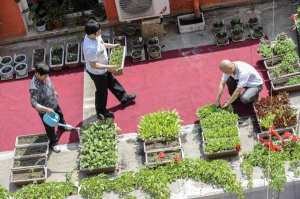
BalconyFood

COVID-19 as a strong stimulus for balcony farming
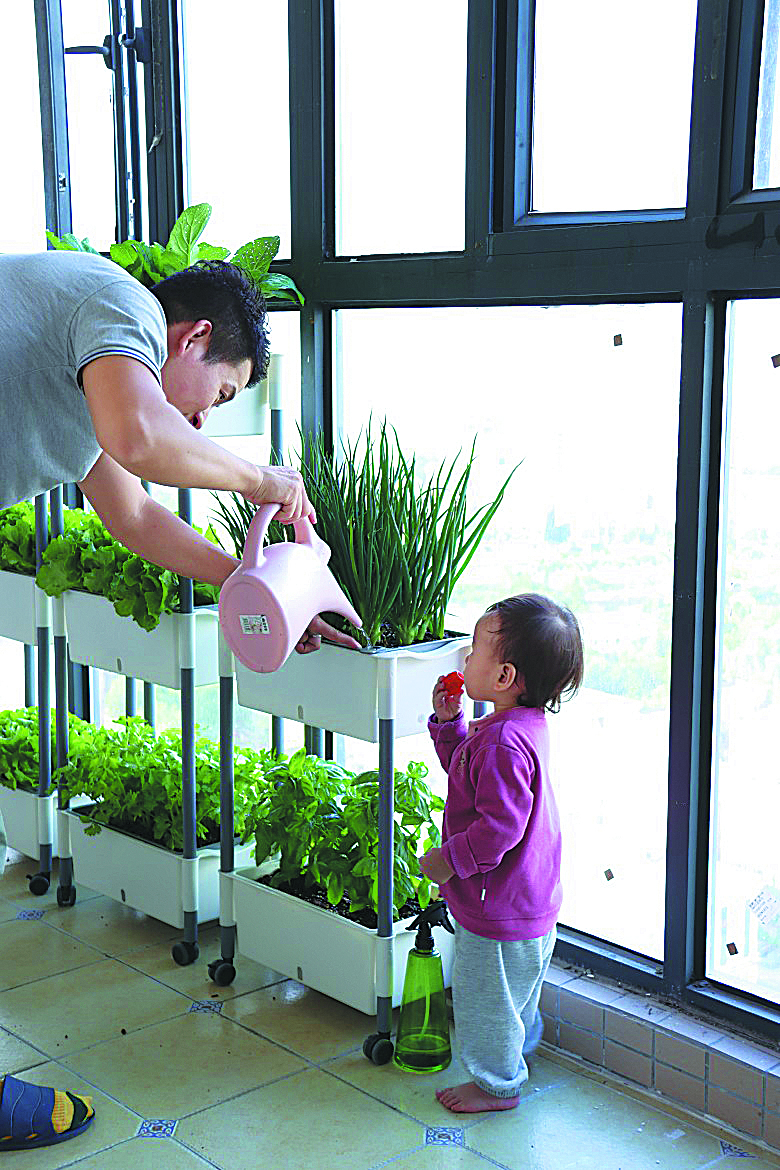
HomeFarming

It does not come as a surprise that COVID-19 has been  a great stimulus for home farming. In the first quarter of 2022, sales of vegetable seeds on Tmall doubled compared with the same period of 2021, according to a report on balcony gardening released by Alibaba.

Shanghai, Beijing, and Guangdong province’s Dongguan are among the top five cities for urban vegetable growers, who are mainly in their 20s and 30s. Coriander, chives, chili peppers and tomatoes are the most popular choices, it added. Lu Zhipeng, who heads Tmall’s flower department, said balcony gardening is now worth tens of billions of RMB. Enthusiasts can go the traditional route of planting seeds with soil and fertilizers, while others opt for automated growing machines. Zhao Haiping, owner of a Tmall seed store, mainly sells fruit and vegetable seeds from Shouguang, Shandong province. Sweet corn and Japanese pumpkin seeds are his bestsellers.

Han Yijun, director of the National Agriculture Research Centre at China Agricultural University, said he used to grow watermelons and scallions on his balcony. However, growing vegetables in balcony gardens is more than just an accomplishment, Han said. It is becoming a lifestyle trend, and one that requires suitable equipment that is easy to use. Zhang Min, who is in her 20s, said she has harvested small tomatoes three times from her balcony garden in Beijing. Red peppers and coriander are regulars in her garden, and she adds them to her dishes when cooking.

Qin Huai, owner of Marseed an online seller of seeds, said most seed orders his store receives are from urban communities. Buyers are usually young mothers or white-collar workers. “Customers prefer leafy vegetables and seeds that produce red fruit,” he said. The hobby also has great social value. “We set up a group chat where growers can share their fruit and suggestions,” Qin said. “A boy from Suzhou, Jiangsu province, shared photos of about 1,500 red fruits produced from the small tomato seed he planted on his balcony.” The Jiangsu Academy of Agricultural Sciences has been testing 40 tomato and 30 chili pepper varieties that are sold by Marseed. Twenty varieties sold by the store this spring were developed by the academy.

Statistics published in June 2023 point out that Chinese produce appr. 150 mln mt of fruits and vegetables on their balconies yearly.

Container dweller

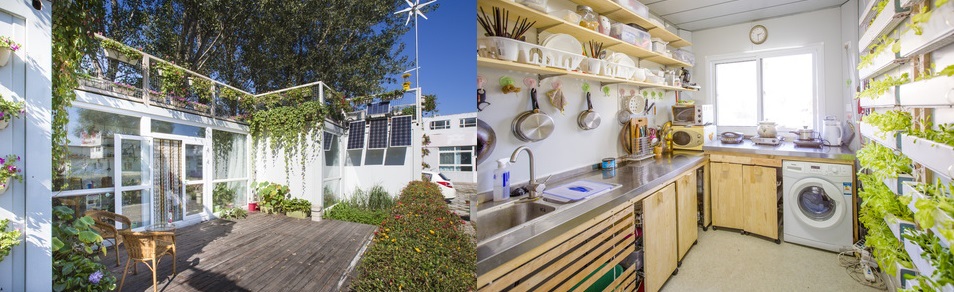
In the summer of 2014 Niu Jian and his family moved from the bustling Beijing district of Haidian to the village of Niuhe in Shunyi, a suburban district. Their new home consists of a single-storey arrangement of six 20-foot shipping containers. A 600 watt solar panel hangs on one wall and 300 watt wind turbine spins on the roof.
Niu had the containers made to order, with doors and windows, a power supply and insulation. The 150 square metre space cost him about RMB 300,000 to have built and fitted out and he describes this as a laboratory for sustainable living. Asked why he wanted to spend so much money for a tougher life on the outskirts of Beijing, Niu explains that he wants to spread the idea of a ‘shared community’ – people who want to find a more sustainable life in the smog ridden city.
Niu’s plans started in 2009. As a gardening technician, he advocated the use of vertical greenery and balcony gardens for years and had a real love for plants and greenery. But he found people in Beijing weren’t as keen as he’d hoped, and this led him to re-examine the way people live in cities.
During 2015 this sustainable living laboratory will hold a series of workshops designed to allow participants to experience communal living. People who share the projects values, and have the necessary time and money, will be selected to invest in building small “sharing communities”.
ContainerHome

Following nature’s lead on food

No tomatoes in winter. No oolong tea after Tomb Sweeping Day. Do not treat meat as an everyday staple. The initial impression is that she keeps to the stringent regime of a sustainable lifestyle, but Shi Yan says it’s all totally natural – if you live on a farm.

She is probably the best-known advocate of community-supported agriculture in this country, and she is totally committed. They are often referred to in China as ‘weekend farmers‘.

“If you live and feed on the farm, you have more vegetables and grains. And you can only kill a pig once in a while. It cuts down the consumption of meat.”

As for the tea, she says oolong tea before Qingming (Tomb Sweeping Day) is better because pesticides are rarely necessary then.

“Whatever nature dictates, it’s often the best,” the 30-year-old post-doctorate graduates says. She calls herself a “new farmer” and has been preaching the cause for many years in her slow, calm, measured tones.

Shi is on the sustainability lecture circuit, often appearing in a simple linen shift with her hair tied up in a ponytail and wearing sandals that had just trudged through the farm fields. She has been doing this since she came back from six months’ of hard labor on the Earthrise Farm in Minnesota in 2008.

“Once you build up an intimate relation with the land, life is different,” says the city-bred agriculture scientist from Baoding, Hebei province. It was the hands-on experience from dawn to dusk that taught her the CSA concept from the ground. She wrote a book on her return and quickly became a champion of the movement.

Her first project, initiated with her heavyweight graduate program supervisor Wen Tiejun from Renmin University of China, is Dondon Farm in western Beijing. It made its name as a rented plot of land that hires farmers and promises clean, natural produce for customers who order and pay in advance.

It was a success, although the founder says with all modesty “it was because we broke the ground at the right moment, when concern for food safety was extremely high.”

The farm is still thriving after three years but Shi wanted to address the bigger issue – the sustainability of the rural community “where we are determined to live”.

As head of the year-old CSA model farm, Shared Harvest, she recruits land-owning farmers who are willing to work on the land themselves. Shi monitors the farming process, markets the produce to customers who are willing to pay for their vegetables in advance, and shows them around when they visit.

“Having another stakeholder means more transparency, customers can get what they want to know not only from us, but also from different farmers,” she says, “and if there are disagreements, all the better.

“It is the farmers who benefit from the model more than anyone else. Farming should be rewarding enough to let them stay on the land.”

For now, Shared Harvest makes RMB 0.45 for every 500 grams of vegetables sold. It has already cleared the red, and even projects a sizable profit at the end of 2013, when the number of members will exceed 600.

Her hope is that these members will care enough about what they eat to come down to the farms more often and take part in the whole process.

To encourage them, Shi tirelessly updates progress on the plots and posts reports online on her various social network accounts, sharing everything from pop quizzes on botany to the farms’ daily delights and woes to quotes from Mother Teresa.

“They ask me why my photos always look so good. I tell them the photos show the love of the photographer,” she says as she carefully packs bunches of kale into delivery boxes. This is all part of her routine, and she attends to it with the eye of a committed lover.

She highlights the beauty of deformed tomatoes and crooked cucumbers with a dash of humor, arranging them into heart and swan shapes that are posted online with a poetic line or two. That’s attracted about 30,000 fans to her weibo account.

It’s part of her larger plan to educate consumers: That perfect-looking vegetables may not be safe, and that buying from your neighborhood farmer reduces “food miles” and carbon emission. Yolanda, an expectant mother who is a member of Shared Harvest, is definitely a Shi Yan fan.

“Shi has her feet on the ground, but she upholds an ideal at the same time. I admire her for the stamina and her vision for a better future. I trust her. I’ve seen the farm myself and I can let go of all my worries about food,” she says.

Shi current lives, works and has her research base at Mafang village where she has 40 pigs, 2000 chickens, 30 geese and three farms. Her loving husband works with her and more than 20 young colleagues who all affectionately call her “boss”.

“Shi Yan taught me not to lie,” says Chen Li, who is in charge of sales for Shared Harvest. “That’s almost against a salesman’s instinct. But honesty is the core of our business.”

Chen joined the enterprise a year ago because he believed Shi’s initiative is “small and beautiful”, and that “it could only be done by someone who is adamant and innocent at the same time”.

“I marvel at how people are willing to help her because she’s so trustworthy,” he says.
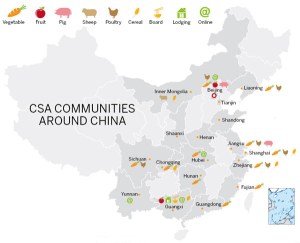
CSAregions

People power

Farmers supported by their communities may be the answer to China’s concern over food safety, efficient land use and the unbalanced distribution of rural-urban demographics. Sun Ye goes out into the countryside to find out if this model will work for the country.

The physical manifestation of the trend is a box of vegetables that appears on the doorstep every week, filled with seasonal produce with an occasional wormhole, but is still warmly welcomed. It is also the chance to meet and get to know the farmer who supplies the box, and the opportunity to bring the children down to the farm to take part in the sowing and the harvesting.

It is the building of a community, one that is prepared to pay a premium up ahead for the assurance that vegetables on the table are grown according to safe practices, are sustainable, seasonal and as far as possible, free from an overload of pesticides. It is a chance to meet and meld with other members of the community who have the same passion and beliefs.

This is what CSA looks like in China, for now. But looking beyond the summer tomatoes and winter cabbages that are purchased even before they are sown, CSA is a new concept that goes against the traditional, or is a return to old systems – depending on how you look at it.

More importantly, it is a trend triggered by rampant food-safety problems thrown up in attempts to adequately feed a growing country of 1.35 billion. Huge waves of urban migration are yet another problem as the younger generations abandon the hard and thankless efforts of cultivation in their villages and head out to the bright lights.

CSA encourages young farmers to go back to the land, and offers them a business model that gives them insurance against fluctuating prices brought on by inclement weather, unpredictable harvests and natural disasters.

CSA involves the communities around the farms, and is a model that has worked with varying success in North America, Australia and New Zealand. In China, CSA is only at its juvenile stages, and it may grow up to be a very different child.

Shared Harvest in suburban Beijing takes its name from a CSA guidebook. It has also become living proof for this farming model since its inception in mid-2012. It is a cooperative that supplies more than 400 members with weekly boxes of green vegetables – all of which have been paid for upfront.

This new initiative has also helped its farmers, by educating them on agricultural methods that are sustainable, with an emphasis on the long-term rather than short-term bounties. For example, the farmers would probably not have given up the use of pesticides on their own.

“It’s simply scary,” says Liu Xiancang, the director of the Liu village co-op that’s responsible for supplying the vegetables that get sent out to Shared Harvest members.

Harvesting the homegrown

City folks are just as concerned about the food they put in their mouths, often more so than rural residents. That’s why many are turning to their tiny balconies for sustenance. Eric Jou reports on a growing trend.

Imagine growing organic lettuce, tomatoes and cucumbers all without pesticides and chemicals. Then imagine being able to harvest such vegetables without even leaving home or changing out of your pajamas to go to market. That is the promise of urban farming, of growing fresh produce in limited spaces.

As more and more people migrate from rural China to the cities, many of them wind up living in cities such as Beijing. According to the National Bureau of Statistics of China, more than 163.36 million people moved from their hometowns to other locations to work in 2012. Such transient psychographics can be both a blessing and a curse, particularly when it comes to food. Urbanites are eager for opportunities to reconnect to nature. And they face many challenges of time and space.

Urban farming is basically about growing produce and food in an environment with limited space, and it is slowly gaining popularity in Chinese cities.

Dannan Hodge, co-founder of urban farming company High Rise Homestead in Beijing, says it is a popular concept with a lot of benefits.

“You know what’s going on with your food, there are no pesticides or herbicides – nothing that will negatively affect your health,” says Hodge. “A lot of farmers who do traditional farming have vegetables they grow for sale and vegetables they grow for their own consumption. They grow them differently because they know the chemicals they use are hazardous.”

High Rise Homestead works to help Beijing residents to “grow their own” at home. They supply products such as frames that train plants to grow upward, kits for growing produce on inclined surfaces and vertically stacked planters. Windowsills and balcony gardens are all in the picture.

Hodge says the most popular plantings on balconies are vegetables because they’re simple to grow, even strawberries, cherry tomatoes and gourds.

“It really does inspire people to eat healthy – you can’t grow a bag of chips,” she says. People – especially children – get excited to see their own food grow, food that they planted and will harvest themselves.

“There is also a health benefit where people are inspired to become more conscious consumers,” she says. High Rise Homestead is working to cut down the supply chain by sourcing materials locally.

Elizabeth Jane Ashforth says the idea of growing food indoors is great. Ashforth is a doctor of marine biology who tried to build her own sustainable system within her apartment in Beijing, and she says growing food indoors can create wonders.

“People in general have lost a connection to where their food comes from and how difficult it is to grow actually,” says Ashforth. “Doing something like this adds a bit of greenery to your home, it just makes you feel connected to the environment and that can only be a good thing.”

American Tim Quijano has recently started giving DIY lessons on setting up aquaponic ecosystems.

Aquaponics is similar to a hydroponic setup where plants are grown in water, except aquaponics introduces fish into the equation.

A simple aquaponics setup involves a fish tank with possibly edible fish, a water pump, a second layer above the tank where the plants are grown and a light source. The fish eat and create waste and the pump siphons the water to the upper layer to fertilize and water the plants. The water then drains back into the lower tank. According to Quijano, some aquaponics setups can support edible fish such as tilapia.

A fellow with the Princeton in Asia organization, Quijano says his main passion is working on environmental issues. Quijano started working on aquaponics during a move from one apartment to another.

“What got me started was that I had this fish tank in my apartment that I moved into this year and I thought how I could do something fun with this,” says Quijano.

“I like having new projects and learning new things. It just hit me one night that I could learn something about aquaponics,” adding that he’s spent “many hours on Youtube researching growing my own food”.

China has a rich history and culture of being self-reliant when it comes to food, says Quijano. Pointing out recent food safety scares and the migration of workers from the countryside to the cities, Quijano says that there is a wealth of agriculture knowledge in Chinese cities.

“I live in a large apartment complex and the grannies that are there, they have set up little makeshift greenhouses with a stick of bamboo and a tarp. There’s so much knowledge and there’s such an appreciation for it.”

Aquaponics newbie Andrew Morrissey attended one of Quijano’s workshops on a whim after seeing an online posting about it.

“I came to see what it was about and whether I could do it at home and grow some tomatoes for the family and make me more useful,” says Morrissey,

“I don’t know about farming but I am never going out and buying vegetables again but if I can get something going and it works. If it can get bigger over time with a bit of experimenting it can be a lot of fun. Maybe I can get some edible fish. It would make the wife very happy.”

Nanjing – an other city

Much of the above refers to Beijing with its high concentration of well educated people and expat inhabitants with a liking for home-grown foods. Nanjing, that has been the capital of China for while, gives in insight in how slighly smaller big cities are doing in this respect.

Nanjing’s urban centre has very little land suitable for urban agriculture. However, there are various attempts at growing food around residential buildings, especially in tiny front yards and on unused land. Balcony and rooftop gardening is found on a few buildings. Nanjing residents seem to use every available square inch in their communities to grow food. Even the narrow riverbanks of the Qinhuan River are planted.

It is common for property management companies in charge of landscaping to forbid residents to grow food in the community. They argue that growing food would destroy the ornamental landscaping and the manure or fertilizer would cause an unpleasant smell. Still, Nanjing residents too say to grow vegetables because they believe vegetables from the market are contaminated with chemicals. Look at these pictures of food growing in a front yard and water spinach the curb of a road.
 

Peter Peverelli is active in and with China since 1975 and regularly travels to the remotest corners of that vast nation.

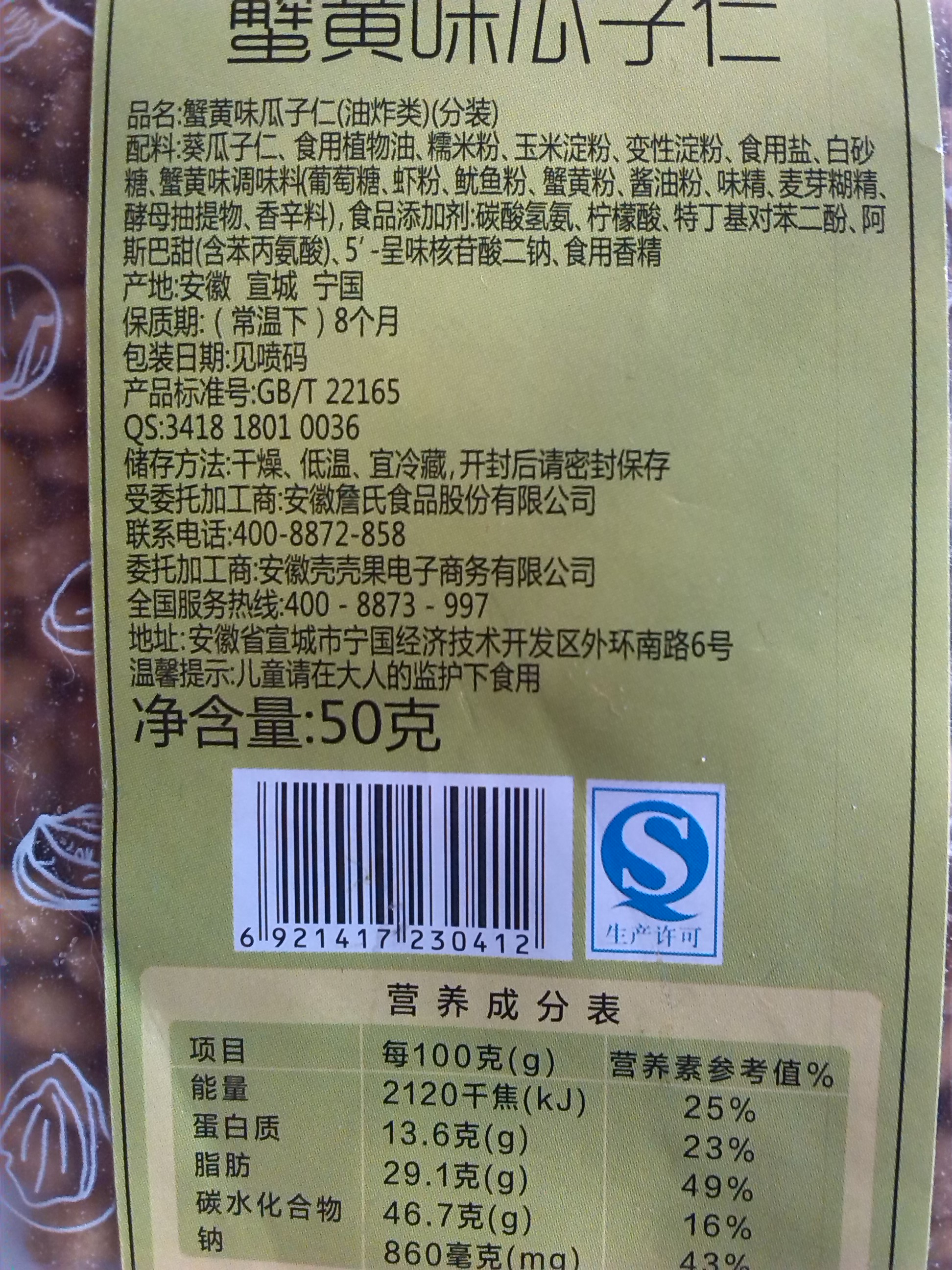
Traditional vs Modern Chinese Candies Explained

China was the world’s second candy exporter in 2019 with a value of USD 910.8 mln (8.6% of the global exports)

I have already mentioned candy in some of my posts, like the huamei candy as an example of how a traditional sweet is used in China as an ingredient for a novel food, a company like Hsu Fu Chi that is one of China’s top biscuit producers, but also makes candy. As most Chinese have a sweet tooth, it is time to dedicate an entire post to the Chinese candy market.

Top 10 candy brands of 2016

BrandShare (%)
Hsu Fu Chi17.46
Alpenliebe6.86
Madajie5.22
Golden Monkey4.73
Extra4.35
Yake3.77
Wrigley3.52
Big White Rabbit3.37
Orion3.29
Fujiya3.26

Hsu Fu Chi and Orion also rank among China’s top biscuit brands.

The global top 100 candy companies list for 2023 for the first time included a Chinese company: Shenzhen-based Amos Sweets. It came in at the 95th position, but after several food safety incidents in the past couple of decades, this is an accomplishment worthy for a congratulation.

Top regions

The following table shows the regional breakdown of candy production in China in 2017.

Regionmt
National33,136,510,000
Fujian8,081,420,000
Guangdong6,684,470,000
Hunan3,002,380,000
Shandong1,880,940,000
Hubei1,765,570,000
Henan1,716,370,000
Shanghai1,487,180,000
Sichuan1,352,090,000
Anhui1,267,100,000
Jiangxi1,185,240,000
Jiangsu1,061,970,000
Hebei928,590,000
Guizhou599,630,000
Chongqing482,510,000
Qinghai460,200,000
Zhejiang261,020,000
Beijing259,160,000
Shaanxi209,500,000
Yunnan164,630,000
Hainan99,850,000
Xinjiang78,870,000
Tianjin62,500,000
Shanxi33,800,000
Liaoning9,040,000
Guangxi1,440,000
Ningxia5,60,000
Inner Mongolia530,000

The first three regions alone are already good for more than half the national output. The regions not included in this table do not produce (significant volumes of) candy. The value of the Chinese candy market is expected to reach RMB 414.8 billion in 2020. The country has produced 1,062,252.2 mt of candy in the first 5 months of 2020; Fujian was the largest region good for 37.44%.

The most typical Chinese candy

Candy is a rather Western thing, but if you want me to identify a ‘traditional’ Chinese candy, my first choice will be dabaitu, ‘Big White Rabbit’ milk candy, produced by Guanshengyuan in Shanghai (est. 1918).

WhiteRabbit

It is a white soft nougat-like candy. Before wrapping, each candy is wrapped in thin edible rice paper. This is meant to prevent the candy from sticking at your fingers and can be eaten along with the rest of the candy. The ingredients as listed on the packaging are:

Edible glutinous rice paper (edible starch, water, glycerin monostearate), liquid maltose, sugar, whole milk powder, butter, additives (gelatin, vanillin), corn starch, syrup, cane sugar, butter, and milk.

Each candy contains 20 calories. Older Chinese still remember Guanshangyuan’s original slogan: Seven White Rabbit candies is equivalent to one cup of milk. It is therefore positioned as a nutritional product. It is still extremely popular. This product alone generated a turnover of RMB 320 mln in 2013. For decades, there was only the original vanilla flavour, but new flavours, like: chocolate, coffee, toffee, peanut, maize, coconut, lychee, strawberry, mango, red bean, yogurt, and fruit have been added. An ‘extra creamy’ variety has also been launched. The latest addition is ‘ice cream flavour’. According to the packaging, the ingredients are:

Liquid maltose, sugar, whole condensed milk, whole milk powder, cream, additives (gelatine, vanillin, food flavours), edible glutinous rice paper (edible starch, water, glycerin monostearate).

The difference with the traditional candy seems to be small, and mainly in the use of flavours.

For more about the White Rabbit brand, see my special post on this topic.

Tradition slowly forgotten (?)

I don’t want to make northerners think that I have a special liking for Shanghai, so I would like to introduce another traditional candy, that is much older, but less well known outside China, that Big White Rabbit creamy candy: crispy shrimp candy. ShrimpCrips

These are traditionally made by rolling a chunk of hot molten sugar into a thin sheet, covering one side with sesame paste, and rolling it up into a cylinder that is finally cut into candy-sized pieces. It is a traditional treat from North China that has been adapted to industrial production in the course of the 20th Century. They are being produced up to the present day, but many older consumers find that the flavour and texture of the current shrimp candy do not match that of the tradition product. Perhaps it has something to do with ingredients, but it can also be a matter of nostalgia, the feeling that nothing tastes as it did before.

Wedding candy – a typically Chinese category

A very Chinese type of candy is wedding candy, or as the Chinese put it: ‘happy candy (xitang)’. Handing out candy is part of every Chinese wedding ceremony. Newly weds often bring some to the workplace to hand out to colleagues who have not attended the ceremony. You can use any candy, but candy makers have started identifying wedding candy as a special market segment and have increased R&D efforts to develop special candy with suitable flavours and colours, and packaging, for this special moment in a couple’s life. Insiders estimate the #Chinese market for wedding at RMB 16 bln, with still considerable growth potential.

weddingcandy

However, the candy industry indicates that the market for wedding candy has been decreasing since the 2020s.

Foreign markets

Chinese candy is finding its way to foreign market. A good example is Jinli Candy Co Ltd, a candy producer established in 1984 in Huairen county of Shanxi’s Shuozhou city. In 2010, the company began to export its candies to the Netherlands and in 2011, it established a cooperation relationship with the US Disney company. In 2015, it was listed among suppliers for the US-based Wal-Mart, becoming one of the few Chinese candy producers to enter the European and American markets. Over the years, the Jinli Candy Co has sold its middle-high-end candies to over 13 countries, including the United States, the United Kingdom, Canada, Australia, Russia, Spain, and Belgium. In 2014, the company’s exports reached $1.5 million.

Jinli

China Candy in international limelight

Ever Maple Flavors and Fragrances Holdings, under control of Kelly Zong, daughter of Wahaha founder and chairman Zong QInghou, has acquire China Candy Holdings in May 2017. The mother company is based in Fujian province and manufactures and sells candies under the Holeywood brand in China, South East Asia, North America, Europe, and internationally. The company’s products include jelly drops candies, aerated candies, hard candies, and chocolate-made products. Rumours about this take over had been around for months. Ms. Zong is also chairman and executive president of Hongsheng Group, beverage producer recording turnover of RMB 5 bln per year. It looks as if she is following her father’s footsteps in building a food and beverage conglomerate, though focused on what Chinese like to refer to as leisure foods and drinks. This move also proves that the Chinese confectionery industry is currently maturing to a global level.

Peter Peverelli is active in and with China since 1975 and regularly travels to the remotest corners of that vast nation.

History and Growth of Chinese Chili Cuisine

From ‘too hot’ to chili lovers

Chili has seen a remarkable growth in China during the past couple of decades. I still remember my first year in China as a student in 1975. Sure, you could get spicy dishes in some restaurants, but the average Beijing citizen would start crying ‘hot!’, if a dish would include as much as one single tiny peppercorn.

Although chilli peppers were introduced to China in the latter half of the Ming Dynasty (1368-1644), the fruit only really gained popularity during the early years of the Qing Dynasty (1644-1911). It quickly entered the cuisines of a few regions in China, in particular Sichuan and Hunan, but in many other regions spicy food was regarded as exotic. This is why the term for ‘pungency’ as one of the Five Flavours was xin (pungent) rather than la (hot).

During my later terms in China, not much change in that situation occurred, until in the course of the 1980s Sichuan restaurants started to spring up like mushrooms in the Chinese capital. And we are not talking about food with a few chillis, but Chongqing Hotpot, a kind of fondue, but then with a soup that seemingly consists purely of chili, became the favourite of the Beijingers.

Nowadays, restaurants specialising Sichuan and Hunan cuisines can be found all over China and chili in many varieties (dried, paste, oil, etc.) are top items in supermarkets. There are even shops specialising in all types of chilli. Some people have started to speak about a Chili culture (lajiao wenhua). In Chongqing you can even visit the Youjun Chili Museum.

ChilliCulture ChliMuseum

The China Food Industry Association has organized the nation’s first Spicy Industry Conference on September 15, 2020, in Beijing.

Top chili nation

During a recently held forum on chili processing, insiders have stated that China has developed into the world’s largest chili processing region. The total value of the world market for chili is estimated at USD 30 billion, and China is good for one third of this. Sichuan province alone has an annual raw chili output of approximately 1 million mt, with a value of RMB 1 billion. In some Chinese statistics, spicy sauces are referred to as ‘Sichuan sauces’. The province’s chili processing industry has an annual turnover of RMB 2 billion. R&D in new applications for chili and chili derivatives is also growing, developing products for the food, pharmaceutical, cosmetic industries.

Here is a map of China indicating the relative spiciness of the local cuisines.

The following graph shows the development of the Chinese chili paste production from 2014 to 2020 (unit: 10,000 mt).

The leading brands in 2020 were:

Brand Share (%)
Lao Gan Ma 20.5
Lee Kum Kee 9.7
La Meizi 9.2

Various shapes

Chili is not only consumed as such, fresh or dried. The fruit is processed in numerous products that themselves are used as ingredients in home cooking or industrial foods. The Food Ingredients China (FIC) 2018 trade fair will included 30 exhibitors supplying various chili-derived ingredients, including: capsaicin, capsicum oleoresin, chili powder, and chili food colour.

A special type of hot sensation is caused by the Sichuan pepper (huajiao) that produces a numbing hot sensation in the mouth, caused by the hydroxy-alpha-sanshool it contains. Sichuan pepper is often combined with chili and other peppers in savoury pastes, like the Pixian Douban reported in an earlier post in this blog.

Chili paste

The by far most common form in which chili is consumed is the chili paste. It is a mixture of ground chili and a variety of other ingredients, and can be easily used to spice up dishes or as a dip for foods that could do with some extra flavour like boiled dumplings. China has produced 5.91 ml mt of chili paste in 2018; up 1.82%. Insiders estimate that that market will be worth RMB 40 billion by 2020.

Here is a list of the top 10 Chinese chili pastes.

Laoganma (Old Godmother) Laoganma

Laoganma is THE success story of the Chinese seasoning industry. Established in 1997 in Guiyang (Guizhou; another leading chili region of China) by a lady who used to sell spicy noodles at a street corner (starting in 1989), it has rapidly grown into China’s top range of chili products. The company also exports worldwide. Watch this video reporting on Laoganma and its founder.

Laoganma has a facebook group called ‘The lao gan ma appreciation society‘, and is sold on Amazon, and many more online platforms all over the world.

According to the 2025 Top 100 Enterprises in Guizhou, condiment maker Guiyang Nanming Laoganma Special Flavour Foodstuffs Co, producing 3 million bottles of the Lao Gan Ma chili sauce daily, posted revenue of RMB 5.39 billion in 2024, up slightly from RMB 5.38 billion in 2023. This was the third consecutive year of growth, bringing it close to its 2020 revenue peak of RMB 5.4 billion.

A group of young Chinese cocktail makers have started experimenting with cocktails made with Chinese spirits (baijiu) and various hot seasonings including Laoganma. The company has also started a fashionable merchandizing campaign late 2018.

Moreover, Laoganma also started diversifying in other condiments. It launched a type of furu (fermented bean curd) of its own in the early 2020s.

Huaqiao Huaqiao

This brand has a history of more than 300 years, deeply rooted in its home town Guilin (Guangxi).

Lameizi (Hot Sister) Lameizi

This is once more a new brand, established in 1998 in a traditional chili region: Hunan. It is part of a conglomerate that produces a wide range of foods, besides seasoning products.

Lee Kum Kee LeeKumKee

I have reported on Lee Kum Kee before, in my post on yuxiang flavours. The brand dates from 1888 and has its home in Nanshui (Guangdong). It is the best known seasoning brand in East and Southeast Asia.

Meile Meile

This is the first Sichuan brand in this list. The brand covers a wide range of seasoning products, but its Fragrant Spicy Sauce has brought the brand fame.

Huhu Huhu

This brand has been established in Qingdao (Shandong), one of China’s blander cuisines, in 1992. It specialises in fermented savoury pastes.

Modocom Maodegong

This is an English rendering of the Chinese brand name Maodegong. It has been established by a farmer from Leizhou (Guangdong).

Huangdenglong (Yellow Lantern) Huangdenglong

This brand was launched in Hainan in 1994. Its name has been inspired by a latern-shaped chili that only grows in Hainan.

Fansaoguang (All Food Devoured) Fansaoguang

This is a brand of Gaofuji Food (Sichuan). The name refers to the Chinese perception that chili paste increases the appetite. There will be no leftover of food spiced up with this product.

Haitian Haitian

Haitian is one of China’s top seasoning brands. It is currently China’s top producer of soy sauce, but its other products are popular. It is another brand with more that 300 years of history, based in Foshan (Guangdong).

Hot and cold: chili-flavoured ice cream

The latest vogue in the Chinese chili culture is the appearance of chili-flavoured ice cream. It was launched, and we are not surprised, in Sichuan’s capital Chengdu; in the high-end Chunxi shopping district to be precise. Chili is added in the shape of chili oil.

The reaction among consumers are mixed, but it seems that this product is there to stay.

Clean chili sauce

Concepts like Clean Label have also reached China and started to get serious around 2022. However, the Chinese interpretation of ‘clean’ seems to be broader or lest strict than the Western. Here is an example of a chili sauce from Eurasia Consult’s database that is advertised as ‘zero additives’ site in China.

Product: Wangjiadu beef chili sauce

Ingredients:

Rape seed oil, fermented bean sauce (chili, broad beans, salt, water, wheat flour), chili, beef, ginger, carrots, peanuts, douchi (soy beans, water, salt, wheat flour), white sesame, maize, spices, flavours.

Peter Peverelli is active in and with China since 1975 and regularly travels to the remotest corners of that vast nation.

China’s Growing Olive Oil Market: An Analysis

Healthy image

International olive oil producers are looking at China to increase their turnover, because the nation appears to have developed a taste for the healthy oil.

An telling story from the media is that of Cui Ronghua, a peanut exporter from the eastern port of Qingdao. His children were already drinking imported baby formula, so he decided that the family started cooking with imported olive oil as well.

Olive oil as an ingredient can give a high-end touch to a generic product. Zhongjing Food (Nanyang, Henan) was already famous for its shiitake sauce. The company recently added a ‘luxury’ version to its range of sauces by using olive oil as an ingredient.

Relying on imports

Because China’s climate is not suitable for mass olive production and more Chinese are realizing olive oil is generally healthier than most cooking oils, imports have surged in recent years, especially in top-tier cities such as Shanghai and Shenzhen, where 80% of olive oil shipped from Spain, Italy, Australia and Turkey is consumed.

Spain is the leading exporter to China. 10,141 mt of Spanish olive oil was imported by China during the first quarter of 2019, 88.4% of the total imports of that period. China imported 37567.96 mt of olive oil in all 2019; up 33%.

Jean-Louis Barjol, executive director of the Madrid-based International Olive Council, the world’s only international intergovernmental organization in the field of olive oil and table olives, said because China’s huge middle class is very conscious about food quality and health issues, the Mediterranean diet, which uses plenty of olive oil, is a practical way to maintain health.

“The numerous television advertisements released recently by Chinese olive oil importers and the campaigns led by export countries’ trade-promotion bodies to explain the uses of olive oil have resulted in a significant increase in sales, as well as the opening of hypermarkets in the nation’s main cities selling imported foods,” Barjol said.

“We found people in China are more inclined to buy extra-virgin olive oil, which does not require refining and is 20% more costly than refined olive oil,” said Amparo Chozaz, assistant managing director of the Spanish Olive Oil Exporters Association in Madrid.

Eager to gain more market share from their already established rivals from Italy and Greece in the China market, Spanish olive oil companies chose to join together in promoting their products under the name Spanish olive oil in the China market.

Chozaz said they spent 4.5 million euros ($6.19 million) on popular cooking programs featuring Spanish olive oil on Chinese TV stations, commercial websites and magazines. They also held national food events to boost their olive oil exports to China in 2013.

Despite the fact that olive oil accounts for only 1% of China’s total edible oil consumption, the country’s olive oil imports remained strong and hit 43,400 mt in 2013, an increase of 5.8% from the previous year.

China’s recent embrace of olive oil was a welcome change for Mediterranean nations, where olive oil prices plummeted in 2012 because of the weak EU economy and a bumper Spanish crop. China’s growing imports have helped support global olive oil prices.

The following table shows China’s imports of olive oil in the past few years.

Year Imports(mt)
2009 14,700
2010 20,200
2011 32,800
2012 41,000
2013 43,400

Outbound investment

The growing trade figure has also pushed Chinese companies to seek takeover targets overseas that can help meet demand for olive oil back home.

In 2012, six investors from China’s textile, garment and agribusiness industries secured a $15.47 million deal for the purchase of the olive oil company Kailis Organic Olive Groves, which owned 3,813 hectares of plantations in Western Australia.

Another major deal was sealed by Jiangxi Qinglong Group, which invested $32 million in Australia to purchase 5,000 hectares of olive plantations last year, as well as half of the shares in Tatiara Olive Processing Pty, a major olive oil processing company in Keith, South Australia.

The Chinese company intends to invest another $12 million to purchase new equipment and build needed infrastructure to ensure future production. This project is expected to produce 25,716 metric tons of extra virgin olive oil after 15 years and achieve sales revenue of $157 million by then. Both Australia and China will be its main target markets.
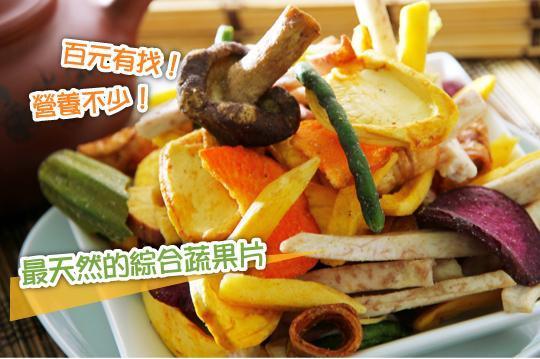
Shanghai-based Bright Food Group has bought a majority stake in Italian olive oil producer Salov Group, the company announced on Oct.7, 2014.

Shanghai Yimin No 1 Food Factory, a subsidiary of Bright Food, signed the deal with the Fontana family in Milan on Oct 1, according to a statement published on the buyer’s website.

Bright Food is a big name in dairy industry as well as categories of rice, pork and vegetable in China. It now has four listed subsidiaries.

In the online statement, Bright Food promised to stick to Salov’s values and missions and help promote its development in China.

Salov operates mainly in olive oil and other vegetable cooking oil. It distributes products under the Sagra brand name in Italy and Filippo Berio in overseas markets.

The oil maker currently markets its products in over 60 countries including China and maintains a leading position in Britain and the United States.

Domestic production

In spite of the adverse geographic conditions, a number of Chinese companies have invested in growing olives to take a part of this growing market with domestic products.

Tianyuan in Sichuan started planting olives in 1974 as part of State sponsored project. The company produces cooking oil and olive oil based cosmetics. Tianyuan cooperates with Chengdu University for its R&D.

Tianyuan

Garden City (the Chinese name is also pronounced Tianyuan, but with different characters) in Gansu is another domestic producer, established in 1998. It produces olive oil, cosmetics and olive leaf extracts.

OliveStory

Another Gansu-based producer, Longcui is advertising its olive oil as a high-end product with three types of certifications: Gansu Specialty, DOC and Organic.

China currently has 29 producers of olive oil with a total capacity exceeding 50,000 mt p.a. The amount of land devoted to olive growing was reported to amount to 86,000 hectares. Domestic production covers about 12% of the country’s current needs.

Blockchain

OliveTimes

Gansu-based Olive Times has started working closely with VeChain to roll-out traceability across itsentire Special-Olive product line using VeChain’s Blockchain-as-a-Service (BaaS) platform.

Exhibitions

The 16th China International High End Edible Oil & Olive Oil Beijing Expo 2017 was held in the China International Exhibition Centre, Beijing, April 17 – 19; the Shanghai International Exhibition Centre, August 30 – September 1; the Chengdu New International Exhibition Centre, October 12 -14.

Peter Peverelli is active in and with China since 1975 and regularly travels to the remotest corners of that vast nation.