Innovative product launches in China is one of my favourite themes in this blog. You can find lots of them in various posts. While we all know that China currently is the world’s largest growing market for food ingredients, both for exporting and sourcing, what is still less known is that no region on the globe sees so many new foods and drinks being launched as China. And innovation in end products is a major creator of demand for new ingredients.
In this last post of 2015, I have delved in the news items on new products that I have retained during my daily scanning of the news streams from China. Apparently, I believed these products were somehow worth saving. Well, I am presenting the to you, my readers, today. Please don’t feel obliged to like them as I did when I saved them. However, please also do not judge them too quickly as funny or useless. Instead, try to see them as reflections of how Chinese food technologists think about developing new foods, drinks, or ingredients.
An interesting finding, after arranging the novel products according to market segment, is that dairy company Mengniu stands out as China’s top food innovator of 2015.
As for time of launching, there seems to be no real favourite month or season for putting new products on the market. However, there are now launches found for the final quarter of 2015. Perhaps the winter blues are affecting food technologists in China.
Moving on to region, Beijing and Inner Mongolia come out on top with 3 launches each. However, all new products of the latter have been launched by one company: Mengniu. A distinctive feature of the new foods and drinks from Beijing is that most of them have been developed in cooperation with a research institute or university. Using the traditional Chinese division between North (of the Yangtze River) and South, nearly all (13 out of 15) of the novel products have been launched in the North. Considering that the home town of Mengniu, Huhhot, is located close to Beijing, as is Tianjin, then almost half (7) of the products have been developed within a large circle around Beijing.
I wish you all the best for 2016 and can assure you that new posts will appear here as frequently as in the year behind us.
Primary produce
Selenium strawberries
The Yegu Group (Beijing) has put the first batch of its selenium enriched strawberries on the market. The Yegu Group has been cooperating with the Beijing Bureau for Agriculture in the development of this product. Apart from the additional fortification with selenium, these strawberries are also produced biologically. High selenium fruits and vegetables are usually produced by adding selenium to the fertiliser, or growing them on selenium rich soil. (February)
Cereals and staples
Potato mantou – a revolution in Chinese staple food
In case you have forgotten what mantou are, please revisit my dedicated post introducing this exciting product. The China Academy for Agricultural Sciences and Haileda Food (Beijing) have jointly developed a type mantou that consists for 30% of potato. This is yet another step in the process of changing the potato into a major staple of Chinese cuisine (also see my post on that topic). The researchers have announced that they next step in this R&D project is to increase the percentage of potato to 40% and then to 50%. Other potato products will also be developed, like: noodles, or bread. (June)
Meat and derivatives
New duck blood products
Huaying Cherry Valley (Xinyang, Henan) is investing in improving duck blood processing. The company has a special subsidiary to develop a range of products from duck blood, including blood powder and blood bean curd. The company produced more than 10,000 mt of duck blood in 2014. This is an interesting example of how a traditional food can be successfully developed into a commercially produced product. Interested in learning more about duck products: see my post on that topic. (April)
Dairy
Mengniu launches cereal milk
Mengniu Dairy (Huhhot, Inner Mongolia) has launched a version of its DeLuxe milk mixed with cereals. It is marketed as the ideal food for office people who have to work late. DeLuxe is Mengniu’s range of milk products fortified with osteoblast milk protein. (January)
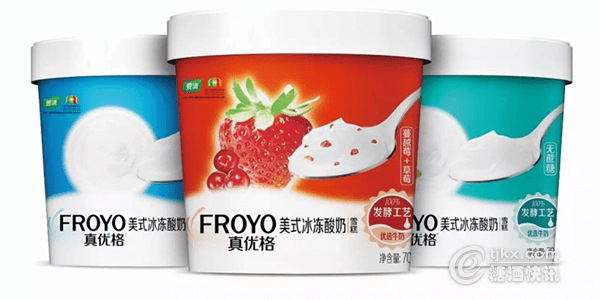
Mengniu launches yoghurt ice cream
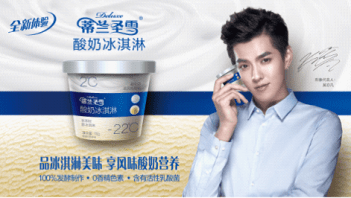
Mengniu Dairy has launched a line of yoghurtice cream under the Dilan brand. Mengniu intends to position this ice cream as a healthy food choice. I mentioned this product in an earlier post, focusing on the innovative advertising. (August)
Mengniu launches new organic formula
Mengniu Dairy has launched a new type of organic infant formula under the Ruipu’en brand on June 5. With this move, Mengniu hopes to better compete with the international brands. According to analysts, the launch of this new product is a logic next step after Mengniu’s acquisition of Junlebao (2010) and Yashili (2013). The company’s focus is clearly moving from a general supplier of dairy products, to one of high end infant formulae. (June)
Milking a new dairy product
Yukunlun Natural Food Engineering Co., Ltd. (Xinjiang) has launched donkey milk powder as a consumer product. CEO Zhang Ming has spent RMB 70 mln developing donkey milk-related products since 2007. So far, he has managed to break even on his investment. Zhang buys donkey milk from farmers at RMB 28 per kg. The retail price for donkey milk powder is around RMB 4000 per kg, double the price of imported cow milk powder, according to Zhang. (May)
Non-alcoholic beverages
New mineral water
A new manufacturer of mineral water, Dipu Beverage Co., Ltd. (Yanling, Henan), has been established. Its water is said to be rich in calcium, magnesium, potassium and sodium. (September)
Prickly pear juice
Shengshang Green Food Co., Ltd. (Yangling, Shaanxi) has launched a line of prickly pear juice drinks. The plant has a capacity of 30,000 hls p.a. The prickly pear (Rosa roxbunghii) is a local product, but has so far not been used for industrial processing. (August)
Alcoholic beverages
New apple wine producer
The joint apple wine project of the Shanghai-based Famous Wines Net and Lanhai Fruit Co., Ltd. (Shaanxi), Malanshan Apple Wine, has started production. The current capacity is 12,000 hls of wine p.a. The plant has a storage capacity of 16,000 hls. This figures are expected to rise to 20,000 hls and 32,000 hls respectively by 2016. Apple wine is positioned as a healthier alternative for the spirits that usually drunk in the Shaanxi region. Shaanxi is one of China’s major apple regions. The traditional product in that sector is apple juice concentrate for export. However, this market is very volatile and adding another product, that is also marketable in China would be welcome. (May)
Cocktails gaining popularity
Bairun Flavour & Fragrance (Shanghai) has announced that it will increase its investment in its subsidiary Tianjin Cocktail (Tianjin) from RMB 280 to 500 mln for the production of the Rio range of cocktails. The reason for this decision is the sharply increased demands for ready to drink cocktails. Shanghai Bacchus, one of the leading companies in the Chinese alcopop market, has increased its purchase of Bairun cocktails to 6 438,400 cases in 2014, 8 times the volume of 2013. Note that another innovative aspect of this item is that it is initiated by a producers of flavours, rather than one of alcoholic beverages (July). In 2017, Bairun’s turnover was RMB 1.17 bln, 87.81% of which was derived from the sales of Rio.
Yanjing wheat beer
Yanjing Brewing (Beijing) has launched China’s first wheat (white) beer. The company uses Australian barley and wheat malt in the ratio 55:45. (August)
Arrowroot wine
Fushangfu Arrowroot Wine Co. (Zhanyi, Yunnan) has launched a new type of arrowroot wine, using locally produced arrowroot as raw material. The wine is marketed as a health drink rich in flavones, amino acids and puerarin. It also contains amounts of zinc. calcium and iron. (February)
Ingredients
Banana powder
Chengli Group (Hainan) is the first in China to launch a banana powder to be used as a food ingredient. It is not only a useful flavor, but simultaneously adds many nutrients a food. It can be used in beverages, cakes, ice cream, candy and even infant formula is mentioned as a possible food that can be enriched with this banana powder. (January)
Low salt yeast extract
Angel Yeast (Yichang, Hubei) has launched low salt yeast extracts as an ideal means to lower salt in many types of food. Angel’s food engineers have performed a series of tests with various levels of salt to arrive at the lowest salt level at which the taste enhancing function of the yeast extract is still not harmed. (March)
The oldest Chinese carbonated beverages dates from 1874
Soft drinks is undoubtedly a Western concept. However, the history of domestic carbonated beverage in China is longer than many people may believe. The most famous soda beverages launched before 1949 are:
Most of the HQ locations were cities with considerable numbers of foreign expats.
The Chinese typology of foods and beverages is one of the recurrent themes in this blog. The typical way in which such products are divided in categories in a certain region provides an interesting look on the influence of the local culture on eating and drinking.
This post will continue with this topic with the typology of beverages. This typology has even been officially laid down in a State Standard (GB), GB10789 to be precise. It discerns the following types.
Carbonated drinks
These are relatively new in China and still strongly connected to the Western lifestyle. China’s oldest carbonated drink: Beibingyang (Northern Ice Sea) has been revived recently, which I have introduced in a separate post on the reappearance of old brands.
Protein beverages
Although not a Chinese invention, this category is much more popular in China than elsewhere in the world. They have also been introduced separately in a previous post. Protein beverages are relatively viscous liquids made from various nuts or beans, or milk, or a combination. A number of them include probiotic cultures.
Bottled water
Paying a lot of money for something that you can get from your tap for a much lower price has also taken on in China. China’s bottled water market is expected to reach 490 mln hls of total annual consumption by 2020. The retail value of bottled water in China for 2019 is estimated at RMB 346.2 billion. Apart from the large number of branded water, new mineral water brands keep appearing in China. Many are profiling themselves with the location of their source. The trend of 2015, e.g., in this category was mineral water from Tibet.
Some statistics of the past 5 years
Year
Volume(hls)
Increase(%)
2015
841,016,000
7.60
2014
781,614,000
9.37
2013
665,114,000
13.01
2012
556,278,000
19.20
2011
178,900,000
23.67
Top brands
The following table shows the market shares of major brands in 2017
Brand
Share (%)
Nongfu Spring
8.5
C’est Bon
8.0
Evian
5.0
Chef Kong
4.8
Ganten
4.6
Wahaha
4.5
Coca Cola
4.0
Others
60.7
A new variety was added to the category of bottled water by Nongfu Spring in February 2022: bottled boild water (baikaishui). This type is inspired by traditional Chinese medicine. TCM attributes many healing and nutritional functions to water that has been brought to the boil and then cooled to drinking temperature.
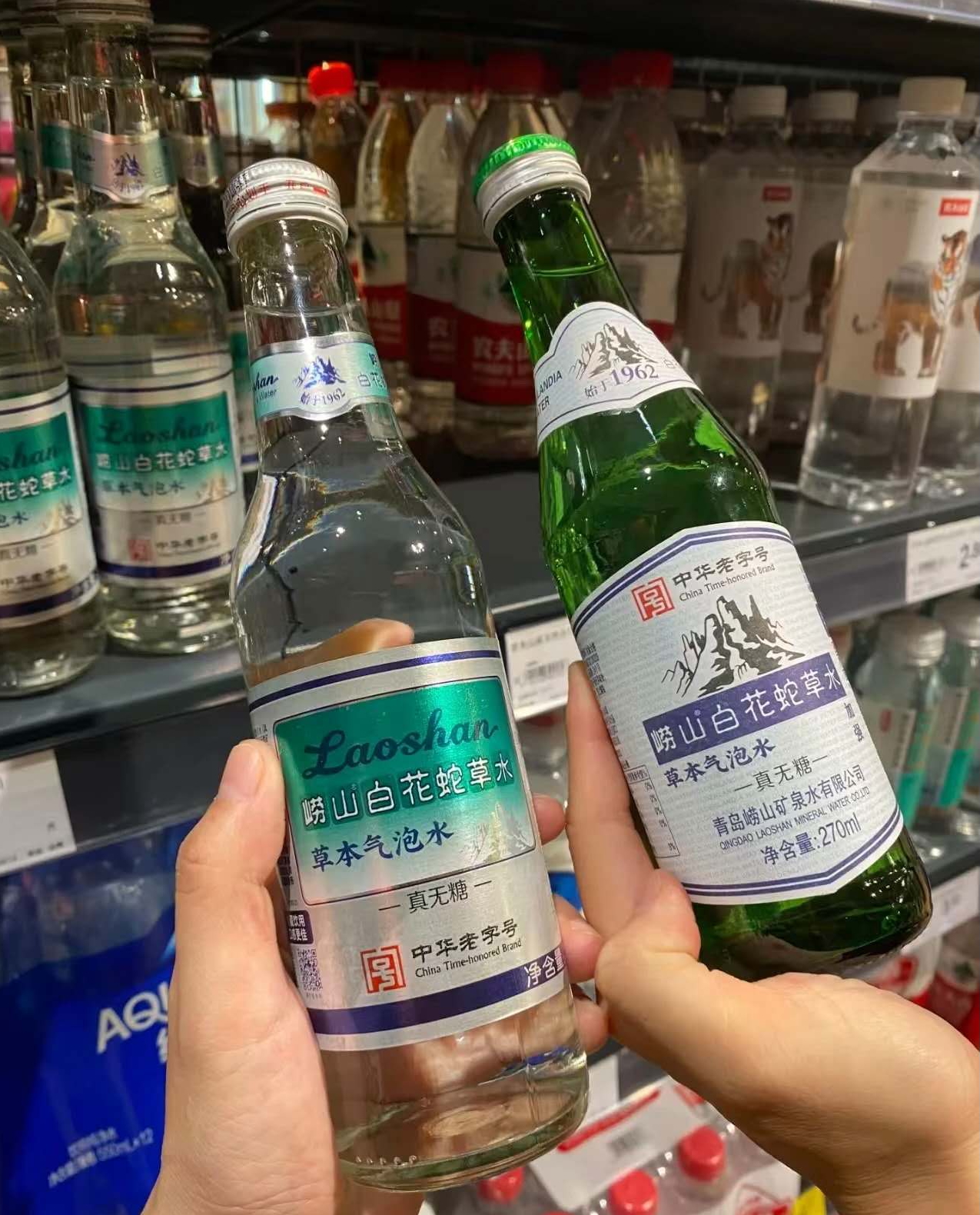
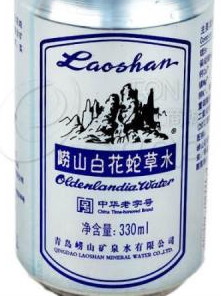
China’s once largest mineral water brand, Laoshan, came back in 2025 with a mineral water enriched with snake grass. Snake Grass, also known as Clinacanthus nutans, is a plant ascribed various medicinal benefits, like anti-inflammatory, anti-diabetic, anti-cancer, and antioxidant properties.
Tea beverages
Tea is China’s national drink, but still, tea beverages have been introduced from overseas. When foreign ice teas were launched in China, many beverage makers tried to concoct their own versions. Tea beverages with various fruit flavours appeared one after another.
Milk tea
A rapidly growing subcategory are the milk teas, based on traditional milk or butter teas drunk by Mongolians and Tibetans.
The pictures shows the Sizhou brand milk tea, with the following ingredients:
In the course of 2018, China’s tea aficionados have embraced a new trend, one that is encapsulated in the growing popularity of the milk tea brand, Hey Tea. Originally sold in a tiny alleyway in Jiangmen, southern China’s Guangdong province, the brand went viral on social media because of its signature “cheese” series — a cup of hot tea topped with light cheesecake mix. Since then, Hey Tea has developed into a franchise with more than 80 outlets in 13 cities across the country. In large urban centres such as Shanghai and Beijing, customers routinely wait for hours to get their hands on a cup of cheese tea. Hey Tea’s cheese-inspired beverages are just variations of the same milk-topped teas available at many urban teashops in China. Fresh milk, skimmed milk, and cream cheese are blended and poured on top of iced tea to create a layer of creamy froth about 3cm thick.
Milk tea is becoming such a huge market that ingredients suppliers have started to prioritise it in their R&D. FrieslandCampina Kievit, e.g., is conducting research to develop the optimum dairy ingredients for Chinese milk tea. Aspects considered include: tea type, milkiness, sweetness and mouthfeel.
A new development in the Chinese tea beverage market is mixed tea drinks. Representative brands are: Teaka (tea + coffee), Chef Kong’s tea + milk, Cha pi (tea + fruit juice) and Hongchajun (tea + probiotics).
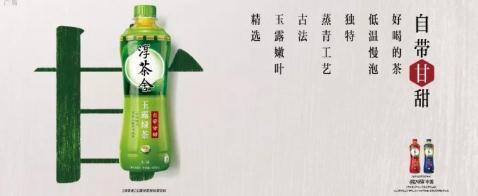
Multinationals like Coca Cola cannot afford to miss out on the popularity of tea beverages in China. The company has launched a range of tea drinks branded Chunchashe ‘Genuine Tea House’. It is marketed as not containing sugar, but still leaving a sweet aftertaste. It comes in green, black and Wulong flavours.
Herbal tea
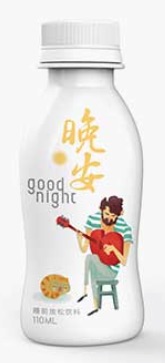
Traditional Chinese Medicine (TCM) is making an effort to cash in on the increasing interest in health foods among Chinese consumers, as has been introduced in earlier posts. The market value was estimated at more than RMB 40 billion late 2015 and is expected to grow to close to RMB 20 billion in 2020.. A very prominent application of medicinal herbs as food ingredients are the herbal teas that have become popular during the past few years. The first and most popular, Wanglaoji, is still based on a traditional recipe. Later herbal teas are marketed as modern health or functional beverages, comparing and competing with Western drinks like Red Bull. A very recently launched product in this category is Good Night (Wan An), produced by Wan’an Technology Co., Ltd. (Beijing). Ingredients are said to include:
natural GABA, theanine, chamomile and spina date seed
Wanglaoji launched its own cola drink, Wanglaoji Cola, in January 2018. The company promoted it during the Davos Summit.
The value of the Chinese tea beverage market in 2020 exceeded RMB 100 billion.
Coffee beverages
Coffee being such a recent arrival in China, so closely linked to a Western lifestyle, it seems odd to find it as an officially sanctioned subcategory of beverages. However, they have become quite popular. Perhaps they are easier on the Chinese palate than the basic black brew. The have been introduced in this blog before, in a separate post.
Plant beverages
This category includes drinks made from the juice of vegetables and fruits, in various degrees of concentration. Cereal based drinks are also included. A subtype that is especially popular in China is called ‘fruit tea’ (guocha) in Chinese. The best English translation would be ‘nectar’. The are relatively viscous drinks with carrot or hawthorn pulp as the main ingredient.
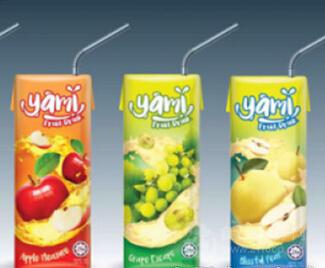
In 2016, China’s fruit juice retail volume was 134.47 mln hls and retail sales reached RMB 100.914 billion, up 1.88%. Main brands in the Chinese fruit juice market include Uni-President, Chef Kong, Nongfu Spring, and Huiyuan. China’s top producer in this category is Huiyuan Fruit Juice (Beijing). The company was once an acquisition target of Coca Cola, but the deal was vetoed by the Chinese cartel watchdog. Huiyuan recently launched a range of juices in Malaysia under the Yami brand.
The latest addition to the fruit nectars is Zaoshanzha, a drink made from dates and hawthorn by Haoxiangni.
In terms of taste, orange juice is still the largest category of the fruit juice market in China, There are some differences in taste between the north and the south in China. Apple, peach and pear consumption is relatively high in the north market. Pure juice (‘not from concentrate’) is the growth point in this industry. Chinese women have greater demand for juice, which is related to the pursuit of a healthy figure.
Another popular new subtype is formed by the fruit vinegars. These beverages have become in vogue in the years 2015 – 2016 as health products that help burn fat. In the early stage, it looked as if they would become a success, cashing in on the general trend towards more healthy food in China. However, the tide seemed to turn mid 2018, when a prominent brand, Tiandi Nr. 1 (Tiandi Yihao)’s semi-annual report showed a turnover almost half that of the same period of the previous year.
Flavoured beverages
The literal translation of the Chinese definition of this category is: drinks made by combining food flavours, sugar or sweeteners, or acidifiers. We probably could also refer to these as: designer beverages. It is not always easy to distinguish these from other categories. If you boil tea leaves and the add other flavouring ingredients to the filtered liquid, you would have a tea beverage. However, a drink whose ingredients list includes tea extract, would count as a flavoured beverage.
Nutritious beverages
These include sports drinks and other functional beverages. This category started to boom in the course of 2016. As a result, Red Bull is confronted with an ever growing number of domestic competitors in China. One of the frist challengers (August 2016) was a vitamin drink by Want Want, presented in a gold-coloured can.
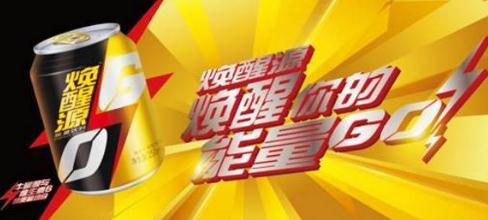
This product category is getting so popular, that a dairy company like Yili launched an energy drink of its own in April 2018: Huanxingyuan.
Solid beverages
These are sold in powdered from and infused before consumption. There is at least one traditional Chinese drink typically sold as such: suanmeitang or sour plum drink (literally: soup). A more recent, but still traditional, product is instant soy milk. Many members of the other categories are now also available in powdered form.
The picture shows Yiben brand suanmeitang, which contains the following ingredients:
Senke Beverages has launched an innovative type of suanmeitang adding traditional Chinese medicinal herbs, marketed as ‘Lotus Leaf Suanmeitang‘, in the summer of 2018. Apart from quenching thirst, it is said to lower cholesterol and have a certain slimming effect.
Daring launches – low survival
Chinese beverage makers are quite daring in launching newly developed products on the market, where Western multinationals would organise more pilots to test the products’ reception by consumers. However, a recent survey by the China Food Industry Association reveals that only 5% of newly launched Chinese beverages survive. I guess that is test marketing the Chinese way.
How do Westerners appreciate this?
Are you getting bored with my academic stories? No problem, you can now relax watching this home brew video in which a Western lady living in China introduces here own favourite Chinese beverages.
Here is another Top 5, but then of the most bizarre Chinese drinks.
Latest trend: odd flavours
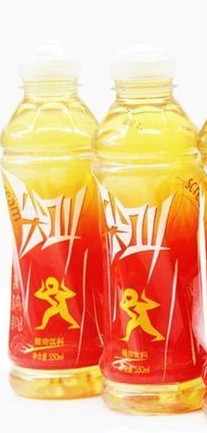
The structure of the Chinese soft drinks market is undergoing rapid changes. Consumers are developing an awareness of personality, paying more attention to individual needs and preferences. This has created a market for what Chinese have started to call ‘odd flavour water (guaiweishui)’. Laoshan, China’s first and for a long time only producer of mineral water, has launched Baishecaoshui (literally: white snake grass water). It is based on Baishecao (oldenlandia). Hey Song Sarsaparilla from Taiwan is also gaining popularity. The current top producer of mineral water, Nongfu Spring (see above), has also launched odd flavour drinks: Oriental Leaves (Dongfang Shuye), which does not contain herbal extracts, but a mix of flavourings and nutrients, and Red Pointed Leaves (Hongse Jianye), which contains extracts from American Ginseng, green tea and bamboo. This market is extremely volatile. The survival rate of new drinks is generally about 10%, and is now dropping to 5%, according to recent market studies. These products are catering to the young and young Chinese consumers have a low brand loyalty where food and drinks are concerned.
As food and culture are so intertwined, proper market research in the food industry should take account of the ways the local culture affects the segment of the food industry that is being surveyed. A good example is the post on Leisure Food earlier in this blog. In this post, I want to introduce the Chinese categorisation of meat products as used in the official publications about the domestic meat industry. I will list the main categories and for each category provide a concise description.
Meat in general
Before turning to the typology, let’s have a look at the Chinese meat market in general. Traditionally, China’s meat of choice is pork, however recently there has been growth in more diverse meats, for example, veal.
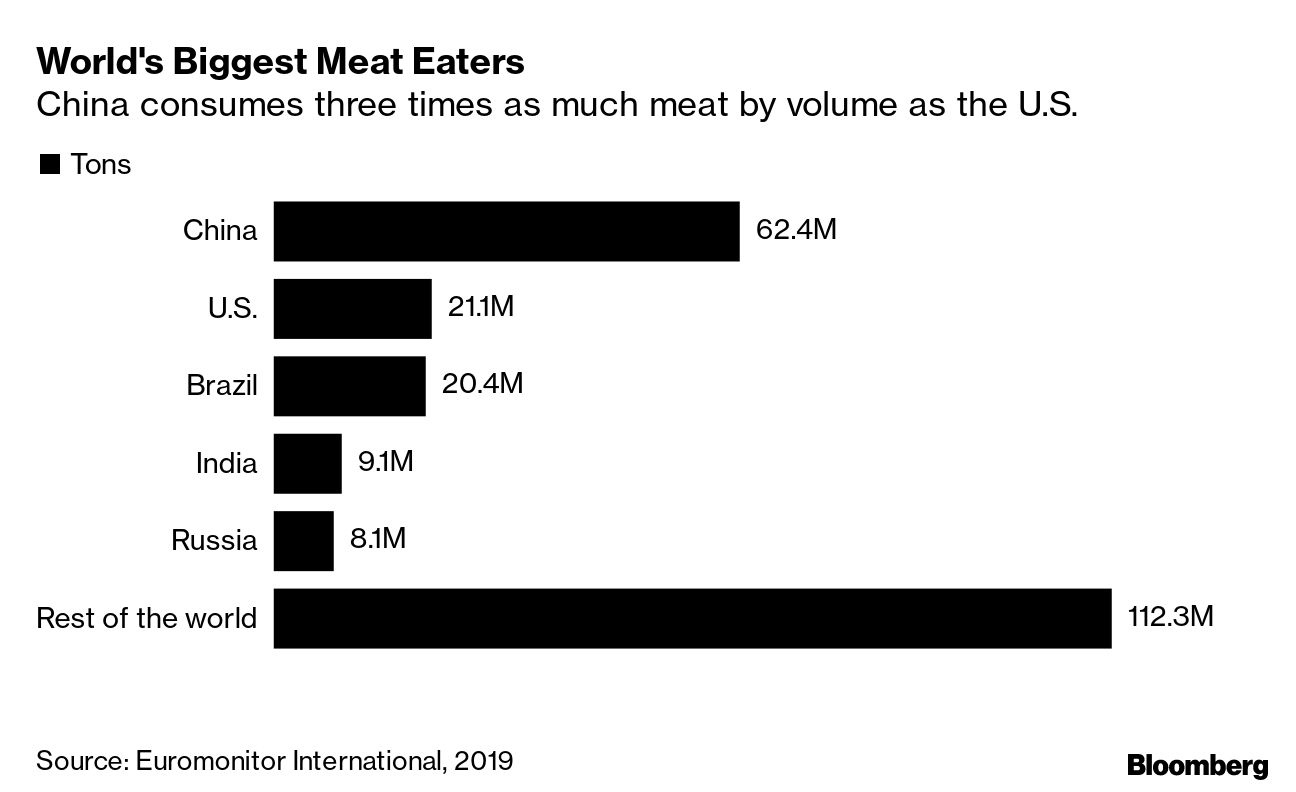
China is now the world’s largest producer, consumer, and importer of meat. In 2019, the country consumed around 28% of the global meat supply, which accounts for 73% of the Asia-Pacific meat market value. In the same year, the monthly import of meat products in China reached USD 1 billion, with Brazil being the leading meat supplier whereas imports from the EU countries including Netherlands, Spain, and Germany growing the fastest.
Fresh meat sales in China make up nearly 80% of the market value. Among all the types of meat, pork sales dominate the market, followed by poultry, beef. It is expected, however, that the Chinese beef and veal meat market will witness a rising demand, with the current per capita consumption rates increased by at least 25% in the next decade, whereas pork market growth will slow. Revenue in the meat segment is expected to reach USD 87.75 billion in 2023, and China’s meat market is projected to grow annually by 19.99% between 2023 and 2027.
The 2023 turnover of China’s top 5 meat companies
Company
Turnover (RMB bln)
Growth (%)
Wenshi
89.921
7.4
Shuanghui
60.097
-4.2
Wanzhou
26.236
-6.75
Meiling
22.367
-10.49
Shengnong
18.487
9.93
Sausages
Chinese sausages are basically the same as anywhere else. Not need to give a separate definition here. The overwhelming majority of Chinese sausages are made from pork and their Chineseness is mainly expressed by the use of seasoning and herbs.
Two popular types need to be mentioned separately:
Cantonese sausages
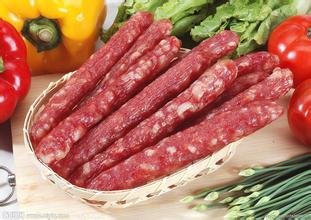
Cantonese sausages or la sausages are fermented sausages. The lactic acid produced during the fermentation gives the sausages a specific taste and functions as a natural preservative. Cantonese sausages are also relative hard, not unlike salami.
A number of research institutes and universities all over China are engaged in R&D to improve the production process of traditional Chinese fermented sausages. Aspects involved include: preventing the oxidation of fat, protecting the colour, enhancing the flavour using enzymes and specially desinged aromas, and decreasing the sodium level.
To learn about a novel type of sausage, date sausages, see my post on dates in this blog.
Ham sausages
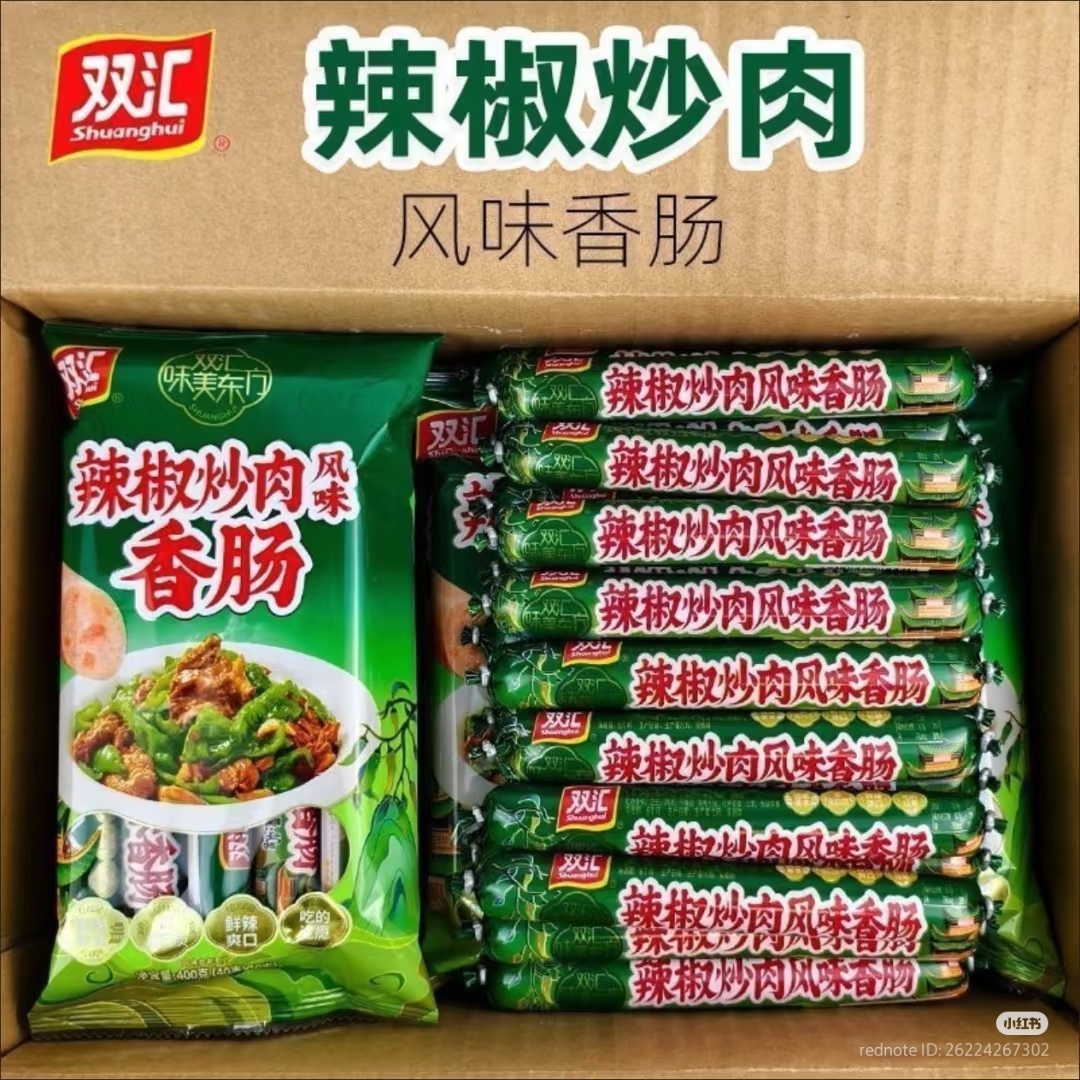
This is an umbrella term for a large variety of relatively small sausages that can be consumed as a snack. Chinese love to bring them on a trip, be it a one day tour to a local scenic spot, or a train trip of a couple of days. Although they count as a meat product, many ham sausages have a high starch content to make them soft enough for easy consumption on the road. For the same reason, they are usually relatively small and individually packed.
A development that I also identified for dumplings is the introduction of complete Chinese dishes as flavouring (and texturing) of sausages. The following two pictures show two sausage types launched by Shineway (Shuanghui) in 2025.
Stir fried chili and meat sausages
Sichuan pepper chicken sausages
Ham
Ham in China is again more or less the same as ham elsewhere, made from the same part of the pig. One of my earlier posts is about one of China’s most famous types of ham: Jinhua Ham.
Cured meat
Cured meat products are typically more closely related to the local culture. People in different regions like different combinations of spices. In the case of China, soy sauce is a product often used in curing meat. Star aniseed is also a prominently present in many flavoured meat products from China.
Sauce pickled meat (luwei)
This category has much in common with the previous one, the main difference being that the products in this category are boiled with spices, while cured meats are pickled and dried.
Cured meats are usually eaten a such, while sauce pickled products are dipped in a sauce when consumed. The most representative product in this category is the duck neck which has become a favourite street food all over China.
The industrialisation of this category is still low. The five major brands had a combined market share of just over 20% in 2023.
Brand
Share (%)
Juewei
8.6
Zhouheiya
4.6
Ziyan
3
Huangshanghuang
2.8
Jiujiuya
1.3
Smoked and roasted meat
These products are what the name says: smoked or roasted meat, again usually first pickled.
Dried meat
A very old way to preserve meat is to air or sun dry it. A special product in this category is:
Shred meat/meat floss (rousong)
Marinated pork or beef is roasted over a slow fire until dry and then shredded. Shred beef is used to flavour white rice, rice porridge and my other relatively bland staple foods. An example of such a food is shred meat flavoured bread introduced in my blog on public nutrition in China.
Meat floss comes in three varieties:
Dried meat floss: the standard product;
Short dried meat floss: the standard product, but with vegetable oil added and fried to small pellets of short fibres;
Dried meat powder: the standard product, but with vegetable oil and bean powder added and shaped into small pellets.
Prepared meat products
This is an umbrella term for meat prepared in various ways into semi-finished products. The consumer can transform them into ready to eat products with a minimum of effort.
Canned meat comes in two categories: hard cans (e.g. luncheon meat), what we are used to refer to as canned meat and soft cans, prepared meat packed in aluminum foil. The former has to be removed from the can for further preparation, while the latter can be prepared by boiling the pack in water.
Hamburger
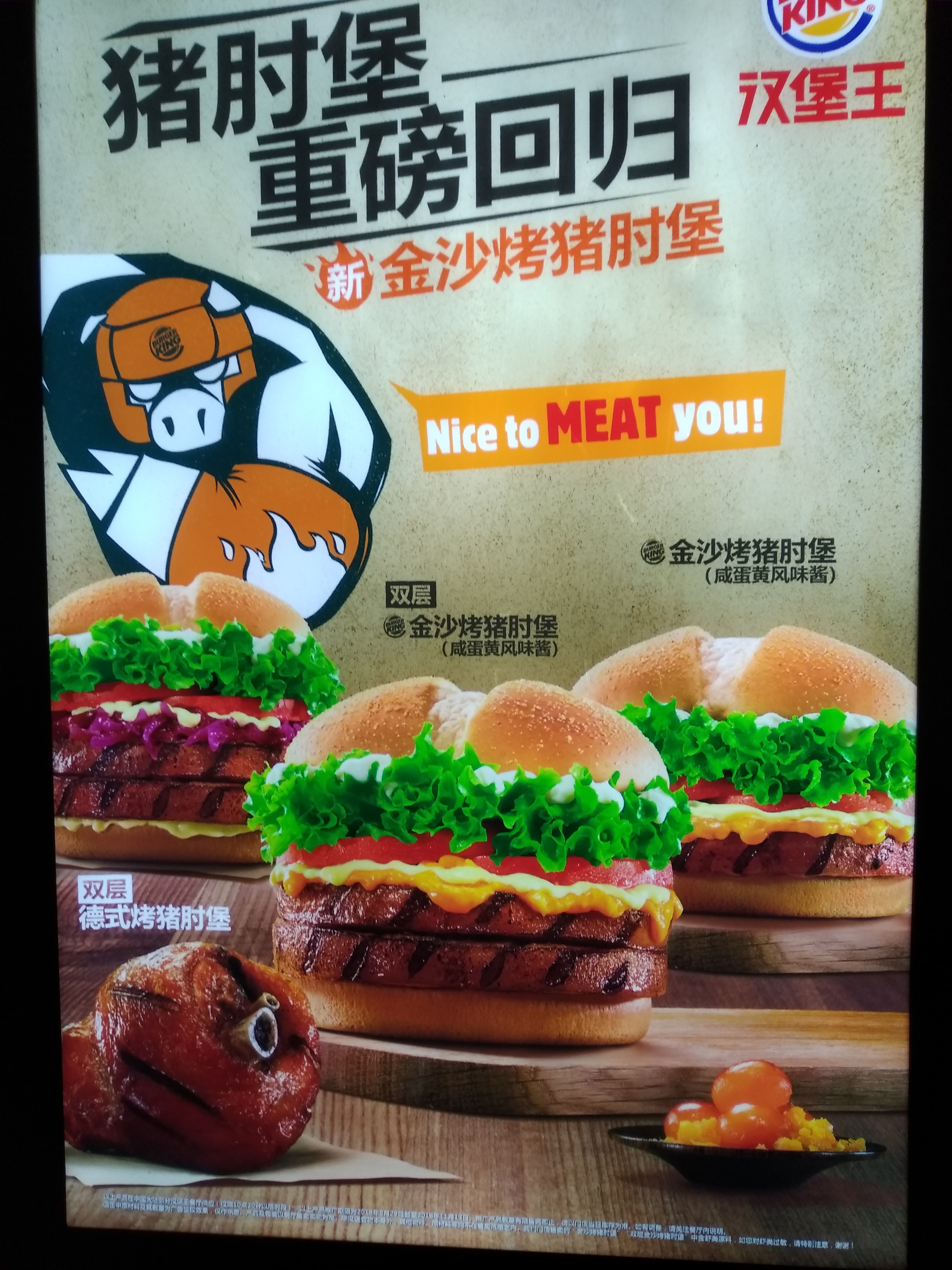
The Western hamburger is undergoing interesting transformations in China to adapt better to the Chinese palate. It is easy to guess that McDonalds was the first channel through which the beef patty was introduced to China. Burger King followed later. Although very few Chinese dislike beef, when Chinese talk about ‘meat’ in general, without mentioning a particular animal, they are always referring to pork. Burger King is responding to by adding a pork-based hamburger to its product range in China. Their ad even uses the same pun that I included in the title of this post.
To still add some foreignness to the promotion, the text in the lower left corner says that the flavour is based on ‘German roast pork knuckle’. A genuine American European Chinese potpourri of flavours!
In our Western view of the world, cream cakes are very much a part of our culture, as the ideal accompaniment of a cup of coffee. The powerful synergy of caffeine and sugar gives a bitter sweet boost to body and mind.
Traditional Chinese pastry is different. Chinese have a sweet tooth as well, but cream is dairy and hence non-Chinese. Dairy products have found their way to China, witness a number of earlier posts in this blog, but it took a while before Chinese bakers starting producing cream cakes that can compare with the ones in a Konditorei in Vienna.
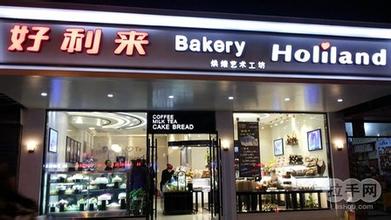
The largest Western style pastry chain in China has an ominous name: Holiland. The story of its foundation is unique as well.
When the founder Luo Hong couldn’t find a decent cake for his mother’s birthday he made a rather extravagant gesture. The then 23-year-old bought a bakery to ensure the problem would never happen again.
That was 18 years ago. Now, at the age of 41, Luo is president of one of the largest bakery chains in China, and controls more than 1,000 cake shops in 70 cities including Beijing, Shanghai, Shenyang and Chengdu. They specialise in cakes, breads and other pastries and control 85.7% of the market.
This year the company is moving some stores from their original homes in the suburbs to downtown areas where the footfall is high enough to bring in even more customers.
Unlike other Chinese entrepreneurs whose names are often connected with their business, Luo is better known as a photographer, environmental campaigner and social activist.
He has spent most of his time during the last decade taking pictures and participating in charity events around the world, including the establishment of an environment protection fund for the UN Environmental Program.
Cake inspired by a photo
It’s Luo’s belief that if a company doesn’t have different brands to meet different customers’ demands, it cannot be successful.
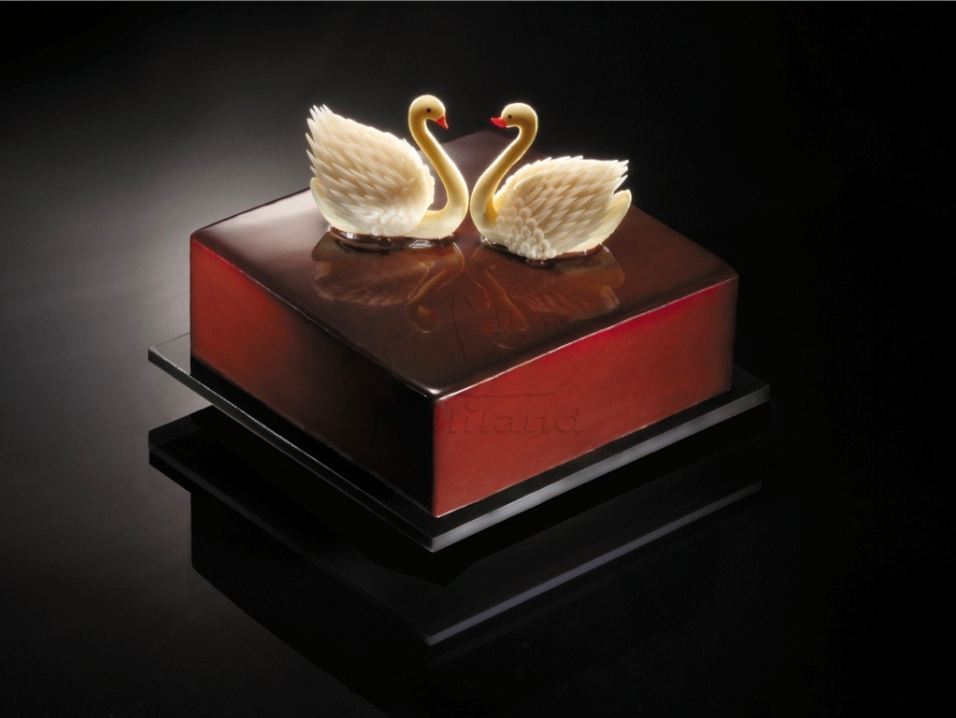
A picture of a white swan taken in Cambridge is the inspiration for a new cake he intends to market later this year as part of his diversification into premium cake making.
Following on the success of the black swan series, white swan cakes will feature top-class decorations and accessories. The price will be between RMB 400 and 10,000, putting it into a class of its own. A cake weighing 1.5 is priced at RMB 469. At 21 cake, one of the most popular online cake shops, a cake weighing the same costs RMB 169 yuan.
The wedding cake in the swan series will set customers back RMB 10,000. Fittingly, as part of the service, it will be delivered to the wedding ceremony by Rolls Royce free of charge.
“Cakes and photography are two parallel interests in my life. Sometimes they cross paths. The launch of swan cakes is a combination of my business and personal interests,” Luo said.
To make white swan cakes as exquisite as possible, Luo asked the developers to capture minute details from the queen of birds.
Luo is confident about the cake’s sale prospects and expects they will account for 50% of Holiland’s total annual revenues.
Photos as marketing tool
Luo says photography brings him happiness, inspiration for design and also a low-cost marketing strategy. Some of his photos adorn subway walls after the Beijing municipal government decided this year to improve the city’s culture environment.
“It’s good for our business,” Luo said. “People who talk about the swan pictures will also be curious about my swan cakes.”
Luo knows that in baking it is wise to follow produce what customers like best. One of his products featured a bear decoration but he got rid of it because some of his friends in the finance industry said it brought back unhappy memories of the bear market during the financial crisis last year.
As one of the largest cake shop chains, Holiland also faces the problem of “brain drain”. The high turnover of skilled employees means that Holiland is always in danger of losing key intellectual capital in its core competency areas. The company needs to develop knowledge management strategies to capture, share, and preserve knowledge and integrate knowledge management into its strategic plans, said Luo.
This year, the entrepreneur paid RMB 5 million to American leadership expert, John C. Maxwell, to give a speech about leadership to all employees at Holiland on July 28 and 29 to improve the management skills of his employees.
Online business
Today’s hurried urban life and the convenience of the Internet are luring more customers to online businesses, including bakeries, in China.
Luo and his team have joined the trend. All swan cakes are only accessible to online shoppers. The savings will be used to improve the product. It will come with a steel knife and fork rather than less environmentally-friendly plastic used previously.
Other bakery shops have also found that doing business online is less time-consuming and more economical. E-beecake, 21 cake and Waffleboy are among those becoming more popular with young people.
Other traditional chains are also challenging Holiland’s market position. Beijing-based Weiduomei is diversifying its business by opening three cafes and two Western-style restaurants. Baoshifu (Chef Bao), a popular pastry chain established by a man named Bao originating from Jiangxi, has made name for its shred meat buns, but also carries a broad range of pastries and breads. Bread Talk is focusing on gaining a foothold in high-end shopping malls and office buildings, reinforcing its niche image. Luo says: “Competition is good for the development of the cake market, which still has great potential.”
Holiland is also expanding its portfolio of delicacies to include mooncakes and sweet dumplings. This autumn, the company will introduce a greater variety of mooncakes to attract more high-end customers. Holiland sold as much as RMB 200 million of mooncakes every year in China. According to Xie Li, general manager of Holiland, regular cakes, mooncakes and sweet dumpling are Holiland’s best sellers, accounting for 60, 20 and 10% of the company’s revenues respectively.
Innovation – localisation
Holiland tries to link up with current trends. A great example is the marketing of its ‘drinkable cakes’ launched late 2020. These chestnut and cheese cake flavoured beverages are based on Western flavours, but the marketing is done in traditional Chinese style.
Another way Holiland links up with the Chinese tradition is launching a series of soy milk based cheese cakes late 2020. These are more acceptable to the many Chinese consumers that still have a problem with the creamy flavour of milk.
Brand name with a double meaning (?)
Readers with knowledge of Chinese may notice that this brand name has a double meaning. The Chinese name Haolilai literally means ‘good profit coming’, but the pronuciation resembles haolaiwu ‘Hollywood’. The English name Holiland is obviously inspired by Holy Land. The allusion to the world’s movie capital will attract Chinese consumers’ attention, while Westerners will want to check out a chain linked to the Holy Land. Luo Hong has never explained his choice of brand names, but I am sure the above is more than a conjecture.
Pets
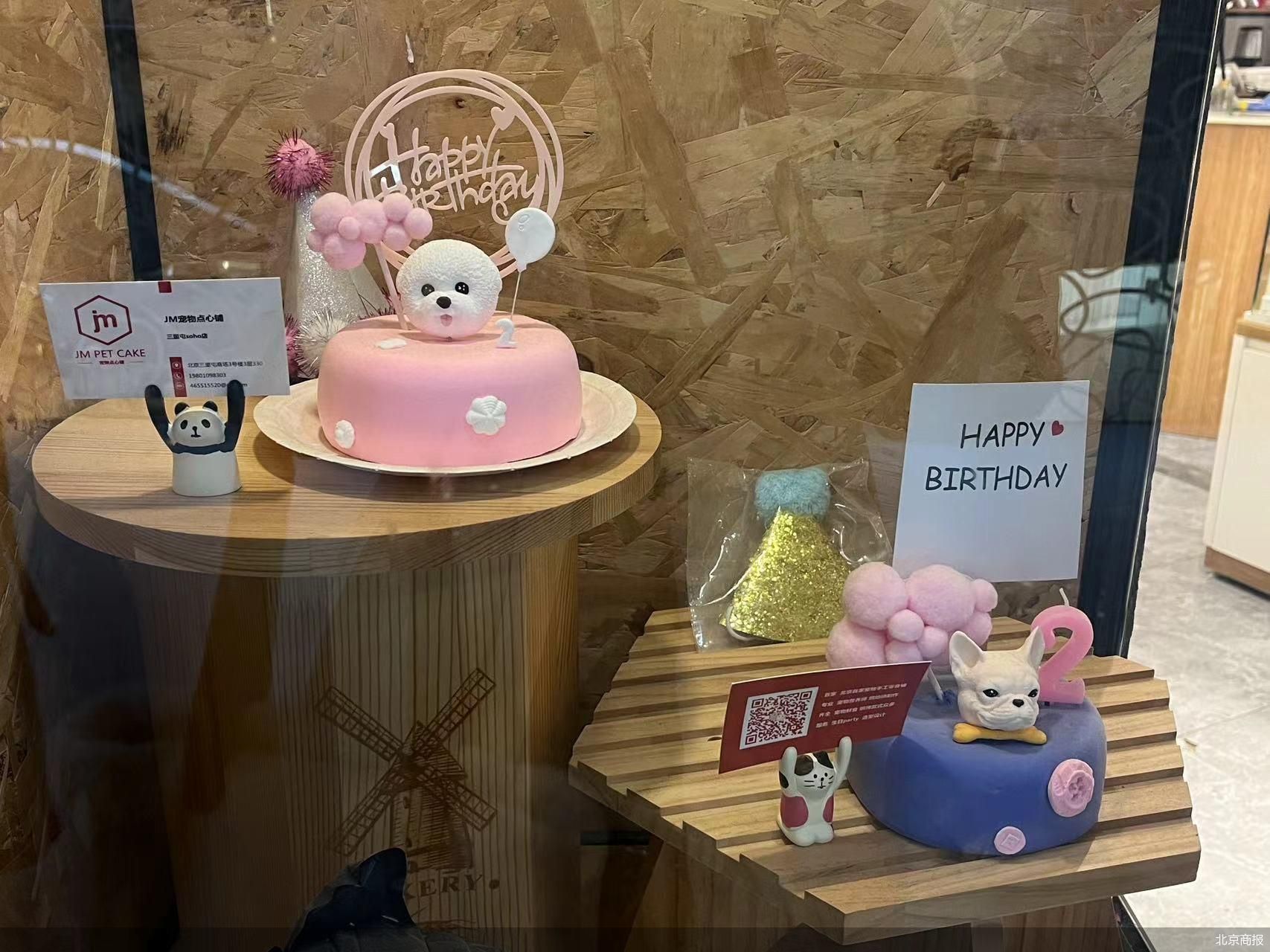
Holiland launched a range of pastries for pets in 2024. You can even organise a birthday party for your pet and his/her friends.
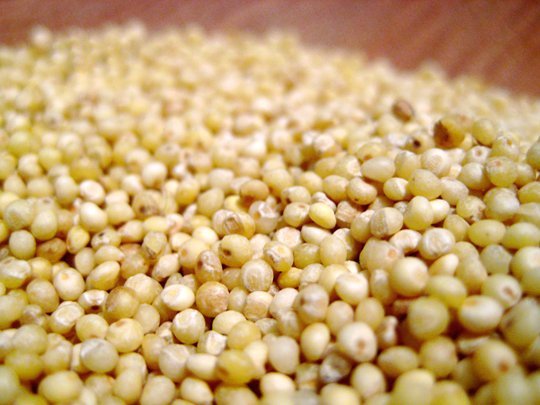
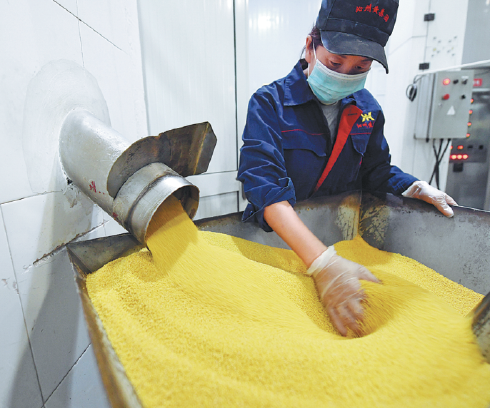
The millet group of plants, like rice and wheat, are grasses that produce small, edible seeds. Archaeologists have long known that they were domesticated very early in China and India; the earliest known noodles, which are 4000 years old and were reported by a Chinese team in 2005, were made of millet. Although rice was domesticated in China’s warm and humid south, millet was domesticated in the north of the country, where conditions were much colder and drier. Archaeological evidence suggests that millet was cultivated as long ago as the Xia Dynasty (21st – 17th century BC) and Shang Dynasty (1600 BC-1056 BC), primarily around the Yellow River basin, northeast China and Inner Mongolia. Yet archaeologists have debated whether these developments were independent or whether rice farmers from the south migrated north and began to cultivate wild millet–which grows much better than rice does in cold and dry conditions–thus transforming it into domesticated varieties.
Revolutionary food
Millet (xiaomi ‘small rice’ in Chinese) was the sustenance that Chairman Mao and the Red Army relied on to sustain them during the arduous campaigns against the Kuomintang and the invading Japanese.
Perhaps even more importantly, depending on how you look at it, millet was also one of the first grains used to brew liquor.
Millet itself retains some of the properties we might associate with the soldiers who relied on it back in 30s and 40s. While it prefers a warm climate, it possesses the ability to adapt to other environments, as well as being remarkably drought resistant and able to survive in poor, heavily acidic or alkaline soils. In short, it’s the kind of food you want to back you up in a tough situation.
Perhaps this is why, in some parts of northern China, it is also traditionally eaten by mothers after giving birth. The grain is mixed with brown sugar and boiled, providing a much needed nutritional boost for recovering mothers and their babies. For similar reasons, the elderly are also advised to gobble down a bowl of millet congee every day before going to bed, to provide energy and help get a good night’s rest. For the life in between these stages, traditional Chinese medicine teaches that millet will help nourish yin, remove humidity, strengthen the spleen and stimulate the appetite, as well as nurture the liver and help lift blood production.
Healthy grain
From the Western perspective, millet falls down when compared with other grains in terms of providing nutritional value, primarily because the nutrients it does contain are hard to digest. However, it is rich in calcium, phosphorous, iron, carotene, Vitamin B1, Vitamin B2, niacin, zinc, manganese, selenium and estrogen, amongst other things. Not bad for a grain that unlike rice does not even need to be refined before it is consumed.
Millet is currently being rejuvenated in China, as part of a revival of ‘coarse grains’. Obesity is a growing health problem in China and eating more coarse grains is regarded as one way to fight overweight.
There is also a nostalgic trend to revive ‘rural cuisines’ in China’s major cities. This is another opportunity for millet to return to the Chinese dinner tables.
Branded millet
A brand promotion meeting for Shanxi millet was held in Taiyuan, capital of Shanxi province, Feb 27, 2019. Nine companies were selected to be members of Shanxi Millet Industrial Alliance which is comprised of 28-member businesses attending the meeting. Several regional millet brands such as Changzhi millet, Yangquan millet, and Wangxiang millet, have been established in recent years, bringing greater economic benefits to local farmers. Apart from further expanding the market in Beijing, Shanxi will explore new markets in Shanghai and Shenzhen in 2019, according to Wang Yunlong, director of Shanxi Food and Strategic Reserves Administration. Promotion events for Shanxi millet will be organized in Shanghai and Guangdong province. Members of Shanxi Millet Industrial Alliance are encouraged to carry out marketing campaigns targeting senior residents, workers and students as well as develop supermarket counters and outlets selling millet.
Qinzhou Yellow Millet Group
Based in Qinzhou city, Shanxi province, is one of China’s leading millet processors. The company has signed a strategic alliance with Canada-based importer of Asian food Afod Ltd. in 2020. The first 200 mt batch of yellow millet was shipped to Canada within that year. The founder of Afod is a Canadian-Chinese, whose hometown is in Shanxi. Qingzhou Yellow Millet Group itself was established in the 1990s as a local flagship company in the processing and sales of the products. Shanxi is good for about 10% of the national millet output.
Aohan Banner Millet
Haiqing Liu is the driving force behind a recent revival in local millet farming in Inner Mongolia. His unusual journey started in 2017, after graduating university, when Haiqing, unlike many of his peers, decided to return to his village and build a future in farming. His idea was to set up a cooperative with local farmers, specializing in ancient millet – produced ecologically. Contrary to his expectations, the idea was not an instant hit with local farmers. Faith was limited in the young graduate, he recalls, and funds were equally scarce. As a result, their early production was “skinny”, he says. All signs pointed to a premature end of the cooperative when Haiqing had an idea: internet crowdfunding. If he could just get 100 people to buy 10 jin (5 kg) each of millets at the price of RMB 150 per person, they could boost local incomes and revive ancient agriculture all at the same time. Within a week, he raised RMB 16,000. This produce-on-demand model – or “Sales before production, production according to sales”, as Haiqing calls it – ultimately became part of their success. It guarantees that farmers get a good price for their product and never produce too much. In 2018, the cooperative registered the trademark Aohan Banner Millet, which refers to the region and guarantees the conservation of traditional millets species like sorghum and foxtail.
Products
So what finished foods based on millet are available on the shelves of Chinese supermarkets? I will introduce a few.
Millet babao porridge
I already introduced babao porridge in one of my earlier posts. Millet can be used as the basic raw material instead of rice. In fact, porridge is the most typical way to eat millet in China. During the colder months, vendors selling millet porridge can be found on many street corners in Beijing.
Millet guoba
Another old acquaintance that can be made from millet is guoba. Sun brand guoba, the oldest branded guoba in China, is available in a millet version. The ingredients listed on the package are:
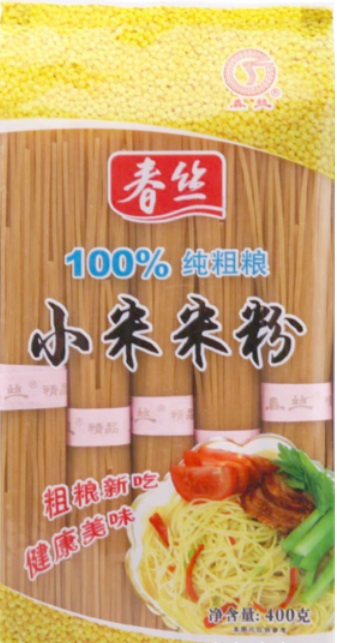
Fensi, glass noodles are usually made from rice (and occasionally from lotus root meal), but again, millet can be used as raw material as well. The Chunsi brand glass noodles are market as ‘made from 100% course grains’.
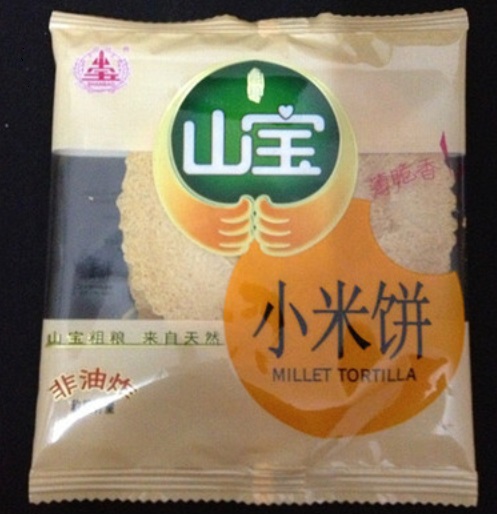
Millet tortillas
With the word ‘tortillas’, I am simply following the English words on the package. We could also refer to this product as millet crackers. The picture shows the Shanbao brand of millet tortillas. The ingredients list reads as follows:
The ice cream market in China has witnessed steady growth over the past years. In 2021, the country’s ice cream industry was valued at RMB 160 billion, with a growth rate of 8.84%. The market is expected to reach RMB 275.19 by 2027.
Chinese invention
Ice cream is believed to have been invented in China, but it’s taken more than 2,000 years for the Asian powerhouse to warm up to the frosty dessert. Their version of ice cream was made from a soft paste of tender overcooked rice, combined with spices and milk and then packed in snow to solidify. It probably was more of a gritty ice milk and less like today’s smooth ice cream.
Although popular among the nobility, the difficulty of storing ice made these treats prohibitively expensive for commoners. It wasn’t until the Song Dynasty (960-1279) that ordinary people gained access to chilled treats. A 12th century memoir mentions a wide variety of chilled delicacies, including marinated plum water, coconut wine, and kumquat snow bubbles. It was also during this time that ice porridge, osmanthus shaved ice, etc. Marco Polo also made note of “milk ice,” a slushy mix of jam and milk that melted in the mouth. This was probably due to the fact that Marco Polo entered China during the Mongolian period. Unlike the Chinese, Mongolians consume dairy products on a daily basis.
When Chinese started living in Europe for studying or acquiring technical knowledge, the returned to their mother land with stories about sweet chilled delicacies. It is no surprise that the first modern ice cream was served in Shanghai, the region with an early and strong Western influence. The following picture shows an ice cream parlour in Shanghai during the 1930s.
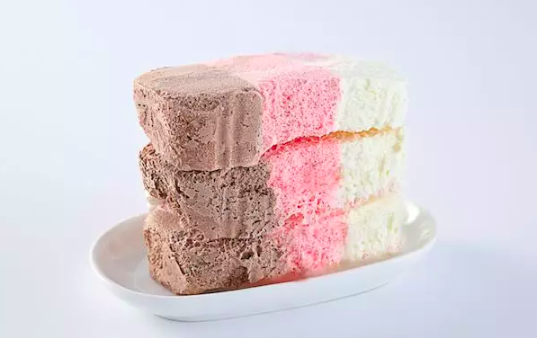
In 1927, the American merchant A.P. Henningsen opened the Henningsen Produce Company in Shanghai and began making ice cream bars. In 1948, the factory was sold to what later became the Shanghai Yimin No. 1 Food Factory, which continues to produce blocks and cups of Neapolitan and regular vanilla ice cream today.
China is now the world’s biggest ice cream market. China has produced 2,214,000 mt of ice cream in 2021; up 5.91%.
Hybrid loan word
The Chinese word for this cold treat so loved worldwide is an interesting combination of a Chinese stem and a loan word. Bing is the Chinese word for ‘ice’. The jiling part has entered Mandarin from Cantonese, where it is pronounced something like ‘keeling’ or ‘keelam’, which is a local rendering of the English word ‘cream’.
One third of all ice cream bought globally is consumed in China, which became the largest ice cream market in the world in 2014, beating the US by a lick with USD 11.4 bn in sales compared with USD 11.2 bn.
Chinese people spent 54% more on ice cream in 2014 than they did five years earlier, while the US market managed a more tepid 6.6% growth. However, Americans retained their crown as the most gluttonous ice cream consumers in the world, consuming 18.4 litres of the dairy dessert per capita in a year – more than four times more than the average Chinese person’s annual intake.
Rising incomes are driving the growth in China’s ice cream market, helped by the country’s increasingly developed retail infrastructure and facilities for storing and supplying “cool cargo” such as fresh produce, frozen foods and pharmaceutical drugs.
The pace of development, coupled with the immensity of the population, is having an increasing impact on the Chinese ice cream market. However, the vast array of locally produced, low-price brands present a challenge for global ice cream giants looking to develop there. Top Chinese dairy company Mengniu recently launched China’s first yoghurt ice cream.
Just two non-Chinese companies make the list of the country’s 10 most popular ice cream brands. Unilever, which owns Wall’s and Ben & Jerry’s, is the fourth biggest company in China with around 3% of the market, while Nestlé holds 1%.
The value of the Chinese ice cream market in 2018 was RMB 123.937 billion and is expected to exceed RMB 160 billion by 2021.
An interesting spin-off of the COVID-19 epidemic was a surge in ice cream consumption, even during the coldest period of year. A survey reported an 18% year-on-year growth in ice cream consumption during the Jan 25-Feb 7 period and a further jump to 37% in the next fortnight, when COVID-19 and quarantines peaked.
Regional production
The following table shows the production of ice cream in China in 2017, broken down in major administrative region.
Region
mt
National
3,783,321
Henan
596,858
Guangdong
525,317
Jilin
325,367
Hubei
319,049
Sichuan
261,499
Guangxi
210,840
Hunan
194,380
Hebei
173,731
Beijing
155,946
Liaoning
132,678
Shaanxi
132,064
Inner Mongolia
112,137
Jiangxi
90,538
Guizhou
87,176
Anhui
77,032
Zhejiang
73,389
Tianjin
72,683
Heilongjiang
71,494
Shandong
68,827
Shanghai
32,300
Xinjiang
29,590
Yunnan
15,841
Jiangsu
15,701
Fujian
8,884
As is the case with many statistics like these, it is useful to also look at the total figure of the cities Beijing and Tianjin and Hebei province, that are geographically one region. The Chinese government is currently conceiving a development plan to (re)integrate those regions. The total volume for ‘Greater Hebei’ would then be 402,360, making it China’s 3rd ice cream region.
Local flavours
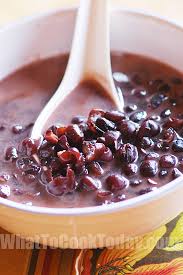
Ice cream makers have adopted the products they market in China to the Chinese palate. Most Nestlé Ice cream has a different flavor than in its Western markets. Not as rich or sweet. For the most part at a Chinese Buffet you can find the typical frozen Ice Cream sections for scooping: chocolate, milk/vanilla, strawberry. Then you have red bean (see photo), taro, green tea, sesame seed, green bean, ginger or red date. There is a plethora of fruits in China like longan, lychee, durian, etc., which can all be used to flavour ice cream. Smaller local companies try to experiment with odd flavours, like: ‘sweet green pea’ and ‘tomato-strawberry’ popsicles, to lure consumers away from the major brands.
Innovative flavours
A number of local players has started experimenting with flavours inspired by traditional Chinese cuisine. Wufeng introduced a spicy chocolate flavoured ice cream called Mengxiaola in 2016. Moreover, an ice cream store called Global has squid ink flavour and other unique flavours from across the world. Yolk ice cream can be found in Bonus, a Chinese ice cream store in Shanghai. These are all newly invented flavours and consumers are keen on trying them. On a widely used restaurants review and recommendation app called Dianping, Global scored 8.3 on a scale from 1 to 10 in terms of its flavours, which is a pretty high mark.
Agreeing symbolism
Fonterra’s Tip Top ice cream started to be sold on trial through Tmall in June 2016. one of China’s leading e-commerce providers, operated by Alibaba Group. Distribution will be handled by specialist frozen products distributor Zhuhai Ice Technology. It is still too early to report on the launch’s success, but I expect that Chinese consumers will be attracted by the icecream shown this picture, as the tiger is a symbol of strength and energy in Chinese culture.
Artisan involvement
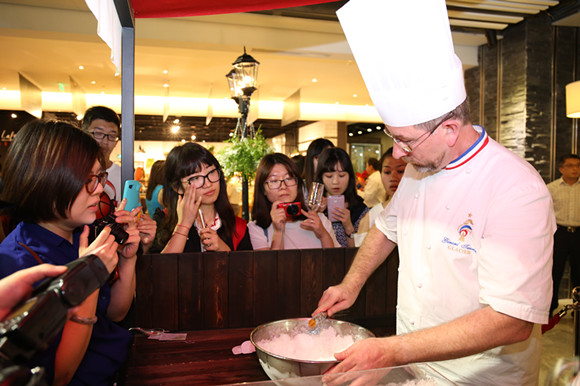
The Chinese ice cream market is now so developed, that it is drawing the interest of international chefs. French chef Gerard Taurin, a pastry chef from Normandy, offered his latest creation at Beijing Galeries Lafayette in June 2015. Most of his ice cream is made with unusual, but very Chinese, ingredients, such as jasmine, goji berries, ginger and Sichuan peppers. Taurin’s selection comprises 10 flavours, including black sesame, tapioca pearl, hawthorn fruit, millet, jujube, cinnamon and eucalyptus. His ingredients are inspired by his travels to Beijing, Hebei, Shanxi and Sichuan provinces. He has shared his ice cream with people on the Great Wall, in the Forbidden City and in Beijing’s hutong alleyways to see how Chinese consumers react to his creations.
Memory lane
All these innovative products have pushed away older ice creams that used to be produced in the early days of the PRC. This has created a craving among older consumers for flavours from the good old days. I have reported on the return of old brands in previous posts. One local company in Heilongjiang province has launched Dongbei Daban ice cream,playing the nostalgia card to promote its ice cream. Dongbei uses 1980s style packaging to wrap the same simple shaped cones designed from that era. For older customers, this brings back memories of their childhood.
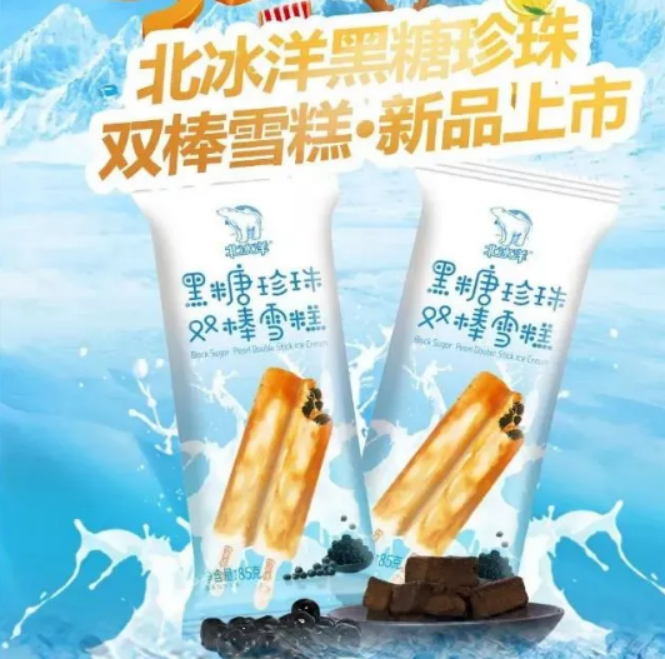
In a comparable move, China’s oldest soda drink brand Beibingyang launched an ice cream popsicle of its own in 2020: Brow Sugar Pearl Double Stick ice cream.
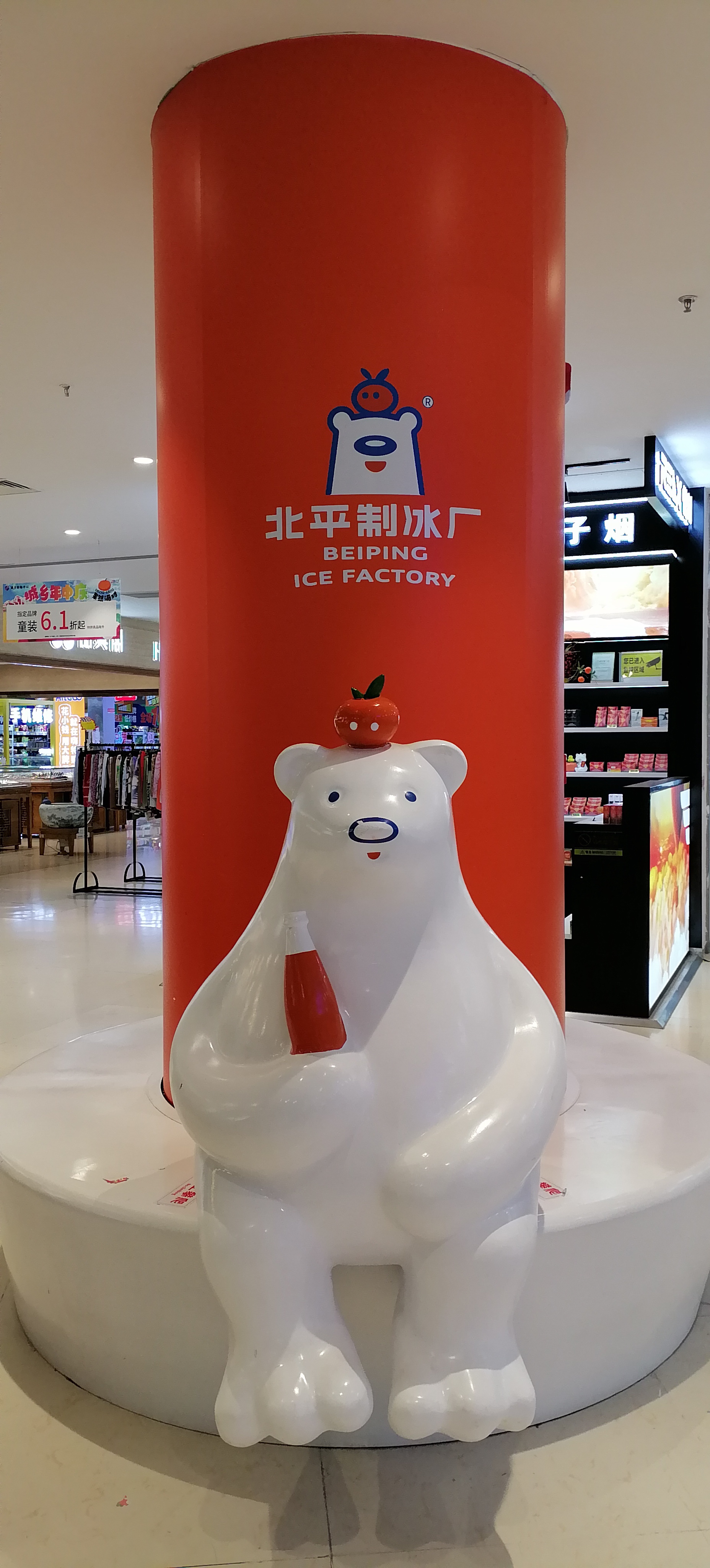
Beibingyang made a major move in increasing its visibility in 2025 by opening a chain of its own ice cream shops. I visited one in Beijing’s Chengxiang Department Store.
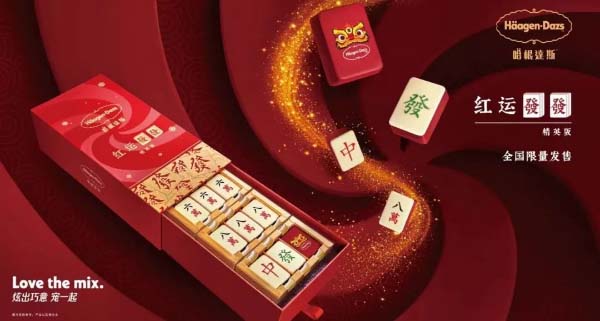
A related trend that started during COVID-19 time is the national(ist) trend (guochao), a nostalgic trend reviving traditional Chinese symbols. Haägen-Dasz followed suit early 2022 by launching a box of ice cream of various flavours packed as a box of Mahyong stones.
Less sugar, less fat, healthier ingredients
Considering that China has the largest occurrence of diabetes in the world and that obesity is also on the increase, an increasing number of people are calling for healthy or low-fat diets, which facilitates the creation of new ice cream types. Noticeably, frozen yogurt has also become a popular choice in China. The probiotics found in frozen yogurt help conserve some of the nutritional value in ice cream, which is conducive to maintaining beauty, slimming, and digestion. Another example is the “one egg” ice cream introduced by Deshi in 2016. The special ‘’egg + oats’’ ingredients drew a significant amount of attention. Astoundingly, the average daily sales volume of “one egg’’ (see photo) was 2 million in Northeast China in the beginning of 2017.
Moutai + Mengniu = baijiu + milk = ice cream
A different development, for some people perhaps less healthy, is that China’s top distiller Moutai and dairy company Mengniu launched three flavours of prepackaged ice cream in May 2022. The three flavours-plum, vanilla and milk-come in small-sized tubs of 75 grams each, are spiked with 2% alcohol. With this move, Moutai hopes to approach more young people. In spite of some improvements, baijiu still has an ‘old men’s drink’ image.
The demand for diversity in choice of flavours (and related colour, texture, etc.) has also reached the ice cream business. This picture shows the various flavours of ice cream wafers offered by Dadongbei in 2025.
The right column from top to bottom: white peach, coffee, melon, strawberry, milk;
The left column similar: melon, white peach, red bean, durian, hawthorn, taro.
DIY experience
As Chinese are putting more focus on experience as opposed to the food itself, ice cream is no longer just seen as a mere treat, but as a product of a modern life style. In traditional Chinese mind-sets, eating very cold food is perceived as adverse to health. However, the considerable impact of Western ice cream has changed perceptions. Nowadays, DIY experience ice cream stores is a new strategy to cater to the requirement of customers. Nestlé, Yili , and the Japanese brand Meiji have together invested over RMB 1 billion for developing new ice cream projects in 2016 to win more shares on the market. In May 2017, Magnum reopened its DIY experience shop called “Pleasure Store” in K11 Shopping and Art Center, Shanghai for the third time, which rekindled the enthusiasm of many ice cream lovers. In other cities like Nanjing, Beijing, Chengdu, Pleasure Store also left footprints in the busiest commercial districts like respectively Jinmaohui , Sanlitun and Taiguli in the last two years. The DIY experience does not only endow ice cream with higher value, but also strengthens the ice cream brand and customers relationship.
Prée: extremely tasty and expensive
The best evidence of the money (urban) Chinese are willing to pay for high-end icecream is Prée that opened its doors in Shanghai’s expensive entertainment quarter Xintiandi. This new high-end ice cream lounge claims to use “smart technology” and alleged recipies from “a very low profile three-star Michelin chef”. The cream gets made fresh on site, with black truffles, bourbon, roasted cherries, and other pieces of luxury. The name is said to have been derived from a popular ice cream shop owner in a small Swiss town, on a street called Ai Prée. The owner, this mystery Michelin man, only uses traditional recipes combined with advanced ice-cream technology, the PacoJet. With prices ranging from RMB 42 to 88 for a dressed up ones-scoop cup, it is the most expensive icecream parlour in China, but the customers are raving about the experience. Prée opened a subsidiary in Hangzhou mid 2018.
The next step in this trend took place in Xiamen in 2024, where people started selling ice cream combined with French fries or noodles.
Trade fair
Ice cream is now big business in China and in particular so for the suppliers of a broad range of ingredients: flavours, sweeteners, emulsifiers, thickeners, etc. This generates a more than enough critical mass for a dedicated trade fair. CICE 2015 – The 11th China International Ice Cream Industry Exhibition will be held in Beijing, April 16-18, 2015. Here, I will only copy the ingredients part of the published scope of this exhibition: specific herbs, flavors and fragrance for ice cream, compound dairy stabilizer for ice cream, natural coloring materials, diet coloring materials, sweetening substances, lactic acid bacteria, specialized & condensed milk essence, special ice cream protein powder & bean powder, other supplements include potato powder, malt essence, fresh cream, dried cheese element, primary dairy products, dairy purification powder, natural fruit powder, chocolate plate, coffee bean, coffee powder, coco fat substitute, nuts, dried fruit.
Downs too – between all the ups
Rising rents and lower profits have forced Haagen-Dazs to close stores in second- and third-tier cities in China in 2015 and 2016 amid a slowdown in the ice-cream market mainly due to a lack of innovation and its inability to keep pace with demand from increasingly sophisticated Chinese consumers. Many Chinese consumers perceive Haagen-Dazs as overpriced. To quote one media article:
‘Two egg-size scoops of Haagen-Dazs icecream costs me RMB 60. I get more value for less by eating two eggs‘
However, the brand has 380 stores in 84 cities in the country, despite the challenges at markets in second and third tier cities in the country. The company reports it still maintains strong growth in large cities. Revenues in Shanghai and Beijing grew 16% and 13% respectively in June 2016, and it opened more than 60 new stores as well in 2015. Insiders believe that the slowdown is partly due to rising rental and labour costs, which have made it become more conservative regarding expansion. Haagen-Dazs also faces intense competition from many other food service players. Many cafes and coffee shops outperformed Haagen-Dazs thanks to their sophisticated dining environment and rich product availability.
Challenging flavours for the coming year(s)
The authoritative magazine for the Chinese flavour industry ‘Domestic and Overseas Aromachemical Information (GuoneiwaiXianghua Xinxi)’ of June 2016 carries an interesting article on possible new ice cream flavours, based on ideas collected from all over the globe. I will list the flavours mentioned here.
Bacon flavour
Ice cream flavoured with a tincture of bacon, adding a little caramel, to obtain a proper salty-sweet balance.
Beer flavour
An idea from Ireland, reported best in combination with dark chocolate.
Chili flavour
Chili and chocolate already has become an accepted combination, so why not try it in ice cream? Some Mexicans in the US flavour their ice cream with Tabasco. Perhaps Laoganma can get involved in this project.
Celery flavour
The origin of the flavour is closer: Japan. The taste sensation of celery ice cream is reported to be close to that of wasabi.
Garlic ice cream
I have actually tasted this one of my favourite eateries in Amsterdam: the Garlic Queen. It is also a must-eat during the Gilroy Garlic Festival. Chinese are big garlic eaters, so garlic ice cream should have a market there.
TCM ice cream
Last but certainly not least, Tradition Chinese Medicine (TCM) includes a number of herbs that could be used in ice cream. No one would object to turning such a delicacy into a health food.
Brand alliance
An interesting product is White Rabbit ice cream, i.e. ice cream flavoured like the famous White Rabbit candy. It is a very Chinese way of trying to create synergy from co-branding.
These ideas provide a rare insight in what Chinese food technologists are thinking about developing new types of ice cream. I will keep you informed about which of these flavours will be turned into a commercial product.
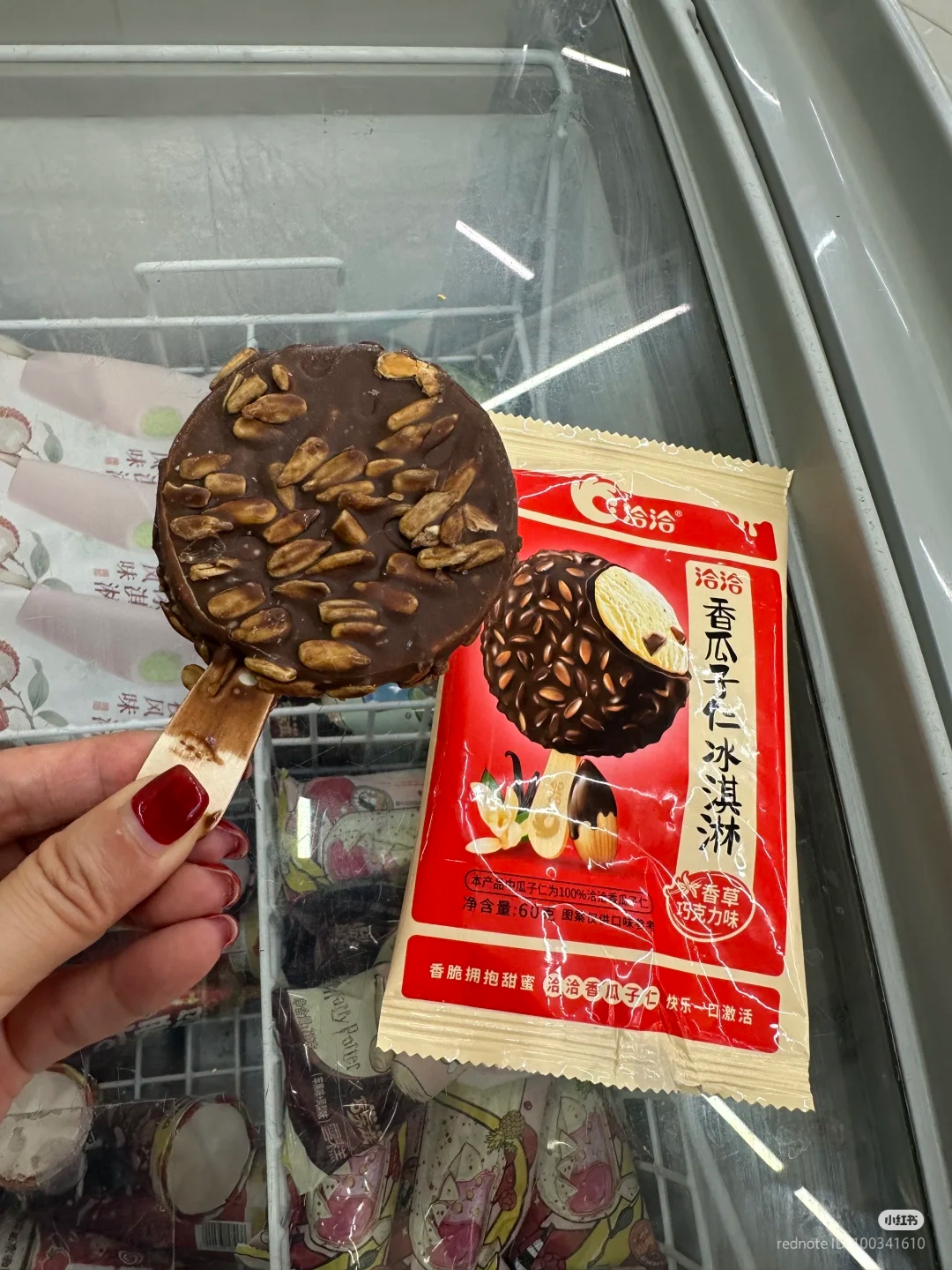
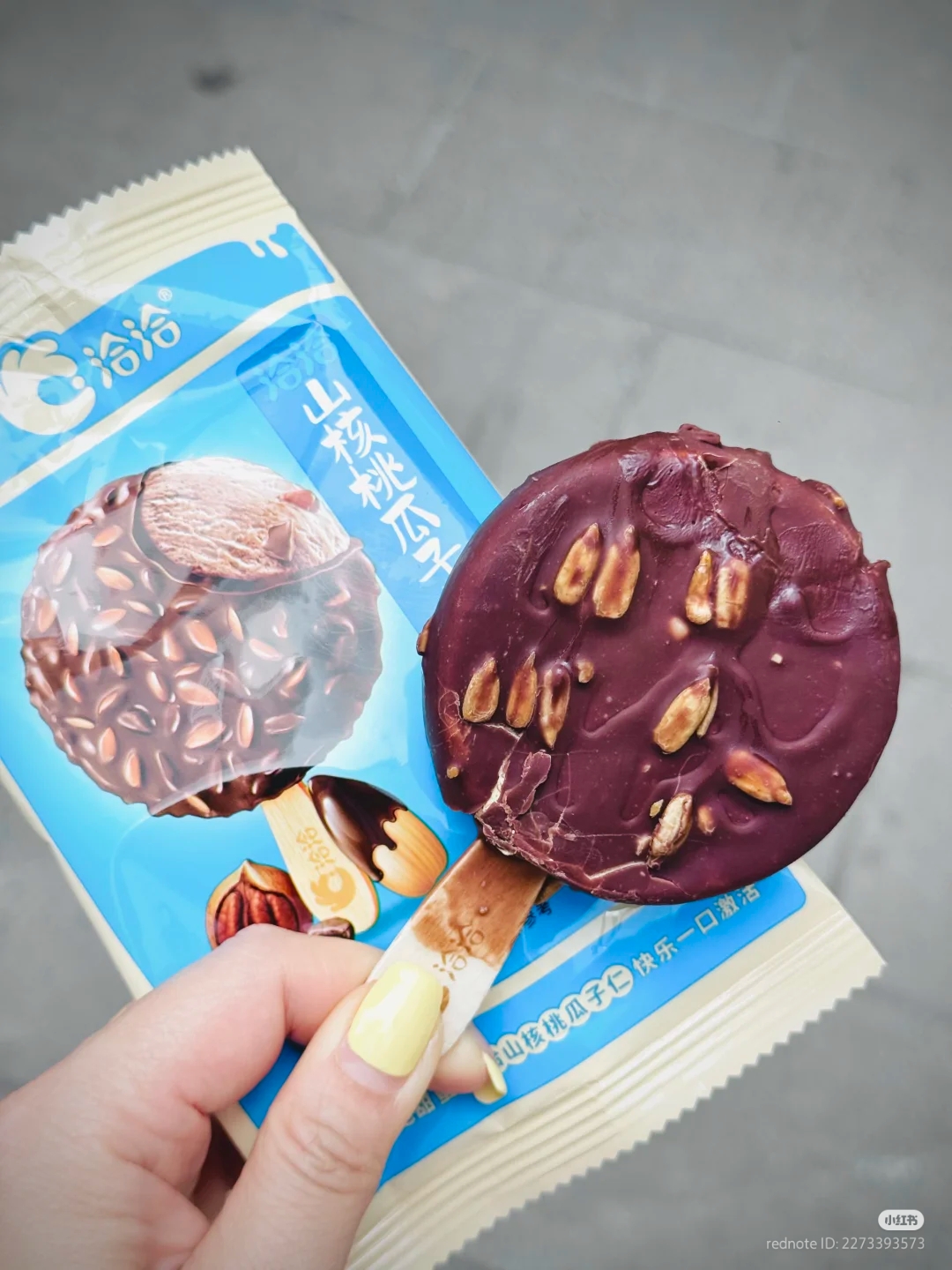
Seed and nuts giant Qiaqia launched a series of ice cream products using its core products are flavouring-texturing ingredients. The following two products were launched in 2025.
Melon seed popsicle
Pecan nut popsicle
Russian ice cream diplomacy
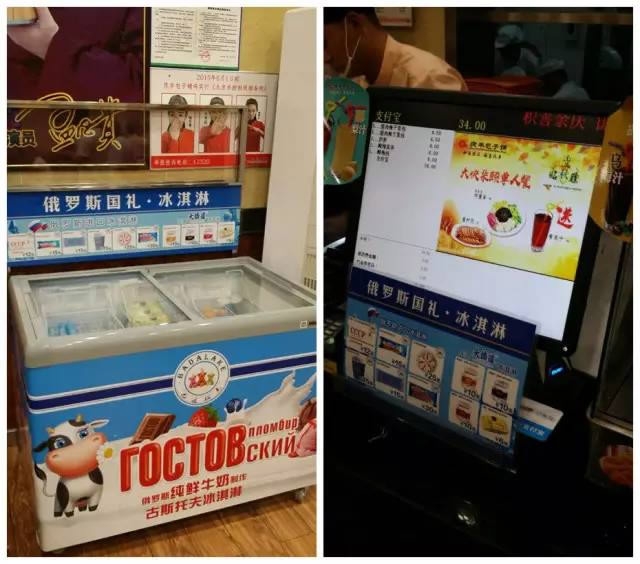
Russian ice cream has been rapidly gaining popularity in China during the past couple of years. Particularly in vogue are the products of IceBerry and sold in Qing-Feng Steamed Buns (mantou) Shops.
The photo shows a freezer containing the ice creams was labelled “Russia’s national gift”-a phrase which refers to Russian President Vladimir Putin, who brought a few boxes of that as gift for his Chinese counterpart Xi Jinping when they met on the side lines of the G20 Hangzhou Summit in east China’s Zhejiang Province. Some Chinese media are referring to this as ‘ice cream diplomacy”.
The ice cream is priced between RMB 6 to 30, and each store sells an average of 300 ice creams a day. According to Roman Lola, the CEO of IceBerry, the company plans to export 500 mt of ice cream to China in 2017. It will not be an easy trip for the ice cream to travel from Russia to China, as the chilly dessert needs to be moved within a temperature-controlled supply chain. “Compared to high-end ice cream brands in Europe and the US, the Russian ice cream has an obviously benefit on price,” said Wang Xianzhe, a company manager focusing on Russian food imports in China. “The good quality and affordable price, let alone President Putin’s advertising effect, all support the Russian ice cream catching on in China.” IceBerry’s ice cream is reportedly made from high quality milk from the Ural and contains no preservatives or other artificial additives. The Russian export of ice cream to China in 2017 was worth USD 2.7 mln; up 13%.
Ice cream from space
Shanghai Space Food Co., Ltd. has acquired the license to produce and sell Astronaut Ice Cream in China. It is basic ice cream in a number of flavours that is said to be similar to ice cream prepared for consumption by American astronauts. It is supposed to be on the market early 2020.
Most Chinese believe that cheese smells like a kitchen rag, but there definitely is a future for cheese in China.
First of all, you should know that most of the Chinese do not like cheese, or at least the typical cheeses Westerners eat every day. Indeed they think it smells horrible and find hard cheeses such as Gruyere or Emmental outright disgusting. In 2017, the per-capita consumption of cheese in China was 0.1 kg a year, while it was 2.4 kg in Japan, 2.8 kg in South Korea and 18.6 kg in Europe. The value of the Chinese cheese market in 2019 was RMB 6.55 billion; up 12%.
A remarkable news item of the first quarter of 2020 was that a survey showed that home cooking during the COVID-19 lockdown caused a 32% increase in cheese consumption in China. The extraordinary period apparently trigger Chinese to do extraordinary things.
More and more Chinese people would like to try new things and to taste imported products, as is attested in many of the posts in this blog. This also includes cheese, especially in first-tier cities such as Shanghai, Beijing or Guangzhou. However, almost all cheese consumed by Chinese is processed, as this removes some of the most problematic properties (texture and odour). Reliable cheese-related statistics about China are notorious hard to get. According to a usually reliable Chinese soure, the country has produced 27,000 mt of cheese in 2016; 10,000 mt made from domestic raw milk and the remaining 17,000 mt being processed imported cheese. The OECD-FAO and USDA statistics are considerably higher, but I suspect that those figures include some yoghurt, which by some producers, in particular in the South, is named suanrulao ‘sour yoghurt’.
Government support
Chinese Vice Agriculture Minister Yu Kangzhen stated on Dec. 13, 2017, speaking at an event to encourage cheese consumption in schools, that efforts should be made to develop dry dairy products like cheese to improve dairy product structure and boost the dairy industry. Chang Yi, chairman of Beijing Sanyuan Food (see below), said at the event that China’s cheese consumption could grow by more than tenfold in future, and that he expected the cheese industry to maintain annual growth of 20% in the next five years.
Imports
While domestic production is growing, most cheese consumed in China is imported. China imported 108,300 mt of cheese in 2018, 2.8 times the volume of 2011.
Region
share (%)
New Zealand
42.2
Australia
27.2
USA
18.6
The old world is obviously lagging behind, which is again a result of the Chinese dislike of unprocessed cheese.
In 2023, cheese demand reached 332,000 mt, while domestic production was far lower, at 172,000 mt, in spite of the strong growth compared to the above figures. This has forced China to continue to rely on cheese imports, which were 155,000 mt in 2024, a slight decrease from the previous year, when the imported volume was 162,000 mt. Imports from Italy were reported to be growing.
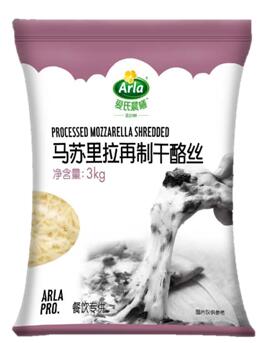
Mozzarella is a major item in the list of imported cheese. Fonterra has recently opened a cheese plant in Australia to better supply the Chinese pizza market. According to a Fonterra spokesperson, already half of the Chinese pizzas are topped with mozzarella from Fonterra. Mengniu and its partner Arla have launched mozzarella in 2018.
China is lowering its cheese tariffs from 12% to 8%, effective from December 1, 2017. This will certainly boost the sales of imported cheese.
Distribution Channels
93%
in supermarkets and hypermarkets
4.8%
in small independent grocers
1.9%
in other food retailers
0.3%
small outlets like hotels and upscale restaurants targeting expatriates
The supermarket is the no.1 distribution channel, because it is absolutely necessary to maintain the cold chain for cheese. Many small grocers cannot provide this quality service. With the development of the Internet and new ways of consumption, it is now possible to buy your cheese online.
Imports are still rising significantly. China has imported 16,446.9 mt of cheese during the first 4 months of 2017; up 41.25%.
Drivers for demand
Demand for cheese is driven by two factors: Chinese consumers looking for high quality dairy products and safe products prefer major western brands. Lifestyles are moving towards European standards of consumption.
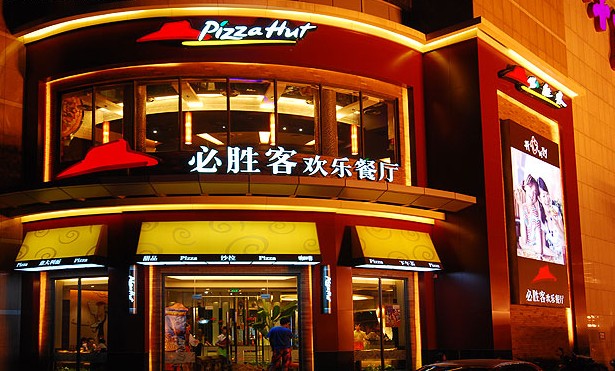
The tastes of Chinese regarding cheese will develop gradually. Traditionally Chinese food is served with several dishes. And unlike us, Chinese don’t eat cold meal. However, pizza has made extremely popular in China after the arrival of Pizza Hut in the Middle Kingdom. Its success has inspired many Chinese entrepreneurs to venture into Italian restaurants, and cheese is an inalienable ingredient of Italian cuisine.
Main brands
The site Manufacturing News has published the following list of China’s top 10 cheese brands of 2015
Half of these are indeed domestic companies, but most of them import bulk cheese and further process it into processed cheese in various shapes and flavours.
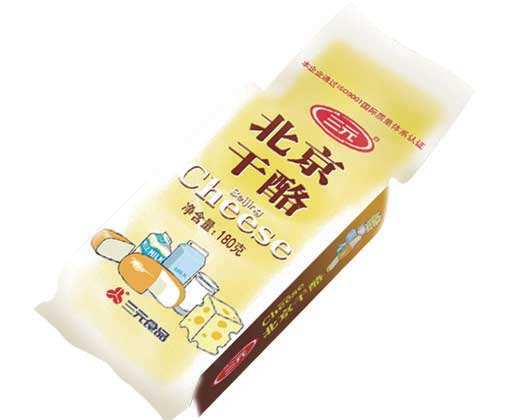
The oldest domestic cheese producer is Sanyuan (Beijing). It imported a Danish cheese production line in 1985, mainly to service the foreign diplomatic community in the Chinese capital. Sanyuan still produces this cheese under the Beijing Cheese (Beijing Ganlao) brand. It now has a capacity of 10,000 mt p.a.
Strikingly, most domestic companies that actually produce cheese in China are small, often privately owned, enterprises. There is Qishi (Inner Mongolia), China’s first producer of Mozzarella, but the most interesting case is no doubt Le Fromager de Pekin, a company set up by a Chinese, Liu Yang, who learned making cheese in France. Liu spent 7 years in France studying the language, business administration and cheese making. Upon his return to China in 2007, he stumbled through careers in translation and IT sales before opening Le Fromager de Pekin, which sells about 5300 pounds of cheese a year. Although Liu’s mission is to promote cheese to fellow Chinese, almost all of his clients are expatriates living in Beijing. Still, he’s convinced that will change. Watch this video report about his activities.
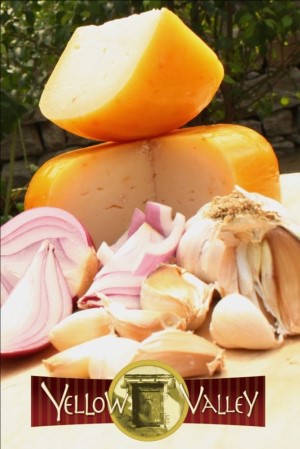
Case study: Yellow Valley: Gouda as only a Dutchman can make it
When Marc de Ruiter’s Yellow Valley business opened up in 2004, it was the first fair trade Gouda cheese producer in China. Known by almost half the expat population in Beijing. Here is a video impression from 2009.
Yellow Valley is located near Taiyuan (Shanxi). It is a small production facility on the premises of a dairy farm. Here, Marc de Ruiter, a Dutch agriculturist, produces his original Gouda cheeses. He is supported by two full-time employees – one cheese maker and one who handles marketing and sales. Two part-time employees take care of the online sales activities via China’s e-commerce platforms. The small Gouda cheese making business grew more successful over the years and the Yellow Valley products were widely known in China’s largest cities. After China was hit by the melamine milk scandal, Yellow Valley had to close down, like many small dairy-processing businesses.
After the close-down from 2011 to 2015, Marc found a way to restart. “Producing ‘farmhouse based cheese’ was the loophole I needed. It requires a lot less licences and permits. The cheese can only be sold directly and online – not in stores.” The Yellow Valley ‘new style’ offers a wide range of traditional and special products, like the original Cheese, the Aged, Herbs de Provence and Cumin varieties and even with local cheese favourites with onions and garlic. There is even a spicy variation red Currently, nearly 90% of its sales go through WeChat, Weidian and Taobao channels.
After the reopening of Yellow Valley in mid-2015, Marc aims to increase production. The company is expanding its facilities to 65+ square metres of production space, a ripening chamber and an exhibition space.
Cheese spread
Shanghai Bright’s cheese spread won a Superior Taste Award by the International Taste Institute in 2024.
Foreign acquisition
French cheese maker Bel acquired 70% of Shandong-based Junjun Cheese in 2022. Bel has said not more about this move than that it expects hat it will hasten its advance in the Chinese market.
Cheese as flavouring ingredient
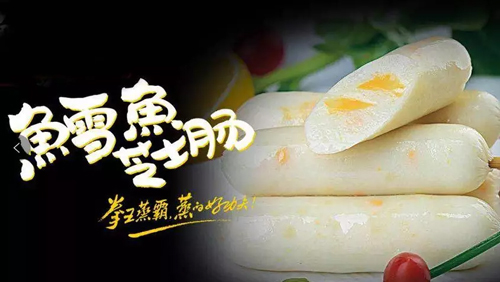
So the Chinese are surely developing a taste for cheese, but what would it take to bring this market to maturation? One problem is that cheese is hard to integrate in Chinese cuisine. You can try to design a recipe for cheese-filled dumplings, but this may make them taste more like an Italian dish than a Chinese snack. The same would happen, if you would sprinkle grated cheese over a bowl of Sichuan-style dandan noodles. It may actually be tasty, but I wonder if it would ever become a hit. One solution could be to do tests with adding molds like those used to produce furu (fermented bean curd) to cheese and develop an indigenous moldy cheese. Huangshan Tianfeng Foods Co. produces a version of the traditional Chinese rice cake niangao flavoured with cheese. Sailor Foods (Fujian) has launched a Cod & Cheese Sausage in 2019. It is a steamed cod-based sausage, with chunks of cheese to add a new flavour, while avoiding a strong cheese taste.
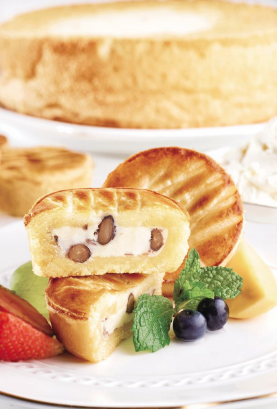
Zhenzhang Food Co., Ltd. (Xi’an, Shaanxi) has launched a cheese-filled mooncake in 2020, using Tatura cheese cake as the main ingredient for the filling. You could see it as a Chinese style cheese cake.
Hsu Fu Chi launched a cheese flavoured saqima in 2021. The company states that it uses imported Danish cheese.
Another problem is that the little natural cheese that is actually produced on Chinese soil is not linked to the local food tradition, the local terroir. When I first lived in China in the 1970s, we could buy cheese from Heilongjiang province (the home region of Mr Liu Yang), close to the Russian border. That was real natural cheese. However, production seems to have halted; pushed from the market by imported cheese and locally produced processed cheese. An idea for Mr Liu Yang would be to promote his Beijing-produced cheese as the ideal companion of Beijing’s famous baijiu (distilled liquor): Erguotou; a beautiful marriage between the old and new local tradition.
If this post is of interest to you, you may also like to read:
The scale of China’s coffee industry has reached RMB 265.4 billion yuan in 2023. The per capita coffee consumption has reached 16.74 cups in 2023, almost double the figure of 9 cups in 2016. (2024 market survey)
Once upon a time every non-Chinese, when asked about the favourite drink of the Chinese, would answer: tea. Foreigners brought coffee with them and introduced that brew to their Chinese friends and business relations. As a result, a number of Chinese in major port cities, where the foreigners were typically concentrated, acquired a taste for that brew as well. Today, tea is still the leader by a massive margin, though coffee is charging forward in leaps and bounds. Manager Wang of Damin Food (Zhangzhou, Fujian), a manufacturer of instant teas and coffees, still remembers that when he was at university in Zhangzhou, there were at most 10 coffee shops in the entire city. When he moved back a couple of years ago, there was one street alone with 10 coffee houses. That’s how things are changing, and we are starting to see real growth outside the metro cities. A trend towards coffee culture has developed over the last half-decade largely through the influence of cosmopolitan Beijing and Shanghai, the drivers of Chinese fashion. Now, the coffee shop has become a common and popular place that many people of moderate income can afford going to. The following table shows the value of the Chinese coffee market in the period 2020 – 2024.
However, the annual consumption amount per capita in China in 2024 was only 9 cups, far behind 300 cups for Japan and Korea, and the world average of 240 cups. This is due to the fact that coffee consumption is large in the cities, but still small to non-existent in the countryside. There is room for an annual increase rate of 15-20% for the coming years. Young white-collar workers in cities like Beijing and Shanghai consume 100 to 150 cups of coffee annually. Coffee drinking has added many new expressions to the Chinese language.
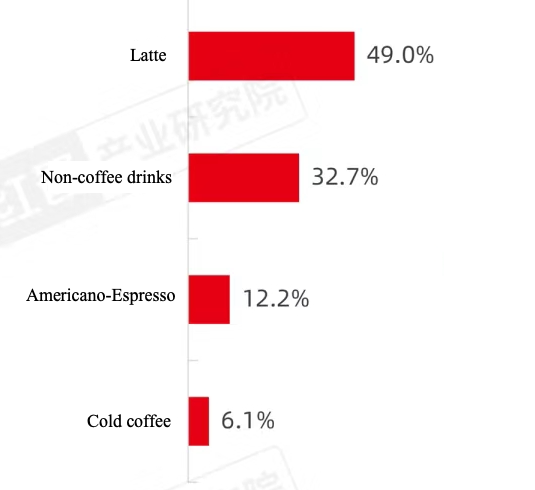
The following table shows the different types of coffee and the degree in which Chinese consumers ordered it in coffee chains in September 2024
China’s oldest domestic instant coffee
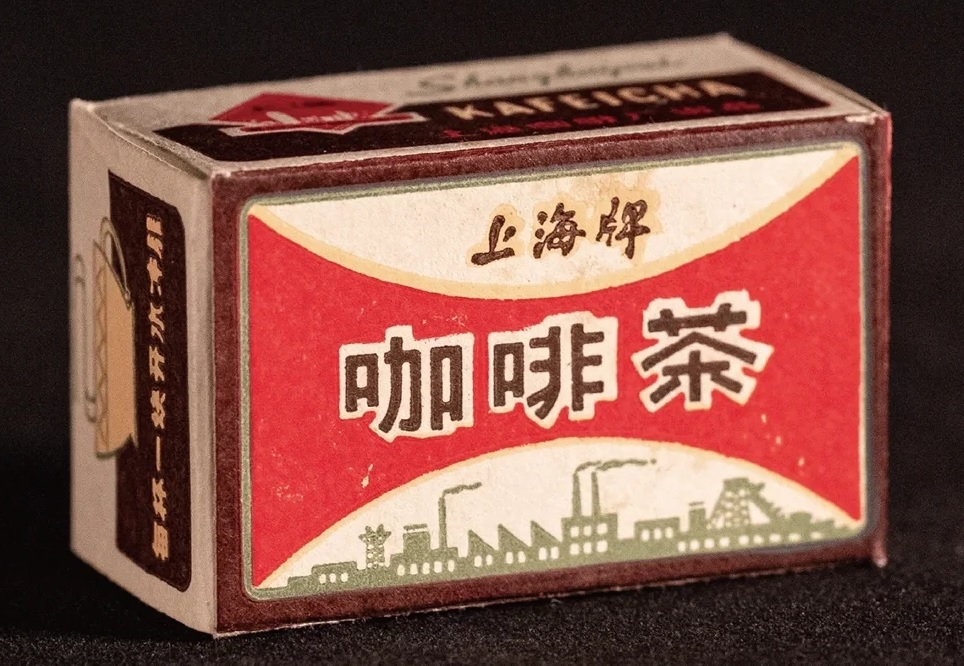
In 1935, Zhang Baocun founded the Desheng Coffee Shop on Shanghai’s Jiang’an Temple Road (currently: Nanjing West Road). The company was renamed State Operated Shanghai Coffee Factory in 1959. After the founding of the PRC, private enterprises were gradually reorganised from ‘private-public joint operation’ to ‘state operated’. This renaming indicates that the company had reached that final stage. A year later, the company started producing a kind of instant coffee, ground coffee beans and sugar pressed into blocks. You only needed to poor boiling water over it to get a cup of coffee. Because the general public was not used to coffee drinking, the product was named: kafeicha, literally ‘coffee tea’.
Vietnam major source
Vietnamese coffee beans accounted for 49% of those imported by China in 2017. However, other coffee exporting nations like Colombia and Brazil have all set up promotion offices in China. Chinese coffee imports grew by 16% year-on-year in 2017, compared with about 2% in the United States, the world’s largest coffee consumer. The following table shows the import and export figures of coffee beans in the period 2019 – 2023.
Surprise from Ethiopia
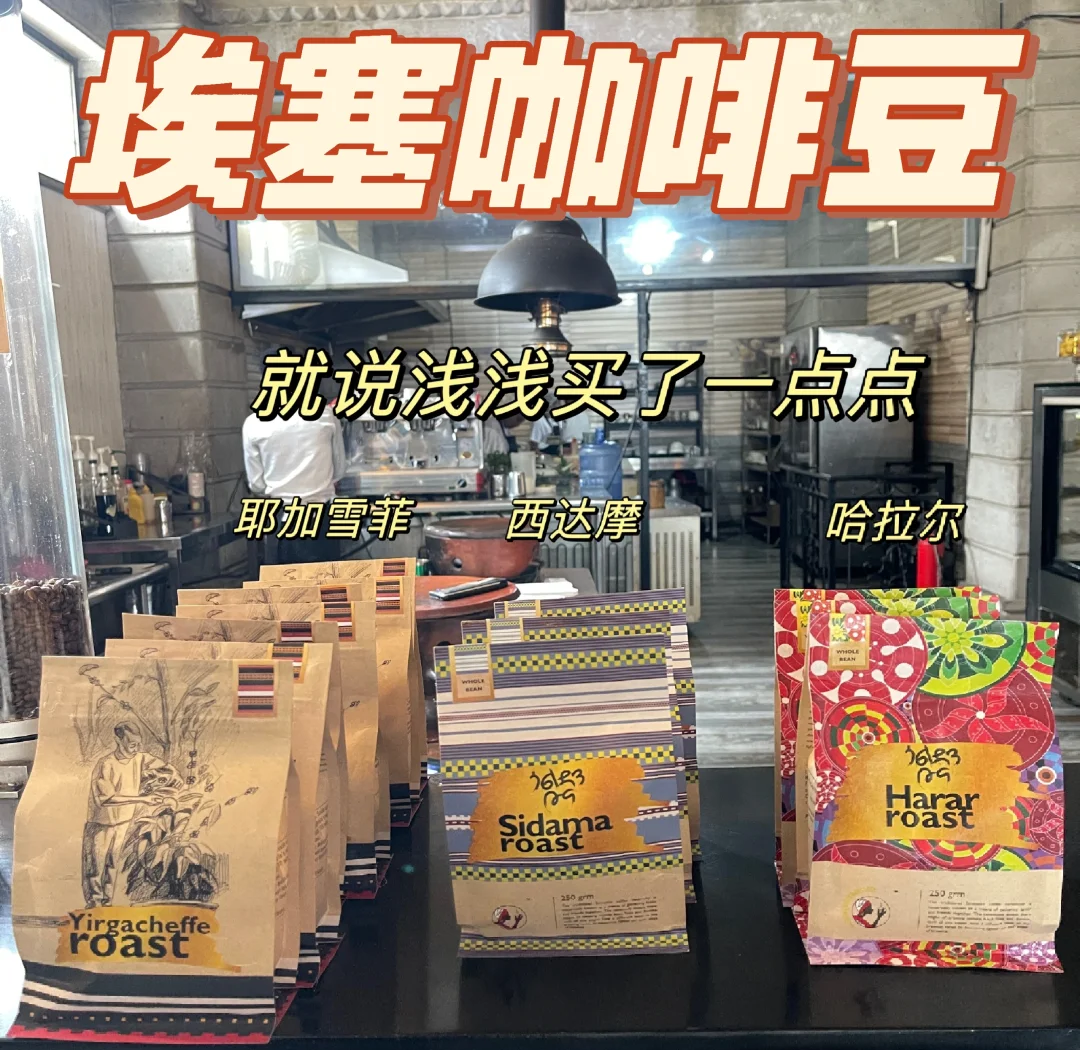
The China (Puyang) Ethiopia Coffee Industry Demonstration Park, which imports raw coffee beans from Ethiopia, has established a complete production chain in 2020, from roasting and extraction to freeze-drying and packaging. With an annual output of 1000 mt of freeze-dried coffee powder, the park can supply around 500 mln cups of coffee each year. Their products have also reached international markets, with exports to countries like Australia and Malaysia.
Market on the rise
China’s currently low average rate of coffee consumption, in tandem with its status as the most populous nation on earth, add up to real market potential, especially as sales of ready-to-drink (RTD) coffee products are soaring. Research carried out earlier this year shows that thus far the most significant strides have occurred in the instant coffee market, which reached over US 1 billion in retail sales in 2012. However, since 2011, RTD coffee has consistently boasted the strongest volume growth of any Chinese beverage category. The RTD coffee segment growth of 22%. Fresh coffee, though, remains a niche product. Its demand, due largely to its convenience, is mostly from recent adopters who tend to be unfamiliar with fresh coffee preparation methods and who often lack the appliances needed to make it. In terms of flavour, instant coffee’s ability to be packaged as a mix with sweeter and other additives appeals to the Chinese palate, which generally prefers milder, milkier coffee to the stronger, acid profiles often evoked by fresh coffee. Indeed, the most popular type of instant coffee in China, which accounted for 52% of the segment’s sales in 2012, are three-in-one mixes that include a mix of instant coffee, creamer and sweetener. Nestlé’s Nescafé is the dominant player in both instant and RTD markets, accounting in 2012 for half of the entire RTD market, and just shy of three-quarters of the instant market. While the brand has a global instant share of 46%, its strength in China is unsurprising, though the strength of its RTD sales in the country is very different to its global weight of just 3% share.
Foreign trade
The following tables show the development of China’s coffee-related imports and exports.
The competing forces
According to analysts, currently, on China’s coffee shop market, there are three distinct competing forces: Chinese domestic, European and American, and Korean and Japanese. They are engaging in different strategies to strengthen themselves. For instance, Sculpting in Time is trying to take the advantage of e-commerce. In December 2014, it established a professional coffee website, Hello Coffee, where visitors can see all relevant information about coffee making and consumption. Hello Coffee says it is China’s first B2C coffee website. Starbucks places more emphasis on fast coffee serving in the shop. It also takes measures to encourage consumption outside of the coffee shop. Mid 2018, Starbucks is present in 147 Chinese cities with a total of 3362 outlets, including 7 cities with 100+ outlets. Shanghai is the largest with 663 stores. Starbucks has announced that it intends to run 6000 outlets by 2022. Costa Coffee, a British multinational, plans to open 900 more stores in China by 2020, which will give it 1344 shops in the country.
Starbucks China has in 2024 lost its dominant position in the on-premises coffee market in China as local coffee rivals have emerged. Starbucks’ brand share in the specialty coffee and tea shops category in China dropped from its peak of 41% in 2017 to 14% in 2024.
Korean coffee shops are dedicated to business alliance. What is more, Korean coffee shops, such as Caffe Bene, Maan Coffee and Zoo Coffee, have entered China’s market. However, this business alliance mode does not seem to work smoothly. In the course of 2015, Caffe Bene started to show cash flow problems and soon the Chinese mother company stopped injecting further capital in the venture. You can still see several Caffe Bene outlets operating in Beijing, but shops in other cities have closed down one after another. Insiders believe that the chain will disappear complete during the first months of 2016. Zoo Coffee is also reporting problems in developing the Chinese market. The management has decided to quit the franchising system and only operate wholly owned outlets. It has also stated that it wants to alter its ‘Korean’ image to avoid Zoo Coffee running in the same problems as Caffe Bene.
Founded in 2019, Nowwa Coffee opened its first store in Shanghai and operated over 1800 stores across 150 Chinese cities in 2025 – making it the sixth largest operator.
McDonalds already operated a chain of McCafés in China and KFC joined its competitor in 2024 by opening a coffee chain of its own: KCcoffee.
Industry insiders believe that chain coffee shops should be prepared to face the challenges from fast-food restaurants and convenience stores as well as milk tea stores. According to these analysts, coffee shops should focus on their unique service rather than size, since consumers might stay there for a long time, thus increasing their operating costs. Also, they suggest coffee shops host some activities in order to boost their business and advertise themselves. Actually, there is also a third force emerging in this market: the private coffee shop. It needs a lot of courage, but there are single Chinese coffee entrepreneurs who do not want to tie themselves to one of the big names and set up their own, often single-store, coffee shop. One of my favourites is Taoyuan Miaoji, located in an alley opposite the main gate of the University of International Business and Economics (UIBE). It is an ideal spot for a quiet talk with friends.
The following table shows the Top 10 coffee shops as per end of 2024.
Here are some maps showing the distribution of major chains in 2024
It is clear that coffee chains were still mainly distributed in the eastern half to one third of the country. However, the development of these and other chains has been fast and is still going on. Starbucks’ distribution shows very few outlets in Gansu province yet in 2024. However, a year later, the company started to cooperate with Dunhuang, China’s most famous caves with Buddhist frescoes, incorporating Buddhist imaging in its advertising. The top text says: ‘Adding some Dunhuang flavour’. The mango passionfruit coffee in the picture is, according to the ad, restricted to the Dunhuang scenic area. A nice cultural gesture, but that restriction may limit its commercial effect.
Categories
The following diagram shows the coffee chains operating in 2024, arranged in five different categories.
Starbucks as measure for development
The site Dudihui is a blog consisting of infographics about Beijing. A blog posted mid 2018 compares the size and development of the various districts of Beijing. One of the dimensions in that infographic is the number of Starbucks outlets in the district. It is shown in the following picture.
It is the strongest sign of the symbolic value of coffee shops on present day China. An interesting detail is that the Chaoyang Distr. with its foreign embassies and CBD has more coffee shops that the university district Haidian.
Starbucks’ business in China got into trouble in 2024, when Luckin Coffee finally reached its primary goal: more outlets in China than Starbucks (see below). The ever growing number of domestic chains also proved a major challenge.
The German connection: from Hannover to Changde
Coffee is often associated with Italy, but Germany has played an outsized role in its history too. The paper filter was invented by a Dresden housewife, and the city of Emmerich am Rhein was home to one of the first automated drum roaster. Now, there’s another reason to turn to Deutschland for your java fix, with the arrival of Hanover Coffee in China. Founded by Andreas Berndt in 2011, the former marketing man opened the first premium coffee bar and bean shop in Hanover, which has since grown to supply private customers, high-class hotels, restaurants, companies, and cafés in Germany with over 30 different types of coffee beans. Last year, Berndt’s sons, Fabian and Flemming, came out to China to set up their first overseas branch. Now operating out of a roastery in Changde, Hunan province, where a ‘German Town’ has been erected (the photo shows the roastering plant in that town). They use a the medium roast, also known as a Vienna roast, which is not too light or dark. The coffee beans are roasted at around 190 degrees Celsius, or as low as possible, to preserve the full aroma. They use a Probat drum roaster from Germany. Their green beans are checked in Germany before they’re shipped to China and checked again.
Luckin Coffee – playing the nationalist card . . . with ups and downs
The nationalist trend in Chinese politics is also entering the fierce competition in the coffee market. Newcomer Luckin (Ruixin) Coffee, with its HQ in the coastal city of Xiamen, opened 525 stores in the first four months of 2018. It has wooed more than 1.3 million customers and created an internet frenzy by challenging coffee giant Starbucks. With investment of more than RMB 1 billion from Lu Zhengyao, CEO of car rental company Ucar Inc, and other founding members, Luckin Coffee aims to grab some of Starbucks’ market share with a combination of delivery services, lower prices and smaller-sized stores-a brand strategy it calls Any Moment. Qian Zhiya, CEO and founder of Luckin Coffee, and previously an executive at UCar, said the goal is to offer Chinese consumers an alternative to Starbucks. “The market will not only have Starbucks. Every country has their own coffee brand,” Qian said. Luckin Coffee said their secret ingredient for creating “a decent cup of coffee” is their select Arabica coffee beans, world-leading coffee machines and professional baristas. Of its stores already in operation, 294 are brick-and-mortar cafes between 30 to 50 square meters in size. Some 231 receive delivery orders only. Qian said, in the future the delivery kitchens will comprise less than 15% of the total. Luckin is also using high tech to distinguish itself.
Luckin Coffee even started to involve the courts in its competition with Starbucks in May 2018. Luckin accused Starbucks of monopolistic activities, because it prohibits owners of properties in which it has set up shop to also sell space to competitors. This case will be hard to win for Luckin, as I can name numerous locations in various cities in China where Costa Coffee or Pacific Coffee have opened outlets very close to a Starbucks shop.
Luckin Coffee announced on July 11, 2018 that it had raised USD 200 million in a fundraising round that values the company at USD 1 billion. Investors are said to include Singapore sovereign wealth fund GIC. The company intends to open another 2500 outlets in 2019.
Lucking Coffee got listed on the Nasdaq Stock Exchanges in 2019. It priced its initial public offering at $17 per share. However, in March 2020, the company came out with an announcement that its COO Liu Jian fabricated more than USD 310 mln worth of transactions in 2019, almost half of the company’s roughly $732 million in sales of that year. The NASDAQ decided to oust Luckin in June 2020.
Following this down period, Luckin then entered its second period of aggressive expansion. Luckin’s financial results for 2022 showed the full extent of its recovery: Revenue exceeded USD10 billion for the first time, and the company turned a profit for the first time in its history. According to Luckin’s earnings report for the first quarter of 2023, net profits have increased 27 times year-on-year. It has opened a new store on average every two hours, including its first foray overseas in Singapore. What was powering Luckin’s recovery was its new strategy of targeting China’s so-called “sinking market” — mostly third- or fourth-tier cities in China. In fact, for the coffee industry, the “sinking market” basically covers second-tier cities and below.
In spite of all the mistakes and mishap, Luckin Coffee surpassed Starbucks China, at least in number of outlets in the course of 2024. Against the background of the US – China trade war, this coffee war between the US-based Starbucks and the domestic street fighter Luckin has gained an interesting political dimension.
One of the original founders of Luckin Coffee, Lu Zhengyao and Qian Zhiya. left the company with a number of employees and established a coffee chain of her own in 2022: Cotti Coffee. Half of Cotti’s core team are former Luckin employees, and pricing and products are also almost identical to Luckin’s. Cotti is even more aggressive in its expansion. While Luckin took 11 months to reach 1000 stores nationwide, Cotti did so in just five months. It took Starbucks 16 years.
More and more
More domestic coffee entrepreneurs are following the example of Lucking Coffee. A newcomer worth watching is Coffee Box. This chain emphasises coffee drinking as a total experience. Coffee Box picks business districts of major cities as the locations for its ‘experience shops’. A more locally concentrated chain is Buzztime Coffee in Shanghai. This chain opens relatively small outlets in areas where restaurants and small shops are concentrated, as a more homely alternative for the more crowded and noisy coffee shops. Shanghai-based Unibrown Coffee (2017), owned by Shanghai Jiajia Electronics, is playing the high-end ‘specialty coffee’ card. Greybox Coffee (2017) and Soloist fall in the same category, but then geared to those who are passionate about coffee. Soloist baristas do not want to be addressed with ‘waiter (fuwuyuan)’ but with ‘coffee master (kafeishi)’, in an effort to link the Chinese term for barista to their own brand. A lesser known newcomer is Beijing-based Coffee08. Minicoffee (Xiaojia) specialises in milk coffees. Uin Coffee positions itself as a high tech coffee maker. ParCoffee is also based in Shanghai, with its most famous coffee cup shaped outlet near Huashi Plaza. The number and speed of new coffee concepts launched in China is so high, that keeping this post up-to-date is a genuine challenge. A catching feature of Fish Eye Coffee (see following photo) is filter coffee; you can watch your brew appear drip by drip.
Uin Coffee (2018) seems to concentrate on high-end office buildings. It als operates coffee vending machines. Coffee Now (2015) is China’s first producer of cups like those of Nespresso. Seesaw Coffee (2017) is once more Shanghai-based, aiming at coffee lovers preferring a quiet elegant ambiance.
Bestar Coffee was launched in Shanghai in 2022, with coffee + artisan ice cream as its distinctive feature.
Lucky Cup, the coffee brand of tea chain Mixue launched in 2017, is known for its ultra-low pricing strategy: a latte for RMB 10 yuan and an Americano for RMB 5. Compared to Starbucks’ and Luckin’s average cost of RMB 40 and 20, respectively, Lucky Cup’s prices are more attractive to younger people in less affluent cities.
Saturn coffee: instant coffee in a cup
Hunan’s provincial capital Changsha is a growing coffee city in China. One typical phenomenon of Changsha is the large number of tiny coffee shops, with only place for 3 – 4 customers at a time. It is also the home of the creator of a new type of instant coffee: Saturn Bird. The company came up with a breakthrough an instant coffee that completely dissolves within a few seconds. No stirring required. It adopted bright, eye-catching (and recyclable) packaging for its coffee pods. Late 2019, Saturnbird Coffee consecutively completed Series A and Series A+ rounds of funding, led by Tiantu Capital, securing RMB tens of millions. FreesFund invested in the preceding round of financing, which was valued at RMB 10 mln.
Another domestic brand of instant coffee is Secre Coffee. Secre Coffee was founded by former executives of major coffee businesses and tech firms, including Starbucks and Uber. Its estimated sales reached around RMB 120 mln in 2020. Secre adopts a tea-inspired product strategy and its product range includes Earl Grey Coffee and Jasmin Tea Coffee.
The Chinese coffee scene is also attracting private foreign investors. Read this interesting human interest story about a Canadian coffee grader who started his own coffee shop in the northern port city of Dalian.
The Russians are back
The Russian coffee brand Lebo opened its first coffee shop in China in Harbin in 2021. Harbin had a large Russian community in the decades after the Russian Revolution until the establishment of the PRC.
Blue Bottle Coffee’s Debut in Shanghai
Blue Bottle is a coffee roaster and retailer headquartered in California, United States. In 2017, Nestlé acquired around 68% of Blue Bottle Coffee’s stake. By then, the brand had 40 stores worldwide. Five years later, its number of stores has been expanded to 100, and the Shanghai store is the first one that Blue Bottle Coffee opened in the mainland of China. The coffee store opened on February 25, 2022. Some people woke up at 6 am just to get a cup of Blue Bottle coffee, and on average, it took 3 hours for consumers to get in line and enter the store. The company has adapted to the Chinese palate. At the Blue Bottle Coffee Shanghai store, consumers can have local snacks to match the coffee, such as mung bean pastry (lüdougao) and mahua, a kind of fried dough food.
Medicinal coffee
Coffee has become such a lucrative product, that even an old established traditional Chinese pharmacy like Tongrentang has started a medicinal cafe that serves various types of coffee enriched with medicinal herbs.
Fruit-flavoured coffee
Shanghai based S.Engine Coffee launched an orange flavoured coffee (or should we say coffee flavoured orange juice?) in 2021. Chinese love to add fruit flavours to all types of foods and beverages.
Strategic alliances
Strategic alliances are one way for foreign players to get a foothold in the Chinese market. Lavazza is cooperating with the shopping mall chain Parkson in operating a chain called Coffii & Joy.
In 2020, China’s Internet giant Tencent entered into a strategic alliance with Tim Hortons, investing in Tim’s entry into China. Tim plans to open more than 1,500 stores in China within 10 years. Statistics show that 80% of Tims China’s sales come from WeChat applets. Tims and Tencent jointly built the first esports themed coffee shop in China, also opened in Shanghai in November 2020, providing users with a strong social attributes “esports + coffee” life scene. Tims Coffee China CEO Lu Yongchen revealed at the end of 2020 that he has made an overall profit in all its stores. Previously set up shop plan, is expected to be shorter.Tims Coffee currently has nearly 200,000 members and a monthly repurchase rate of 40%.
Coffee is now regarded as such a money maker, that the most unexpected parties are venturing to tap this market. China Post got the idea in 2021 that it could use the obsolescent post offices to add or turn them into coffee shops. The first one was opened under the fancy French name La Poste Café.
Coffee on the road
A huge, and still growing, market for coffee in China is: the express way. China’s network of express ways is still growing and so is the number of Chinese going on self-drive holidays. Gas stations along the express ways have turned into full-grown resting areas, often including several restaurants and shops. Coffee is a good way to stay alert behind the wheel, so gas stations have become a place for coffee shops and coffee vending machines.
Sinopec, one of China’s top gasoline makers and distributors, has started a coffee brand of its own, called Easy Joy, to complement the services in its own gas stations. To reinforce the ‘gasoline image’ of the chain, it advertises its coffees with octane numbers: ’92 95 08′. On December 22, 2020, Sinopec Easy Joy announced the establishment of a joint venture with the Internet coffee brand “Lian Coffee,” the main gas station convenience store coffee business. On the same day, “Easy Joy coffee” Beijing first store settled in Beijing Longyu Yuquan gas station, officially open for business.
Coffee without baristas
Laibei Kafei (2015), a transliteration of the Chinese expression for ‘give me a cup of coffee’, is China’s first supplier of coffee vending machines. Supermarkets, shopping malls, etc., can place them in suitable locations to provide coffee to their patrons, with all the issues that come with establishing a coffee corner with life baristas.
New coffee shop adds modern flavour to Palace Museum
The Palace Museum opened a coffee shop for the modern-day guests of Chinese emperors over the weekend-the Corner Tower Cafe-and it quickly became a hot spot for visitors, bringing traditional cultural heritage closer to the younger generation. The cafe serves more than 30 kinds of coffee, tea and other drinks-priced between 22 and 45 yuan-for 40 guests at a time. Visitors don’t have to buy tickets for the museum to enter the cafe. Officials said a restaurant, also called Corner Tower, will open soon near the museum entrance. This move is slightly controversial. Some years ago, Starbucks was not allowed to open an outlet in the Palace Museum, because ‘a coffee shop does not fit into that historic ambiance’.
Lots of cash but little time
RTDs and instant products are driving coffee’s ascendency, perhaps because, as we are informed often, the Chinese are becoming increasingly cash rich and time poor. While this is clearly a marketer’s dream statement, largely designed to flatter consumers into believing the hype, it is also reflective of the coffee market. Chinese don’t have time any more to learn to brew real coffee. It’s just quicker and easier to empty a three-in-one sachet and add water or open a bottle. For consumers, it takes too long to grind the beans and brew the coffee. People like things that are mixed already. However, this is more by culture than necessity. Ever since Nestlé opened up China’s pre-mixed powder market with Nestea relatively recently, consumers have got in the habit of keeping things simple. According to Damin’s Wang, instant coffee volumes have been growing slowly, with an increase in consumption that is nowhere near as fast as is being found in coffee shops. “[Malaysian brand] Old Town White Coffee has played a big part in pushing instant coffee to China. Before that, there was only one real choice over the past few years, and that was Nestlé. Now we have many more brands, both good and bad,” says Wang. It’s safe to say that tea is not currently under any threat from the rise of the coffee granule, and its market is still growing. Indeed, China is forecast to account for half of all global growth in tea demand through to 2017, according to Rabobank, and tastes are changing among traditionalists too. Wang, whose company also supplies tea to trade customers, says ice tea has been the packaged segment leader, though its prominence is slipping. “The most popular tea drink is ice tea, though this in in decline because unsweetened or zero-calorie teas are on the rise as people become more aware of health issues,” he says. “Traditional tea drinking continues to increase, though. And now young people have the opportunity to choose what they need, be it packaged tea, three-in-one coffee or traditional China tea. “Coffee needs about 10 more years to grow before it becomes a big market in China.”
Expensive tastes
While coffee is a staple everyday purchase for most office workers in the UK, it is considered a premium product in China and is a luxury out of reach of most average workers. In Starbucks, a medium latte is RMB 30. Starbucks has come under fire by state media in China for their high prices, especially as the cost of doing business is generally considered to be cheaper in China. The average monthly wage in Shanghai is RMB 5891, less than a third of the average wage in London, making a RMB 30RMB cup of coffee a luxury most can’t afford. However, a high price is considered a sign of quality in China. The more expensive the better. There is still this concept in China, and Starbucks and Costa realise this. They want to brand themselves as premium chains, that’s why they price slightly higher in China. Most of the coffee on sale in coffee outlets in China comes from imported beans. However, China is also growing as a producer of coffee, with the majority grown in Yunnan province in southern China. You can read more about that in my special post on coffee and tea in Pu’er.
From 2017, several new coffee shop chains have popped up in China. Most of them position themselves in the higher end of the business. A good example of this type of coffee shops is Greybox Coffee that likes to set up shop in business districts in major cities. Japanese niche coffee shop Doutor has also set up shop in China, in a joint venture with a local partner TANSH Global Food Group which runs the Shanghai Min and Maison De L’Hui restaurants. With a 65% stake in the venture, Shanghai-based TANSH facilitates Doutor’s mainland operations.
China has also started to export coffee. In 2017, China exported $237 million of coffee beans. As of June of 2019, China has exported around 1.4 million 60-kilogram bags of green coffee beans. Export of green coffee beans shows a stable growth, as quality is improving.
Coffee exchange
The Shanghai Free Trade Zone has just established a Coffee Exchange Centre to boost the China trade for what is the oldest intercontinentally traded commodity in the world. It is not compulsory for companies to trade in the center, but those which do will benefit from Free Trade Zone’s duty-free and foreign exchange policies. By the end of 2015, both companies and individual customers will be able to buy coffee beans on the center’s website. The new center is projected to conduct transactions worth RMB 120 billion by 2018, and aims to overtake Singapore as Asia’s largest coffee exchange.
Nostalgic coffee
Besides the wide array of international and domestic coffee chains that are popping up in China’s major cities, some coffee places of the old days are being revived. A recent example is White Horse Coffee, a coffee shop established in the Jewish quarter of Shanghai, when a large number of Jewish refugees settled there in the 1930s. Hongkou district’s government decided to rebuild the “White Horse Coffee” as part of Shanghai Jewish Refugees Museum’s extended exhibitions. The new “White Horse Coffee” will be located opposite the Shanghai Jewish Refugees Museum. The design and decoration of the new “White Horse Coffee” will stay as close to the original as possible to provide a glimpse into the life of Jewish refugees of that period.
Ethnic coffee
A Tibet-inspired coffee shop, Charu, has recently opened in Chengdu (Sichuan). The place is spacious, outfitted with aged wood panels, edgy houseplants, and dangling Edison-style bulbs. It’s staffed by young people and the couches are upholstered in different shades of blue—the sort of patterns you would expect from a swanky Malibu patio by the beach. The word charu refers to the toggle that links yaks together, according to Tsehua, one of the owners. It connects the tents and the yaks together. Like the charu, this cafe to connect people together.
Tsehua comes from a family of nomadic herders from Hongyuan County in the Amdo Region of Tibet, located in modern-day Sichuan. They live in black tents fashioned from yak hair and rotate around the grasslands according to the seasons.
Charu has a beverage menu of yak-based drinks—among which is yak milk coffee, decorated with the cafe’s logo. The milk is brought in weekly, sent overnight from Tsehua’s nomadic village of Hongyuan. There’s yogurt, which is made in the same place, and as an option, it can be supplemented with highland barley and raisins. The menu also features a juice squeezed from sea buckthorn, a berry from the Himalayas that tastes like a cross between a mango and an orange.
It is this type of new hip spaces that multinationals like Haagen-Dazs find it hard to compete with recently. The ice cream maker has started cooperating with Illy in China. Its outlets can now also function as alternative for the crowded coffee shops.
Coffee as metaphor
Coffee has now become so popular, that the word is gradually transforming into a symbol for a modern leisurely lifestyle. A traditional Chinese medicine (TCM) store in Hangzhou (Zhejiang) has developed ‘herbal coffee‘ to wrap that traditional product in a modern package.
Coffee as flavouring
As coffee is growing more and more popular, many Chinese producers of foods and beverages are developing coffee flavoured varieties of their products. A good example in an earlier post is: coffee flavoured plums.
Snack producer Sanquan (Zhengzhou, Henan) has launched a coffee-flavoured zongzi in 2018.
One of my personal favourites is affogato, one or two scoops of basic vanilla icecream soaked in strong espresso. I first found it in China in some häagen-dazs outlets, but was not impressed by it, mainly because the coffee wasn’t strong enough. I was pleasantly surprised to find a decent affogato in a new (not yet opened) hotel at the north end of Wangfujing Street in Beijing during in September 2018.
Chinese investment in Argentina
A Chinese investor based in China’s northernmost city Harbin (Heilongjiang) is investigating the possibilities of investing in a 400 hectares coffee farm in Argentina, in cooperation with a local overseas Chinese partner. The coffee is to be roasted in Harbin, using technology imported from Brazil. I will keep you informed about the developments of this project. The Harbin region currently consumes about 60 mt of coffee beans per year.
Chains going abroad
Chinese coffee chains are also venturing abroad. In 2015, Mellower led China’s premium coffee to go international, becoming the first Chinese premium coffee chain brand to expand into overseas markets. In March 2023, Luckin Coffee expanded to Singapore with nine outlets strategically located in the core business districts. In 2023, Cotti Coffee opened its first store in Jakarta, , following the launch of its outlet in Seoul, South Korea. At the beginning of 2023, Cotti Coffee announced its goal of opening 10,000 stores in three years. Remarkably, within nine short months since its first store opened, they have already launched 5,500 stores worldwide, averaging over 500 new stores per month. targeting tech-savvy youth. They successfully penetrated the American Asian e-commerce platform Yami. Saturnbird coffee, Tasogare, and Yongpu, embraced a digital-first marketing approach. They successfully penetrated American Asian e-commerce platforms like Yami and Weee!
R&D
A study by the Kunming Institute of Botany, Chinese Academy of Sciences, published in 2026, showed that fungi can be used to enhance the flavour of coffee. A research team established a microbial repository containing 655 endophytic fungal strains from five Yunnan Arabica cultivars across three maturity stages and selected six representative strains that could make coffee more flavourful. The standout strain, Talaromyces funiculosus KQ2, used as a fermentation agent, can raise the sensory score by 1.5 points, exceeding the specialty coffee threshold of 80 points, while imparting distinctive vanilla-cinnamon notes. Metabolomic analysis also showed a 17.11 percent increase in sucrose content.
More than coffee
Coffee has now become such an important item in the lives of more and more Chinese that domestic coffee companies have started looking at expanding their activities to related products. Hogood Coffee (Yunnan) announced the development of a healthier alternative for vegetable fat, the main ingredient for coffee creamers, based on walnut protein.
Fish paste is a good example of a Chinese food ingredient that is widely used, but disproportionally little known. The best known product made from fish paste is the fish ball, shown in the picture, that is an indispensable part of the southern Chinese hot pot. However, it can be used in many more dishes of which I will introduce a few examples later in this post.
Fish paste used to be made at home by chopping a piece of fish by hand. For beginner, try to get a small size fish (approx. 600g) as it is easy to handle. Mackerel is popular material for fish paste. Choose one with some dots on the skin.
Remove head and all the internal organs. Clean the fish and pat dry. Slice both side of the fish, making sure that the flesh does not contain any bones;
Use a spoon to scrape the flesh, including the flesh that may still be on the bones; Chinese do not like to waste any food;
Prepare 1 tsp salt;
Sprinkle 2/3 tsp salt and dash of white pepper powder on the flesh;
Add water to the remaining 1/3 tsp salt;
Use the back of the knife to chop the flesh evenly; remove (pieces of) bones that you may spot in the flesh;
Add the salted water during the chopping process. A little bit at a time. You will find that the flesh will become sticky and make the chopping getting harder.
This gives a basic paste that can be placed in a suitable container to ferment for a number of days. The natural enzymes in the flesh will break down part of the protein to give the past a strong, almost pungent, fishy smell. As this picture shows, it is hardly recognisable as something made from fihs.
Fish paste like this can be prepared in larger quantity and frozen in portions big enough for one dish.
Dishes
For making fish balls, starch is added to the fish paste, after which you can make balls in a similar way as you are used to make meat balls for your soup.
The same starchy fish paste can be used to stuff pieces of bell pepper or bean curd, to prepare ‘stuffed pepper’ (see picture) or ‘stuffed bean curd’, famous dishes of Cantonese cuisine.
Instead of fish balls, you can make fish sausages, still using more or less the same stuff.
Industrial production
The industrial production of fish paste is big business. The 2023 output of fish paste products in China is estimated at 1,466,400 mt. Virtually all offal of the processing of any aquatic product can be used to make fish paste. In this respect, you might conclude that the production of fish paste in China is analogous to the production of pulverised chicken meat that is used to make products like chicken mcnuggets. Your first reaction when you learn about the details may be ‘yuck’, but it makes sense to reduce waste to a minimum. It can add valuable protein to any food.
The stages of the industrial process are
heading and gutting;
separating;
washing and rinsing;
refining;
dewatering;
mixing;
filling;
freezing;
packing;
storage and delivery.
This is industry has become big enough to make it worth the effort for machine makers to develop dedicated equipment for the production of fish paste.
The industrial recipes include a number of ingredients for protecting the paste against frost damage (e.g. sucrose, egg white, sorbitol), texturisers (calcium salts, hydrocolloids) or humectants (phosphates), and of course various flavours.
Ingredients
Apart from from fish, main additional ingredients of fish paste are:
(Modified) starch; fish meat contains 72-80% water. Starch or modified starch is needed to bind some of that water to improve the texture of the fish paste. An ingredient particularly mentioned in the Chinese literature is low cross-linking esterified starch.
Vegetable protein/egg white; this improves the elastic properties of fish paste.
Oil/fat; to improve the flavour and organoleptic properties.
Gelatine; to get smooth jelly-like past.
Sugars; Sugars have a number of effect on fish paste. One is that it removes some of the fishy flavour that is too strong for many Chinese. Insiders recommend sorbitol as the most effective in this category.
Innovation and haute cuisine
These new processes enable the development of a growing range new products like fish noodles, shrimp cake, fish beancurd, fish strips (look like noodles, but mainly consist of fish paste, unlike the fish noodles that are noodles flavoured with fish paste), fish cubes, fish ham (no pork used!), fish sausages, fish filling for dumplings, or fish aspic.
Boli brand fish strips come in two flavours: natural and spicy.
Nutritional value:
Item
per 100 gr
Energy (kcal)
323.85
Hydrocarbons (gr)
57.00
Fat (gr)
2.75
Protein (gr)
16.75
Ingredients as indicated on the label:
Fish paste, starch, sugar, salt, pepper, potassium sorbate.
Fish aspic includes hydrolysis of the proteins using the enzyme neutral protease. As the picture shows, this ingredient extracted from fish can then presented again in the form of a fish. This is the ultimate goal of haute cuisine Chinese style: creating an improved form of the original raw material. A good place to taste it is Beijing’s Duyichu Restaurant.
Another interesting variety is mixing fish paste with small cubes of vegetables or mushrooms of various colours, shape that into a large sausage shape and wrap it in a sheet of fried beancurd. After boiling, you can serve slices of this sausage as a fancy fish paté.
I am sure that more ‘fishy’ products will appear in China in the near future and I will keep you abreast about those developments by updating this post.
Fish paste forum
Fish paste is becoming such an important ingredient, that this year a special International Forum will be organised around it in Xiamen (May 19 – 20, 2016). Topics discussed will include applications like surimi.
Experts estimate that the value of the Chinese chicken dessert market will rise to RMB 109.1 billion in 2024
Dessert is not served at Chinese meals in the same way as in Western countries. Generally there is no separate part of a meal that is reserved for eating sweet dishes. Banquets typically end with a plate of assorted fruits. However, China is home to many dessert-like foods, either as part of a meal or as a snack.
Bing
Bing refers to a large and varied group of baked wheat flour based pastries. They are either similar to the short-pastry crust of western cuisine or flaky like puff pastry, the latter of which is often known as su. The preferred fat used for bing is lard. One of the more commonly known are the moon cake (yuebing), and wife cake (laopobing (second picture); sometimes translated as sweetheart cake), pastry with a thin crust of flaky pastry, and a filling of winter melon, almond paste, and sesame, spiced with five spice powder. An interesting combination of Chinese and Western ingredients is the deep fried mantou, served with sweetened condensed milk (first picture).
Tang
Chinese candies and sweets, called tang, Chinese for ‘sugar’, are usually made with cane sugar, malt sugar, and honey. These sweets often consists of nuts or fruits that are mixed into syrup. Dragon’s beard candy (longxutang) is a traditional example (first picture), and White Rabbit Milk Candy a modern variety.
Sugar coating of various fruits can also be regarded as part of this category of Chinese sweets or desserts. The traditional favourite fruit here is the hawthorn. Hawthorns are a member of the rose family and the red berries are the size of a large, round, rosehip. Eaten raw they are incredibly sour and quite astringent, but rolled in oil then confectioner’s sugar and left to dry gives the crunchy, sour hawthorns a crisp sweet white crust (bingtang shanzha; second picture). In northern China, street vendors sell glazed hawthorns (tanghulu, literally: ‘sugar calabash’; third picture), made by dipping skewered hawthorns in melted sugar.
McDonalds China has picked up the tanghulu and combined it with its McFlurry concept making a Tanghulu McFlurry.
Guo/gao
Gao or guo are soft glutinous snacks that are typically steamed and may be made from glutinous or normal rice. Some are made from sweet potato or yam; see e.g. the separate post on Sweet Potato & Yam Pastry These rice based snacks have a wide variety of textures and can be chewy, jelly-like, fluffy or rather firm. Various types of gao include Niangao, a popular type of rice cake, which can be served as a sticky treat or a pudding, flavored with red bean paste or rosewater (first picture), baitanggao, and tangyuan.
Guihuagao, or sweet osmanthus cake (second picture), is a more delicate variety in this category. Made in a very traditional way, the two layers of steamed white unsweetened ‘cake’ sandwich a sweet red bean paste and black sesame seed filling, with the osmanthus flowers adding a gentle honey scent.
Ice
Shaved ice desserts with sweet condiments and syrup is common eaten as a dessert in China. Ice cream is also commonly available throughout China, and Chinese are getting more and more inventive in creating
Jellies
Chinese jellies are known as dong. Many jelly desserts are traditionally set with agar and are flavored with fruits, though gelatin based jellies are also common in contemporary desserts. Some Chinese jellies, such as the grass jelly (liangfen) set by themselves. Grass jelly is a jelly that is made by boiling the stalks of a mint-like plant in potassium carbonate and letting it cool to room temperature. It has a slightly bitter taste and is often mixed with soy milk. Jellies sometimes have medicinal properties. Another famous variety is Almond Beancurd (xingren doufu) Almond tofu is a common and popular Chinese dessert in hot summer. It can be considered as the Chinese version of panna cotta. It is also referred to almond jelly. The recipe differs slightly from places in China, but the common ingredients are all similar: almond, sugar, and agar.
Traditional jelly has become a big money maker as a treat, in the form of fruit jelly (guodong) packed in small plastic cups. The value of this market was RMB 25 billion in 2018. The picture shows tangerine flavoured jelly with the following ingredients.
Chinese dessert soups (tang ‘soup’ or hu ‘broth’) typically consist of sweet and usually hot soups and custards. Some of these soups are made with restorative properties in mind, in concordance with traditional Chinese medicine. A very common example is red bean soup (hongdoutang).
Modern desserts
Modern desserts, in particular dairy based desserts like yoghurt or pudding, are widely available in China in a broad range of flavours and textures. See, e.g., my post on ‘old yoghurt‘ earlier in this blog. Babao porridge is sometimes served as a dessert as well.