Innovative Foods from Top Chinese Agricultural Universities

In a few earlier blogs, I introduced novel foods designed by students for their graduation. One was dedicated to vinegar-based foods, another had a more general nature. The inventors were typically students of food science.

Chinese universities have not only continued these innovative activities, but have combined it with Chinese innate entrepreneurial instinct. A number of agricultural universities and colleges have developed novel foods and have started commercialising these themselves. An important driving force behind these commercial activities is the popularity of the TikTok (Douyin) platform, on which students can advertise their products through direct broadcasting.

In this post, I will introduce a number of novel foods developed and marketed by students and professors of various Chinese universities.

South China Agricultural University

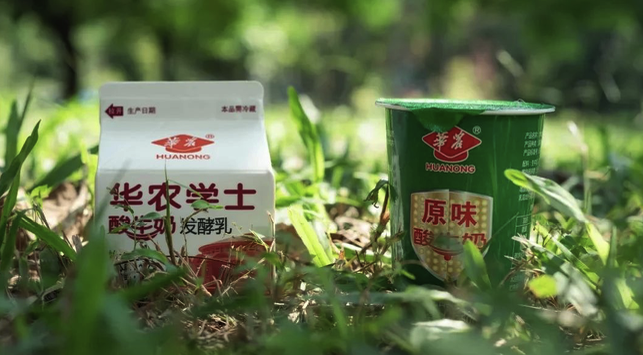
According to the official introduction of South China Agricultural University, in the 1930s, the Agricultural College of Lingnan University, the predecessor of Huanong, had a dairy farm with the scale of one to two hundred cows. This laid the basis for their dairy specialisation. Later, the research field was focussed on the production and development of yogurt. In 1997, Huanong established the Dairy Factory of South China Agricultural University and officially started selling yogurt to the outside world.

Compared with yoghurt on the market, Huanong yoghurt is fresh and contains fewer additives. Its raw materials are fresh milk, bacteria and sugar. Huanong yoghurt’s sales slogan is: our yoghurt is like a meal cooked by our own family. It may not taste as attractive as restaurants, but we believe that simplicity can do the trick’.
Southwest University

Southwest Konjac is a product developed by Southwest University, founded in 2012. The story says that in 1979, Professor Liu Peiying of Southern Agricultural University discovered that Japan purchased large volumes of konjac from Sichuan and Yunnan provinces, and initiated research into konjac. The university registered its own konjac brand, and founded the KGM Functional Food R&D Centre to develop functional products, special medicinal foods, medicines, beauty products, etc., all with Konjac as raw material.

Southwest is offering more konjac-based products.

Konjac strips. You can prepare them as a low calorie alternative for glass noodles.
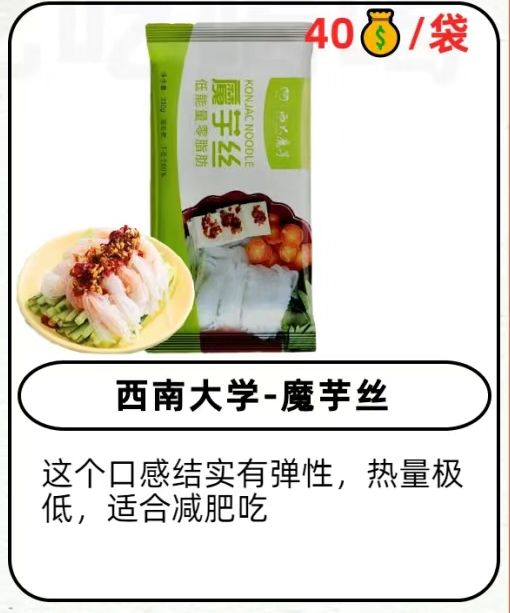
Konjac sticks; Marketed as ‘not so sweet’.

Yunnan Agricultural University

When talking about Yunnan, people usually think of fresh flower cake. In fact, the fresh flower jelly developed by Yunnan Agricultural University and the Yunnan Highland Agricultural Industry Research Institute is also very special. At present, the fresh flower jelly series includes four flavours: rose, jasmine, chrysanthemum and osmanthus. There are fresh flowers in each jelly.

Hunan Agricultural University

Fantianwa is a brand of spicy dough sticks, a traditional product of Hunan that has gain national popularity during the past couple of years, developed by Hunan Agricultural University. In addition to being the leading brand, these spicy strips are also unique in taste. Their sales slogan in: ‘it makes people feel like they can “go to heaven” after eating’. Fantianwa has also created a toplevel clean room, becoming the first spicy stick enterprise in Hunan with HACCP certification and ISO9001 quality management system certification.

Xinjiang Shihezi University

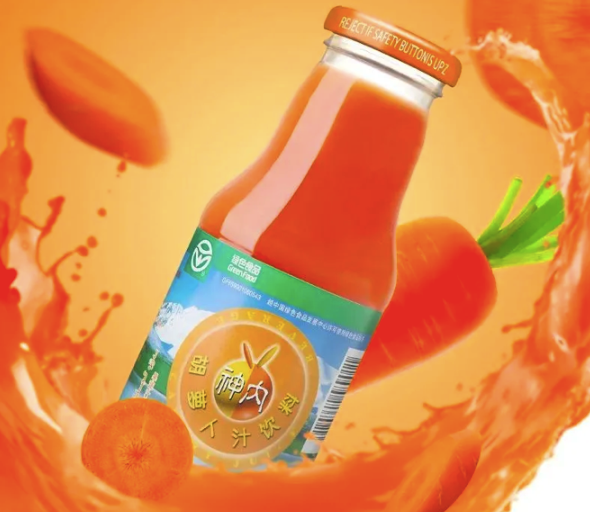
Shennei brand carrot juice is not only alive in the memory of Xinjiang children, but also makes some people who don’t like to eat carrots change their minds about this vegetable. In 1996, Shihezi University set up the Shennei Xinjiang Product Research and Development Centre, and carrot juice is one of its products adapted to local conditions. Shennei carrot juice is made from a local variey of carrot, which is produced in the north slope of Tianshan Mountain, and is freshly pressed by cell wall breaking technology.
There are several more of these university-developed novel foods. The above my personal pick, but I will be most happy to guide those who want to know more, like partenering with one of this high-quality institutions.

Guangdong Academy of Agricultural Sciences

Pure mulberry juice. This product does not contain any additive.

Nanjing Agricultural University

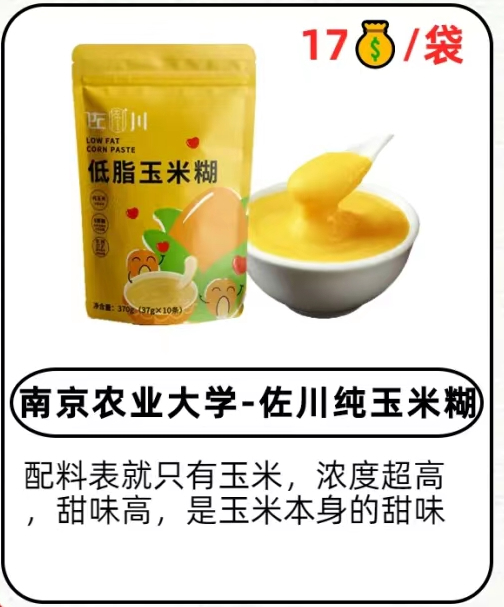
Zuochuan Pure maize porridge. Maize is the only ingredient on the label.
China Agricultural University

Four types of honey; all without any additives.

Ningxia Academy of Agricultural Sciences

Pure goji juice; No thickeners, sugar or water added.

China Academy of Tropical Agricultural Sciences

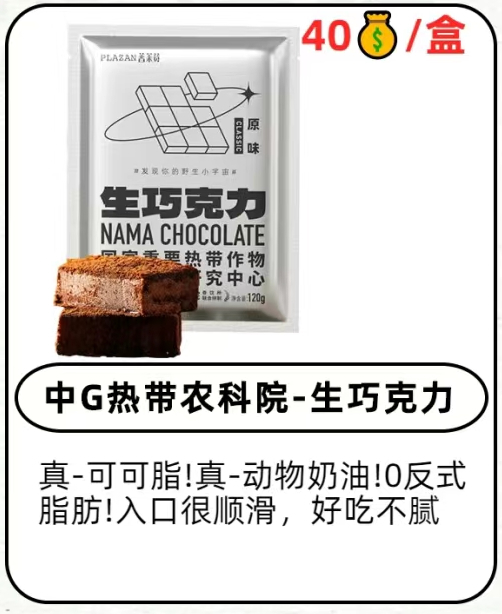
Nama chocolate; this product fits in with the ‘raw food’ trend in China. Does not contain transfatty acid.
Guangxi Academy of Agricultural Sciences

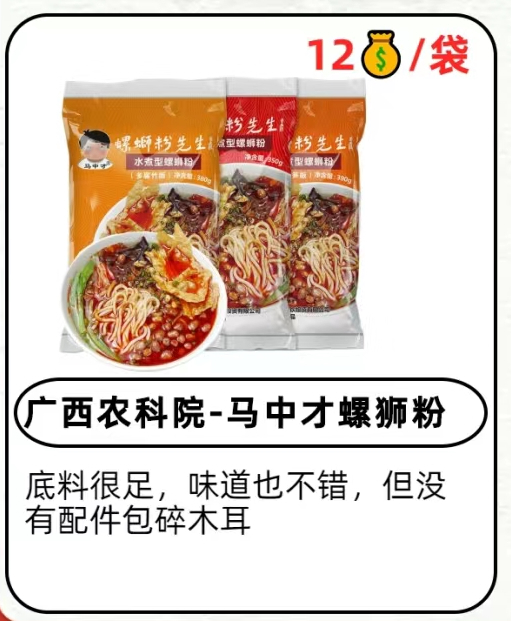
Mazhongcai river snail noodles; a modern presentation of the traditional food from Liuzhou in Guangxi.
Heilongjiang University

Master Ling sauerkraut; not the German stuff but traditional Chinese style.

China Academy of Agricultural Sciences

Shizhuang oat meal; Chinese are gradually getting into oat meal and this product is marketed as healthy.

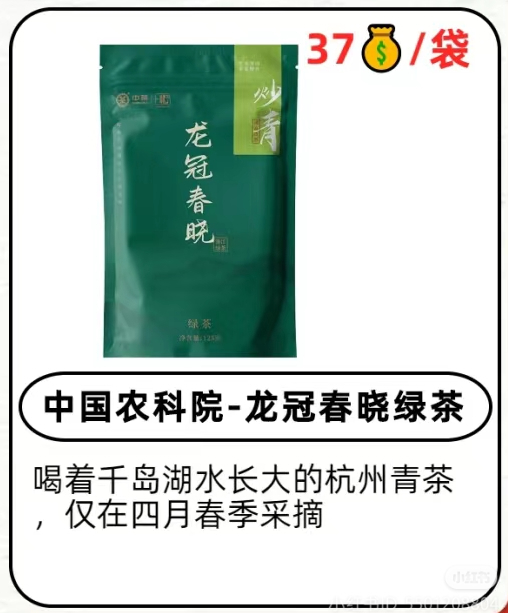
Longguan pure green tea; grown in the Thousand Island Lake near Hangzhou.
High folic acid sweet corn; contains 300 microgram of folic acid per knob.

Fujian Agricultural University

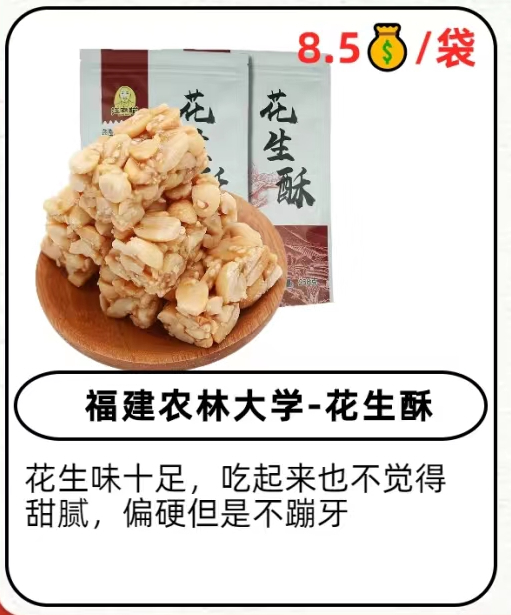
Peanut crisps; just a healthy snack.
Yunnan Academy of Agricultural Sciences

White bean coffee; combining the fat burning action of white bean extract with the mental boost of coffee. I visited their stand on the Pu’er Coffee Fair in January 2024.

Nanjing Agricultural University

Purple sweet potato congee; for an alternative breakfast. The ad promise that it is good for losing weight.

More products

Here is additional information added Feb. 2024
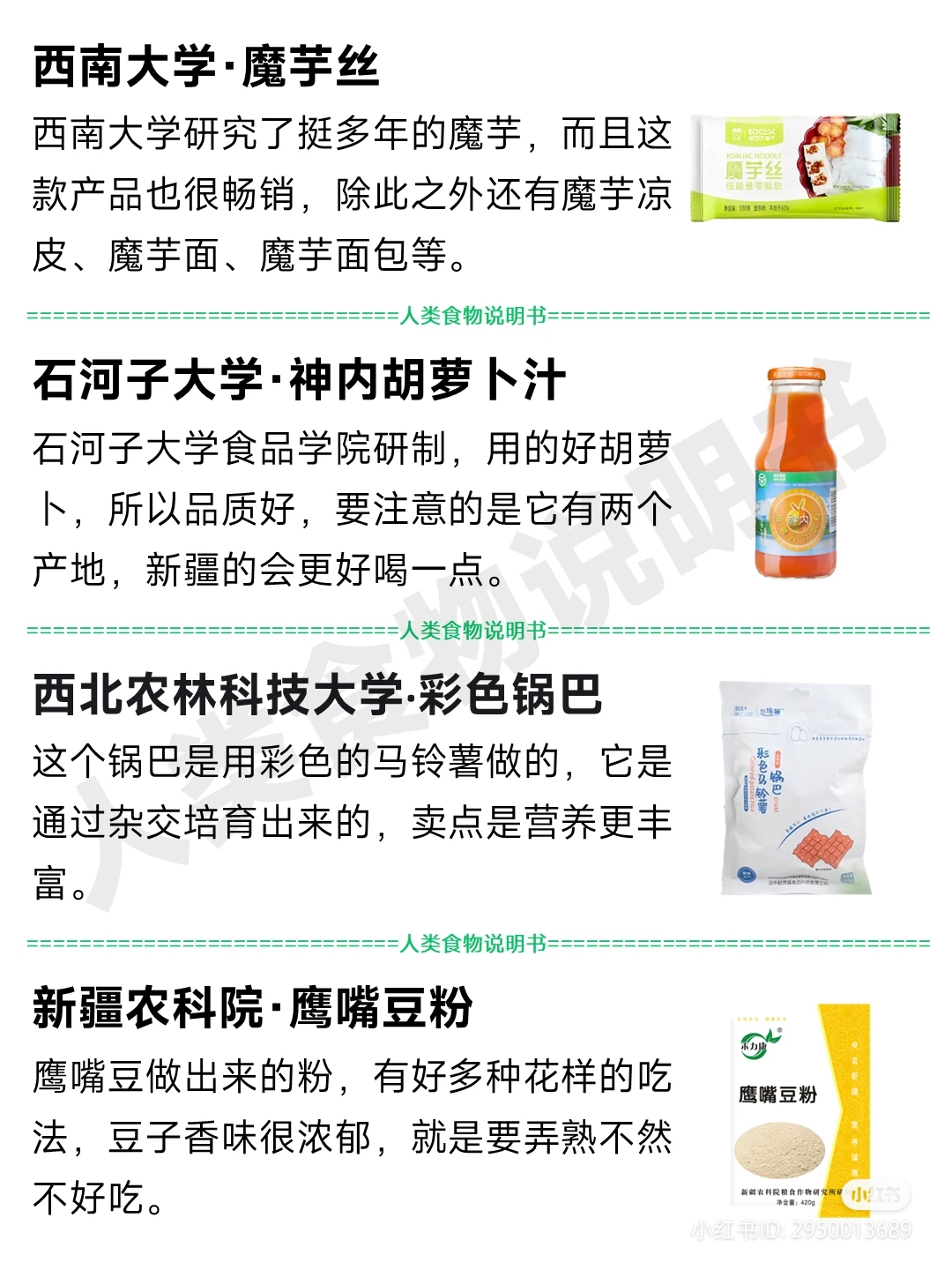
Konjac strings

Southwest University (Chongqing) has developed konjac strings, a healthy snack food. Other products include: konjac noodles and konjac bread.

Coloured guoba

This is a product from Northwest Agriculture & Forrest University (Shaanxi); made from coloured potatoes.

Chickpea powder

It is an easy guess that this product has been developed by an institution in Xinjiang: Xinjiang Agricultural Research Institute. The powder can be used in various recipes.

Prof Huang’s roasted chicken

A professor of Nanjing Agricultural University is trying to imitate Colonel Sanders.

Honey

Yangzhou University (Jiangsu) has developed a range of honeys, including one from loquat and robinia flowers.

Rose sauce

This ingredient can be added to tea, milk, bread, etc., and is a product of Yunnan Agricultural University.

Buffalo Milk

Central China Agricultural University (Wuhan) is behind this product. An interesting detail is that they transliterate ‘buffalo’ as bafulai, which means ‘eight (types of) luck are coming’.

There are more products from this news source, so contact us for a more complete report on leading Chinese universities in food and beverage development. Eurasia Consult has a database of research conducted at a large number of Chinese universities and research institutes

Peter Peverelli is active in and with China since 1975 and regularly travels to the remotest corners of that vast nation. He is a co-author of a major book introducing the cultural drivers behind China’s economic success.

Exploring Healthier Fruit Jelly Options

From extremely popular to off the shelves – fruit jelly flirting with consumers to recoup their market

People with experience in Asia probably know the stuff: brightly coloured fruit flavoured jelly in small plastic cups. Chinese women, as well as their sisters from many other East Asian nations, cannot get enough of fruit jellies. You rip off the sealing foil and suck the entire jelly into your mouth. There, it will start melting instantly and you can enjoy (if fruit jelly is your thing) the feeling as if you have just taken a huge sip of fruit juice. The effect is partly caused by a mixture of texturisers, flavours and colourants, but who cares. Well, parents did, when a few children almost choked to death on the things.

You need to be careful when giving them to younger children. Even though they melt quickly in the oral cavity, if you suck with so much enthusiasm that the thing ends up in your windpipe, you are in trouble. A number of such incidents happened and Chinese retailers reacted in a very Chinese way: they took all fruit jellies from the shelves. That radical measure will certainly protect the children, but is a big blow to the producers. And the market is huge. It has grown into an RMB 25 billion industry, with about 300 serious manufacturers in China alone. They want their market back and who would dare to blame them.

The original thing

Before I look at how some manufacturers are trying to win back the market, let’s have a look at the original standard fruit jelly. The main ingredients of fruit jelly are:

fruit juice, carrageenan, konjac sodium alginate, water and sugar.

Production is relatively easy. Just mix the ingredients, fill it into the cups, close the cups, refrigerate to set and you can package and dispatch them.

Fruit jelly is obviously not a very nutritious food. However, it is still better than the average candy. It does not contain much fat and some of the texturisers used are dietary fibre that helps the bowel function.

Insiders distinguish four types of fruit jelly producers.

  1. The big players for whom fruit jelly is their core product; like market leader Xizhilang (22.1% market share in 2019);
  2. Candy makers that also produce fruit jelly; like Hsufuchi (introduced in another post in this blog about biscuits; 2.8% market share) or Want Want (introduced in various posts about beverages; 5.5% market share);
  3. Specialist food companies for which fruit jelly fits in the product line; like pudding maker Qiaomama (Clever Mummy) that specialises in pudding for children (see the Trends page of this blog).
  4. Local companies supplying their own regional market.

Innovation

Taiwan-based manufacturer of leisure food Want Want seems to be leading these efforts by launching a number of varieties that call for a slightly different way of consuming fruit jellies, thus reducing the risk of choking.

Soft pudding

Soft puddings do not contain trans-fat and have a protein content of more than 1.1 g/100g. They are chewier than the traditional fruit jellies and therefore invite to bite and chew on, rather than sucking them in at once.

Weiduoli

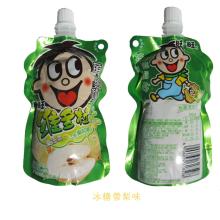
Li means ‘pellet’ and refers to the small chunks of fruit in the jelly. Want Want claims that Weiduoli contains at least 5% of fruit. However, the most innovative aspect of Weiduoli is that it comes in a soft bottle, so you can suck it in small sips, rather than swallowing an entire piece of fruit jelly.

Fruit flesh jelly

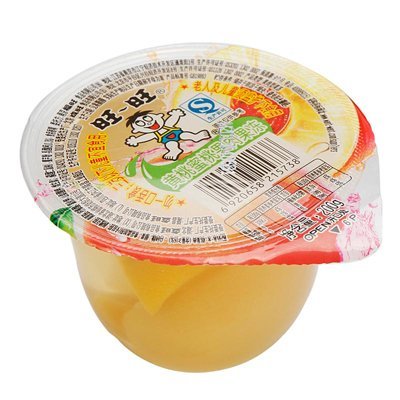
This is fruit jelly with a 20% – 25% fruit content. It is more like pieces of fruit held together by jelly. This as well invites to consume it by biting off small pieces and properly chew it. It also has more dietary fibre than the classic jellies, obviously. And if you are lucky, you may even hit some remaining traces of vitamins and minerals.

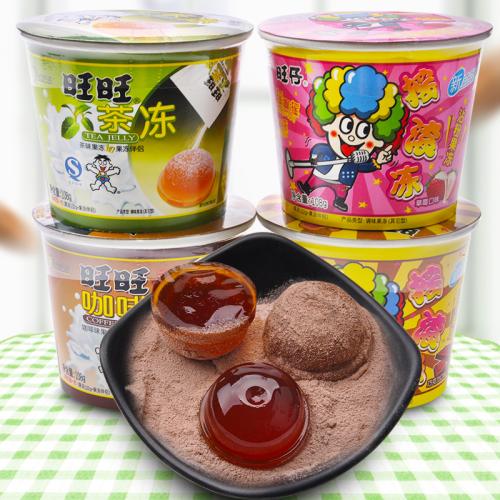
Yaogundong (Rock ‘n Roll Jelly)

Low calorie

Qinqin Food (Fujian) launched a new type of low calorie konjac fruit jelly in cooperation with Orihiro from Japan in July 2020. An interesting feature of the ad is that it does not use children, but a young adult male to promote these products. This could be a subtle attempt to reposition fruit jelly.

I’m sure that most readers love this variety even before trying it. This product is sold in a cup resembling that used to sell ice cream. The cup contains a few jellies in the traditional packing and a layer of fruit flavoured powder. According to an advertising video that is entertaining even for readers who cannot understand the Chinese, you can consume these jellies in three ways:

  1. eat the jellies in the traditional way;
  2. take them out, roll them through the powder and eat them;
  3. Wet your finger, dip it in the powder and eat the powder;

This is a clever move. Children will be tempted to go for the second way, which will slow down their moves and diminish the risk of choking to a minimum. However, I wonder if this variety will survive. I will keep you posted.

With so much innovative energy from the competition, market leader Xizhilang is also introducing a floral type of fruit jelly to re-interest its patrons in their products. Perhaps this more elegant fancy look will make consumers less eager to suck the jelly up at once.

Healthier

Chinese manufacturers of fruit jelly are also trying to revive the product by designing healthier types. They experiment with adding more fresh fruit and vegetable juice, adding tradtional Chinese medicinal (TCM) herbs, tea extracts, etc. Using healthier types of thickeners, like konjac or xanthan, is also part of this research.

Peter Peverelli is active in and with China since 1975 and regularly travels to the remotest corners of that vast nation. He is a co-author of a major book introducing the cultural drivers behind China’s economic success.

Exploring Babao Porridge: Tradition Meets Convenience

Babao Porridge (Babaozhou, Babaofan), a sweet rice porridge stuffed with dates, lotus seeds and other fruits, is an extremely interesting example of a traditional product revived by industrial production. The concept of babao is used in more traditional foods, e.g. zongzi, filled steamed rice cubes wrapped in leaves, which are introduced in a separate post of this blog.

Image
Image

Present day Babao Porridge is derived from a southern type of porridge called Laba Porridge. La refers to the La month, the last month of the lunar calendar and ba (‘eight’) to the eighth day of that month. On the 8th day of the lunar 12th month people used to prepare a porridge using eight or more ingredients to celebrate the end of the year. Another story explains the custom as a Buddhist tradition.

Laba porridge was first cooked as a sacrifice for ancestors and gods during Laba Festival as a part of winter worship. In an agricultural society, the 12th month or layue (腊月) was a time when families consumed some of their stores from the harvest season. Cooking a porridge with rich and varied ingredients is a way to celebrate a prosperous harvest for the year, in hopes of a better one to follow.

Just like Christmas overtaking the ancient Roman holiday of Saturnalia, when Buddhism arrived in China, it stamped its own influence on this local tradition. For Buddhists, Laba Festival is also Buddha’s Enlightenment Day.

The legend says that Shakyamuni, after 6 years of seeking enlightenment by living frugally, once sat down under a tree, dead tired. A woman herding cows saw him and prepared a simple porridge for him using course cereals and wild fruits. Shakyamuni was so revived from eating a bowl of that porridge, that he immediately gained enlightenment. From that day on, Buddhist Temples prepared a similar type of porridge on the 8th of each 12th month.

With the increasing pace of life, modern Chinese are less and less willing to spend several hours a day in the kitchen. This includes less frequently prepared foods like Babao Porridge.

The basic production process is easy enough. The raw materials are mixed and cooked, cooled and then packed in cans, similar to those used to pack soft drinks. In this way, the porridge can be easily consumed as a convenient food, while travelling, as a snack during office work, etc. A plastic spoon is usually attached to the can, so the traveller does need to pack a metal spoon from the kitchen either.

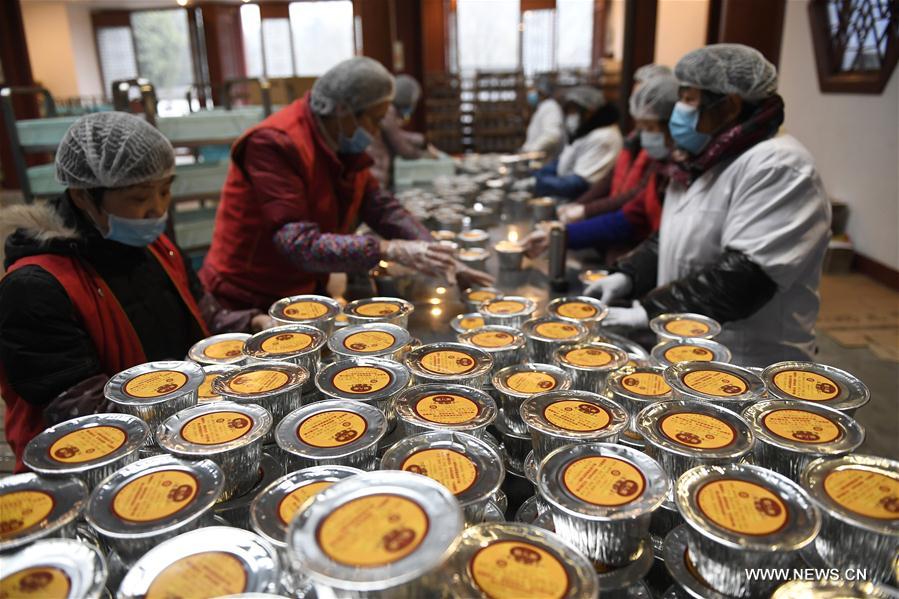
Buddhist monestaries have to abide by the law as well, so more and more temples are producing laba porridge in a semi-industrialised clean way, to ensure that the faithful do not have to pay dearly for enjoying a bowl of laba porridge with food poisening. On the way, it earns the monestary a lot more income as well.

Formulation

The most essential aspect of the production of Babao Porridge is the combination of emulsifiers and thickeners. Babao Porridge consists of a viscous liquid part and solid parts. Manufacturers need to formulate the product in such a way, that the solid parts are more or less evenly distributed over the liquid part upon opening of the can.

A number of Chinese manufacturers of emulsifiers and thickeners supply products specially formulated for Babao Porridge. Some sources propagate CMC as the most appropriate thickener for this application.

A combination of CMC and a low calorie high intensity sweetener to replace the sugar will not only provide an authentic mouthfeel, but also decrease the caloric value.

Industrial recipes for so called ‘low calorie Babao Porridge,’ proposed by manufacturers of ingredients use sticky rice as the macro-ingredient, where part of the rice can be replaced with pumpkin. Various combinations of fruits (dates are most popular) and nuts (including peanuts) are added. Frequently suggested micro-ingredients and additives: pumpkin powder, xylitol, oligoxylose, CMC, konjac powder, and EDTA.

As a result of all the recent food safety problems, Chinese consumers have become more aware of ingredients and started asking if one food really needs so different ingredients. A recent article (24/9/2014) criticises the use of xanthan in one brand of Babao Porridge. Xanthan is known in the porridge industry under the nickname zhoubao, literally: ‘porridge treasure’. The reporter believes it is a means to hide the lack of skills of the manufacturer to produce a proper porridge.

Top brands

The following brands are recognised as China’s top brands for Babao porridge

Yinlu   PorrYinlu

The Yinlu Food Group was established in Xiamen (Fujian) in 1985 as producer of canned food and beverages. It is still one of China’s top producers of protein drinks. It now operates production units in Shandong, Hubei, Anhui and Sichuan. Nestlé has acquired a controlling stake in Yinlu, nut has announced that it intends to sell that stake again early 2020.

Wahaha   PorrWahaha

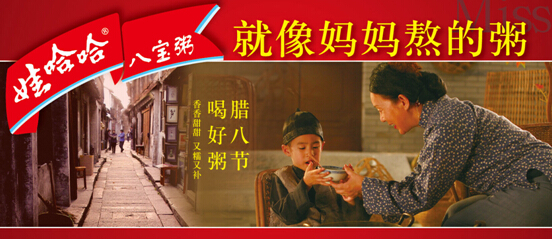
The Wahaha Group was established in Hangzhou (Zhejiang) in 1987 as a private company operated by a school, producing tonic for school children. The founder and CEO, Mr. Zong Qinghou, is currently one of China’s richest entrepreneurs. Wahaha has 150 subsidiaries in all regions of China, employing 30,000 people. It ranks among China’s top 500 companies in 2014 It is a relatively new player in this market, but has rapidly risen to this position. The range includes a babao porridge sweetened with xylitol. Wahaha has started a new campaign for its canned porridge range in January 2015, stressing that the company is being loyal to the Chinese tradition of porridge making. The following picture says that Wahaha’s Babao Porridge ‘tastes just like mother used to cook it’

WahahPorr

Wahaha has launched another type of nutritious Babao Porridge mid 2018, under the Qingzhi brand.

Ingredients:

Koji, plant sterols, sugar, glutenous rice, barley kernels, red beans, maltitol, black rice, peanuts, red kidney beans, hulless barley, tremella, lecithin, sucrose ester, fatty acids, sodium tri-polyphosphate, acesulfame-k, EDTA-2Na, sucralose, water

Qinqi   PorrQinqi

Based in Guangzhou (Guangdong), Qinqi was the first in China to launch Babao porridge in cans, which created the market for ready to drink Babao porridge. Although no longer the number one brand, Qinqi still bears the honorary name ‘porridge king’.

Qinqin   PorrQinqin

This brand is owned by the Xinxin Food Group, established in Yangzhou (Jiangsu) in 1991, by a local factory and a Taiwan investor. It produces a range of convenience foods, including Babao porridge.

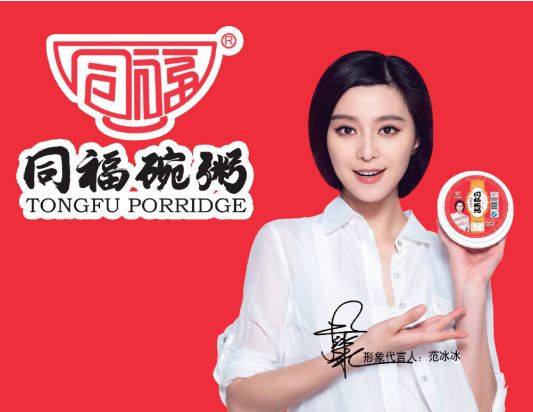
Tongfu   PorrTongfu

The name of the producer, Tongfu Bowl Porridge Co., Ltd., betrays that it is dedicated to producing exactly that: porridge in (plastic) bowls. Tongfu was the first to introduce this type of packaging in China. It is considerably lighter than the canned version. It is located in Wuhu (Anhui)

Corona was good for Babao porridge

Babao porridge sales went through the ceiling during the first quarter of 2020, when the entire Chinese nation went into quarantine at home. It turned out to be the ideal corona food, besides instant noodles and other packed fast foods.

More nutritious and high end

Babao porridge entered the high end sector in 2022, when Huangxiaozhu launched its series of zero sugar low fat nutritious babao porridge. Flavours included coconut-water chestnut and and black sesame – taro. The packaging was also inspired by the ongoing nationalist trend (guochao).

Peter Peverelli is active in and with China since 1975 and regularly travels to the remotest corners of that vast nation. He is a co-author of a major book introducing the cultural drivers behind China’s economic success.