Understanding China’s Anti-Ageing Industry

I. Overview

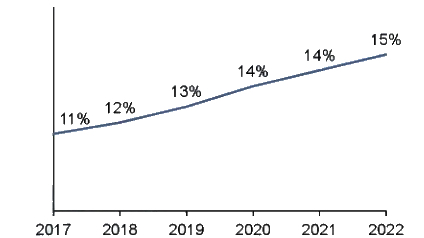
Anti-ageing helps people delay the ageing process of the body and promote overall health, so that people can stay mentally and physically healthy, within the life limit determined by genetic factors, and improve the quality of life. The following table shows the percentage of the part of the Chinese population that is 65 years or older.

Skin ageing refers to the deterioration of the cell structure and function of skin tissue under the continuous action of the internal (accounting for 20%) and external (accounting for 80%) environment, usually manifested as dry skin, pigmented spots, reduced skin elasticity, sagging, rough and wrinkled skin. There are many schools of research on the causes of skin ageing, including genetic ageing, excessive free radicals, photoaging, non-enzymatic glycosylation, etc. Endogenous ageing refers to the ageing of the human body due to irresistible physiological factors such as genetics and endocrine. Exogenous ageing is environmental ageing, that is, ageing caused by light radiation, environmental pollution, bad living habits, etc.

II. Anti-ageing policy

In recent years, China has issued a series of policy documents to promote the development of the anti-ageing industry. In August 2022, the General Office of the Guangzhou Municipal People’s Government issued the ’14th Five-Year Plan’ for the Development of the Marine Economy of Guangzhou, which proposed to focus on the development of marine biologically active substance screening, marine biological genetic engineering and other technologies to support marine biological vaccines and substances such as antibacterial, antiviral and antioxidant derived from marine organisms. The research and development of biologically innovative drugs, as well as the development, production and industrialisation of high-value-added marine biological functional foods such as lowering blood sugar and blood lipids, improving immunity and anti-ageing, have led to the establishment of a number of new enterprises in the fields of marine drugs and functional biological products. In January 2024, the General Office of the State Council issued the Opinions on Developing the silver-haired Economy to improve the welfare of the elderly, which proposed to develop the anti-ageing industry, promote the deep integration of biotechnology and delayed senile diseases, and develop products and services for early screening of geriatric diseases.

III. Anti-ageing value chain

The upstream of the anti-ageing industry chain is mainly plant extracts, traditional Chinese medicine and other anti-ageing raw material industries, and the downstream is mainly in the fields of skin care, beauty and health care.

At present, scientists have found that a variety of plant extracts can be combined with NMN to improve their anti-ageing effect. This development started relatively late, but its growth is rapid. According to statistics, the domestic plant extract market has increased from RMB 5.66 billion in 2015 to RMB 23.78 billion in 2023; an annual growth rate of 20.94%.

IV. Development status of the anti-ageing industry

With the ageing of China’s society, ‘anti-ageing’ has now become a topic of high public attention. People’s lifestyle and habits are changing. They all want to be young forever and minimise the traces of ageing, which has promoted the rapid growth of sales of anti-ageing products. Data shows that the market scale of China’s anti-ageing industry in 2023 was about RMB 152.18 billion, in which skin care products were good for RMB 94.82 billion; nicotinamide mononucleotide (NMN) health care products RMB 12.48 billion; and other anti-ageing health care products and health foods RMB 44.88 billion.

The research and development strategies of domestic anti-ageing brands are shifting to products made from traditional Chinese medicine, and use advanced medical technology to promote the rapid development of traditional Chinese medicine skin care products. The attention of international high-end brands still dominates the field of anti-ageing skin care products in China, but consumers gradually recognise domestic anti-ageing brands, which promotes domestic brands to perform better and better in the mass market and have greater development potential.

Data show that 53.2% of consumers begin to pay attention to anti-ageing at the age of 26-35, and 23.2% of consumers at the age of 18-25. With the in-depth development of the anti-ageing industry and the popularisation and application of anti-ageing knowledge, the people who pay attention to anti-ageing are getting younger and younger, and the market increases proportionally.

Still according to the research, 68.2% of consumers combine anti-ageing with fitness, 62.4% of consumers use skin care products to prevent ageing, and nearly 50% of consumers pay attention to diet and take supplements for anti-ageing. With the continuing upgrading of anti-ageing skin care products and health care products, more consumers will recognise the effectiveness of anti-ageing ingredients and anti-ageing through the use of skin care products and health foods.

V. Key enterprises in the anti-ageing industry

The market competition in China’s anti-ageing industry is fierce, and the leading enterprises consolidate and expand their market share through product innovation, technology research and development and marketing. At the same time, with the increasing diversification of consumers’ demand for anti-ageing products, enterprises are actively looking for differentiated competitive advantages. At present, the main enterprises in China’s anti-ageing industry include Vecanbio (Zhongyuan Xiehe), Kingdomway (Jindawei), Marubi (Wanmei), BBCA Pharmaceutical (Fengyuan Yaoye), (Challenge & Young) Qianyuan, Zhongsheng Pharma, Yiling Pharmaceutical, Changchun High-tech, By-health (Tangcheng Beijian), etc.

Lycopene Vitamin E from By-health

VI. Trends in the anti-ageing industry

  • Diversification and personalisation of consumer needs. Consumers’ demand for anti-ageing products is no longer limited to a single effect, but pays more attention to the diversification and personalisation of products. They not only hope that the product can effectively prevent ageing, but also hope that the product can meet their specific needs, such as improving skin quality and enhancing immunity. In addition, with the improvement of consumers’ health awareness, their requirements for the safety and effectiveness of anti-ageing products are also getting higher and higher. Therefore, brands need to pay more attention to ensure that products are both safe and effective.
  • Technological innovation and application; With the continuous development of biotechnology, genetic technology, nanotechnology and other high-tech technologies, anti-ageing products will pay more attention to the application and innovation of science and technology. These new technologies will help improve the effect and user experience of the product and meet consumers’ needs for efficiency, safety and convenience. At the same time, anti-ageing products will be more intelligent and personalised in the future. Through intelligent devices and technical means, brands can more accurately understand the skin quality and needs of consumers, so as to provide more personalised skin care solutions and product recommendations.
  • Market segmentation and channel expansion; With the continuous development of the anti-ageing market, the trend of market segmentation will be more obvious. Brands need to segment the market according to different age groups, skin type, dietary needs demand and other factors, and launch more targeted products to meet the needs of different consumers. At the same time, the sales channels of anti-ageing products will be more diversified in the future. In addition to traditional offline channels, online channels will occupy an increasingly important position. Brands need to pay attention to the expansion and operation of online channels to improve brand awareness and product sales.

If this post appeals to you, you may also like to read:

Medicine Food Same Source

Public nutrition in China

Bird’s nest – if you can’t eat them, drink them

Cosmetics food same source

 China’s silver hairs are challenging the single dogs

The Chinese health food market in 2023

Chinese research of anti-fatigue functional food

Chinese health water – the hottest drink to cool you down this summer

Peter Peverelli is active in and with China since 1975 and regularly travels to the remotest corners of that vast nation. He is a co-author of a major book introducing the cultural drivers behind China’s economic success. Peter has been involved with the Chinese food and beverage industries since 1985.
The Rise of Herbal Health Waters in China

sugar-free tea beverage undoubtedly were the major trend in the Chinese beverage industry in 2023. Tea drinks in general are healthier and more refreshing than all those funny bubble teas that Chinese consumers started drinking in the years before.

With the growing concern for health, moving on to sugar-free tea beverages was a logical step. Data show that the year-on-year growth rate of sugar-free tea in 2023 was as high as 110%, the market size exceeded RMB 10 billion. That year saw the introduction of 64 new sugar-free tea products.

It seems that the next step for 2024 is adding more nutritious ingredients, in particular herbal extracts from TCM plants. This also fits in with the ongoing ‘national trend’ (guochao), which explains why the new drinks category is referred to as ‘Chinese health water’ (zhongshi yangshengshui). A market survey dating 2024 predicts that the compound annual growth rate will exceed 88% over the next five years. By 2028, sales are expected to exceed RMB 10 billion.

It is too early to say that these health waters will canabalise the entire market for sugar-free tea drinks, but they will certainly take a considerable part of it.

Let’s look at a few of health waters that are already on the market.

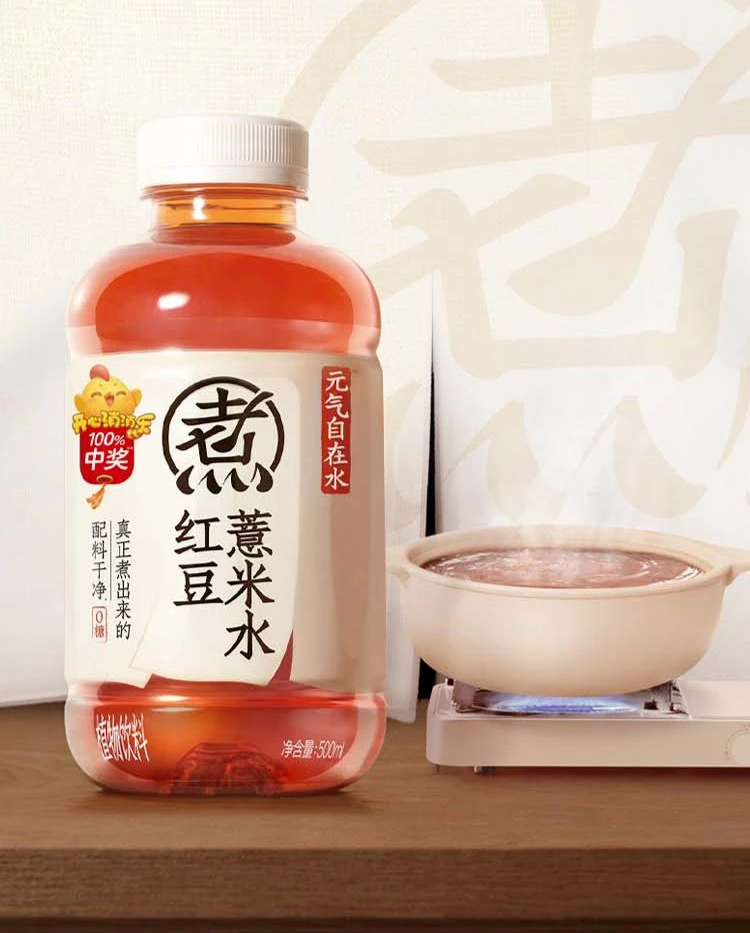
Genki Forrest – red bean and barley
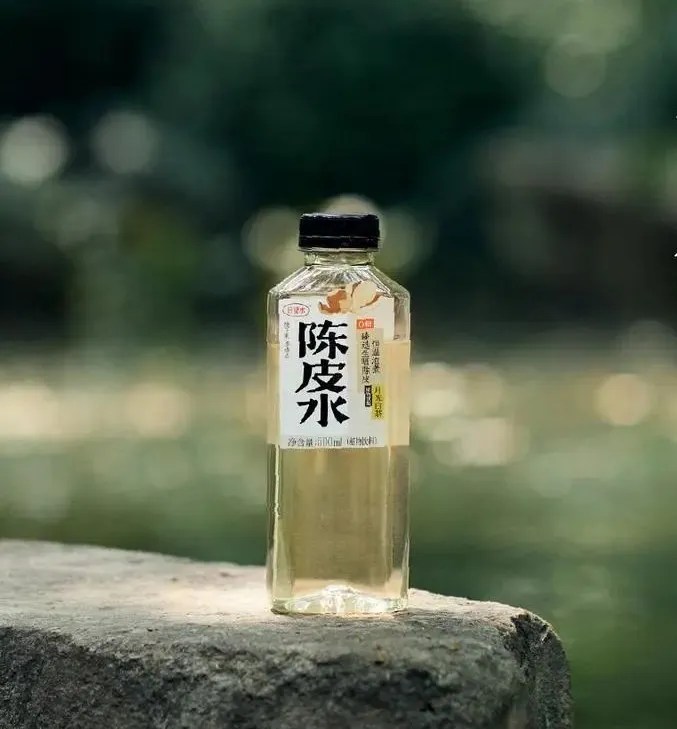
Haowangshui – dried orange peel
Keyang – green bean

Nestlé

Foreign players have also noted the TCM trend. Nestlé China has launched two new beverages: white mulberry oolong and hawthorn tangerine peel in 2024.

Peter Peverelli is active in and with China since 1975 and regularly travels to the remotest corners of that vast nation. He is a co-author of a major book introducing the cultural drivers behind China’s economic success. Peter has been involved with the Chinese food and beverage industries since 1985.

Innovative Cheese Snacks Designed for Children

Cheese consumption has been increasing at an incredible speed in China during the past few years, considering that not so long ago, almost all Chinese were abhorred about the smell of cheese. Cheese supply volume in China has surged from 140,000 tons to 270,000 tons during the period 2017-2022. This figure is expected to maintain double-digit growth, far above the world average for the coming years.

Although the average cheese consumption in China is far below many Western countries as well as Japan and Korea, it has significantly increased from 80g/person/year in 2017 to 130g/person/year in 2021. At the 2022 China Cheese Development Summit Forum, the Dairy Association of China released an action plan, proposing that the national cheese production would reach 500,000 tons by 2025. Much of the cheese sold in China is processed, but non-processed is increasing.

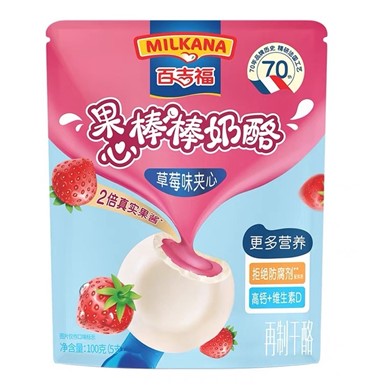
A uniquely Chinese development is that Chinese cheese producers are focusing their own R&D on developing one-bite cheese snacks, for all ages, but in particular for children. This is partly a result of the pressure of the Chinese authorities to increase dairy consumption among children. Such products include cheese sticks, cheese slices, cheese strips, etc. Cheese sticks form the most popular type, which was first launched by Milkana, but was popularized by Milkground. Presently, driven by the increasingly intensive market competition, dairy enterprises have rolled out a wide range of cheese sticks with distinctive features. Apart from various funny shapes, including ‘cheese lollies’, they are also experimenting with flavours. A good example are Milkana’s strawberry flavoured cheese sticks.

This ad by Milkground presents their range of cheese sticks in various flavors: coconut, grape and natural. It promises a calcium content 7 times that of liquid milk. It has added Vitamin D. The animals indicate how fast your child will grow, if you let them snack on Milkground cheese sticks.

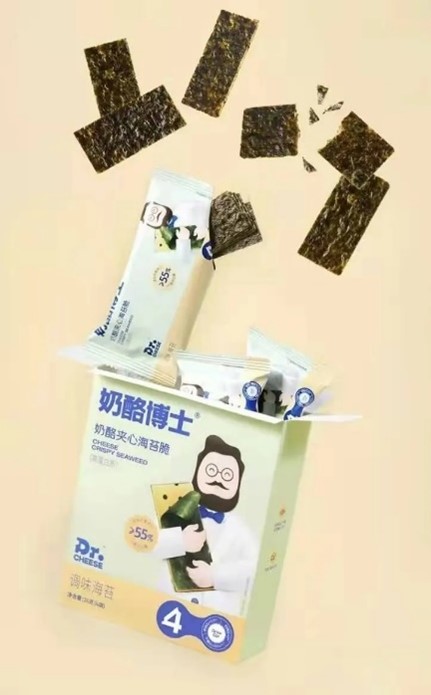
The current trend towards more nutritious snacks is also influencing the design of cheese sticks. Dr Cheese has launched a cheese stick sandwiched between two layers of dried seaweed.

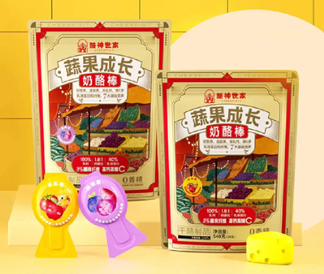
Cheespirit has launched a series of innovative products in 2023: ‘Vegetable & Fruit Growing Up Cheese Sticks’. The company claims to have selected 8 kinds of ‘super vegetables and fruits’ to create high-calcium and high-VC cheese sticks, containing 3% dietary fibre. The calcium is 100% milk calcium, with a 1.8:1 calcium-phosphorus ratio. The product contains 40% whey protein, as well as algal oil DHA and various trace elements derived from vegetables and fruits, providing nutrients such as protein, dietary fibre, vitamins and other basic nutrients needed by children. It contains no preservatives. It uses two innovative two-colour-flavours: Lele orange (tomato, carrot and apple compound flavour) that contains β-carotene; and absolute purple (purple sweet potato, purple cabbage blueberry complex flavour) containing anthocyanins to help the children’s growth.

If this post is of interest to you, you may also want to read:

Cheese in China – a gargantuan challenge

Peter Peverelli is active in and with China since 1975 and regularly travels to the remotest corners of that vast nation. He is a co-author of a major book introducing the cultural drivers behind China’s economic success. Peter has been involved with the Chinese food and beverage industries since 1985.

Understanding China’s Maternal and Infant Water Market

China’s new generation of parents has become extremely finicky about the quality of any product used for or by their newborns. Many posts in this blog already reflect the growing concern for healthy food among young Chinese consumers. This concern only multiplies, when they are starting a family. One innovative product that has come from this development is special purified water for infants. As a drinking water designed for infants and pregnant women, maternal and infant water has many advantages. First of all, it undergoes strict purification and filtration treatment to ensure that the water quality is pollution-free, and can provide a safe and reliable drinking water source for infants and pregnant women. Secondly, maternal and infant water is enriched with a variety of minerals and trace elements, which are essential for the growth and development of infants and young children and the health of pregnant women. According to recent data, China’s maternal and infant water production has increased to 228 mio bottles in 2023; Demand grew to 224.75 mio bottles.

Overview of the maternal and infant water industry

Maternal and infant water is a pure natural mineral drinking water specially for pregnant women and infants to drink, with rich mineral ions, strong antioxidant capacity, good nutrient absorption, low soluble total solids and other characteristics. Maternal and infant water is the ‘natural mineral water’ that meets or exceeds the national standard of the Chinese Nutrition Association. Maternal and infant water must be high-quality raw water derived from nature, without any pollution in the water intake area, and retain the natural mineral elements in the water under the premise of safety and cleanliness; Filling must be carried out close to the water source with special hygienic protection.

According to the National Bureau of Statistics, the number of births in China reached 9.02 mio in 2023, a decrease of 540,000 from 9.56 mio in 2022. On the whole, the number of births in China is showing a downward trend, but considering the large size of China’s population, the number of births still remains at a relatively high level. Moreover, with the implementation of a series of policies and regulations and supporting measures to actively support childbirth, the decline in the number of births in China is expected to decrease in the future. This is expected to usher in development opportunities for the maternal and infant market.

The value chain

The upstream of the value chain is mainly mineral water resources and packaging materials, among which mineral water resources directly determine the output and quality of the products; The midstream refers to the production and manufacturing of maternal and infant water, represented by brands such as Nongfu Spring, which have won the trust of consumers with strict quality control and unique market positioning; The downstream link refers to the consumption of maternal and infant water, and its sales channels mainly include shopping malls, supermarkets, convenience stores, e-commerce, etc., and the development level of these channels directly affects the market demand for maternal and infant aquatic products.

The development of the industry

The data shows that from 2015 to 2023, the scale of China’s maternal and infant water market has continued to grow, and the scale of China’s maternal and infant water market reached RMB 1.043 billion in 2023. However, it is worth noting that in 2023, the size of China’s packaged drinking water market has exceeded 200 billion, so maternal and infant water accounts for less than five thousandths. It is expected that with the continuous development of the maternal and infant water market in the future, more and more brands and manufacturers will begin to increase the publicity and promotion of maternal and infant water, improve consumers’ awareness and acceptance of maternal and infant water, and thus stimulate the growth of industry demand. In addition, the expansion of sales channels has further promoted the development of the maternal and infant market. In addition to traditional supermarkets and baby stores, more and more e-commerce platforms and social media have also started to sell and promote baby water.

There are four main producers of infant water, with Nongfu Spring, already market leader in the Chinese mineral water market, ranking first place. Contact me for an in-depth market study.

If you are interested in this post, you may also want to read:

Infant formulae in China – a showcase of Chinese food policy

Peter Peverelli is active in and with China since 1975 and regularly travels to the remotest corners of that vast nation. He is a co-author of a major book introducing the cultural drivers behind China’s economic success. Peter has been involved with the Chinese food and beverage industries since 1985.

Why Young Chinese Consumers Prefer Online Bakeries

In Shanghai, bread has become an indispensable part of young people’s lives, whether it’s gathering with friends, exploring every corner of the city on a City Walk, or at various social events, bread has become a must-have food companion.

With the popularity of the Internet and changes in lifestyle, young people in Shanghai are revolutionizing the way they buy bread. From queuing up in physical stores to buying bread online, this shift not only reflects the change in consumption patterns, but also drives the innovation and development of the entire baking industry.
Bread has always been loved by the public as a quick and delicious breakfast and snack, and more and more young people are no longer satisfied with buying bread in traditional offline bakeries, but choose to buy bread online.

Metropolis

In the fast-paced metropolis of Shanghai, traditional bakeries seem to be losing favour with younger consumers. According to Winshang Big Data, although Shanghai has more than 1,300 bakery shops, ranking first in the country, young people are more inclined to buy bread online.

Left-overs

Driven by the wave of digitalization, online shopping has become an important part of modern life. For busy young people in Shanghai, buying bread online is not only convenient and fast, but also enjoys more discounts and choices. Recently, a method of food sales called ‘leftover blind boxes’ has quietly emerged, which is highly sought after by young people because it is labelled as money-saving, fun, and environmentally friendly. In addition, bakery accounts on social media platforms have become a new front to attract customers. Through the release of activities such as ‘Discount Blind Box’ and ‘Free Tasting’, it has successfully attracted the attention and participation of a large number of young users. This seems to be the next step after the appearance of good boxes in previous years.

Buying bread is crazier than buying clothes

In Shanghai, the fashion capital, young people are just as crazy about food. Compared to traditional bakeries, online bakeries are more diverse in styles and flavours. Shanghai’s bakeries have a variety of cake styles, so many that they may be more than you can imagine: from classic baguettes to creative matcha breads, from healthy breads with low sugar and fat to rich sandwiches. From classic French desserts to innovative varieties infused with Chinese flavours, Shanghai’s bakeries cater to every taste. There is a wide range of styles to make people dazzled.

Blind boxes

In recent years, the blind box economy has risen rapidly in China, and major businesses have launched blind box products to attract consumers.  Blind boxes, as an emerging marketing method, have found its place in the food industry. The bread blind box packages launched by major merchants not only increase the fun of shopping, but also provide consumers with more opportunities to try unknown flavours. And under this trend, the bread industry is not to be outdone by launching the bread blind box. These mystery boxes often contain a variety of random styles of bread, making every opening full of surprises. Consumers don’t know exactly what styles and flavours of bread they will get when they buy it, and this sense of mystery and anticipation makes young people want to stop. For young consumers who are looking for novelty and curiosity, this way of buying has an irresistible appeal.

Recommended other posts:

Bread in China – from snack to staple, though still for the young urban

Some Chinese bakery statistics

Uncle and Aunty Xiong, French bakers in Beijing


Peter Peverelli is active in and with China since 1975 and regularly travels to the remotest corners of that vast nation. He is a co-author of a major book introducing the cultural drivers behind China’s economic success. Peter has been involved with the Chinese food and beverage industries since 1985.

Understanding China’s Tomato Paste Production Chain

Introduction

The industrial chain of tomato paste production mainly includes tomato planting, harvesting, processing, packaging and sales. Its upstream industries include tomato planting, pesticides, fertilizers, agricultural machinery, etc.; The midstream link is the production and processing of tomato paste, including cleaning, crushing, deseeding, concentration, seasoning and other steps, which require advanced processing equipment and technical support; The tomato paste produced by midstream production enterprises is packaged and sold through downstream sales channels, and is widely used in ready-to-eat fast food, pizza, snack food, canned food, beverages/juices, soups and other fields. As a commonly used condiment, tomato paste is widely used in Western cuisine. In Chinese cooking, it is mainly used to prepare sweet and sour flavours, such as squirrel mandarin fish, sweet and sour pork, etc.

Nutrition

Tomato paste contains lycopene, B vitamins, dietary fibre, minerals, protein and natural pectin, etc. Compared with fresh tomatoes, the nutrients in tomato sauce are more easily absorbed by the body.

Industry

In recent years, the scale of China’s tomato paste market has continued to expand, and the market capacity has been growing. However, at present, China’s tomato paste market is mainly occupied by leading enterprises, which have become industry leaders by virtue of their brand advantages, production scale and sales channels. However, some small and medium-sized enterprises compete with large enterprises through cooperation with farmers, production cost advantages, and flexible marketing strategies. In addition, some cross-industry enterprises have also entered the ketchup market, and these enterprises usually have strong financial strength and advanced production technology, which has a certain impact on the market competition pattern.

Ketchup

Ketchup is tomato paste with various added ingredients. In fact, ketchup is derived from the pronunciation of the Chinese term qiezhi (tomato juice) in southern dialects, spoken by Chinese in Southeast Asian countries. Ketchup is mainly divided into basic ketchup, Italian ketchup, jam-based ketchup, chili ketchup, sweet ketchup, sugar-free/low-sugar ketchup, organic or natural ketchup. The most common type of base ketchup is made from fresh or processed tomatoes, onions, garlic, herbs, spices, etc. It is often a versatile sauce that can be used to make a variety of dishes.

Industrial chain

The industrial chain of tomato paste production mainly includes tomato planting, harvesting, processing, packaging, sales and other links, and its upstream industries mainly include tomato planting, pesticides, fertilizers, agricultural machinery, etc., and tomato planting enterprises mainly provide raw materials for the midstream, so its output and quality will directly affect the quality and cost of tomato paste. The midstream link is the production and processing of tomato paste, including cleaning, crushing, deseeding, concentration, seasoning and other steps, which require advanced processing equipment and technical support. Leading enterprises are: COFCO Sugar Holdings Co., Ltd., Xinjiang Guannong Co., Ltd., Zhongji Health Industry Co., Ltd., Xinjiang Tianye Co., Ltd.

Tomato growing

In recent years, China’s tomato planting area has stabilized between 1.2 and 1.3 mln hectares, ranking the fourth largest vegetable variety in the country and has become an important part of the agricultural industry. The planting area is an important factor affecting the yield of tomatoes, so its stability will ensure the yield of tomatoes to a certain extent. The data shows that in China’s tomato production continued to rise during the past few years reaching more than 70 mln mt.

Xinjiang is blessed with unique natural conditions, including long sunlight hours, large temperature difference between day and night, dry climate and little rainfall. Xinjiang tomatoes have a high content of red pigment, high soluble solids, a high yield, as well as less pests and diseases. These characteristics greatly reduce the occurrence of fruit cracking and mouldy rot, and improve the overall quality of tomatoes. Therefore, Xinjiang is the main area of tomato cultivation in China. From the perspective of development history, Xinjiang first began to plant tomatoes on a large scale after the founding of the People’s Republic of China. After the first tomato paste production line was built in Xinjiang in 1984, the tomato industry began to embark on a fast track. From a national perspective, Xinjiang’s tomato production accounts for more than 80% of the country’s total.

Unstable

A good development of tomato production and marketing requires the a stable foundation for different parties in the value chain such as breeders, seedling dealers, growers, vegetable wholesalers, and consumers in the whole industry chain. In tomato production, wholesalers dominate market prices, so producers are at a disadvantage, unable to obtain stable and considerable income The low and unstable income have accelerated the transfer and loss of growers to other industries. The data show that from January 2022 to May 2024, the wholesale price of tomatoes in China has shown a downward trend. However, from the perspective of the production of tomato sauce in the midstream, the decline in the wholesale price of tomatoes will directly reduce the production costs of tomato sauce manufacturers, which is conducive to the rapid development of tomato sauce production enterprises.

Paste production

In recent years, the scale of China’s tomato sauce market has been growing. At present, China’s tomato sauce market is dominated by a few leading enterprises, which have become industry leaders by virtue of their brand advantages, production scale and sales channels. However, some small and medium-sized enterprises compete with large enterprises through cooperation with farmers, production cost advantages, and flexible marketing strategies. In addition, some cross-industry enterprises have also entered the tomato paste market, and these enterprises usually have strong financial strength and advanced production technology, which is beginning to impact the market competition pattern.

Related posts:

Tomatoes in the Chinese kitchen and even more for export

Peter Peverelli is active in and with China since 1975 and regularly travels to the remotest corners of that vast nation. He is a co-author of a major book introducing the cultural drivers behind China’s economic success. Peter has been involved with the Chinese food and beverage industries since 1985.

Exploring China’s Milk Tea Craze: Brands and Growth

A rapidly growing beverage category in China are the milk teas. They are a combination of the bubble teas that originated in Vietnam and based and traditional milk or butter teas drunk by Mongolians and Tibetans.

In the course of 2018, China’s tea aficionados have embraced a new trend, one that is encapsulated in the growing popularity of the milk tea brand, Heytea. Originally sold in a tiny alleyway in Jiangmen, southern China’s Guangdong province, the brand went viral on social media because of its signature “cream cheese” series — a cup of hot sweet tea topped with a spoonful of savoury cream cheese. Since then, Heytea has developed into a franchise with more than 80 outlets in 13 cities across the country. There are also outlets in North America.

Milk tea now has many brands and more are still being added. Some are already established brands: for example, Naixue, Chagee, Mixue Ice Cream & Tea and Chabaidao.

This table shows the number of new outlets opened per year.

The penetration of chains has been steadily increasing in this business.

Here is an overview of the market size in RMB 100 mln and annual growth in %.

The following table lists the turnover and profit for a number of major players in this market for 2024.

This positive trend can be expected to continue, as the total turnover of this business is expected to grow, at least during the coming few years.

The 2023 New Tea Drink Research Report, released by the China Chain Store and Franchise Association and Meituan New Catering Research Institute, predicts that by the end of 2025, the market size of Chinese-style tea drinks will reach RMB 242.5 billion.

Related earlier posts:

Chinese milk tea brands cover their sins with artificial sweeteners

Drinks galore – the Chinese typology of beverages

Peter Peverelli is active in and with China since 1975 and regularly travels to the remotest corners of that vast nation. He is a co-author of a major book introducing the cultural drivers behind China’s economic success. Peter has been involved with the Chinese food and beverage industries since 1985.
Exploring China’s Growing Market for Meal Replacers

Food is a core aspect of Chinese culture. Although Chinese are spending less and less time in the kitchen, they still have the same high expectations for flavour, texture, nutrition, etc., of their meals. This makes the Chinese market for meal replacers very different from that in most Western nations.

The Chinese market for meal replacers is therefore even more promising in terms of profits. Chinese customers expect the highest quality ingredients and they want them fresh. They also like to be regularly triggered by new flavours.

This mini-blog shows the historic and projected growth of this market (unit RMB 100 mln): double digits for several years to come, with interesting niche segments.

Peter Peverelli is active in and with China since 1975 and regularly travels to the remotest corners of that vast nation. He is a co-author of a major book introducing the cultural drivers behind China’s economic success. Peter has been involved with the Chinese food and beverage industries since 1985.
Exploring China’s Bakery Ingredient Market Trends

The Chinese bakery business is booming, but the market is also extremely volatile. There is no better moment to enter the Chinese market for suppliers of any bakery ingredient than now.

I have collated a few statistics that are recent enough to give a rough impression of the size of the market.

The first table indicates the development of the value of the market and the projection of the near future.

Some interesting details about consumer behaviour:

  • Whether online or offline, women are still the main consumers of baked goods in China.
  • In terms of age, 70% of consumers are between the ages of 21 and 40.
  • In terms of price, consumers spending RMB 20 – 40 in a single consumption constitute the largest segment (35. 8%).

The next table shows the number of bakery shops in a selected group of major cities. This tells something about the geographic distribution. However, the smaller provincial cities currently show the highest growth.

We should not forget the focus issue of this blog: food ingredients. This graph shows the major cream suppliers to the Chinese baking industry. As you can see, the market still consists of a few major brands and a large number of small suppliers.

You can find more information in earlier posts, e.g. about flour (improvers), baking enzymes, leading bakery Holiland, a small private bakery in Beijing, bread, and you can find more by using the search function in this blog (try pastry, cake, biscuit, etc.). Contact me for proprietary studies.

Peter Peverelli is active in and with China since 1975 and regularly travels to the remotest corners of that vast nation. He is a co-author of a major book introducing the cultural drivers behind China’s economic success. Peter has been involved with the Chinese food and beverage industries since 1985.
A new trend in China: grading low-fat and sugar-free drinks

In the turbulent and increasingly diversified Chinese beverage market, sugar-free and low-fat have become the choices of more and more consumers. The following picture is taken from an influencer promoting ‘clean label’ products. However, official food and beverage labelling has only just started in China. As you can see, this influencer follows international practice.

Black bean milk

Origin: Ganquan; Brand: 8000 Miles (Baqianli) Price: RMB 1.70/200 ml; shelf life: 90 days.

Nutrition information (100 gr): energy 174 kjoules; protein: 4.4 gr; fat: 1.4 r; carbohydrates: 2.8 gr; sodium: 7 mg.

Ingredients: potable water, black beans, black rice, sesame.

According a recent survey, the market size of China’s sugar-free beverage industry has increased from RMB 2.26 billion in 2015 to 19.96 billion in 2022, and is expected to reach RMB 61.56 billion in 2025. In addition, according another survey, 75% of consumers believe that health is a focus issue in choosing which beverages to buy. In addition to taste, ingredients have become one of the most important beverage purchase considerations for consumers.

To meet the needs of consumers and guide them to make healthier decisions, projects for beverage grading have been proposed. Recently, Shanghai has started the first batch of pilot projects for the grading of ‘nutritional choice’ for beverages, and mainstream brands such as Naixue tea and Bawang Chagee tea have been selected as the first objects for testing, which has caused heated discussions in the industry.

Beverage grading

As the name suggests, beverage grading is the classification and rating of beverages based on certain criteria. These criteria usually include the ingredients, texture, taste, etc., of the beverage. The ‘Nutritional Choice’ grading piloted in Shanghai is based on the content of non-dairy sugar, saturated fat, transfat and non-sugar sweeteners in beverages, and comprehensively classifies beverages through four grades from A to D, in decreasing order. This allows consumers to make more rational consumption choices.

According to Shanghai Centre of Disease Control, the ‘Nutritional Choice’ beverage classification method mainly refers to domestic and foreign standards, and the full indication ‘Nutritional Choice’ can be used in various contexts, such as beverage packaging, ordering procedures, and menus. The classification of a beverage’s grade depends on its ‘shortcomings’. For example, if a beverage has a sugar content of C, saturated fat and transfat of A and no added non-sugar sweeteners, the beverage will be classified as C.

Singapore as example

In December 2022, the Singaporian government began to officially implement a classification policy for prepackaged beverages in the retail market, which also used four grades according to the sugar content and saturated fat content: A, B, C, and D. ‘A class (dark green)’, ‘B class (light green)’, ‘C class (yellow)’, ‘D class (red)’. Grade A means that sugar content and saturated fat are the lowest, and grade D represents the highest content. In addition to packaged beverages, all kinds of handmade beverages such as freshly squeezed juice and milk tea will also be labeled in this way soon. The labeling is the responsibility of the manufacturer, importer or distributor.

Milk tea first

It is understood that milk tea brands like Nai Xue, Bawang Chagee, Happy Lemon, and Hangzhou Leyuan are the first batch of brands to try out the ‘nutritional choice’ classification. On March 27, Naixue’s Shanghai stores and ordering outlets fully implemented the ‘Nutritional Choice’ logo, and Naixue’s ready-to-drink (RTD) products were also superscripted with the ‘Nutritional Choice’ logo. The data show that Naixue’s tea freshly made drinks and RTD bottled beverage products are mostly concentrated in the A and B grade ranges, with obvious health attributes and high recommended values. It is worth mentioning that after the introduction of the ‘Nutritional Choice’ label, the number of consumers choosing grades A and B has increased significantly.

As for Bawang Chagee, the medium-sized cup with less sugar is classified as B-grade, and the Oriental Iced Tea as A-grade. Bawang Chagee also emphasizes healthy sugar, promoting the choice of low GI foods (glycemic index less than 55), food GI value less than or equal to 55, are good choices, but this does not mean that the lower the GI value, the better. Tea lovers also need to choose according to their own situation to avoid falling into knowledge misunderstandings.

More beverages

In addition, Zerup Zero Sugar Drink, Watsons Soda, Suntory Sugar-Free Oolong Tea, etc., are classified as Grade A, F&N Ice Cream Soda, Wahaha AD Calcium Milk are classified as Grade B, FairPrice Whole Milk, Nongfu Spring Brand Tea, Green Oolong Tea, Yuzu Green Tea, Coconut Palm Coconut Water, Benasong Coffee and other products are all classified as Grade C.

Future

The ‘Nutritional Choice’ classification has enabled the beverage industry to move towards a more professional and refined business. With the continuous promotion of the ‘grading system’, more brands may join the ranks in the future. This will also be extended to food. Compared to beverages, there are more types of foods, and the content and proportion of nutrients are more complex. For example, a food can be evaluated based on the content of key nutrients such as protein, fat, carbohydrates, dietary fibre, vitamins and minerals in the food. At the same time, the content of nutrients such as sodium and sugar that are not conducive to health in food can also be considered, so as to evaluate the nutritional value of food more comprehensively.

Peter Peverelli is active in and with China since 1975 and regularly travels to the remotest corners of that vast nation. He is a co-author of a major book introducing the cultural drivers behind China’s economic success. Peter has been involved with the Chinese food and beverage industries since 1985.