Most foreigners liken sea cucumber with bicylce tire, but for Chinese it is a mine of nutrition
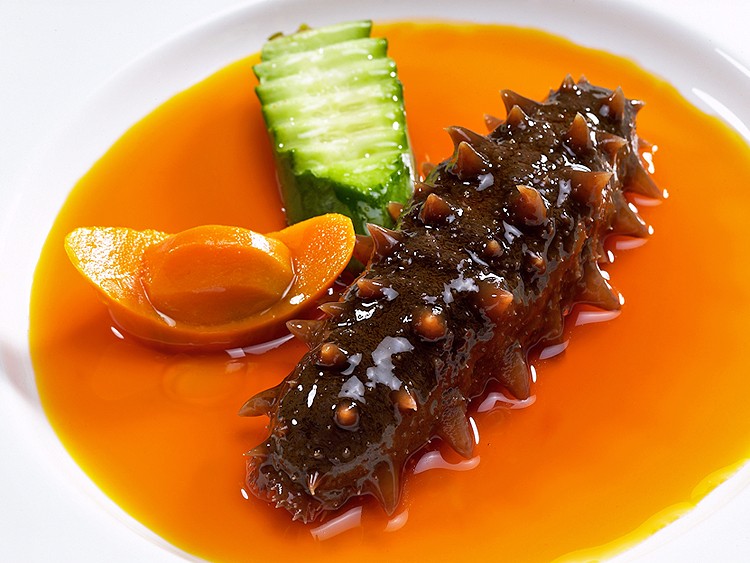
The sea cucumber is a gelatinous creature that is distantly related to star fish and sea urchins. Like these creatures, sea cucumbers have small tentacles around their mouth to take in food. It derives its name from the fact that it is shaped like a cucumber.
Sea cucumbers have been part of Chinese cuisine for centuries. They are not part of the everyday menu, as they are regarded an expensive delicacy, with a high nutritional value.
In traditional Chinese medicine, sea cucumber is ascribed salty and warm properties, and is associated with the Heart and Kidney meridians. It is believed to help nourish the Yin and blood, and is a tonic herb for treating the kidneys. It is used to treat a variety of conditions, including impotence and frequent urination.
Western visitors usually do not appreciate the rubbery mouth feel of the creatures. This aversion is reflected on the alternative name for sea cucumbers: sea slug.
The Chinese name for sea cucumber – haisen – literally means “sea ginseng.” This partly reflects the shape of sea cucumber, but also refers to the high nutritional value Chinese attach to this food.
Sea cucumbers really do not have a taste of their own. The taste has to come from the condiments with which it is prepared. They are usually served in a thick broth.
With the increase of the spending power of Chinese consumers, the production of sea cucumbers has increased considerable, as shown in the following table.
Year
Output (MT)
2003
39,000
2008
90,000
2012
171,000
2021
222,700
2022
292,000
The largest production regions in 2021 were Shandong, Liaoning and Fujian provinces.
Region
Ratio (%)
Shandong
45.8
Liaoning
33
Fujian
14.9
Hebei
6.1
Others
0.2
Types
Chinese experts distinguish a number of types of sea cucumber products.
Brine soaked sea cucumbers: soaked in strong solutions of salt; can be kept 3 – 6 months;
Salted dried sea cucumbers: the most traditional type of treatment;
Low salt dried sea cucumbers: basically the same as the traditional treatment, but with less salt;
Freeze dried sea cucumbers: have to be stored under freezing conditions.
Top companies
The top companies in 2022 were
Company
Zoneco
Oriental Ocean
Haodangjia
Region
Liaoning
Shandong
Shandong
Founded
1992
2001
1992
Reg.cap. (RMB)
711.11 mln
756.35 mln
1.46 bln
Instant sea cucumbers
Preparing sea cucumbers is laborious and several research institutes are developing instant sea cucumbers ready for consumption. A number of these have already been patented. However, it seems that none of these patents have so far resulted in actual products. A company in Qingdao (Shandong) has patented a process that includes steeping sea cucumbers in an infusion of several TCM herbs. A company in Qinzhou (Guangxi) has filed a patent for processed sea cucumber packed in a so called ‘soft can (ruan guantou)’, that can be heated in the pack before consumption.
Eurasia Consult can help you find Chinese patents for all types of foods.
Added value
The industry has been studying ways to convert sea cucumbers in higher valued products.
A company in Shandong has developed a process to extract peptides from sea cucumber. The product has obtained official registration as a health ingredient. It is said to help lower blood cholesterol, ease hypertension and relieve fatigue.
Another company in Shandong has developed a process to produce sea cucumber powder using enzymatic hydrolysis. It is promoted as a health food for people with a high risk to develop cancer.
To satisfy the growing demand for sea cucumbers, some companies have started to breed them in coastal water. A company in Liaoning has developed a ‘three-stage breeding method’, starting in shallow water and gradually transferring the animals to deeper water. The photo shows a sea cucumber breeding zone near Qingdao.
Another Shandong-based company, Haina Baichuan, has launched a breakfast replacement made from sea cucumber. It is marketed as ‘168 Selenium Pack’, referring to its high selenium content.
Dedicated trade fair
A dedicated trade fair for sea cucumbers will be launched on August 25-27, 2021 in Shanghai.
First DOC for sea cucumbers
Changhai county in Liaoning province was the first region that received DOC status for its sea cucumbers
Sea cucumbers from Canada
Wild Canadian sea cucumbers, captured in the North Atlantic Ocean off the coast of Nova Scotia province, are now also finding their way onto Chinese food tables, as most Canadian people don’t consider the creature edible.
Canadian seafood processing company United Trans has signed a deal with Beijing Pharma in June 2015. Under the agreement, Canadian sea cucumbers will be allowed entry into China as a health product. At least 30% of 2014’s catch was imported into China.
The wild variety of sea cucumber is usually larger and rounder than a Chinese farmed creature. They also have little thorns on the cylindrical body’s skin and have a ring of tentacles around the mouth. Canadian sea cucumbers are claimed have greater nutritional and therapeutic value as compared to the ones farmed in China, because they are richer in nutrients, including holothurin compounds, minerals and protein, and are free of contaminants because they grow slowly in deep, cold waters. Holothurin is also known as sea cucumber saponin. North Atlantic sea cucumber contains four types of holothurin. Research indicates that holothurin may help fight obesity. The chilly waters also force Canadian sea cucumbers to swim a lot, resulting in more muscle texture in the body.
Now it is time to relax and watch this video that offers a look at the various aspects of growing, processing and eating sea cucumbers.
The Iceland connection
Wild sea cucumber from Iceland joined a coding system launched by AliHealth, a health arm controlled by Alibaba Group Holding Ltd, to help ensure food safety. The tracing system demonstrates product information such as its origin, production date, customer transportation, and safety/quality information. The Iceland sea cucumber is sold in Hema Xiansheng, an emerging online-to-offline supermarket operated by Alibaba. AliHealth first launched such a system in mid-2016 for medicines and the latest move represents a further expansion of the system’s use in the food industry.
Global heating poses big threat
High temperatures have caused deaths of sea cucumbers in a large area in Northeast China’s Liaoning province in the summer of 2018. The water temperature reached 35 C to 36 C around 2 pm at some days, which is about 10 degrees higher that sea cucumbers can sustain. According to local fisheries departments, sea cucumbers began to die across the province from July 28, and the animals first to go were in pools with a depth less than 7 meters. This is yet another unpleasant effect of global heating on the food industry.
China has produced 32,504,405.3 mt of wheat flower in the first 5 months of 2020; Henan was the largest region good for 27.36%.
Flour is an important food ingredient in China, both for the industry and the consumers. The nation currently consumes 70 mln mt of wheat flour per year. However, with the increasing spending power, the per capita consumption of flour has started to decrease recently. According to the State Statistical Bureau, the per capita consumption of flour in 2018 was 109.7 kgs, down from 121.3 kgs in 2012.
When I first came to China to study in 1975, flour and flour based products were still distributed using a system of coupons. When you bought biscuits in a shop, or ordered a bowl of dumplings in a restaurant, you were not only required to pay with cash, but also with grain coupons denominated in the weight of what you had purchased.
Those days lie behind us and flour is now available in abundance. However, it is still regarded as a strategic product. This is reflected in the selection of flour as a key carrier of nutrients in the state sponsored public nutrition program.
China has produced 88.917 mln mt of wheat flour in 2021; up 6.57%. Insiders expect that the Chinese demand for premixed flour will increase to 165,000 mt in 2025. In 2020, China’s top three flour producers (Wudeli, Yihai and COFCO) combined are good for 30% of the national daily processing capacity.
The following table shows the regional breakdown of the 2018 production and the ratio of each region in the total national output.
Region
Volume (mt)
Ratio (%)
Henan
26,925,000
30.34
Shandong
12,051,400
13.58
Anhui
10,528,900
11.86
Hebei
10,185,400
11.48
Jiangsu
7,793,600
8.78
Shaanxi
5,849,200
6.59
Hubei
3,251,100
3.66
Guangdong
2,838,100
3.20
Xinjiang
1,669,300
1.88
Fujian
1,516,600
1.71
Others
6,141,000
6.92
Decrease in demand deemed temporary
The demand for flour has been decreasing steadily during the past few years.
Season
demand
(mln mt)
2012-13
97.10
2013-14
96.30
2014-15
92.00
2015-16
90.00
However, insiders name the gradual decrease of the population growth as the major factor behind this trend. They therefore expect that the demand for flour will start increasing again with the population growth that will be caused by the loosening of the family planning policy.
Specialty flours
Formulated flours, i.e. flours specially formulated for a specific end-product like dumplings, fried dough sticks (youtiao), steamed bread (mantou), etc., are gaining popularity in China. This makes the country a market that suppliers of various flour ingredients cannot afford to ignore. Apart from enzymes, emulsifiers and other ingredients commonly used internationally, a number of vitamins and minerals are also allowed to be added to flour.
This chain comprises four main types of companies, which we will indicate using single letters:
Letter
refers to
M
Millers
E
End-users, the companies that produce bread and other products, and consumers
I
Producers of compound flour improvers
A
producers of addtives and ingredients
In situation 1, by far the most common chain, the flow ends at the end-users, that receive premixed flours, which contains various ingredients. The end-users only add yeast (when needed), and ingredients as required by their recipes. The end-users in this situation are typically smaller companies, producing more standard products, and consumers.
The larger end-users prefer to assign the millers to produce tailor made premixes based on their own recipes. The top millers can also assist the end-users in optimizing their recipes.
Small and most medium sized bakeries do not buy single ingredients. They buy flour improvers and selected the improver that suits each of their recipes best, usually by a trial-and-error. Small bakers are open to exchange their experience with flour improvers when they meet during conferences, trade fairs, etc., and nowadays also on the Internet in one of the numerous trade related chat rooms.
In both situations, the improver manufacturers are the main target for suppliers of ingredients. Improver companies are usually established by scientist with specialist knowledge needed to select the ingredient for their flour improvers. Using this same knowledge and experience, they can help end-users optimizing their recipes. A very practical side of this is that it makes manufacturers of improvers relatively easy to talk with for suppliers in general and non-Chinese ones in particular.
The second in line as target for suppliers of flour ingredients would be the top millers, with sufficient in-house R&D capabilities.
I intend to highlight a number of Chinese regions and cities that stand out in the food and beverage industry. This post introduces Pu’er, Yunnan Province, that has developed from a relatively unknown agricultural town to an international centre where a number of the world’s most popular beverages join to create great synergy. Pu’er, located in the border area of southwestern China, is an oasis on the Tropic of Cancer. Biological and cultural diversity are the most vivid characteristics of the region. An interesting part of the region’s history is that there has been considerable French influence through French Indochina during the late 19th and early 20th centuries, in particular the famous Kunming – Haiphong railroad.
TEA
– background
Pu’er is a special kind of tea grown in southern Yunnan. It is listed as a recognised protected brand name in the agreement on cooperation on, and protection of, geographical indications signed by China and the EU late 2020. It is widely believed in China that after a heavy meal, a cup of Pu’er tea will help to dissolve the grease and remove excessive fat from the body. In the Chinese imaginary, Pu’er tea often seems to be symbolic for the entire Chinese tea culture. Read more about this in my essay in Weber.
This knowledge has seeped to the West as well. The Dutch drug store chain Kruidvat (owned by Hong Kong based A.S. Watson) sells Pu’er tea in convenient tea bags as a slimming agent.
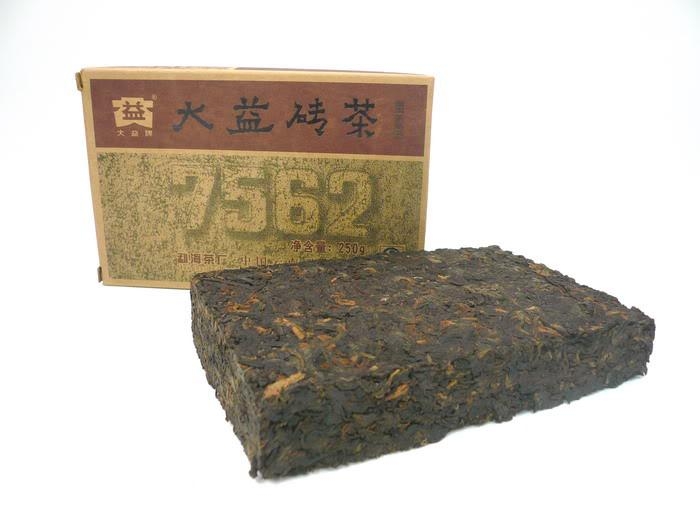
Pu’er tea is traditionally pressed into bricks. These are easy to transport and store for longer periods. In the old days, traders would sell the tea bricks in Tibet and Southeast Asia. There even was a special Tea-Horse Road, a kind of Silk Road for tea. Nowadays, Pu’er tea is exported to all continents, generating more that USD 2 million in hard currency p.a.
Map of the tea-horse road
Pu’er tea is the typical tea used in producing chayedan, salty eggs cured in tea, one way in which eggs can be presereved in Chinese cuisine.
With an output of 114,000 mt in 2014, Pu’er tea has become such an important product for its home region in southern Yunnan province, that the local government changed its original name Simao to Pu’er a few years ago.
Over the last few decades, pu’er has gained a cult-like following, with some of the costliest tea leaves exceeding their weight in gold. At the Guangzhou International Trade Fair in 2002, a 100-gram portion of pu’er was auctioned for RMB 168,000, dethroning tieguanyin green tea as the most expensive tea in the world. In Beijing, a three-gram portion reached 32 times the price of gold in a 2004 auction. During the market’s hottest years leading up to the “Pu’er Tea Bubble” of 2007, wholesale tea markets kept desktop monitors listing the fluctuating cost-per-kilogram of pu’er, as if trading stocks or futures. Prices could rise or fall by RMB 500 in a day. Even today, Qu divulges that one kilogram of his leaves, once dried and packaged, retails for over RMB 1000.
– modern presentation
While the bricks look mysterious and attractive to certain tourists and tea lovers, they are not convenient for world wide marketing. This is why Pu’er tea has also been made available in tea bags.
Now traditional Chinese medicine company Tasly has taken the ambitious step of trying to make it “the third coffee” for people in the West.
Tasly uses modern extraction processes to make highly purified Pu’er tea extract and completely remove any possible heavy metals, pesticide residues and foreign substances.
Tasly intends to market its instant Pu’er tea as a functional supplement lowering lipid levels, helping weight loss and reducing blood pressure.
According to the general manager of Tasly Deepure Tea Technologies Co. “It has a good taste, is good for one’s health and it does not affect sleep. Some of our distributors in the United States said it would be a perfect substitute for ‘the third coffee’ in the afternoon,”
The local government has taken an even bolder step: not only marketing Pu’er tea as a substitute for coffee, but developing the real product.
Yunnan is one of China’s earliest coffee producing regions. A French priest brought a coffee sprout into what is now Zhu Ku La village, Binchuan District, Dali City, Yunnan. This small sprout rooted itself deep into the local soil, and this century old coffee tree is said to still stand tall today.
Yunnan grows a variety of coffees, including Arabica Catimor, Typica, and Bourbon. The unique combination of high elevation and differences between the temperature during the night and day creates the original character of Yunnan coffee – “Fruity fragrance, rich but not bitter, and aromatic but not overwhelming”, reflecting the beauty of the Yunnan.
The statistics from the provincial Department of Agriculture in 2012 state that the total coffee growing area is 89,333 hectares, with a total production of 82,000 mt. Yunnan is good for 98% of China’s coffee production.
The government of Pu’er has had the foresight to recognize the potential synergy that can be generated by growing both in their home region. In 2019, Pu’er had a total of 120,000 hectares planted with coffee, producing more than 150,000 mt of coffee beans. The export value of Pu’er coffee beans reached RMB 462 mln in 2022; up 296.4%. There are 70 registered businesses, and around 1 million people in Pu’er’s coffee industry. The objective is to reach 1 mln mt by 2016. Here is an interesting video providing more background information on coffee production in Yunnan.
Hogood Coffee Co., for example, has become the largest instant coffee producer in China with a capacity of 33,000 mt/p.a.. The Bureau of Reclamation of Yunnan invited Zhang Baocun in 1983 to serve as a technical consultant for the development of the local coffee industry. Zhang, then 69 years old, spent three years in Yunnan establishing the Yunling Coffee Company, which later was renamed Hogood Coffee. It became a supplier to Nestlé and Starbucks in the 1990s, the company decided to promote its own brand at the turn of the century by collaborating with hundreds of thousands of farmers in the province. Hogood does not stop with coffee alone. The company’s R&D department announced that it has developed an alternative, healthier, vegetable fat: freeze dried walnut protein, branded Walnut 007. This could become a functional ingredient for the next generation of coffee creamers. Hogood posted a turnover of RMB 3.2 billion in 2018.
Mellower Coffee is a company established in 2011 in Yunnan’s capital Kunming, operating a chain of coffee shops headquartered in Shanghai. It has about 50 outlets is major Chinese cities, as well is in Singapore, South Korea and Vietnam.
Yunnan Coffee Traders is a wholly foreign-owned enterprise operating in China’s Yunnan province.
Recently, another 611 coffee famers and coffee growing companies in Yunnan have passed international third-party verification, allowing them to sell 4C (Common Code for the Coffee Community) Compliant Coffee. This is the third batch of coffee suppliers that have passed the verification process since July 2013.
Netherlands-based UTZ is also working with tea and coffee organizations in the region. Li Gongqin, secretary general of the Coffee Association of Yunnan, says farmers are receiving more training and that working with UTZ will help them with profits and standards.
Nestlé started advertising with coffee from Yunnan in 2022:
The State Quality Inspection Bureau officially opened a Coffee Inspection Lab in Pu’er in December 2014. The main task of this organisation is to ensure that coffee exported from the region is in accordance with international quality specifications.
In the course of 2015, the price of coffee has been decreasing to a level that is felt threatening my most players in Yunnan. Insiders ascribe the problem to the fact that anyone can buy coffee strait from the farmers in Yunnan, while other coffee regions in the world use a system of central purchasing and sell the coffee though the commodity exchange. The CEO of Hogood Coffee has proposed a similar system for Yunnan.
An interesting development is that a local coffee shop in Pu’er has started serving Pu’er tea flavoured coffee.
Exports of green coffee beans from state-owned Yunnan Nongken Coffee Co Ltd. surged 622.81%, in the first half of 2022.
Tourism
Another recent development is that the coffee industry in the Pu’er region is becoming a more and more popular holiday destination for domestic tourists; yet another way to cash in on coffee. The local coffee people have arranged for the tourists to experience ‘traditional’ ways of brewing coffee like using filters or even percolators.
Festivalsand exhibitions
The 4th Coffee Culture Festival was held in Dehong, Yunnan, January 23 – 25, 2015. The culture week series activities included the China final of the third Syphon Competition, the Pu’er Green Coffee Competition, the Pu’er Coffee Summit Forum and the third Pue’r Coffee Exhibition. The government of Pu’er further organised a National Coffee Making Contest in January 2015, with regional contests in several cities and the Grand Final in Pu’er. Eurasia Consult visited the 2023 China (Pu’er) International Coffee Expo.
Foreign aid
Coffee in Yunnan has even become an occasion to help fight drug trafficking through China, and create new business opportunities. Changshengda Investment Co. based in the Kunming Hi-Tech Zone supports its neighbour Laos to cultivate coffee instead of opium poppies, lifting more than 6000 peasant households out of poverty and contributing to the stability in borderland.
Foreign investors
This development has caught the attention of a number of international players in the coffee business.
Starbucks
Starbucks that has been using Yunnan coffee in its Asian outlets for a few years. The company established a Farmer Support Centre in Pu’er in 2012. It cooperates with the Yunnan Academy of Agricultural Science.
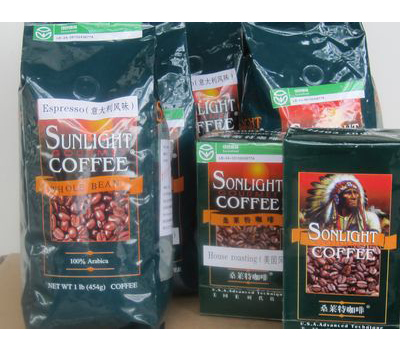
Earlier that year, Starbucks had set up a joint venture with Yunnan based Yunnan Aini Agriculture Livestock Group (the producer of the Sunlight brand coffee) for processing up to 20,000 mt of green coffee beans p.a.
Have a look at this Aini commercial.
Since Starbucks entered Yunnan, it has been encouraging its local suppliers to follow CAFE practices. The company publicly stated in 2008 that it hoped to source 100% of its coffee through CAFE, Fairtrade or another externally audited system by 2015. In 2014, 96% of its coffee met this standard, with 95.5% through CAFE and 8.6% through Fairtrade.
Nestlé
Nestlé, which has been active in the region since the 1980s, has also announced it is expanding its operations in the province. The company has signed a memorandum of understanding with the prefectural government pledging to invest RMB 100 million to build a coffee farming institute in Pu’er.
The planned Nescafé Coffee Centre will have warehouses, laboratories and education facilities. According to a press release announcing the memorandum, Nestlé plans to train 5000 coffee farmers, agronomists and business professionals at the center each year.
Over the past several years the Nestlé has steadily increased its purchase of Yunnan coffee and last year bought more than 10 000 mt of beans. This accounted for 20% of the province’s total coffee production. The company has said it has plans to double coffee procurement in Yunnan over the next two years. Nestlé has made a new coffee capsule from Yunnan Arabica beans for its Dolce Gusto coffee machine. It hasn’t been on the market for long, but so far 70 countries where they sell the capsules seem to be happy with it.
Nestlé has signed an agreement with fertiliser producer China Green Agriculture to supply fertiliser to local coffee bean farmers. The company has also introduced 4C in the region.
Nestlé has set up a scholarship program in Yunnan since 2013, which is open to outstanding students from families of coffee farmers who are registered under Nestlé Agricultural Services Department. The program encourages the students to pursue a high-level professional education and also rewards farmers for their contribution in the development of the local coffee industry. All scholarships are fully funded by Nestlé, and are selected based on an open, transparent and merit-based process, under the supervision and guidance of the Puer City’s Committee for the Wellbeing of the Youth and jointly implemented by China Women’s Development Foundation, Puer City’s Women’s Development Foundation and Nestlé China.
KunMing Jiesi Trade Co., Ltd., in Kunming (the capital of Yunnan) – exclusive distributor and exporter of ManLao River coffee.
JS Catalyst, Inc. , DBA ManLao River Coffee Company USA – exclusive US distributor.
Yunnan Pu’er ManLao River Agricultural Development Co., Ltd – the original ManLao River plantation continuing the initiatives of poverty alleviation and organic/sustainable farming.
The company provides educational, sales and facilities support to its 3,000 employed farmers. ManLao River produces roughly 500 mt of coffee annually, a number that is not intended to grow significantly over the next five years as it looks to increase quality over quantity.
Volcafe
At a signing ceremony in Pu’er on 22 October 2014, Volcafe and Simao Arabicasm Coffee Company (SACCO) signed an agreement to establish a joint venture to be called Yunnan Volcafe Ltd. The new company will be majority owned by Volcafe. It will procure and process green beans from the expanding Chinese coffee-producing region of Yunnan, for export to Volcafe’s worldwide client base. “Chinese mild Arabica is still relatively new to the world coffee scene, but its improving consistency means it is rapidly growing in acceptance with global roasters,” said Jan Kees van der Wild, Global Head of Commodities at Volcafe’s parent company ED&F Man. “The new company will harness Volcafe’s expertise in managing sustainable supply chains and improving quality control and post-harvest practices. Simao Arabicasm Coffee Company has been active in coffee export from the region for over a decade, and its operating activities include coffee cultivation, processing, procurement, sales and export. Currently, the company has established a production line with annual processing capacity of 10,000 mt of green coffee in Pu’er Industrial Zone. Presently, SACCO has been consistently ranked as the top 5 exporters in Pu’er, and has been recognized as one of the leading enterprises in Yunnan coffee industry.
Train to Europe
Pu’er has recently started to export coffee to Europe by train via the Chongqing Commodity Exchange. A major problem for Yunnan’s foreign trade is that it is a land-locked region. By first transporting the coffee to Chongqing, it can use the so called New Eurasia Land Bridge, a rail link between the Chinese east coast and major industrial centres in Europe. This also fits in with the recent ‘One Belt and One Road’ initiative of the Chinese government for international economic development. Pu’er expects to dispatch 30,000 – 50,000 mt of coffee this way within 2015. This volume may grow to 100,00 – 150,000 mt in 2016, and 230,000 – 250,000 mt in 2017.
Environmental concerns
Yunnan has realised that to establish a coffee reputation, it must improve the quality of its beans and plant in an environmentally sustainable way, rather than follow the mass market’s demand for quantity over quality. The local authorities want to develop speciality coffee which gives the farmers the power to set the price themselves. By 2020, Yunnan plans to have more than 4,600 hectares of organic coffee farms using only organic fertiliser and bio-pesticide, and with more shade trees to improve soil quality and water retention. It also aims to have more than 3,000 hectares of coffee certified by the Rainforest Alliance (RA), a non-profit organisation that promotes sustainability in agriculture and forestry. Yunnan plans to achieve these goals through efforts including government investment in training farmers and building dozens of “demonstration farms”.
WINE
Yet another way in which the city government is trying to diversify the local economy based on the traditional Pu’er tea is linking it with Bordeaux wine.
The City of Pu’er has signed a trade agreement with the city of Libourne in Bordeaux to promote each other’s products in 2012. Libourne is the closest city to the Pomerol and Saint Emilion vineyards. Two Chinese delegations have visited Libourne since the accord was signed, while the mayor of Libourne and the presidents of the local wine syndicates have been to Yunnan to learn about tea culture. The related Press Release confirms that this marriage between tea and wine is taken seriously.
There are many similarities between the two products. Pu’er tea is harvested by hand each year, is labelled with a vintage, and can be aged for up to 50 years. The finest teas can reach prices as high as the best wines of Pomerol and Saint Emilion.
Its taste is affected by the soil it is grown in, and the weather conditions during the year of harvest. Tea can also be fermented, with bacteria converting bitter tastes to softer, rounder flavours, a process similar to malolactic fermentation in wine.
Pu’er tea is rich in polyphenols, and is said to have health benefits in much the same way as the French Paradox is linked to polyphenols in wine.
Foie gras, not Pu’er but close enough
This post started as one specifically about Pu’er, but it is gradually expanding to Yunnan province and the revival of its old French connection. The company Mountain Valley Technology in Kunming has imported lande geese from French to set up production of foie gras and goose fat. The company reported a capacity of 400 mt of foie gras and 700 mt of goose fat p.a. late 2020.
Avocado
The investment in new foods in the Pu’er region never seems to stop. In the 2020s, Menglian County started growing avocados, stimulated by the rapidly increasing popularity of the food among Chinese urban consumers. The output in 2024 was 19,500 mt; good for 15% of the national avocado imports of that year.
Rice wine is the oldest alcoholic beverage in China and therefore probably one of the oldest in history. Chinese records mention a gift of rice wine to an emperor as early as 4000 years ago, and up to the 15th Century, rice wine was still the main alcoholic drink in China.
Rice wine is also using in cooking. Using wine for the blending of flavour is also a great invention of Chinese cuisine. Wine not only kills the rank stench of fish and meats, it can also produce a real appetizing aroma. When making stir-fries, adding a little cooking wine can bring out the delicious aroma of the food within the evaporating wine; the texture of the meat is melt-in-your-mouth tenderness.
The traditional production process was cumbersome. The yield of wine from raw materials was relatively low and it was difficult to obtain a clear liquid. Until far in the 20th Century, rice wine was known as a sweet brownish red turbid liquid, hence the Chinese name huangjiu, ‘brown wine’. It was consumed like the Japanese sake: heated au bain marie. There also is a transparent white rice wine produced from glutinous rice called mijiu (literall: ‘rice wine’).
It was brewed and sold in ceramic pots, even long after glass bottles had been introduced in China. Such packaging hides the turbidity. A glass bottle with a turbid liquid, or with a layer of sediment at the bottom, is does not look good on the shelves of a wine shop.
Here is a video introducing the production process. It is part of a course in Chinese, so it teaches you a number of relevant expressions while enjoying the brewing process.
Rice wine is used as an ingredient in various traditional foods, like fermented beancurd or furu.
In the course of the past century, traditional Chinese distilled liquor, baijiu, started to lure away a considerable part of the traditional consumers of rice wine. On the other hand, foreign beverages like beer and wine started to be produced in China as well. These initiatives were first made by foreign investors for the expatriate community, but the more affluent Chinese consumers started drinking them too, to show that they were adopting a Western life style.
Rice wine remained an important drink only in the Yangtze River Delta, roughly the triangle formed by the three major cities in that region: Shanghai, Nanjing and Hangzhou. It has been made famous by the writer Lu Xun (1881 – 1936) in his short story Kong Yiji. That story positions rice wine as the drink for workers and elderly men.
Our blog on China’s top food brands of 2014 shows that those brands include a number of distillers brewers and wineries, but no rice wine brands.
Revival
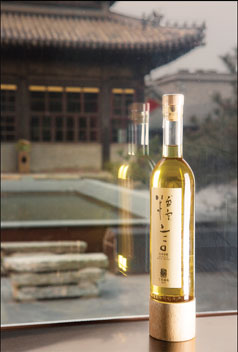
While rice wine had been almost completely written off by the Chinese alcoholic beverage industry, the product suddenly started a revival in the late 1990s. A number of the traditional brands began modernising the production process to make rice wine that appealed more to the modern consumers: a clear wine that was more thoroughly fermented and therefore had a fresher taste. This fresher product could also be drunk at room temperature. The China Institute of Food Science & Technology has established a special branch for rice wine on March 18, 2014. This should be seen as an important step further in the modernisation of this traditional beverage. The following table shows the production figures from 2015 to 2018.
Year
volume (hls)
2015
30,180,000
2016
32,250,000
2017
43,010,000
2018
33,480,000
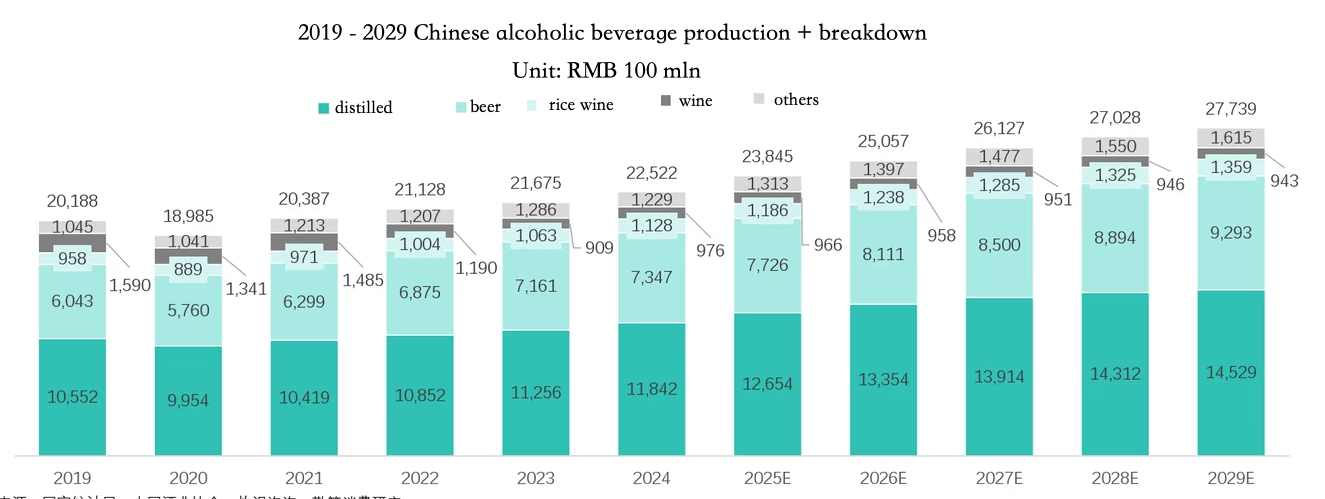
Here is a table showing the Chinese alcoholic beverage production up to the projection for 2029. Rice wine shows a small but steady growth.
Dry rice wine
New producers sprung up in various parts of China. One even launched a ‘dry rice wine’.
Ethnic rice wine
Sanyou Group (Heyuan, Guangdong) has started the construction of a new rice wine plant with an official ceremony early December 2014. Heyuan is located in the heartland of the Hakka people and Sanyou intends to embed this new plant in the traditional Hakka culture to create a unique image for its rice wine.
Eco rice wine
Jiuzhiling Distillery (Nanchang, Jiangxi) has developed an ‘ecological’ rice wine. It is made from unpolluted rice and brewed with such precision, that it is a clear white liquid without leaving sediments on the bottom of the bottle like the traditional rice wines do.
The young rediscover rice wine
Young Chinese consumers have been rediscovering rice wine during recent years, though they seem to prefer the transparent mijiu. The best-selling brand in this segment is Huatian Xiangzi. Huatian Xiangzi was founded in 2013 by Fan Yu of Xi’an, after spending several years trying to come up with an ideally flavoured rice wine. It sells well on Taobao; the value of those sales on the platform was RMB 5 mln last year Apart from selling Huatian Xiangzi online, Fan says, he is selling it to outlets of the Metro chain all over China.
Another favourite rice wine brand is Nuoyan, founded in 2014 by Huang Yu, a winemaker and designer. It comes in original and sparkling versions. After 3 years’ development, Huang has created 13 rice wines and a boutique winery in Fujian province, together with two wine shops in Beijing. His aim is to redefine Chinese rice wine and he has poured more than RMB 10 mln into developing rice wine products, each taking him an average of three years. He believes that Chinese wine should have a new representative, and rice wine should be it.
Sparkling rice wine
Mikwine has launched a range of fruit-flavoured sparkling rice wines under the Mike brand in 2020. Flavours include organge white tea and lychee black tea.
The Chinese armed forces include about 2.3 million military personnel. Moreover, as the army is a regular Chinese employer, it is responsible for the livelihood the entire household of its officers and civilian employees. This means that the Chinese armed forces are facing the burden of feeding 5 – 6 million mouths. Even when we restrict our attention to food for combatants, this group of consumers constitutes a complete market by itself.
The total budget of the Chinese army was RMB 720.2 billion in 2013.
Nutrition
As reported earlier in this blog, medicinal functionality and nutrition have always been overlapping realms in Chinese culture, including in the design of combat foods. Modern food technology now adds the availability of functional ingredients and combining these with traditional Chinese medicine (TCM) creates and interesting challenge as well as opportunities for the suppliers of food ingredients.
The Military Provision Research Institute of the General Logistics Department, that conducts this research in China, identifies the following aspects of military food that require special attention:
Digestibility
The food needs to easy to digest, cure indigestion and ensure a maximum bioavailability of the nutrients.
Suppress hunger and fatigue
Soldiers in combat can not always eat their meals regularly. Their food must be high in energy and release that energy slowly, to allow for long breaks between meals. One of the current research programs of the Military Provision Research Institute is the addition of soy bean oligopeptides in military food to combat fatigue.
Protect against climate and adverse geographic conditions
Soldiers need to be operative under any type of climatic conditions, from the humid heat of the tropics to severe cold, or at high altitudes with less oxygen. Chinese soldiers do not need to be sent abroad to experience all these climatic extremes. China comprises virtually all types of climates in the world within its national borders. Different foods need to be designed for different environments.
A military college has developed a type of biscuit that can increase the consumers’ oxygen level and alleviate fatigue for 48 hours. The recipe includes a number of TCM herbs.
Protect against disease
The food needs to enhance the immune system of soldiers and protect against diarrhea and perhaps even diseases like influenza. This is where TCM is believed to be especially useful as a source of new military foods.
Protect against radiation
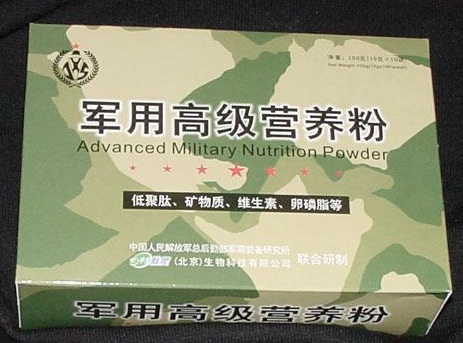
There is ongoing research into food ingredients that make people more resistant against radiation during nuclear warfare. E.g., seaweed is being studied as a source of ingredients for anti-radiation foods and beverages.
The picture shows an example of existing ‘antiradiation food’ developed by the Chinese army that is also sold to the general public. The interest among such products has increased after the problems with the Fukushima nuclear plant in Japan.
Taste like home
Chinese are finicky eaters and the military are no exception. Chinese are happy that modern technology reduces the time needed for the preparation of meals in the kitchen or the battle field, but that food must still retain its traditional texture, colour, flavour, etc.
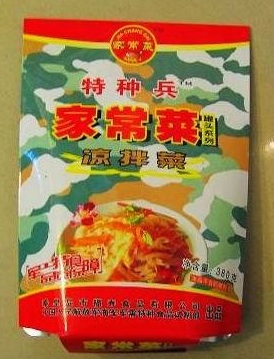
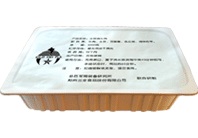
This picture shows a complete meal packed in plastic, which might as well have been purchased at a regular supermarket.
Some insiders even remark that military convenience food in China is better developed that what is currently sold as ‘Chinese’ fast food, which still finds it hard to compete with multinationals like McDonalds and KFC. They therefore urge the military food industry to expand its business scope to civilians as well. Chinese military industry has always been known as technologically more advanced than average with a high concern for quality. If the military food manufacturers will pay attention to this call and start making consumer products as well, they may turn out to be tough competition of the existing industry.
On the other hand, several civilian food companies are trying their hand in feeding Chinese military. An example is China’s top producer of snack foods Sanquan, that is mentioned in several other items in this blog: the quick frozen tradition and China’s top food brands.
Here is a video showing how to open and prepare a complete Chinese army meal. It is rather lengthy, but at least you will get a good look.
Developments in 2020
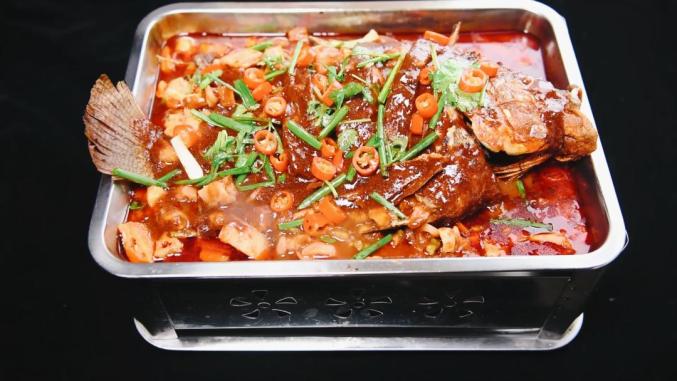
Some photos released late 2020 show the latest developments of that year. Following a general trend in the Chinese restaurant business, ready-to-eat baked fish looks like a real treat.
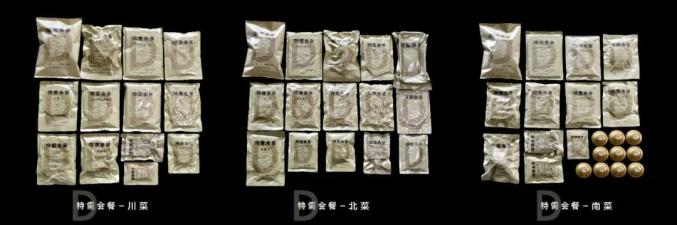
A second trend is military food inspired by regional cuisines. This photo shows Sichuan food, Northern food and Southern food. It sounds great to be able to taste a bite of home while watching the enemy’s movements from the trenches.
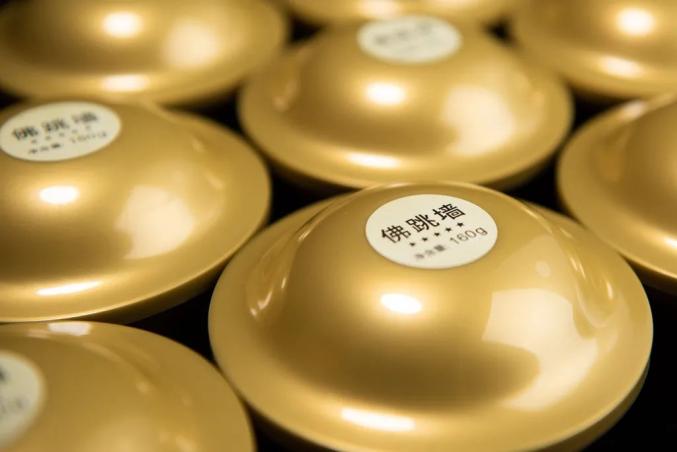
Militarised versions of luxury dishes are also available, like the famous Buddha Jumps over the Wall; a food so tasty that it makes Buddha do exactly that, to catch a bite.
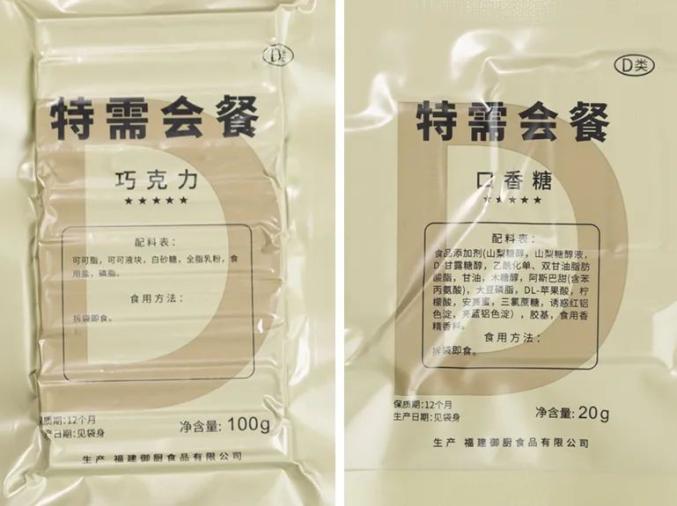
Finally two picture of military leisure food: chocolate and chewing gum. Soldiers also need to have a few snacks in-between regular meals.
I am amazed about these trends. Could Chinese soldiers be the best fed in the world?
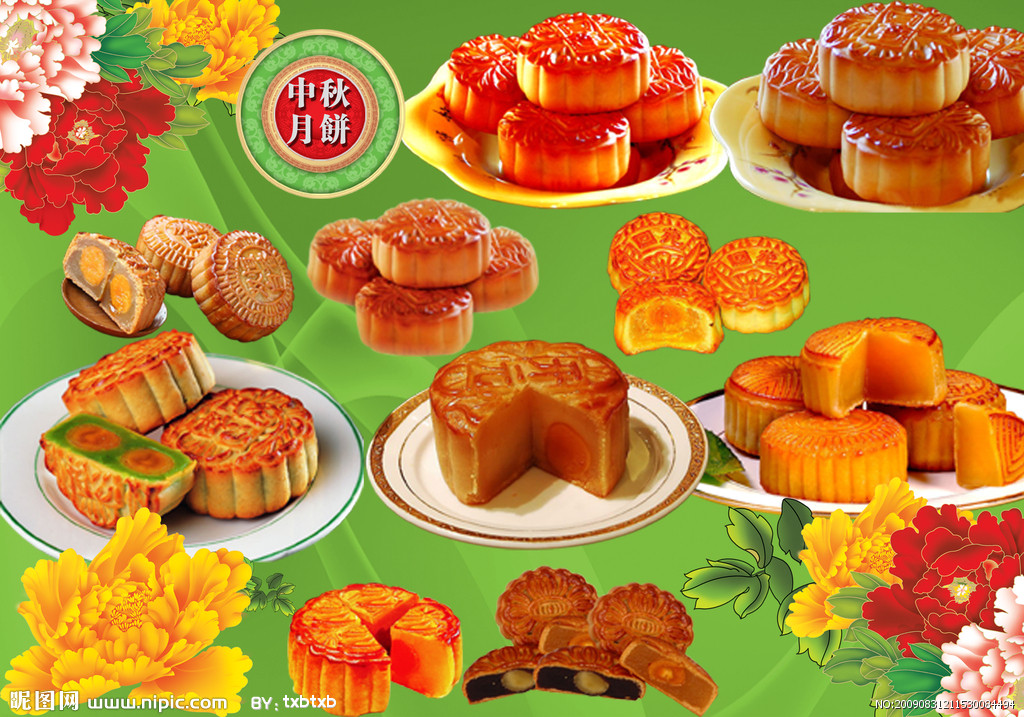
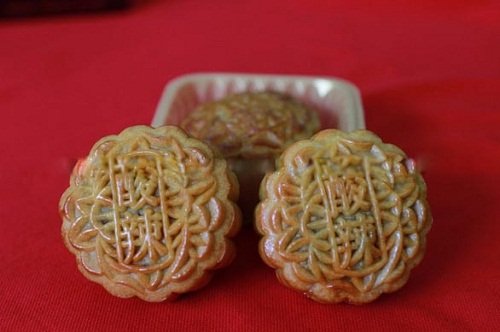
Moon cakes are probably the most important type of traditional Chinese pastry. However, the period in the year that they are available is short, only a few weeks.
Moon cakes are the typical treat you eat around the Mid Autumn Festival, the first full moon of the Autumn according the lunar calendar.
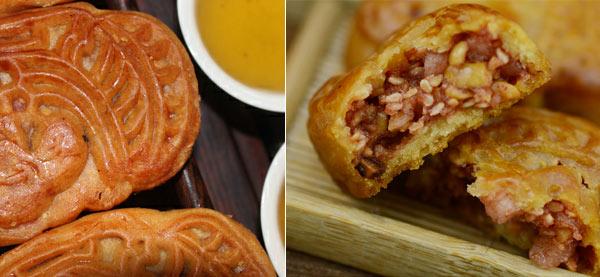
The bulk of a moon cake consists of the filling, wrapped in a crust of traditional Chinese pastry dough (relying on fat for the texture, rather than yeast or other rising agent). Moon cakes are roughly divided into Northern types and Southern types. The Northern moon cakes are harder and dryer, while the Southern types are softer and moist.
Fillings can be based on lotus paste, bean paste, fruit, nuts, etc. Southern moon cakes can also contain small pieces of ham or other meats and often have a duck egg in the centre. Moon cakes are rich, eating one in the morning can easily count as breakfast as well as lunch. Chinese often cut a moon cake in small pieces.
The moon cake production season starts early, sometimes two months prior to the actual festival. Many traditional bakeries, and even bakeries of Western pastries, usually stop manufacturing other products, directing all man power and resources to the production of moon cakes. The value of the mooncake market in 2025 was estimated at RMB 33.28 billion; up from RMB 15.06 in 2013.
A market survey conducted in 2019 has shown that the main consumer group for moon cakes is the 30 – 39 years age bracket; good for 54% of the total consumption. The second group is the 20 – 29 years bracket; good for 22%. That year a total of 1.38 billion mooncakes were sold, generating a turnover of RMB 19.67 billion.
It is big business for suppliers of food ingredients as well. Traders in food ingredients also stock up large quantities of moon cake ingredients and place extensive advertisements in the local media.
Here is a video of producer of moon cake production machines. It is a commercial video, but still gives an interesting insight in the industrial production of moon cakes.
Signature moon cakes
Major hotels and restaurants have also started noticing the potential of mooncakes as a novel way of reaching out to the market. They have asked their chefs to come up with innovative flavours using unconvential ingredients. Some even experiment with Western ingredients. Here is my pick from the Beijing 2014 season.
The mooncakes of the Imperial Palace Restaurant are mainly Chaozhou-style (a cuisine in Guangdong) pastry mooncakes, which are handmade by chefs with more than 10 years’ experience, and are delicious and fresh, with low levels of fat and sugar. The restaurant claims that their products have no additives. In addition to the traditional mooncakes, the restaurant has introduced fillings made from fruit and vegetables, such as cranberry and white gourd.
The Westin Beijing Financial Street has packages that mix Western and Chinese flavors such as goose liver, truffle pumpkins and Chinese chestnut.
The Shangri-La Hotel in Beijing has 42 fillings at different prices, including some special flavours such as rose with red bean paste. Diabetics can choose low-sugar pumpkin mooncakes, and those who want to keep fit can buy ones containing cereal germs.
Moon cakes can not escape the problems of modern industrial production. Consumers want the products look, feel and taste exactly as the traditional hand made cakes, leaving the manufacturers with the problem to translate that wish into a recipe.
Formulation issues
Modern moon cake production has a number of problems related to ingredients:
Preservatives
With the increase in the period between production and consumption preservation has become a serious problem. Moon cakes are an ideal environment for the growth of molds, especially the moist Southern style moon cakes. My latest bite of mooncake (Jan. 1, 2015; Jiayuan brand, bean paste filled) contained potassium sorbate and sodium dehydro-acetate.
Until mid 2000, many manufacturers included a small pack of dimethyl fumarate (DMF) with their moon cakes. This preservatives slowly sublimates, preventing the growth of mold. Moreover, DMF did not have to be listed on the packaging as a preservative, because it did not count as an additive. However, the use of DMF for food was prohibited in May 2000. Alternative preservatives are still being tested by the manufacturers. Especially the suppliers of Natamycin are actively promoting their products for the treatment of moon cake surfaces.
A company in Guangdong has developed a special preservative for moon cakes. The longer the shelf life the higher the price is no longer the case with moon cakes. Rules have changed, so have perceptions. The norm now is, the shorter the shelf life the higher the price.
Antioxidants
Traditional Chinese pastry dough is high in fat, creating that typical crumbly texture. This calls for antioxidants to preserve the flavour of the pastry. Recently publications on antioxidants in moon cakes seem to converge on their preference for tea polyphenol as the best solution. It is a natural ingredient and apart from its antioxidant property, it also has a preservative activity and protects the colour of the pastry. An interesting ingredient in this respect is tea, which adds colour, flavour and mouthfeel and also functions as an antioxidant. See my special post on tea as food flavour.
Sweeteners
Moon cakes are supposed to be sweet. However, Chinese consumers are also getting more aware of the problems caused by excessive intake of sucrose. The past few years have seen experiments with alternative sweeteners. A number of manufacturers are already offering moon cakes sweetened with polyols, in particular maltitol and xylitol. Beijing based Daoxiangcun produces ‘maltitol moon cakes’. According to the information on the package, the pastry contains 15% and the filling even 43% maltitol.
Trends in typology
A survey held in 2019 still showed that traditional flavours were mainstream in the moon cake business.
Type
share (%)
Traditional
78.4
Innovative
9.1
Healthy
2.3
Others
10.2
The term ‘healthy’ is not explained by the authors of the survey, but we can assume that these are mainly sugarfree moon cakes.
Branding
Most moon cakes are still produced on an ad hoc basis, and sold in bulk, without brand. However, a number of brands have started to emerge in recent years. The current top three brands are:
Huamei
Produced by the Huamei Food Co., Ltd. In Dongguan (Guangdong), this is not only a noted brand, but also a ‘green food’, the Chinese designation for ecologically friendly foods, one grade below biological foods.
Yuanlang Ronghua
The producer of this brand, Ronghua Pastry Co., Ltd., is also located in Dongguan, but the mother company is from Hong Kong. This company has been engaged in a fierce legal battle with an entrepreneur from Shandong about the use of the Wingway (the Cantonese pronunciation of Ronghua) for many years. This is yet another proof of the economic importance of moon cakes.
Anqi
Anqi Food Co., Ltd. is yet another Guangdong-based company, located in Shenzhen. It was the first to introduce ‘iced moon cakes’ in the Mainland. These are white moon cakes, with a skin made from glutinous rice.
The top 5 moon cake brand in online sales in 2019 were:
Brand
share (%)
Daoxiangcun
22.07
Huamei
11.77
Wufangzhai
7.58
Meixin
4.91
Gongdelin
2.51
Phantasy shapes
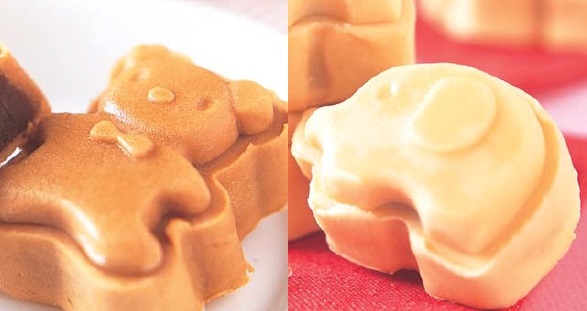
The only limits of what is possible with moon cakes are the limits of ones imagination. Any more or less round shape from dough with any kind of filling can be called a moon cake. The photo of this section shows a bear-shaped and elephant-shaped moon cake. The bear cake has a coffee flavour, while the elephant cake is scented with orange.
Trend 2015 1: medicinal moon cakes
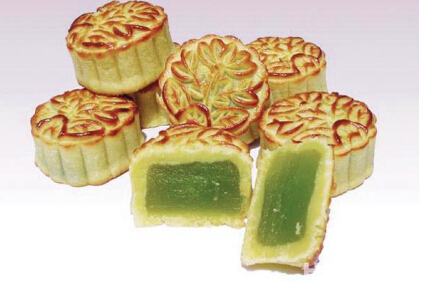
A trend in 2015 is to enrich moon cakes with traditional Chinese medicinal ingredients, like: ginseng, goji berries, or cordyceps (a fungus infected caterpillar). The resulting pastry can then be attributed medicinal functions and, hopefully, be sold at a premium price. This initiative has received mixed reactions from the market. However, whether it catches on or not, it has at least added new colours to the existing range of moon cakes, as shown by this picture.
Eurasia Consult’s databases include a large number of recipes for generic and innovative moon cakes; and our database of the Chinese food industry includes 121 producers of moon cakes.
Weird, weirder, weirdest
It is not always easy to come with yet another novel type of mooncake. Here are some of the weirder examples launched in 2015.
Chocolate mooncake with spicy beef filling
Ten years ago, a Chinese girl was reported to say to a boy, “It’s impossible for us to be together, like chocolate will never be with beef.” Today, it seems that everything is possible.
Sour and spicy mooncake
The sourness of the mooncake filling is from pickled vegetables and hawthorns. The spiciness is made from a chilli sauce resembling to the famous brand Lao Gan Ma.
Fermented bean curd mooncake
This is a variant of a kind of pastry made with fermented bean curd popular in Chaoshan, Guangdong province, similar to furu, also reported in an earlier post. The pastry is usually used as a sacrificial offering by local people on the first day and the middle day of each month.
Mooncake with fillings of cream, truffle and goose liver
Expensive is still fancy in China. The “Louis Vuttion” of mooncakes is made with expensive ingredients of truffle and goose liver. This luxurious mooncake definitely deserves a bite.
6. Mooncake with leek egg filling
Scrambled egg is a popular filling for Chinese Jiaozi (dumpling). But for the first time, scrambled egg is being used for the traditional Mid-Autumn day dessert.
“Shiren” mooncake
“Shiren” mooncakes have 10 kinds of nuts, doubling the traditional “Wuren” mooncake with 5 kinds of nuts. It’s four to six times larger than traditional mooncakes, and implies best wishes of “perfect in every respect”.
Mooncake stuffed with braised pork and preserved vegetable in soya sauce
Braised pork with preserved vegetable in soya sauce, or “meicai kourou” is a famous Chinese dish. The one made this special filling for mooncake must be a super fan of this dish. Like the scrambled egg moon cake, this variety is in line with another innovative type of dumpling reported in another post of this blog: dumplings with entire dishes as filling.
Bamboo charcoal mooncake
This mooncake is made by putting bamboo charcoal powder into the mooncake when baking. It’s said to have the function of absorbing toxins inside our bodies. As reported earlier, the distinction between food and medicine is much smaller in China than in the West.
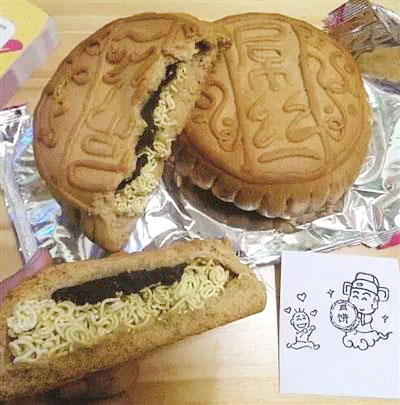
Instant noodle mooncake
Putting instant noodles into the traditional mooncake will surely give you a special experience. The mooncakes are also marked with Chinese characters, “Diao Si”, which means “underprivileged losers” in a self-mocking way. Perhaps this refers to the recent decline in the instant noodle market in China.
Mooncakes with bean-taste filling fried with tomatoes
Moon cakes as ingredients. The canteen of Civil Aviation University of China had put forward a dish which fried mooncake pieces stuffed with sweet bean taste and tomatoes before decorating them with caraway. The dish became a hit on the Internet and is called the weirdest mooncakes.
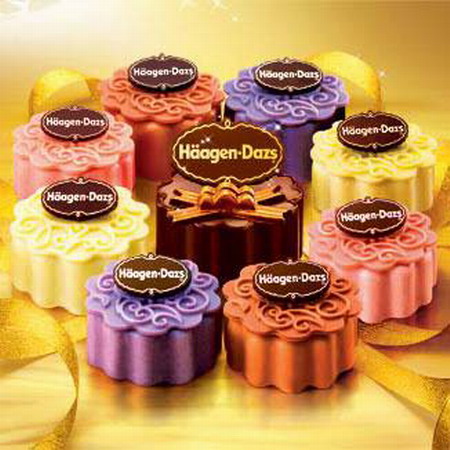
Virtually any food-related chain in China is offering its own specialty in the shape of moon cakes. Häagen-Dazs is also joining in with ice cream moon cakes.
Domestic ice cream makers had to follow suit and Chicecream launched a series of ice cream moon cakes in 2021, in cooperation with Shangrila.
Mooncakes with an academic flavour
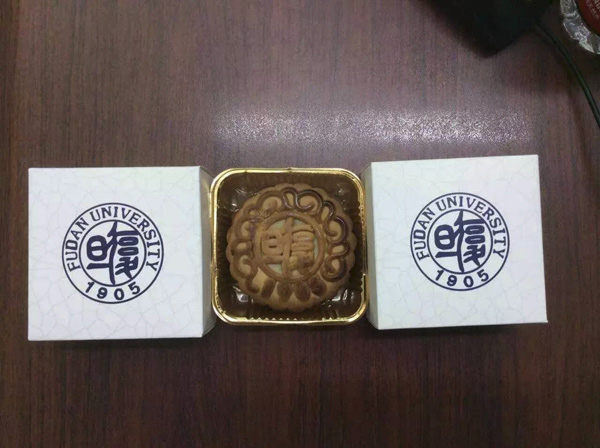
Universities around Shanghai have begun competing to offer mooncakes with the most distinctive characteristics in 2016. In addition to traditional fillings such as egg yolk, lotus seed paste, “five kernel,” red bean paste and fresh meat, a variety of new flavors have been introduced, including tiramisu, durian, coffee, ham and beef, purple sweet potato and mushroom. These new flavors offer a real treat for teachers and students alike.
Trend in 2018: small and special ingredients
More and more food companies whose products do not include pastry are launching their own specialty mooncakes this year. A prominent example is nut processor Three Squirrels with a range of 6 different flavours. The most spectacular one has a liquid caramel core as shown in the picture.
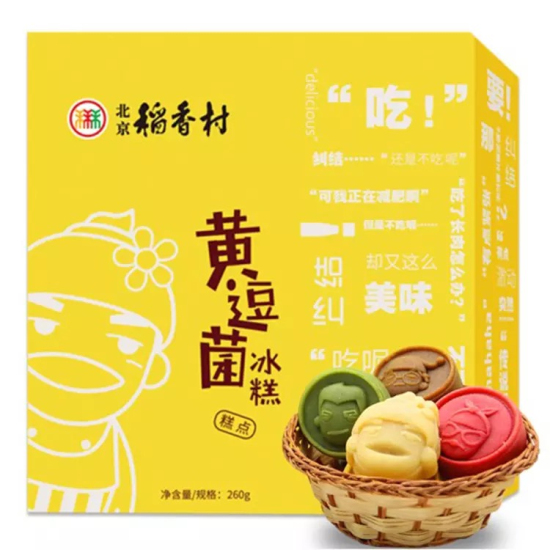
Daoxiangcun (Beijing) is a pastry maker, but has launched a series of relatively small colourful mooncakes based on a famous animation character Huangdoujun.
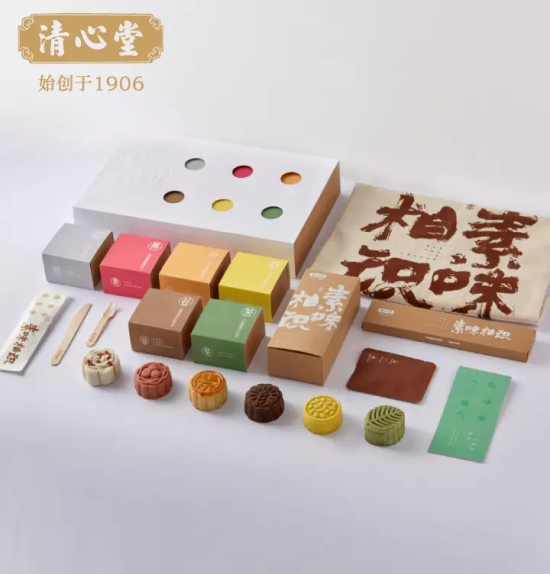
Qingxintang is a Guangdong-based producer of a wide range of traditional Chinese snacks. This year, the company is luring the mooncake crowd with a series of 6 mini-mooncakes that are promoted as vegetarian (many Guangdong style mooncakes contain pork or duck egg) made from selected flowers, cereals, seeds and teas.
Surprises of 2020: cheese-filled mooncake
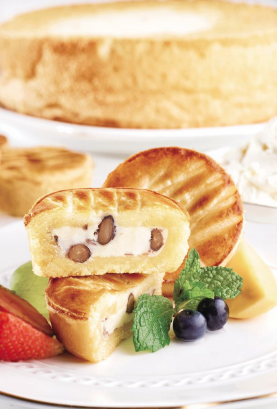
Zhenzhang Food Co., Ltd. (Xi’an, Shaanxi) has launched a cheese-filled mooncake under its Yupinxuan brand in September 2020. It uses Tatura cream cheese as an ingredient. Although the cheese is imported from Australia, the mooncakes are marketed as ‘French style cheese mooncakes’, obviously because French sounds fancier than Australian.
Also in 2020, newcomer Bee & Cheery has invested in buying the rights to launch a series of Doraemon moon cakes in sweet pumpkin and green bean flavours.
Leading dairy company Yili has launched a limited edition of its Ambrosial drinking yoghurt with moon cake flavour. I wonder it this will ever become a success, but it is an interesting example of how anyone is something in the Chinese food industry wants to cash in on moon cakes.
Chinese consumers also started liking smaller sized moon cakes in 2020. According to Bianlifeng, a Beijing-based, data-powered convenience store chain, the smaller mooncakes in pretty packaging have quickly gained popularity among consumers. Females accounted for 60% of the consumers who bought mooncakes at Bianlifeng, which has prompted the manufacturers of the mooncakes to make the snacks about half their traditional size. Mooncakes lighter than 80 grams accounted for 67% of the chain’s sales in 2020.
Trend for 2024
Mooncakes using traditional Chinese medicine ingredients are are the big trend in 2024. TCM holds that many herbs can act as both nourishment and medicine, being as effective in disease prevention as pharmaceuticals. This theory, known as medicine food homology, forms the basis of food therapy.
For example, Tong Ren Tang, a time-honoured TCM brand, has introduced a mooncake gift set containing traditional Chinese medicine ingredients such as danggui (female ginseng), dangshen (a type of bellflower) and shihu (the dendrobium flower). These mooncakes are designed in five colours, aligning with the TCM theory that ‘five colors nourish five organs’.
Chinese cuisines shine at mixing and blending of flavours
This is not only aided by superior culinary techniques that can mix natural flavouring, but also with the help of a whole line-up of seasoning. Aside from salt, vinegar, sugar and essence soups, which are representative seasoning, pastes, soy sauce, wine, and stinky tofu are all commonly used seasoning in Chinese cooking. Paste made from the fermentation of beans was regarded highly in ancient China. Once it was the food for the upper class. When treating guests at banquets, bean-sauces must be served, since each kind of meat has its matching paste. Experienced eaters will know the kind of great food to be served just by seeing the type of paste. In time, pastes became important seasoning, from which a whole series of seasonings were developed, including soy sauce, bean paste, black fermented beans and more. Pastes made from beans are very much a Chinese specialty sauce. It holds an important place in Chinese culinary history, or even the culinary timeline of the entire world.
Broad bean chili sauce (douban lajiang) is a typical condiment of Sichuan province, known for its tingling spicy cuisine. It is a mixture of fermented broad bean paste and chili paste, with a ratio of either 50:50 or 60:40.
The broad beans are first soaked in clear water and then heated to 80 – 85 ˚C in a 2% sodium hydroxide solution to separate the bean from the peel. The lye is washed off with water. The beans are then soaked in water again until they are completely saturated, after which they are steamed. The steamed beans are mixed with wheat flour with a ratio of 1:3 (beans : flour). The mixture is inoculated with 0.15 – 3% of qu, the traditional Chinese mixture of molds, and transferred to the fermentation vessel. The fermentation will heat the mass itself to 40˚C, after which a brine solution on 60 – 65˚C is injected into the mass with ratio of 140 kg of brine solution to 100 kg of mass. This will bring the temperature to approximately 45˚C, which is maintained for about 10 days.
Meanwhile, fresh chili peppers have been pickled with salt and left for three months, after which the mixture has been ground to a paste. The fermented bean paste is mixed with the chili paste and left to ferment for another half a month. A number of condiments can be added to the end product; e.g.: sesame oil, spices, sugar, rice wine, etc. Each manufacturer will have its own proprietary mix to reach a unique flavour.
The single most famous type of broad bean chili paste is from Pixian county in Sichuan. A special company has been established to cash in on its fame, named after the county: Pixian Bean Paste Co., Ltd. The picture accompanying this introduction shows the range of different pastes produced by this company.
Pixian fermented bean paste has received DOC status, like the Jinhua ham introduced earlier in this blog. No manufacturer outside Pixian will be allowed to sell fermented soy bean paste as Pixian fermented bean paste. The local government has established a research centre to improve the production process.
In 2018, Pixian Bean Paste, whose brand was evaluated at RMB 65.6 billion, ranked top among geographical indications concerning processed food nationwide. The popular paste has been exported to more than 80 countries and regions.
I have found and translated a flow chart of the production process. It also indicates 4 critical control points (CCP).
The following table listing the output of Pixian douban during recent years indicates the success of the DOC status.
Year
Output (mt)
2006
200,000
2008
350,000
2009
470,000
2010
600,000
2013
960,000
The following video shows the production process of Pixian douban.
If you randomly ask people in the street of any Western city what is the first typically Chinese food that comes to mind, more than 80% will probably mention noodles.
Noodles are indeed China’s favourite snack food. Whenever you feel a pang of hunger, but your next meal is still far ahead, you get yourself a bowl of noodles, from a street vendor, a kiosk type of noodles shop, or another road side cookery.
When you then continue to ask what the respondents know about flavouring those noodles, they will undoubtedly reply that it depends on what you put into it. That can be pieces of meat, fish, and a large array of vegetables and spices.
That is not untrue. But, what is much less known about professional noodle making in China that the real secret of the cook lies in the broth in which the noodles are cooked. This broth is referred to in Chinese as ‘soup (tang)’.
The apex of noodle soup is referred to as lao tang, or ‘old soup’, in Chinese. Why old? Tradition has it that real noodle makers only once start their kettle. Once the broth is boiling, they just keep throwing in noodles and condiments, which, once done, are scooped into a bowl and served to the customer. Some fresh condiments will be thrown on top if, and the noodles are ready for consumption.
This process will be repeated for each new customer. Day in day out. In theory, the cauldron can hold soup stretching back years. Tall stories go around in China about noodle makers whose broth has not been changed for more than 100 years. They cook just keeps adding water. This is supposed to create an extremely rich broth.
This branch of Chinese cooking has developed a vocabulary of its own. Take e.g. the ‘milky soup (naitang)’. This soup in fact does not use milk as an ingredient. The milky appearance is caused by cooking animal bones for a long time.
As applies to the adaptation of other traditional Chinese foods to modern industrial production, the big challenge to redesign Old Soup in a modern setting is to retain the original flavours and textures, while creating a product that complies with the current strict regulations.
The importance of old broth can be seen at the Food Ingredients China (FIC) trade fair held annually in Shanghai in March. On the floor dedicated to flavour companies, you will see numerous stands offering instant old soup. That may be a contradictio in terminis, but it is also big business. As soon as you enter that floor, you will be welcomed by the intense smell of the (not so) old soup. Stands will have pans boiling on electric cookers ready to serve you various snacks cooked in that broth.
Old soup has already become big business. The leading manufacturer, Lida Food in Henan province, produces almost 80,000 MT p.a.
A lot of old soup R&D is going on in China. E.g., an interesting study by researchers of the Nanjing Research Institute for The Comprehensive Utilization of Wild Plants apply for processes, slow fire, quick fire, pressurization and enzymolysis, to several types of raw material, to study the dissolution rate and protein utilization rate of pig and chicken bones.
The lotus flower is often associated with China and Chinese culture. The lotus frequently features on traditional Chinese paintings. What is less known is that the lotus plant is an important food as well, particularly its pods.
The lotus is sacred and regarded as a special symbol of Buddhism in China, being a favorite icon of the Goddess of Mercy. She is often depicted standing or sitting on an enormous lotus flower. Lotus buds, carefully folded back, are often sold outside her temples so devotees can buy them as offerings. In China, it is the flower of summer, just as winter is best symbolized by the peach, spring by the orchid and autumn by the chrysanthemum.
The lotus has appeared frequently in Chinese literature. The poet Han Yu (768-824) once sang praises of the lotus root and described it to be “sweet as honey, icy as frost, a slice in the mouth heals all sickness”. The Qing emperor Qianlong (1711-1799) compared it to “the snowy white, slender curved arm of a beautiful woman”.
Several parts of the lotus plant are eaten. The bright green shoots hidden inside the lotus seeds are intensely bitter. They are collected, dried and used in infusions meant to clear the heat from tired bodies. They are a traditional cure for pimples and acne as well, and young girls wanting a clear complexion willingly drink the bitter brew. The seeds, however, are sweet and nutty and are eaten fresh, straight from the pod, or dried and preserved. They are rehydrated and cooked in stir-fries and in soups both sweet and savory. The nuts are also ground down into a sweet paste that is popularly used in Chinese cakes and pastries.
Lotus pod is actually a misnomer, because the most famous edible part of the lotus is actually the swollen stems, which grow underwater, and not the actual roots, which appear like beards along the noded segments. It is for these that farmers grow the lotus, and there are about 500,000 to 700,000 hectares under cultivation all over the country, depending on demand. The most famous producers are concentrated in Hubei province, especially around the city of Wuhan. However, the lotus root is such a popular vegetable that it is grown wherever there is water, from the peaty, black-earthed regions of China’s northeast to the riverine hinterlands of both the Yellow and Yangtze rivers, to the coastal provinces down south to the island of Hainan.
China has produced 11,222,000 mt of lotus pods in 2017 and exported 30,000 mt in the same year.
Lotus pods can be eaten raw. They are juicy and crispy and have a rather neutral taste. In traditional Chinese medicine, lotus pods are cold food and hence an excellent refreshment during a hot day. According to Chinese medicine, lotus pods strengthen the spleen and the stomach and relax strained nerves.
The China Research Institute for Nutritional Resources in Beijng has found the following composition of nutrients in lotus pods (per 100 gr of fresh lotus pod).
Nutrient
content
Proteine
1gr
Fat
0.1 gr
Carbohydrates
19.8 gr
Calcium
19 mg
Phosphorous
51 mg
Carotene
0.22 mg
Vitamin B1
0.11 mg
Vitamin B2
0.04 mg
Nicotinic acid
0.4 mg
Vitamin C
25 mg
Lotus pods are most frequently processed into slices. Lotus pods slices can be sold dried, fresh, canned, etc. The are an ingredient in many traditional Chinese dishes, like birds nest soup introduced in another post of this blog..
The following video shows the harvesting and processing of lotus.
Honeyed Lotus Root Stuffed With Sticky Rice (guihua lian’ou; literally: ‘osmanthus flower lotus root’) is one of the traditional ways of preparing lotus roots. The interior root chambers filled with sticky rice then slowly cooked so that the lotus root’s starchy sweetness fully develops, and turns from pale white to deep red-brown (much like a quince) and the rice grains plump up to fill the long tubular spaces within the lotus root, giving it that characteristic appearance when sliced. After removing a root from its syrupy bath the cook will slice it into centimetre-thick slices.
Autumn food
Lotus root is most abundantly harvested in autumn, and has naturally become part of the feast for the Mid-Autumn Festival. One of the reasons it is widely used in cooking of autumn dishes is because of the Chinese culinary tradition of “eating local, eating seasonal” which was born out of the belief that food in season is the best gift from nature. In the case of the lotus root, traditional Chinese medicine practitioners claim that the aquatic root vegetable is best for relieving summer heat and autumn dryness. While the lotus root is widely used in soups, cooked with pork ribs and stir-fried sweet and sour style, it is usually presented as an appetizer, or cold dish, during autumn. Candied lotus root stuffed with slow-cooked glutinous rice and topped with osmanthus jam is one of the most common starters. This dish was once native to the east China region where diners liked having something sweet to start the meal. These days, the dish is popular all over the country, attracting loyal followings with the shiny lustre of the osmanthus syrup, its appealing fragrance, and above all, the soft and sticky lotus root, cooked to a melt-in-the-mouth mealy texture.
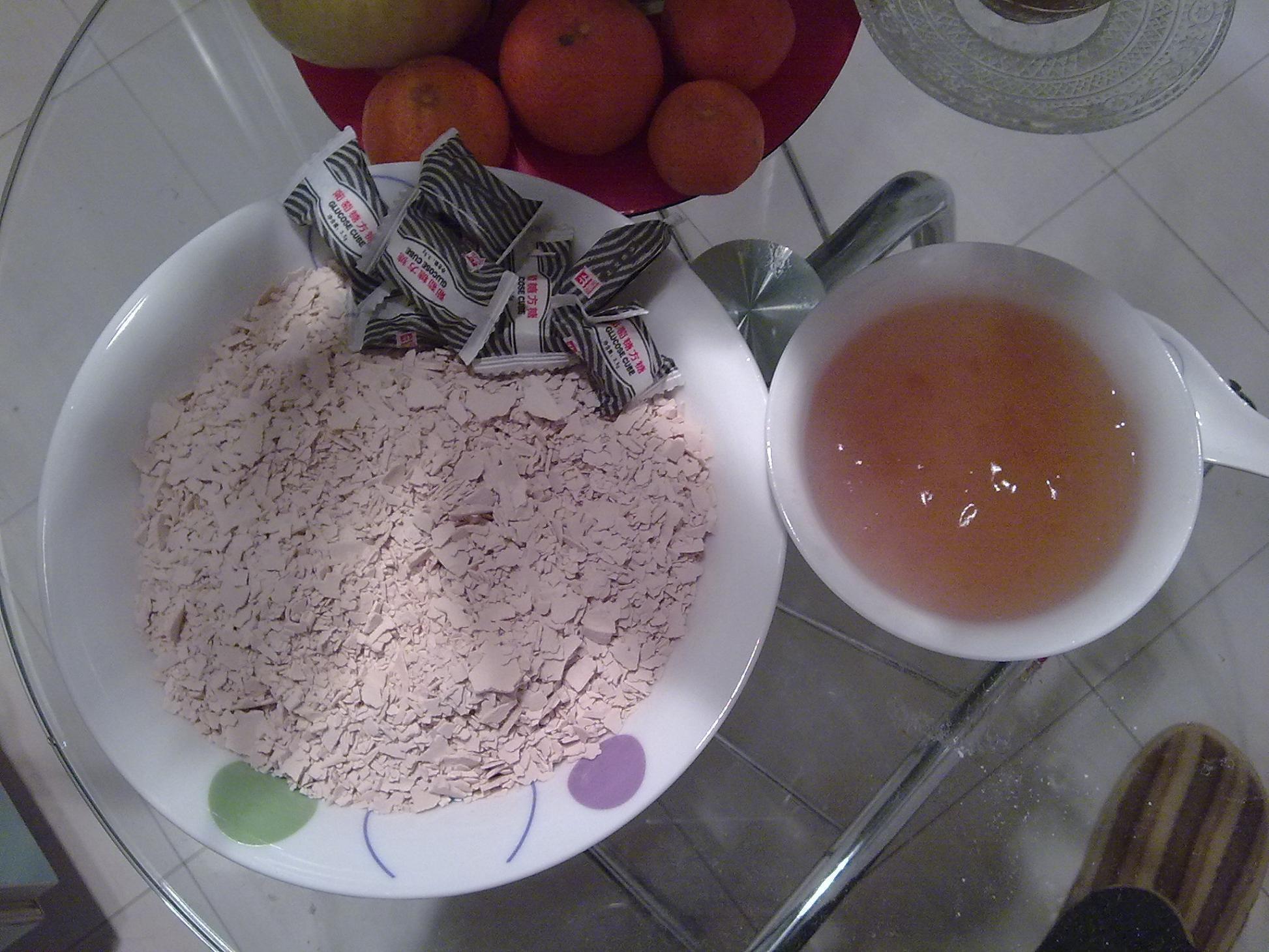
Lotus pod flour
A second traditional product is lotus pods flour (oufen in Chinese). China has produced 13.231 mln mt of lotus flour in 2024; up 1.58%.
Cleaned pods are crushed in water and filtered. The filtrate is then set aside to let the lotus flour precipitate. Tianfeng Food Co., Ltd. (Hangzhou, Zhejiang) produces a lotus pod flour with lotus seeds and scented with osmanthus flowers.
Lotus pod flour is currently available in various adapted versions. Wanglong Food Co., Ltd. (same) supplies a sugar free lotus pod flour, sweetened with iso-maltitol and enriched with dairy calcium.
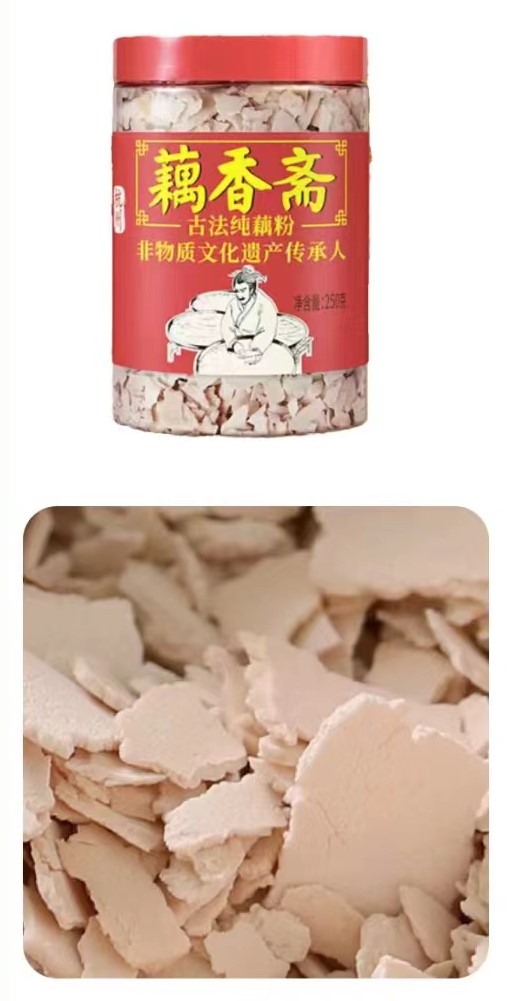
Ouxiangzhai (same) produces lotus pod flour in flakes:
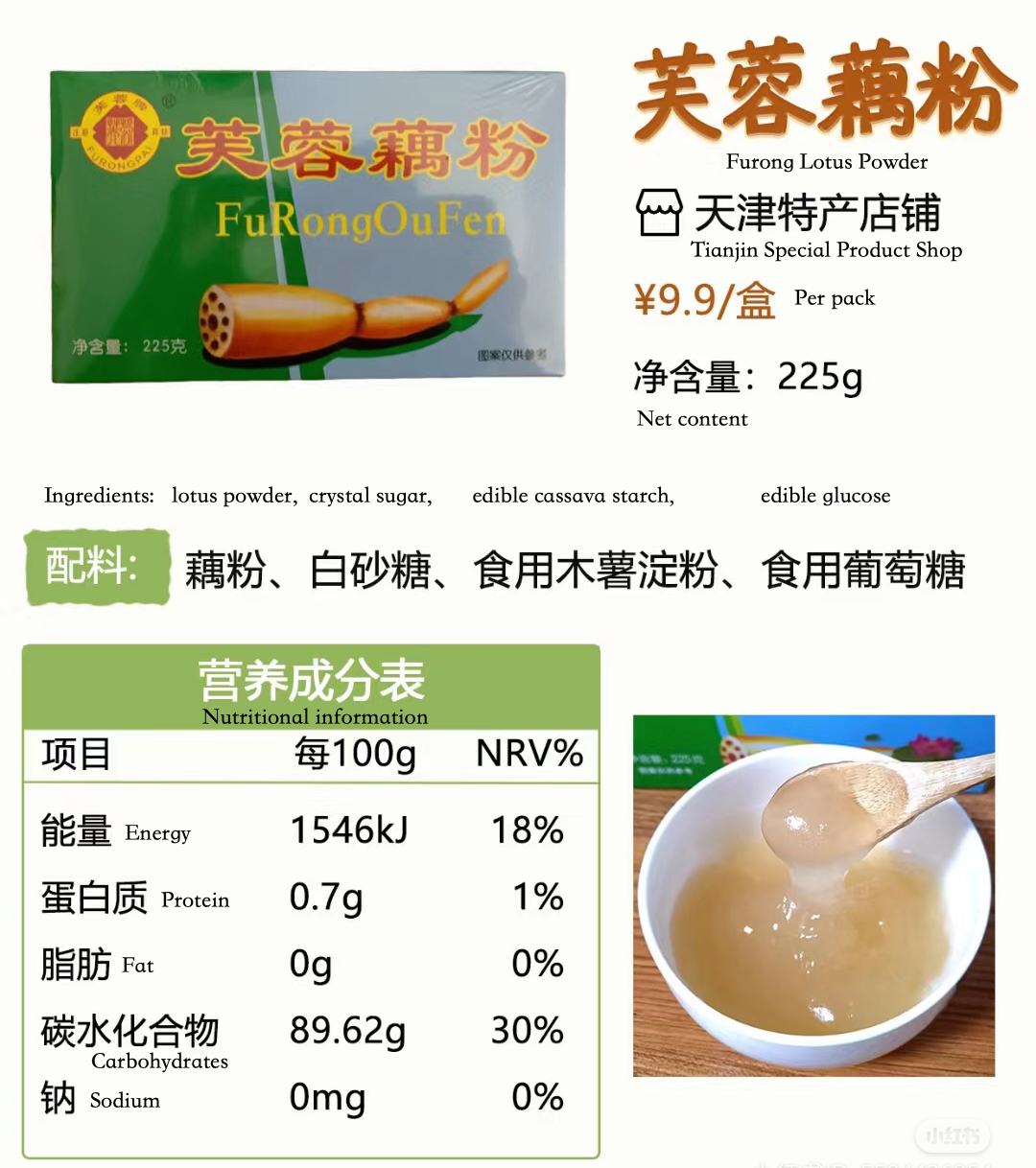
Tianjin Furong produces a lotus pod powder under a clean label.
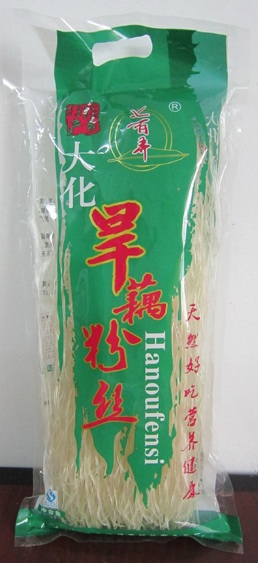
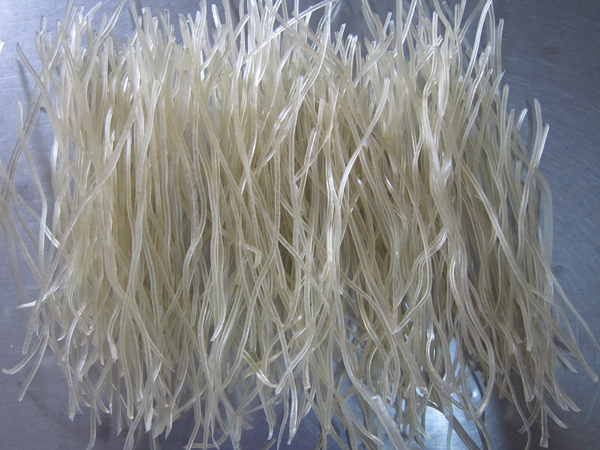
Another popular product is lotus rood vermicelli, or fensi in Chinese. This vermicelli is made from the starch of lotus root. It is a natural green food with no preservatives or additives, with a long shelf life. When it is put in boiling water, it gets soft and flexible easily and can be put in soup, fried dishes, hot pots, casseroles, cold dishes, or stewed and other dishes After cooking, it is clear and its liquid is transparent. It is called “the king of vermicelli” because of its easy digestion and claimed aid in reducing body fat. A major manufacturer is: High Mountain Natural Longevity Food Co. (Dahua, Guangxi).
Hot pods
An example of an innovative product are Liangpin Puzi (Bestore)’s ‘spiced lotus pods’. The ingredients are: lotus pods, sugar, chili pepper, salt, chicken powder, MSG and spices. An intriguing alternative for crisps to accompany a cold beer.
Healthy seeds
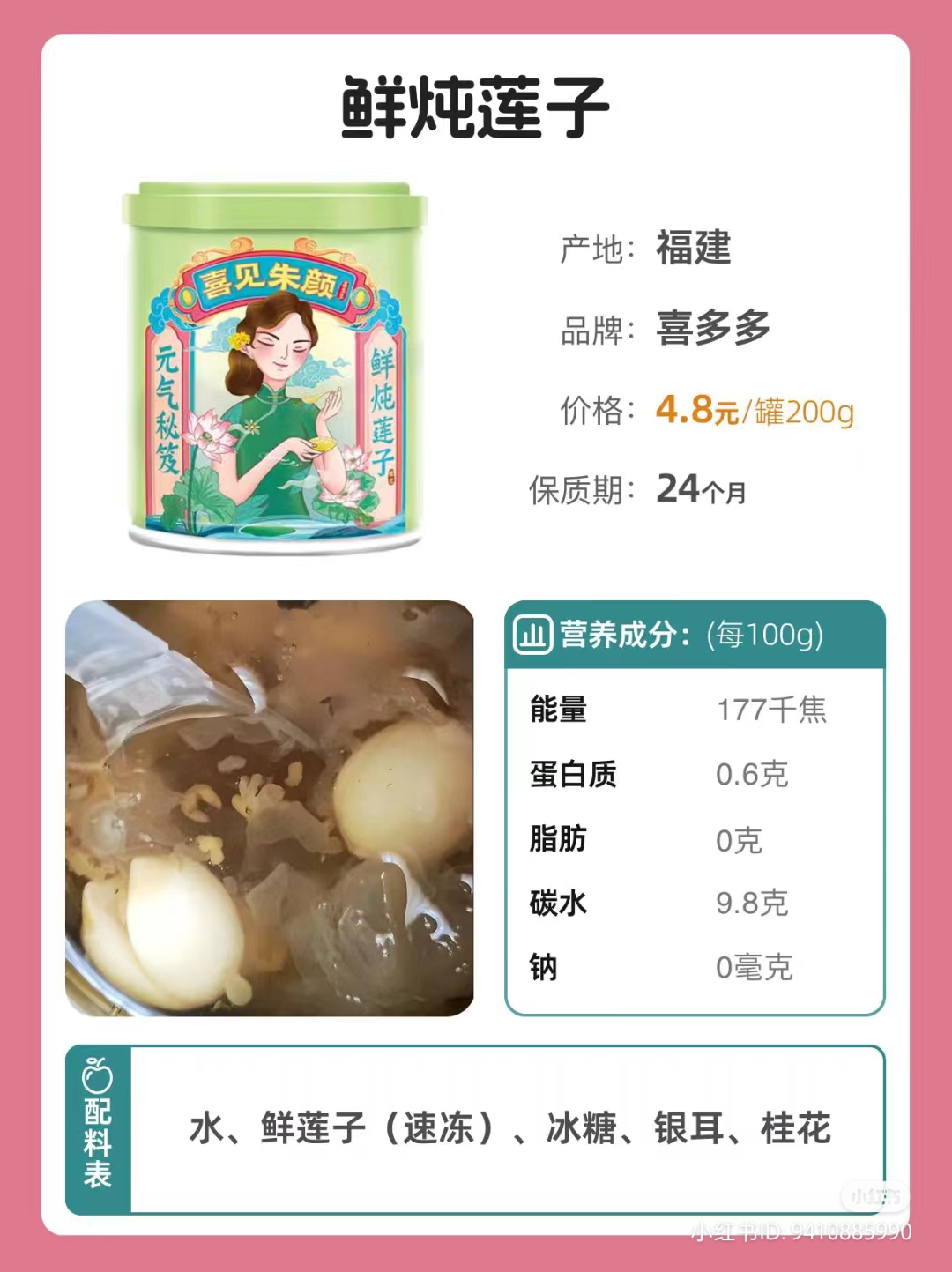
Lotus seeds are often stewed into a soup with silver ear (yin’er) mushrooms and rock sugar. Chinese ladies like to drink it for their complexion, but I believe also for its sweet taste and smooth mouth feel. Xiduoduo has made this into a industrial product. Ingredients:
Water, lotus seeds (quick frozen), rock sugar, yin’er, osmanthus flowers
Also look at the vinegar lotus eggs in my post on innovative vinegar-based foods and beverages.
The existence of a category like leisure food in Chinese food statistics is rooted in the laid back nature of Chinese culture
Entering a typical Chinese supermarket and looking around at the distribution of foods and beverages on the shelves, one indication that may strike you as unfamiliar, of even odd, is ‘Leisure food’, xiuxian shipin in Chinese.
Leisure and food are a match made in heaven in any culture, but there is no nation that created a more harmonious marriage between those two concepts than the Chinese. Visit any historic site in a Chinese city, and you will be amazed about the choice of snacks and drinks that are on sale in small shops or by street vendors.
When you then zoom in on the domestic tourists, you will have a hard time spotting one who is not eating or drinking, or at least visibly carrying food in their bags, ready to take it out and have a bite.
Before getting to those sites, or scenic spots, you need to travel. China is a huge country, so travelling can take time, and the best way to kill time in any culture is . . . eating. Chinese airports, train stations and long distance bus terminals are genuine food streets, offering everything the easily bore passengers may want to keep themselves, and their facial muscles in particular, busy. Eating has thus become the favourite way to pass the time on long haul rides in China.
Chinese high school and university students are also an important consumer group of leisure foods. Bakery products and meat snacks are their favourite foods during breaks.
All this has led to the coining of the category leisure food in the Chinese food industry.
It has become an officially recognized term. The library of Eurasia Consult has a collection of Food Industry Yearbooks starting with 1985 until the early 2000s, when the Internet rendered those paper information carriers unnecessary. Leisure Food is a separate section in those books, like the separate shelf for those products in Chinese supermarkets.
Leisure food is a hybrid collection of foods comprising:
One source divides leisure foods in the following subcategories:
Type
main market
customers
outlets
consumption mode
Private consumption
home
family members
Residential areas, special shops, convenience stores
At home
Travel food
travelling
travellers
local special shops, supermarkets , airports, railroad stations, tourist spots
Travelling, gift giving
Gifts
Gift giving
people in need of gifts
special shops, supermarkets
Gift giving
What I especially like in this division is the category of ‘gifts’. It always a nice gesture to bring home local delicacies when returning from a trip. And with a country as large and varied as China, there are more local specialties than a person can bring home in a life time. Moreover, gifts play a key role in Chinese culture. This is why Chinese airports and larger railway stations sell local foods in fancy gift packaging. People do not buy those to eat themselves, but to give them to relatives and friends.
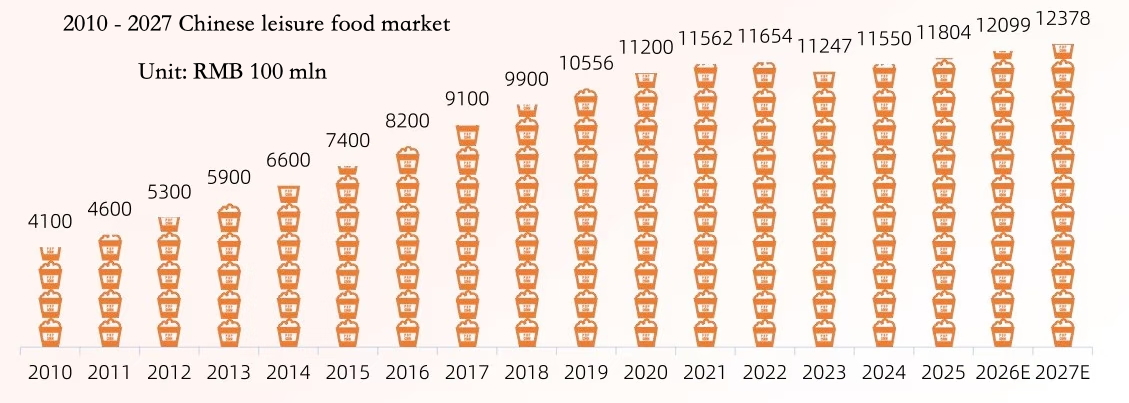
The following table shows the development of the market and the projections up to 2027 (Value in RMB 100 mln).
The following graph shows the market shares of various categories of leisure food of December 2019.
Market size and value
There are more than 4000 manufacturers of leisure food in China.The leisure food industry in 2018 was worth RMB 1029.7 bln; up 12%. Insiders expect that the value of this market will reach RMB 1298.4 bln by 2020.
Ingredients
It is an interesting market for suppliers of food ingredients. Preservation is key term here, not only referring to keeping the bugs out, but also the preservation of the flavor, color and texture.
This sector is also an interesting market for suppliers of food packaging machinery. All of the above mentioned products need to be packed in small portions, that can be conveniently stowed in ones pocket or hand bag. The preferred size is the single-portion package; a pack you open and empty in one leisurely moment, without the need to close and seal it for the next moment.
Trends for 2017
Leisure food should be tasty, novel and healthy. Snacks are by definition tasty. Consumers will only make repeat purchases and remember the brand if a snack is delicious. Chinese consumers are eager to try new leisure foods. As long as a product is novel and interesting, they are willing to give it a go. As Chinese are becoming increasingly health conscious, growing numbers place great emphasis on the nutrition facts of nibbles, such as those that are low in sodium, sugar and fat. This also includes additives in general. If more flavourings are added in order to create exciting taste, it can may Chinese consumers, who are now avid readers of ingredients lists, suspicious.
Small Packs are the trend. A very prominent trend is packs are getting smaller and smaller. Factors driving the growing demand for leisure food in mini packs are convenience, hygiene, pricing and visual impression. Mini packs can satisfy consumers’ demand for “convenient and hygienic one-off consumption”. They are particularly popular with female consumers who prefer snacks that can be eaten in one go. With large packs, if the food inside cannot be consumed straight away after they are opened, some consumers would not want to eat it again afterwards as they would consider it to be neither fresh nor hygienic.



























 Peverelli on Chinese food and culture