My earlier post on chili sauce dates from quite a few years back. Today, I found this article on the standardisation of food heat in China. It seems like a nice follow up.
At a time when the spicy industry is booming, making ‘spiciness’ visible, tangible and measurable is essential for its high-quality development. This was discussed at an expert seminar on the standardisation of spiciness held in Chongqing recently.
Sun Baoguo, academician of the Chinese Academy of Engineering, president of the Chinese Society of Food Science and Technology and professor of Beijing University of Technology; Xie Jianping, academician of the Chinese Academy of Engineering; Meng Suhe, president of the principal of the Chinese Society of Food Science and Technology; Chongqing Dezhuang Li Dejian, chairman of Industry (Group) Co., Ltd.; and other experts and enterprise representatives held an in-depth dialogue on the construction status and upgrading path of the quantitative grading standards for spicy seasonings.
Under the industrial pattern where the market scale of spicy seasoning has exceeded RMB 280 billion and there are more than 12,000 related enterprises, Li’s spicy scale, a local standard in Chongqing, has taken the first step in this process. However, to move from the local area to the whole country, it is necessary to gather industry consensus, address technical shortcomings and overcome application bottlenecks.
This seminar has signalled a shift in the spicy industry from a traditional model of ‘relying on the touch and relying on experience’ to a new stage of standardisation based on ‘numbers to follow and moderation to follow’.
The Six Degrees of Li’s Scale
- 12° (Baby Hot / 微辣): Mild spice, designed for a gentle aromatic kick.
- 36° (Social Hot / 低辣): Low spice, friendly for casual group eating.
- 45° (True Hot / 中辣): Medium spice, standard local flavor depth.
- 52° (Bold Hot / 高辣): High spice, intended for experienced heat-seekers.
- 65° (Champion Hot / 特辣): Super spice, pushing intensive thresholds.
- 75° (Hero Hot / 暴辣): Extreme spice, built for maximum heat and fermented flavor intensity
The industry urgently requires standards.
The 280 billion spicy market calls for a unified spiciness language.
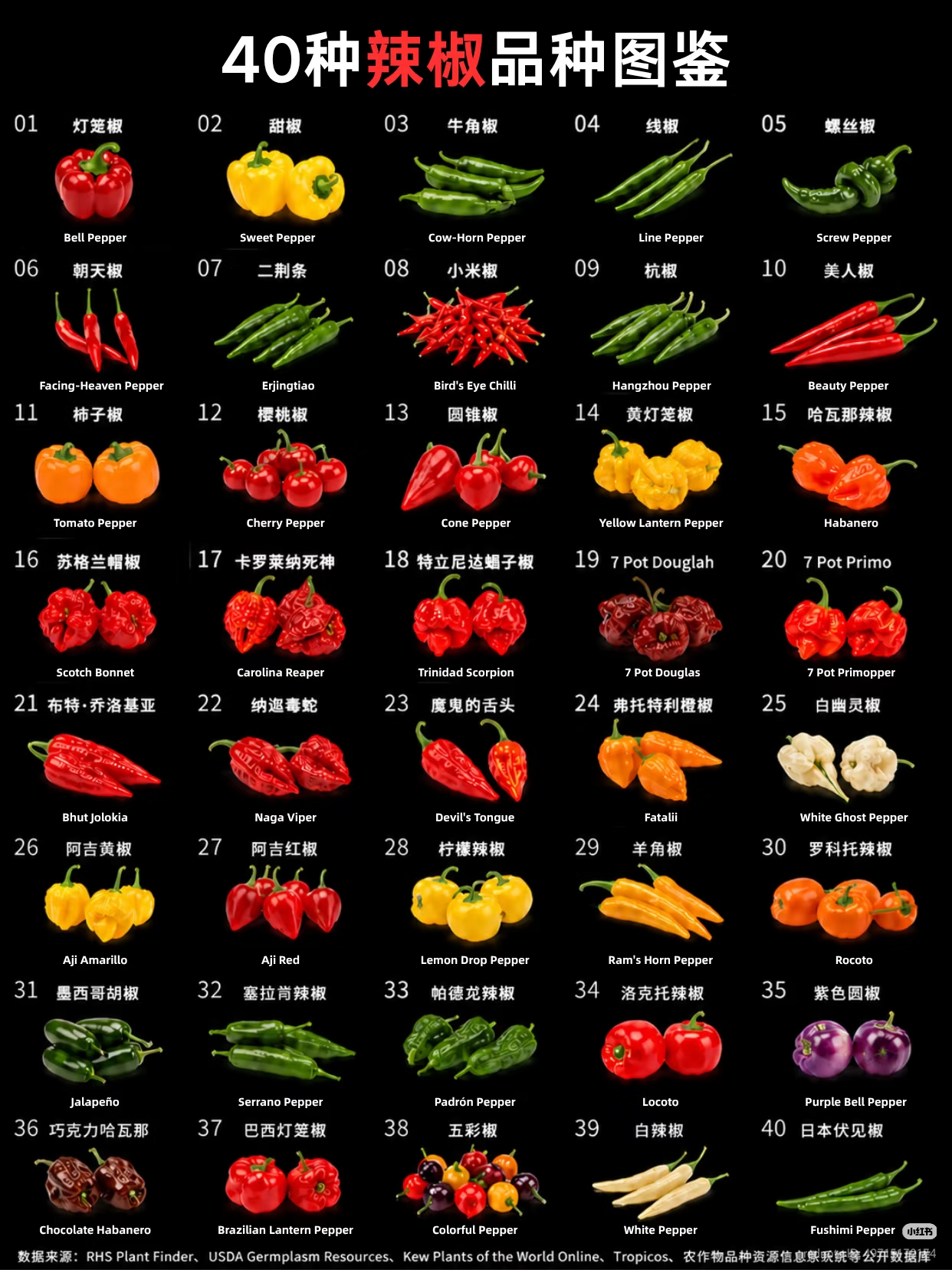
The size of the spicy flavour industry in China is substantial. A set of data provides the answer: in 2025 the compound seasoning industry will reach 281.5 billion yuan, the market size of hot pot base products has exceeded 40 billion yuan and there are more than 12,000 spicy seasoning-related enterprises across the country. However, in stark contrast to the scale of the industry, the evaluation of spiciness has long been based on vague expressions such as ‘slightly spicy, medium spicy, extra spicy’.
In his speech, Sun Baoguo retraced the international exploration of the sensory evaluation of spiciness. He mentioned that in 1912 the American chemist Wilbur Scoville proposed the ‘Scoville Spiciness Unit’ (SHU) named after his surname. This designed a set of sensory test methods to quantify capsaicin. ‘This indicator has been widely recognised worldwide for more than a century. However, there has been no unified understanding of how much is spicy and how much is not spicy.’ Dezhuang Company has taken a significant step through years of efforts to raise Li’s spiciness to Chongqing’s local standard and has been recognised by a considerable number of enterprises and consumers.
Meng Suhe, analysing the historical dimension of the industry, noted that Sichuan and Chongqing seasoning enterprises have endured decades of challenges and setbacks. This success is attributed to the significant influence of Sichuan food culture, which is unique in global cuisine. It not only preserves deep traditions but also reflects modern tastes and health requirements. Meng Suhe emphasised that the technical accumulation of these enterprises is largely self-driven.
Despite the industry’s growth, the lack of standards presents a significant challenge. Li Dejian, representing Chongqing hot pot, highlighted the confusion surrounding the spice levels of ingredients. Stir-fry chefs rely on experience to determine the spiciness, leaving consumers uncertain about the exact level of heat. This inconsistency has led to gastrointestinal issues among many diners, posing a barrier to the industry’s development. Li Dejian’s observations reflect the concerns of numerous enterprise representatives.
Xiao Zuobing, a professor at Shanghai Jiaotong University, identified technical shortcomings within the industry. He pointed out that while the deep processing capacity is inadequate, active substances such as capsaicin are susceptible to oxidation, resulting in unstable product quality. Furthermore, the flavour profile is limited, with most products characterised by high oil and salt content and a lack of functional development. These issues necessitate the industry’s standardisation for improvement.
Xue Jingbo, R&D director of Baixiang Food Group, noted that the standardisation of spiciness aligns with global consumption trends. The growth of young consumers and the international demand for spicy flavour have made it a global food flavour. Qi Wenqing, director of food safety regulations at Weilong Delicious Global Holdings Co., Ltd., advocated for the food industry to reduce ambiguity and establish unified standards. The digital spiciness evaluation system can address the uncertainty arising from geographical and personal preferences.
Liao Hongbo, vice president of the Chongqing Institute of Quality and Standardisation, stated that existing international standards and domestic testing methods are inadequate. A new system aligned with Chinese consumption characteristics is required. Xing Fushen, director of Tianjin Spring Object Technology Group Co., Ltd., asserted that the traditional description of spiciness is based on vague concepts such as ‘slightly spicy, medium spicy, extra spicy’. The absence of a unified scale has led to the development of a digital grading system that provides a more accurate evaluation. Yue Peng, general manager of Dandan County Douban Group Co., Ltd., highlighted the extensive application of chilli peppers in China. A spiciness standard that reflects domestic consumption should be established to provide a unified basis for production, research and development and sales, thereby avoiding cognitive deviations caused by subjective differences.
Eighteen years of research into ‘Chinese spiciness’
——From local standards to technical exploration
Dezhuang has been focussing on ‘spicy’ for more than 30 years, consistently investigating its scientific and technological aspects as well as its cultural significance. ‘Spicy’ and ‘quality’ have become integral to the company’s identity. Li Dejian reviewed the process of standardising Li’s spiciness. Since 2008, Dezhuang has been exploring whether a ‘degree’ of spiciness can be quantified in the same way as temperature and alcohol. In 2011 the company officially launched research into the standardisation of spiciness. After seven years, a breakthrough was achieved in 2017.
Zhang Li, director of the product research and development centre of Chongqing Dezhuang Agricultural Products Development Co., Ltd., presented the scientific background of Li’s spiciness with detailed data. She explained that the research has collected consumer sensory feedback from over 600 hot pot restaurants in China, completed more than 20,000 blind tests and developed a spicy cognitive database covering multiple regions and eating habits. After extensive experiments and data analysis, a logarithmic regression model relating spiciness to the total amount of capsaicin was established. The relevant results have been published in academic journals both domestically and internationally.
Zhang Li further explained the team’s technological breakthrough: the innovative construction of a three-layer mapping architecture comprising a sensory level, an instrument data layer and a mathematical model. The grading layer determines spiciness according to large-scale sensory experiments while the objective layer is provided by high-performance liquid chromatography to accurately correspond to the content of capsaicin substances in batches of products. The mapping layer converts this to a continuous spiciness value through a regression model. This method overcomes the limitations of simple instrumental analysis which is ‘number without sense’ and simple sensory evaluation which is ‘with sense without standard’.
Regarding grading, the team uses an intuitive expression of alcohol content to divide spiciness into six levels: 12°, 36°, 45°, 52°, 65° and 75°. These correspond to slightly spicy, low spicy, medium spicy, high spicy, extra spicy and violent spicy respectively.
Sun Baoguo believes that revising, improving and defining the standard is a topic that requires further study.
Fan Daming, vice president of Southwest University, stated that the spiciness standard is not only a technical endeavour but also a common language and cultural expression of the food industry. This work helps to redefine China’s food flavour system. Promoting this requires the joint participation of universities, scientific research institutes and enterprises to form a systematic innovation platform. Southwest University is willing to utilise its scientific research capabilities and collaborate with enterprises to promote the research of spicy standards, technology transformation and industrial application. Li Xiang, vice president of Sichuan Tourism Institute, believes the spiciness standard can promote the combination of sensory evaluation and physical and chemical testing to achieve scientific classification. It is suggested to further promote the transformation of local standards into national standards and open up the technical system for more enterprises to apply it. Consumer science popularisation should also be strengthened. Zou Guangyou, chairman of Sichuan Guangyou Potato Industry Co., Ltd., proposed that standardisation is not only applicable to hot pot but can also be extended to other food fields such as hot and sour noodles. This will further establish a digital evaluation system for flavours such as acidity, numbness and fragrance and promote the digitalisation and intelligent upgrading of the food industry through standards, enabling traditional food to learn from experience. Production is moving towards data management.
Gao Changwei, general manager of Yang Food Technology (Henan) Co., Ltd., commented from the perspective of product innovation that Dezhuang has created a new product differentiation path through spiciness grading which is of inspirational significance to the food industry. In a fiercely competitive market environment enterprises need to innovate by subdividing categories and consumer demand. Liu Hongtao, general manager of Chengdu Jinmailang Noodles Co., Ltd., stated that the standardisation and digitalisation of the spiciness level can allow consumers to select the spiciness similar to choosing alcohol content and enhance their consumption experience. Wang Shengli, R&D director of Hunan Spicy Prince Food Co., Ltd., believes that the establishment of the standard will enable enterprises to form a comprehensive data management system from raw material planting production and processing to product sales and promote the refined development of the spicy industry.
The foundation of the standard is consensus
The industry has joined forces to promote the ‘grading’ of the spiciness standard. During the discussion, experts agreed that the formulation of standards is an iterative process. They held in-depth discussions on how to promote the spiciness standard from local to national levels from a single product to a full range from technical documents to market language and formed a multi-point consensus.
Meng Suhe’s discussion was particularly systematic and profound. First, after decades of rapid development, enterprises have reached a stage where they should slow down and consolidate the scientific foundation. Second, as a leading enterprise in the industry, it strives to promote the digitalisation of spiciness which is an expression of its industry responsibility after long-term practice. Third, the establishment of standards has given consumers greater right to know and is also conducive to healthy competition in the market. From the perspective of protecting consumer rights and interests this information should be transparent. Fourth, industry innovation is often ahead of standard formulation. When the industry develops faster the demand for standard construction is stronger.
Ding Gangqiang, chief expert in nutrition at the Chinese Centre for Disease Control and Prevention, emphasised from a public health perspective that spiciness is not only related to food flavour but also closely associated with human health. The establishment of spicy evaluation standards can transform the subjective nature of spiciness into digital indicators which is of guiding significance for consumers’ healthy choices. He suggested that the current standard system has a scientific basis but should be further upgraded. This could involve transitioning from local standards to national recommended standards and clarifying the boundaries of the spiciness range to strengthen consumers’ understanding of different levels.
Liu Bin, chairman of Beijing Flavour Food Technology Co., Ltd., stated that from a consumer perspective the spiciness standard makes spicy food more transparent. Previously consumers could only choose based on vague descriptions such as slightly spicy and medium spicy but the digital spiciness system provides a more precise indication of the spiciness level suitable for them. He also emphasised that the promotion of standards requires technical construction and consumer education to ensure greater understanding of different spiciness levels and to promote spiciness standards as a system recognised by the industry and the state.
Li Yanfei, the former chief engineer of Chongqing Metrology Quality Testing Research Institute, pointed out that the spiciness standard has realised the transformation of consumers from no perception to digital cognition, allowing consumers to establish a more effective connection between consumers and enterprises. From the national level, the scale of China’s chilli industry is huge, and it is of strategic significance to establish independent spiciness standards. From the perspective of the industry, standards can promote the standardised development of the industry, help enterprises carry out product innovation according to different consumer needs, and achieve more accurate market positioning.
China’s spicy industry is huge, but there are still shortcomings in terms of deep processing, functionalisation and product flavour. The four innovative trends put forward by Xiao Zuobing in the report provide a technical roadmap for the spiciness standard to lead the industrial upgrading. First, high-value deep processing of raw materials. The industry will no longer be limited to primary processing, but will further explore the value of active substances such as capsaicin, explore its role in lowering sugar, anti-tumour, anti-inflammatory, etc., and expand other application scenarios. The second is the intelligentization of processing quality control. The detection method will gradually shift from the static detection of traditional instruments to the application of biosensing real-time evaluation system to realise the rapid quantification of spiciness and the quality control of the whole process of production and processing. Third, the active ingredients are delivered accurately. Spicy hemp substances generally have pain points such as poor water solubility, excessive stimulation, unstable storage, etc., which can realise the controlled release of spicy taste through microcapsulation, emulsion delivery, cyclodextrin embedding and other technical means, taking into account product stability and flavour experience. Fourth, flavour collaboration and innovation. In the future, we will promote the integration and innovation of spicy flavour with sour, sweet, fresh, fruity fragrance, smoked and other flavours, and deeply study the multi-sensory interaction mechanism. On this basis, we will realise salt and sugar reduction, and promote the development of spicy food in the direction of health and personalised customisation.
Li Hongjun, a professor at the School of Food Science of Southwest University, emphasised that it is necessary to strengthen publicity and popularisation to promote the development of spiciness standards, so that experts, governments, enterprises and consumers can jointly understand the value of spiciness standards. At the same time, we should strengthen the research and dissemination of the health functions of peppers, and promote more enterprises to adopt new spiciness evaluation through market demand. System.
Liao Hongbo pointed out that the construction of spicy standards reflects the combination of scientific and technological innovation and standardised development in the food industry. After years of research, spicy standards have innovated in terms of testing methods, grading and industrial applications. In the future, it is hoped that more enterprises will participate in the promotion and jointly promote the development of the standard service industry.
The standardisation of spicy degree is a systematic project, which not only requires scientific research institutions to provide a theoretical basis, but also requires leading enterprises to be the pioneers, requires government departments to provide policy support, and requires consumers to gradually recognise and accept, so as to form a synergy. As Sun Baoguo said at the meeting, ‘Strive to do a better job in the spiciness standard and get more recognition.’ China’s spiciness standard starts from Chongqing and is gradually going to the whole country and the world.
Peter Peverelli is active in and with China since 1975 and regularly travels to the remotest corners of that vast nation. He is a co-author of a major book introducing the cultural drivers behind China’s economic success