Hot Pot – how a traditional Chinese way of eating has developed into a complete market

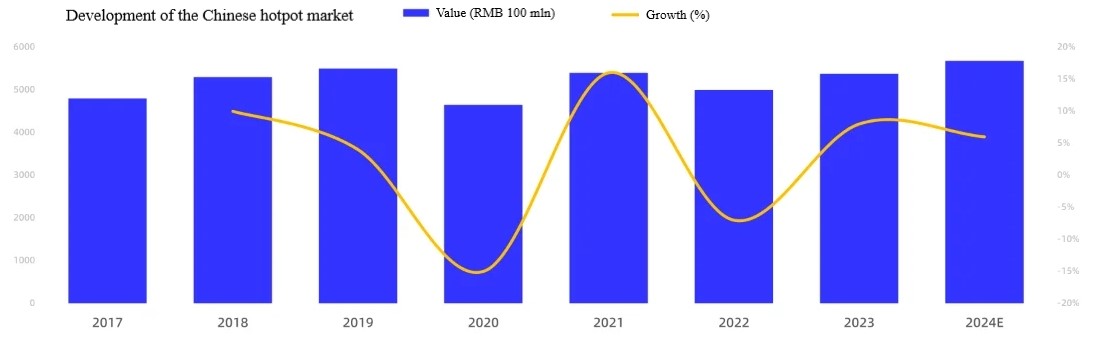
Hot Pot has grown so important that this traditional Chinese way of eating had developed into a full grown market. A specialised trade fair has been launched for it: Shanghai International Hot Pot Industry Trade Fair. The value of the 2023 Chinese hot pot sector was RMB 596.6 billion and is expected to exceed RMB 600 billion in 2024.

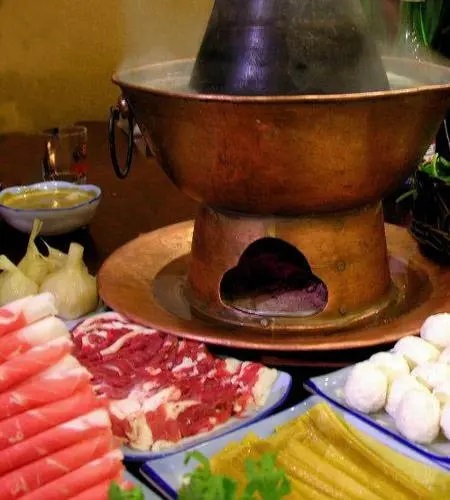
If there is one Chinese dish, or better: eating experience, that virtually all foreigners who have been to China enjoy, it is hot pot. The most traditional version is what Chinese refer to as shuan yangrou, literally ‘dipping mutton’. Eaters dip thinly sliced mutton in a boiling broth in the middle of the table, then dip it in a sauce with sesame paste as its base and other flavourings added on the basis of personal preference. While mutton is the main ingredient, various vegetables, bean curd, mushrooms, etc., can be dipped as well. This used to be winter favourite for the northern Chinese, as it is a way of eating that warms you up inside and outside. I hold dear memories of hot pot from my first winter in Beijing in 1975.
Modernisation

The consumption of hot pot increased with the growing spending power of Chinese consumers. This heightened interest caused a number of changes, adapting to the higher variation of likings of the patrons, also incorporating new technologies. Apart from mutton, beef and other types of meat were added. The charcoal as a source of heat was gradually changed to alcohol gel, which is considerably less smelly, and later electricity. There is even an annual Hot Pot Exhibition held in Chongqing. Chongqing has even constructed a complete Hot Pot Industrial Park.

Market structure

The hot pot market consists of three segments. The first includes the suppliers of raw materials: meat, vegetables, seafood, etc.; or simply: the stuff that is dipped in the soup. The following illustration shows a number of the most important ones (May 2024)

The intermediate segment includes the suppliers of the soup base and the condiments in which you dip the boiled ingredients.

The final segment comprises the providers of hot pots; the hot pot restaurants brands.

North versus South

The traditional northern hot pot also got influenced by the southern type. Southern Chinese have a different concept of hot pot. They throw about everything edible in a pot and fish it out using small metal nets. The Chongqing version uses a very spicy broth. Southern hot pot includes meat, but it is not the core ingredient. Most private restaurateurs who set up hot pot restaurants could not afford to stick to the shuan yangrou tradition and name there cuisine literally huoguo ‘hot pot’ (literally: ‘fire pot’). Hot pot gradually became an equivalent of a way of communal eating that required little effort. At home, you just placed a pan of broth on an induction plate, surrounded with plates with various raw ingredients. The same applied to hot pot restaurants, where the main activity in the kitchen was slicing meat and vegetables.

The Chongqing version with a spicy and a non-spicy half

Instant hot pot

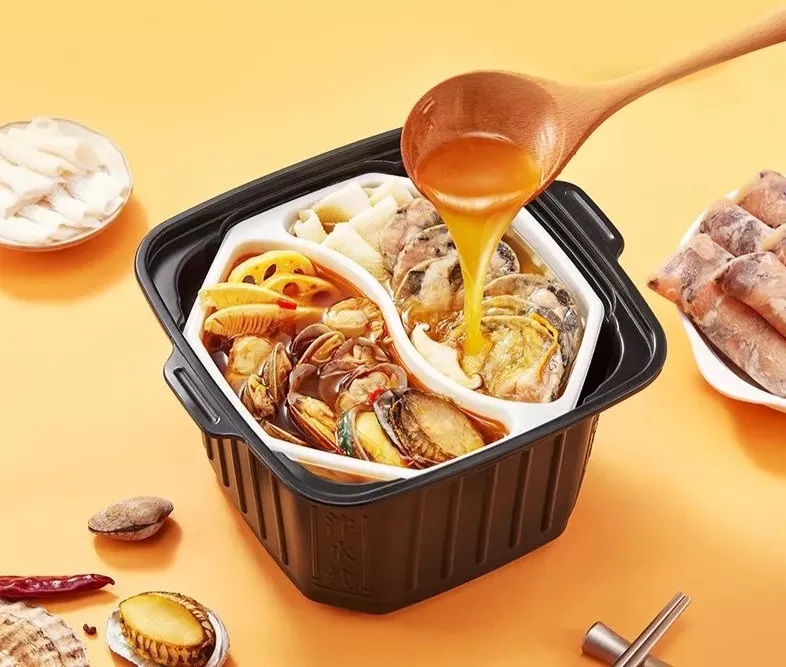
A new development in the Chinese convenience food market is the appearance of self-heating noodles, congee, etc. Instant hot pots appeared soon afterwards. The photo shows a typical Chongqing hot pot with a spicy and non-spicy section by Qingxixi, launched in 2021. Qingxixi promotes the product as only containing zero fat or low fat ingredients.
In-Shop Hotpot: A Post-COVID Development

A recent development in the culinary industry is the in-shop hotpot, a dining experience where hotpot is prepared and served in a corner of a food establishment. This concept offers consumers a more cost-effective option compared to traditional restaurants, as the establishment incurs lower operational costs. In-shop hotpot has gained significant popularity among young professionals with limited budgets who seek to reduce their food expenses while maintaining a flavourful dining experience.
Growing market for small hotpots

Small or individual hotpots have always existed, but started to become a market of their own in the 2020s, which met the needs of the growing demographic segment of singles. With the continuous rise of the wave of ‘one person’s meal’, the model of ‘one person one pot’ was in line with the independent dining needs of single consumers. At the same time, its high cost performance also meets the needs of consumers in third and lower tier cities. With the acceleration of urbanisation and the increase of urban population, the consumption potential of those markets is further opened. According to statistics, the market size of China’s small hotpot industry in 2024 reached RMB 58.8 billion, an increase of 12.07% year-on-year.

Women form a small majority among  China’s small hotpot consumers, accounting for 51.4%. In terms of age, 70% of the consumers are in the 20-39 years bracket (2024 statistics). Young consumers pay more attention to personalised and convenient dining experience, and are more sensitive to price, which is more suitable for the positioning of the small hotpot. The proportion of one-person meals is as high as 44.2%, mainly for single consumers or dining alone, followed by small group dinners, accounting for about 33.4%. In terms of consumer concerns, taste is the most important factor, accounting for more than 70%, followed by ambiance and price, accounting for about 65.5% and 63.9%. Small hot pot consumers are relatively sensitive to price, and the highest proportion of groups who can accept prices between RMB 20 – 40.

A whole new market

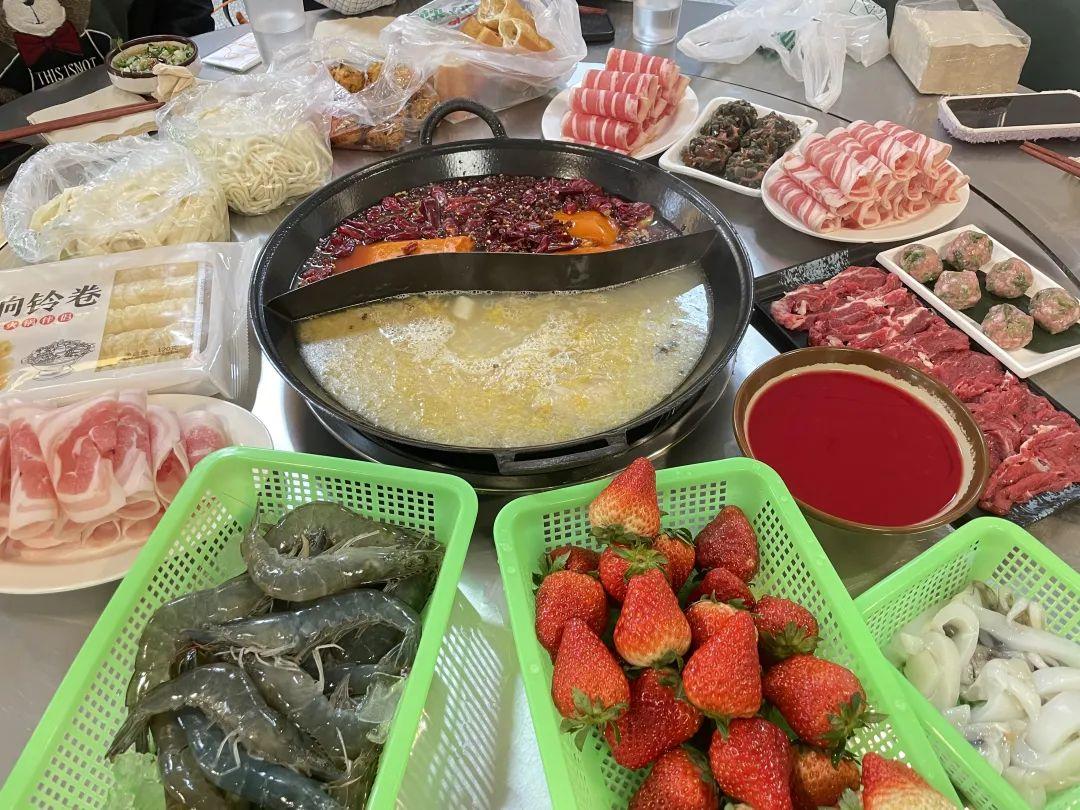
Probably also aided by the renewed interest in home cooking caused by COVID-19, the hot pot rage has recently created an complete new market for packed hot pot ingredients. Hot pot chains like Haodilao started this by selling ready-to-use blocks of hot pot condiments. You simply melted it in hot water and you had an instant dipping broth. Meat processors followed suit by launching packed sliced mutton and beef. Fish followed soon. Chopped and sliced vegetables also appeared on the shelves of Chinese supermarkets. A recent study estimates the value of the market for hot pot meat alone at RMB 30 billion. The same study estimates the value of market for hot pot condiments at RMB 49 billion. A Chinese netizen posted the following photo of the various products he had purchased for a hot pot meal at his home with a few friends.

As you can see, it includes drinks and a cake for dessert. The only fresh ingredient is a plate of vegetables at the top of the photo.

So, is this a good development, all that packed food, or is it against the trend towards healthier eating? As far as the meat is concerned, I know from personal experience that the appearance of frozen pre-sliced mutton and beef felt as a liberation from slicing it yourself. Apart from being sliced/chopped and packed, these products have not been heavily processed. Fact is that ‘hot pot materials’ have become a sub-market of their own in China. The following table shows the historic development of the value of this market.
Hot pot buffet

A new vogue in Qingdao was launched in 2023: buffet style hot pot during which customers can pick whatever the see passing by.

Clean hot pot

Concepts like Clean Label have also reached China and started to get serious around 2022. However, the Chinese interpretation of ‘clean’ seems to be broader or lest strict than the Western. Here is an example of ready-to-use hot pot broth seasoning from Eurasia Consult’s database that is advertised as ‘zero additives’ site in China.

Product name: cow fat mildly spicy

Ingredients

cow fat, chili pepper, broad beans, wheat flour, water, MSG, spices, sichuan pepper, ginger, garlic, rock sugar, onions, fermented beans, yeast extract, chili red

Peter Peverelli is active in and with China since 1975 and regularly travels to the remotest corners of that vast nation. He is a co-author of a major book introducing the cultural drivers behind China’s economic success

Savoury ice cream in China – where East meets West

Temperatures are rising rapidly in China and that is traditionally the signal for the ice cream industry to increase production. However, ice cream is one of the products the consumption of which has increased dramatically in the first quarter of 2020, when virtually all Chinese were confined to their homes with only very limited opportunities to go out. Convenient foods like instant noodles and snack food like nuts and seeds reported year-on-year increases up to more than 100%. The increase in ice cream consumption was less spectacular, but still 20% – 30%.

However, the most interesting development in the Chinese ice cream scene is not just the increase in consumption, but the growing interest in savoury flavours. Until recently, ice cream was typically a sweet to very sweet treat. Now, the most peculiar flavoured ice creams are appearing all over the country. Can you imagine enjoying scoop after delicious scoop of ice cream laced with: seaweed, shredded meat, onion rings, etc.? Curious? Go to China this summer to try them out, one by one. This development is so sudden and overwhelming, that I am not adding this news to my earlier post on ice cream, but dedicating a special post to it. This will not be a show window of who makes what. As usual, I will give you a good look into what is happening in this market.

Chives and shred meat

I have introduced shred meat or meat floss in an earlier post on Chinese meat products. I already noted there that it can be used as an ingredient in various foods. Here it is combined with chopped spring onions. If you can keep the taste of fresh spring onions, this combination might actually work very well with a suitable ice cream flavour.

Herbal tea

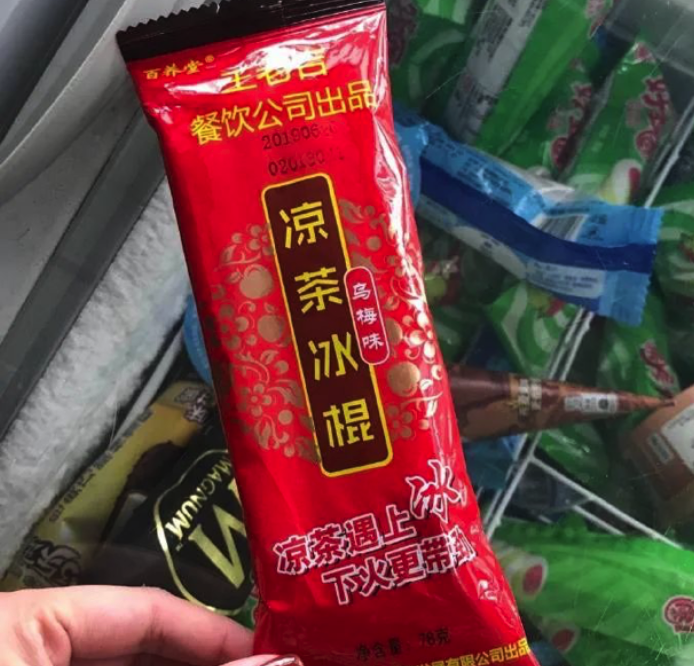
As noted in my post on Chinese drinks, I introduced herbal tea (often referred to as ice tea in Chinese) as a type of beverage derived from traditional Chinese medicine (TCM). It has become extremely popular in China during recent years, so why not make it into a popsicle? The design of the packaging reflects the ‘traditional’ nature of this product.

Hot and spicy

After my introduction, you undoubtedly expect a chili flavoured variety, so here it is. The packaging promises a lot of fire. I like chili chocolate (the mild type), so I expect to like this too.

Stinky toufu

Toufu, bean curd, is known very well in the Western world, as a versatile food ingredient and an alternative to meat. Stinky toufu doesn’t sound very nice, but refers to a kind of black fermented toufu that is fried and sold as a snack at street stalls in various parts of China. A traditional hot snack in winter is now also available as a cold snack in summer.

A cold hot pot

The last, but most spectacular, type that I want to introduce in this post is hot pot ice cream. Chinese love to eat hot pot, at home and in restaurants. You can throw almost any food in the boiling water, retrieve it when done, dip it in a sauce, and savour it. This ice cream comes in a pot, with a wafer a the lid, and laced with chopped vegetables and seaweed, topped with a layer of shred meat.

Fishy ice cream

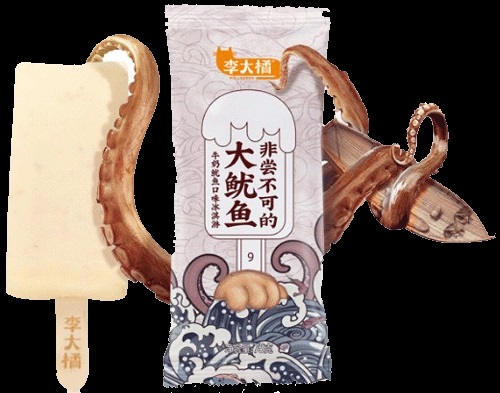
Lidaju has designed what could be the weirdest type of savoury ice cream: fishy-flavored ice cream with bits of dried squid in it. This is someone I would only recommend to the seasoned lover of crazy foods. This is corroborated by the sub-text on the packaging feichang bu kede ‘very improper’.

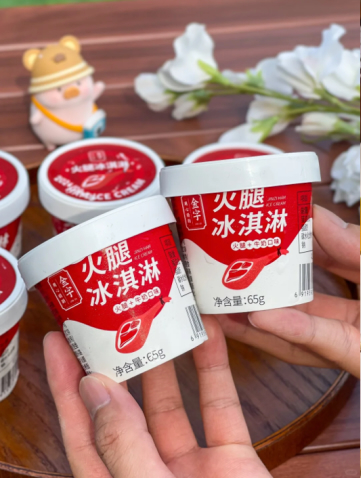
In 2024, Jinzi brand launched a ham flavoured ice cream.

HamIcecream

There are more types and undoubtedly even more will appear. I may add the ones that I find most striking later.

Related posts:

China’s new funky ice creams

China: the world’s biggest ice cream market

Peter Peverelli is active in and with China since 1975 and regularly travels to the remotest corners of that vast nation. He is a co-author of a major book introducing the cultural drivers behind China’s economic success.

What Chinese food lovers love most

There are different Chinese expressions for people who love food in Chinese (as there are in English). A classic, more highbrow, term is meishijia, literally: ‘a person knowledgeable of good food’. This term is close to the English concept of gourmet. People like this do cook, but prefer to indulge in the better restaurants. The not only have good taste, but also do not lack of cash to fund their likings. In recent years, the term chihuo has become popular. It literally means ‘eat merchandise’. As I prefer an English translation over keeping a Chinese word untranslated, I will use the equally popular English term ‘foodie’ as the, more or less, equivalent for chihuo.

Like Western foodies, their Chinese counterparts do not just like to eat because they crave food, but because they have an interest in new flavours and textures, foods that are linked to things that are fashionable in other sectors of life, like art. They are focused on convenience and leisure foods, but although do not necessarily reject junk food, they are especially interested in novel foods that are ready to eat or at least easy to prepare, but are also healthier than the traditional street food. Attractive packaging is also valued.

Chinese foodies can be unexpectedly traditional in their taste. In many posts of this blog, I have mentioned the special status attached to imported food, which often has a special section in the larger Chinese supermarkets. The novel foods that Chinese food bloggers introduce are often improved, i.e. better packed, more nutritious, versions of traditional Chinese foods. In fact, you can get a good impression of what Chinese foodies like by surfing to the Trends page of my blog. All items introduced there have been taken from the accounts of Chinese food bloggers.

That page is serviced irregularly. I post a product that strikes me as interesting.  Recently (12/3/2020), Tmall, one of China’s leading online shops, has published a Top 20 Products like most by chihuo. I will share that list with you here, with a short explanation of each item. It will give you a valuable insight in what Chinese foods buy online now. The only point for attention in interpreting this list is the possible influence of the corona virus epidemic on this list. I will take it for granted here. Whenever Tmall publishes an update, we will be able to compare the new list with the one introduced here.

  1. River-snail noodles; a dish from Guangxi made from pickled bamboo shoots, dried turnip, fresh vegetables and peanuts and served in a spicy noodle broth flavoured with river snails.
  2. Turkey noodles; these are actually ordinary instant noodles originating from South Korea, so quite spicy. The Chinese media have shown contests in turkey noodle eating in 2019, which is probably the reason for the popularity of this product. Chinese love games and contests.
  3. Cherries; mind that the Chinese term here is chelizi (a transliteration of the English word) and not yingtao, the regular Chinese word. I have not (yet) detected a difference between berries offered in China under the name chelizi and those marketed as yingtao, but the former are praised a rare treasures. Well, as long as it sells.
  4. Instant noodles; I guess these are all instant noodles, minus the turkey noodles.
  5. Self-heating pots; these are ready to eat foods that can heat up by themselves through a chemical reaction started by squeezing the bottom.
  6. Spicy strips; this is real junk food. They are strip made from a starchy product mixed with chili. Reports have been published exposing the bad average quality of the hot strips, but they remain popular snacks.
  7. Self-heating hot pot; this is a special type of self-heating pot, emulating the popular hot pots eating in restaurants all over China. These usually are soups with chunks of meat, fish and vegetables.
  8. Hot and sour glass noodles; glass noodles are made from starch rather than flour; they are flavoured with pickled vegetables and chili.
  9. Boneless chicken claws; chicken claws are a regular item in the Cantonese dim sum; boneless prepared chicken claws are easier to eat as a snack.
  10. Hot pot stock; I already mentioned above that hot pot is immensely popular; hot pot restaurants and now also many seasoning companies, are producing chunks of fat with all the seasoning in it; just throw it in your pot at home, heat it, and have a feast.
  11. Strawberries; like the cherries above, a berry regarded as a rare delicacy.
  12. Milk tea; this fashion has started in Taiwan, entered China in the South, but has now also reach the North; milk tea comes in an endless array of flavours, and is often spiced up with bits of dried fruit, chunks of jelly, etc.
  13. Potato crisps; no comments needed.
  14. Nuts; same; this category has been made famous by the products and marketing campaigns of Three Squirrels, introduced in several posts of this blog.
  15. Custard tart; this is an example of a reasonably traditional product that has suddenly become fashionable; the custard tart (danda) is a Portuguese influence on the Cantonese dim sum. In case you didn’t know: Macau used to be a Portuguese colony. This is the second dim sum in this list that has gained national popularity.
  16. Ice cream; no comments needed.
  17. Chocolate; ditto.
  18. Hand-pulled pancake; this is plain version of the onion pancake popular in Taiwan. It consists of several thin layers that are easily pulled off when you pick them up, hence the name. A reason for their popularity could be that it is easy to combine them with any dish. You can wrap a few spoons of the dish in a pancake and eat it with your hands, as a Chinese type of wrap.
  19. Haidilao; this is the only brand name in the list, and not one of a food, but of a hot pot restaurant. By now, even inattentive readers will have noted that hot pot is a popular type of food and Haildilao has grown into the leading chain in this business. What puzzles me is how you can get Haidilao from Tmall. Perhaps Tmall can also be used to book a table.
  20. Thin cream; Chinese traditionally do not like dairy products and the main reason is that most of them have a problem with the creamy taste of milk. The very fact that thin cream appears in this list, even though at the end, is a revolution. However, its main use is raw material for whipped cream, in which the creamy flavour is partly masked by the added sugar.

This is what a hand-pulled pancake looks like

Well, this is the Top 20 most popular food products purchased from Tmall mid March, 2020. I will refrain from guesses and inferences about what it could mean for suppliers who want to cash in on this reasonably affluent segment of the Chinese market. Most of them will be able to make that step and Eurasia Consult is always there to help out.

Peter Peverelli is active in and with China since 1975 and regularly travels to the remotest corners of that vast nation. He is a co-author of a major book introducing the cultural drivers behind China’s economic success.