Yak is a characteristic breed of livestock in China’s higher elevations, mainly distributed in the Qinghai-Tibet Plateau and surrounding areas. More than 95% of the world’s yaks are produced in China. Yak meat, milk, bone, hair and other yak products have their unique characteristics or uses. In recent years, China’s yak breeding scale has continued to expand. In 2021, China’s yak slaughter volume reached 3.78 mln head. Regionally, the total number of yaks in Qinghai, Sichuan and Tibet accounted for more than 80% of the national total yak inventory in the country.
The value chain
The whole yak industry chain includes breeding, processing and sales, the upstream of the yak industry chain is feed, vaccine, veterinary drugs and other enterprises, feed enterprises from oil mills or dealers to purchase soybean meal, corn, etc. mixed into feed, for breeding to provide necessary food raw materials. Yak breeding related enterprises are in the middle of the industrial chain. The downstream processing and circulation links are specifically subdivided into primary processing and intensive processing products such as yak beef, milk, fur, etc., and flow into supermarkets, wet markets, catering industries and other distribution places, to finally reach consumer outlets.
Development
Yak breeding is subsidized by the government and belongs to the construction of the national agricultural product quality and safety traceability management information platform and the development of the national agricultural product quality and safety traceability management information system. The State has issued the “Ministry of Agriculture Support for the Green Development of Agriculture and Animal Husbandry in Tibet” to assist farmers and herdsmen to increase their income. Yak raising in the unpolluted alpine area has become a symbol of natural green food, known as the crown of beef yak products in domestic and foreign exhibitions many times, including many awards, have won extraordinary evaluation, to yak fluff, fur made of items frequently appear in major fashion weeks, with its warmth and decorative advantages, internationally respected, with the attention of governments at all levels, scientific research workers and the continuous updating of research methods, modern biotechnology will play an increasing role in yak production.
Current state ofdevelopment
With the popularization of the consumption concept of buying organic and green products, the global market will increase the demand for high-end meat products, yak meat as a high-grade meat product, with obvious high protein content, low fat content, low cholesterol, meat tender and other high-quality characteristics, at the same time, yak milk, yak skin, yak hair and other products are also welcomed by consumers in various countries. In recent years, global yak breeding has continued to expand. In 2021, the global yak stock reached 17.3465 million head, and it is expected to reach 18.9613 million in 2023. From the perspective of regional distribution, the yak is mainly distributed in China, Mongolia, Russia, Afghanistan, Pakistan, Sikkim, and Bhutan.
Market prospects
Yak as one of the world’s three major alpine animals, yak meat is known as the “crown of beef”, is semi-wild natural green food, yak meat protein content, low cholesterol content, rich in a variety of amino acids, vitamins and calcium, phosphorus, iron and other minerals, with the improvement of people’s living standards and the change of consumption concepts, yak meat market demand is gradually increasing, broad market prospects.
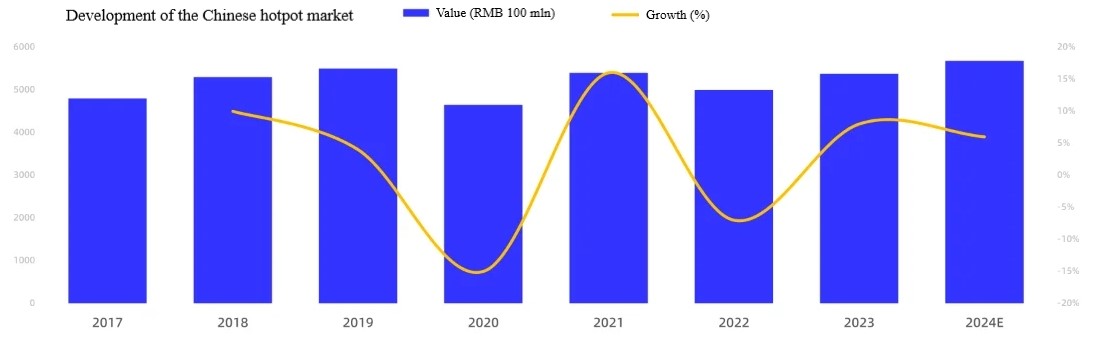
Hot Pot has grown so important that this traditional Chinese way of eating had developed into a full grown market. A specialised trade fair has been launched for it: Shanghai International Hot Pot Industry Trade Fair. The value of the 2023 Chinese hot pot sector was RMB 596.6 billion and is expected to exceed RMB 600 billion in 2024.
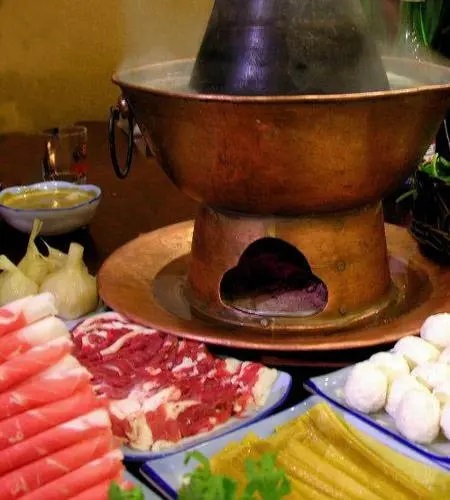
If there is one Chinese dish, or better: eating experience, that virtually all foreigners who have been to China enjoy, it is hot pot. The most traditional version is what Chinese refer to as shuan yangrou, literally ‘dipping mutton’. Eaters dip thinly sliced mutton in a boiling broth in the middle of the table, then dip it in a sauce with sesame paste as its base and other flavourings added on the basis of personal preference. While mutton is the main ingredient, various vegetables, bean curd, mushrooms, etc., can be dipped as well. This used to be winter favourite for the northern Chinese, as it is a way of eating that warms you up inside and outside. I hold dear memories of hot pot from my first winter in Beijing in 1975.
Modernisation
The consumption of hot pot increased with the growing spending power of Chinese consumers. This heightened interest caused a number of changes, adapting to the higher variation of likings of the patrons, also incorporating new technologies. Apart from mutton, beef and other types of meat were added. The charcoal as a source of heat was gradually changed to alcohol gel, which is considerably less smelly, and later electricity. There is even an annual Hot Pot Exhibition held in Chongqing. Chongqing has even constructed a complete Hot Pot Industrial Park.
Market structure
The hot pot market consists of three segments. The first includes the suppliers of raw materials: meat, vegetables, seafood, etc.; or simply: the stuff that is dipped in the soup. The following illustration shows a number of the most important ones (May 2024)
The intermediate segment includes the suppliers of the soup base and the condiments in which you dip the boiled ingredients.
The final segment comprises the providers of hot pots; the hot pot restaurants brands.
North versus South
The traditional northern hot pot also got influenced by the southern type. Southern Chinese have a different concept of hot pot. They throw about everything edible in a pot and fish it out using small metal nets. The Chongqing version uses a very spicy broth. Southern hot pot includes meat, but it is not the core ingredient. Most private restaurateurs who set up hot pot restaurants could not afford to stick to the shuan yangrou tradition and name there cuisine literally huoguo ‘hot pot’ (literally: ‘fire pot’). Hot pot gradually became an equivalent of a way of communal eating that required little effort. At home, you just placed a pan of broth on an induction plate, surrounded with plates with various raw ingredients. The same applied to hot pot restaurants, where the main activity in the kitchen was slicing meat and vegetables.
The Chongqing version with a spicy and a non-spicy half
Instant hot pot
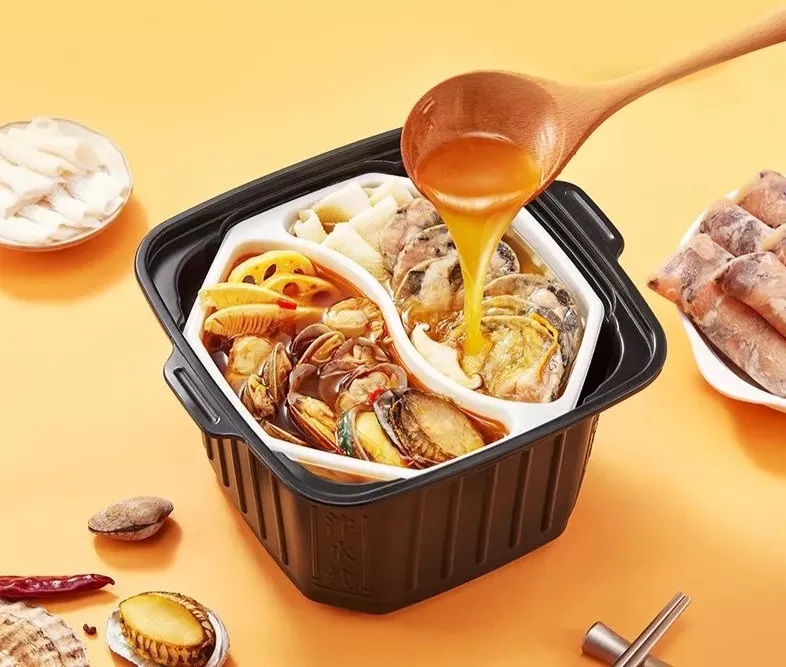
A new development in the Chinese convenience food market is the appearance of self-heating noodles, congee, etc. Instant hot pots appeared soon afterwards. The photo shows a typical Chongqing hot pot with a spicy and non-spicy section by Qingxixi, launched in 2021. Qingxixi promotes the product as only containing zero fat or low fat ingredients.
In-Shop Hotpot: A Post-COVID Development
A recent development in the culinary industry is the in-shop hotpot, a dining experience where hotpot is prepared and served in a corner of a food establishment. This concept offers consumers a more cost-effective option compared to traditional restaurants, as the establishment incurs lower operational costs. In-shop hotpot has gained significant popularity among young professionals with limited budgets who seek to reduce their food expenses while maintaining a flavourful dining experience.
Growing market for small hotpots
Small or individual hotpots have always existed, but started to become a market of their own in the 2020s, which met the needs of the growing demographic segment of singles. With the continuous rise of the wave of ‘one person’s meal’, the model of ‘one person one pot’ was in line with the independent dining needs of single consumers. At the same time, its high cost performance also meets the needs of consumers in third and lower tier cities. With the acceleration of urbanisation and the increase of urban population, the consumption potential of those markets is further opened. According to statistics, the market size of China’s small hotpot industry in 2024 reached RMB 58.8 billion, an increase of 12.07% year-on-year.
Women form a small majority among China’s small hotpot consumers, accounting for 51.4%. In terms of age, 70% of the consumers are in the 20-39 years bracket (2024 statistics). Young consumers pay more attention to personalised and convenient dining experience, and are more sensitive to price, which is more suitable for the positioning of the small hotpot. The proportion of one-person meals is as high as 44.2%, mainly for single consumers or dining alone, followed by small group dinners, accounting for about 33.4%. In terms of consumer concerns, taste is the most important factor, accounting for more than 70%, followed by ambiance and price, accounting for about 65.5% and 63.9%. Small hot pot consumers are relatively sensitive to price, and the highest proportion of groups who can accept prices between RMB 20 – 40.
A whole new market
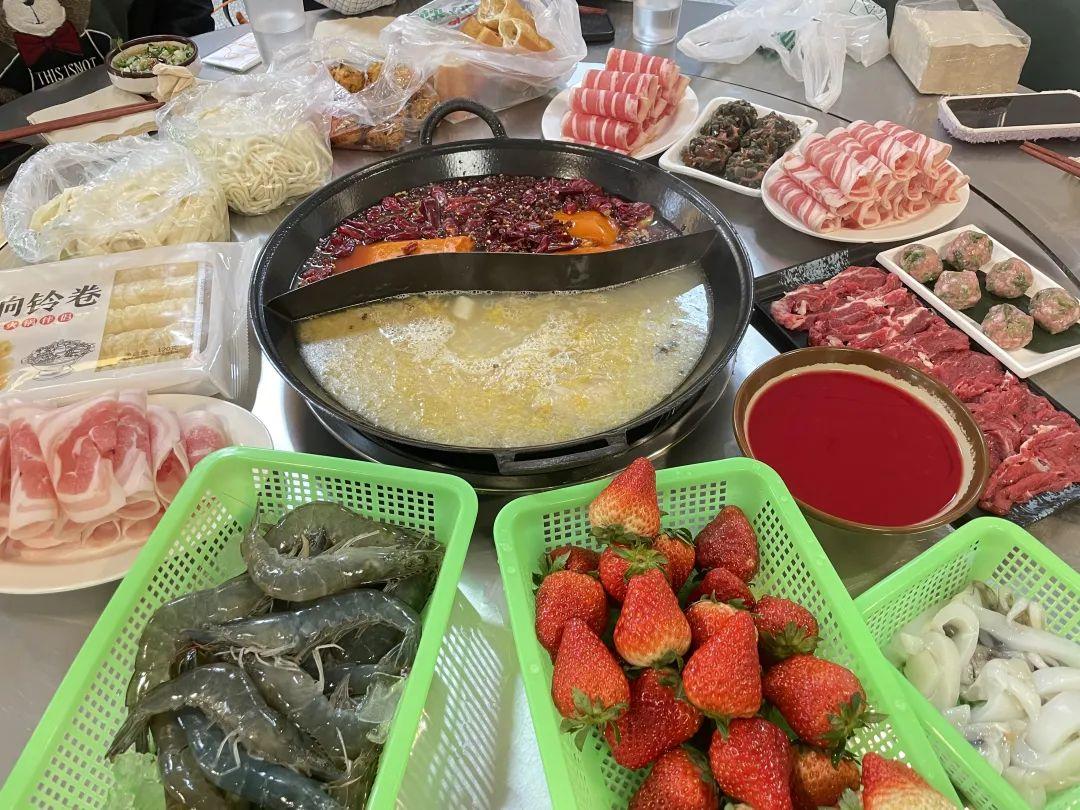
Probably also aided by the renewed interest in home cooking caused by COVID-19, the hot pot rage has recently created an complete new market for packed hot pot ingredients. Hot pot chains like Haodilao started this by selling ready-to-use blocks of hot pot condiments. You simply melted it in hot water and you had an instant dipping broth. Meat processors followed suit by launching packed sliced mutton and beef. Fish followed soon. Chopped and sliced vegetables also appeared on the shelves of Chinese supermarkets. A recent study estimates the value of the market for hot pot meat alone at RMB 30 billion. The same study estimates the value of market for hot pot condiments at RMB 49 billion. A Chinese netizen posted the following photo of the various products he had purchased for a hot pot meal at his home with a few friends.
As you can see, it includes drinks and a cake for dessert. The only fresh ingredient is a plate of vegetables at the top of the photo.
So, is this a good development, all that packed food, or is it against the trend towards healthier eating? As far as the meat is concerned, I know from personal experience that the appearance of frozen pre-sliced mutton and beef felt as a liberation from slicing it yourself. Apart from being sliced/chopped and packed, these products have not been heavily processed. Fact is that ‘hot pot materials’ have become a sub-market of their own in China. The following table shows the historic development of the value of this market.
Hot pot buffet
A new vogue in Qingdao was launched in 2023: buffet style hot pot during which customers can pick whatever the see passing by.
Clean hot pot
Concepts like Clean Label have also reached China and started to get serious around 2022. However, the Chinese interpretation of ‘clean’ seems to be broader or lest strict than the Western. Here is an example of ready-to-use hot pot broth seasoning from Eurasia Consult’s database that is advertised as ‘zero additives’ site in China.
Product name: cow fat mildly spicy
Ingredients
cow fat, chili pepper, broad beans, wheat flour, water, MSG, spices, sichuan pepper, ginger, garlic, rock sugar, onions, fermented beans, yeast extract, chili red
Mid-Autumn Festival (Moon Festival) is a harvest festival, celebrated in China and other East Asian countries. Mid-Autumn Festival is the second most important festival in China after Chinese New Year. To the Chinese, the festival means family reunion and harmony. It is celebrated when the moon is full, and Chinese people believe a full moon is a symbol of reunion, harmony, and happiness. It’s always in September or October, on month 8 day 15 of the Chinese lunar calendar. In 2019, it will fall on September 13.
I have introduced that festival in my post on moon cakes, the typical food eaten on that festival. I have tried to keep you abreast with the latest trends on that post. I will continue to do so, but I recently received a note from a Chinese friend who had been given a Mid Autumn Gift Box, containing exquisite moon cakes, but also a few other luxury versions of Chinese local delicacies, not necessarily consumed during the Mid Autumn Festival.
Trends
This box represents a number of current trends and describing the contents of this box therefore gives a good insight in those trends; so good, that I prefer to do so in a post, rather than add it to the Trends page of my blog. The two trends are:
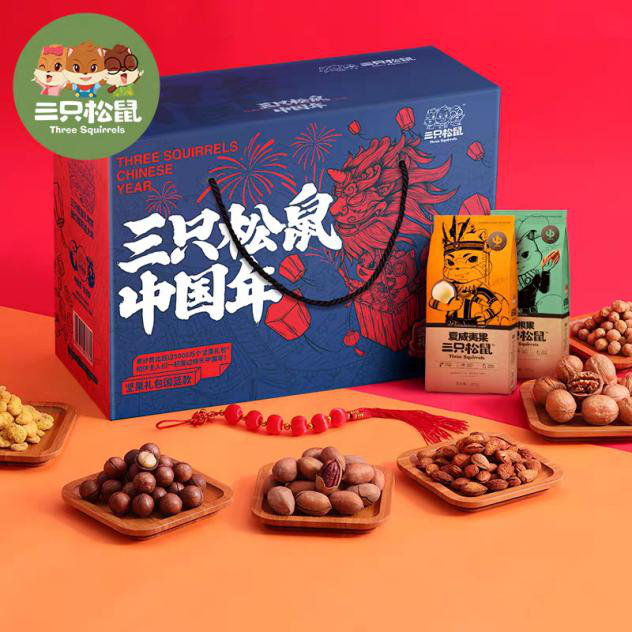
Goody boxes; goody boxes containing samples of part or all of the product range of a manufacturer has become a vogue in China this year. One of earliest of such presentations was a box of single portions of nuts and seeds by Three Squirrels. Such boxes suit Chinese communitarian culture: you can share the box with your family, colleagues or friends.
Local specialties; regional governments have become more aware of the value of local delicacies and have started actively developing their production to comply with the expectations of the modern Chinese consumer. Look, e.g., to my post on Jinhua Ham for a successful example. You can consult my post on local cuisines to find the locations mentioned here.
The box
So, now have a look at the overview picture, showing the fancy top of the box and its contents.
It includes a 3, because the manufacturer is supplying three grades. I am describing the top grade in this post. This is what was in the box my friend was presented.
Honey glazed walnut kernels from a mountainous region of Yunnan province
Dried apricots from Xinjiang in China’s far West.
Red can sugar candy from Lincang, Yunnan; it makes a sweet drink by solving it in hot water.
Spicy dried beef from Hunan province.
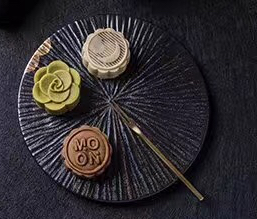
And, last but not least, fancy mooncakes.
Two milk tea moon cakes;
Two macha cassia moon cakes;
Two red tea moon cakes.
Chinese have been eating walnuts, dried apricots or beef jerky as a snack for ages, but in this day and age, you need to get your walnuts from the high mountains of Yunnan or from an outpost of the ancient Silk Road to arouse the interest of present-day Chinese consumers. And, you have to wrap everything in packs and boxes matching the high quality of the foods. It makes you wonder what the next step will be.
More festivals following
The trend is not restricted to the Mid Autumn Festival. Towards the end of 2019, China’s top snack maker and seller Three Squirrels launched the following good back containing a rich sampler of their nuts.
Black may be the colour of evil, even in Chinese culture, but for food it is a sign of superior nutrition
Black food has become a focus in the Chinese health food market in recent years. Black food refers to the natural melanin containing foods, whether derived from animals or plants. The natural melanin content causes a dark, dark purple, or dark brown colour. Some foods have a dark skin, while others are black at the end, inside or outside, such as black goji, black rice, black sesame seeds, black fungus, mushrooms, seaweed, kelp and laver. Manufactured black food, such as plum sauce, bean curd, soy sauce, cured egg etc., are meant to stimulate people’s appetite through their colour, but do not count as real black food.
The scope of what counts as black food is not strictly defined. The Guangdong Academy of Agricultural Biotechnology is one of the earliest domestic research institutes specialising in black food. It defines black food as having a relatively dark natural colour, rich in nutrition, and structurally acceptable to the human physiology as food. This definition excludes artificially black foods such as soy sauce.
Black foods contrast with food groups of other colours:
White food: bread, noodles, etc.; main nutrients: starch, sugar and other carbohydrates;
Red food: pork, beef, lamb, chicken and rabbit; main nutrients: protein, fat;
Green food: green vegetables and fruits; main nutrients: a variety of vitamins and cellulose;
Black food: black rice, black beans, turtle, black fungus, black mushrooms; main nutrients: protein, fat, amino acids, vitamins.
According to traditional Chinese medicine (TCM), black foods nourish the kidneys. They are rich in anti-oxidants and can therefore prevent several types of cancer and slow down aging. They strengthen the brain and lower blood pressure. The fact that shining black hair has always been regarded as a sign of physical health in China certainly also plays a role in the positive image of black foods in China.
Five Black Elements
The most conspicuous producers of black foods in China is the Five Black Elements (Heiwulei) Group in Guangxi. The company was founded in 1984 as the Nanfang Children’s Food Factory by Mr. Wei Qingwen. The name Heiwulei was adopted a decade later. The term itself originates from the Cultural Revolution, denoting five types of bad people (‘black categories’) in society: landlords, rich farmers, counter-revolutionaries, bad elements, rightists. Mr. Wei loved black sesame paste, which was his company’s first product. Now, the company is producing ‘Eight Black Treasures’ (Heibazhen): black rice, black beans, black fungus, black mulberry, black corn, black dates, black sesame and black seaweed (laver).
Black milk powder
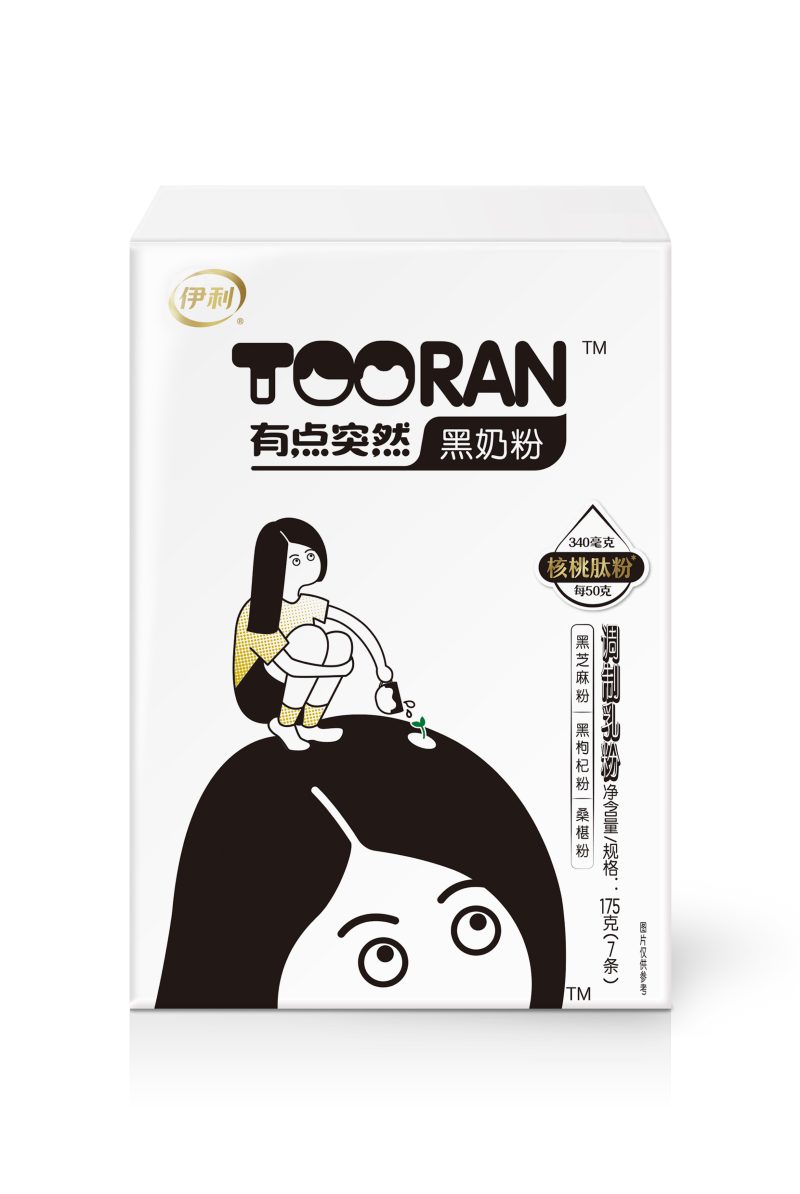
Yili Dairy has launched Tooran black milk power in 2021, containing powdered black sesame, black goji and mulberry fruit as well as walnut peptides. It won the ‘best functional dairy’ award on the 2021 World Dairy Innovation Awards.
Black Oats
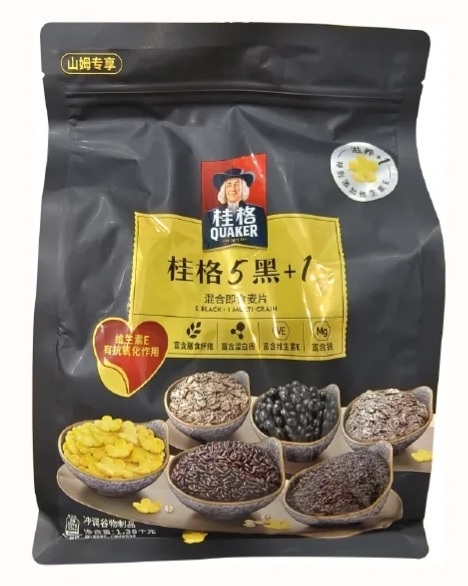
Quaker is trying to cash in on this interest in black foods by launching a black oat meal in China. The ingredients list is very Chinese:
Black wheat, oat, black rice flakes, black bean flakes, black sesame, black rye
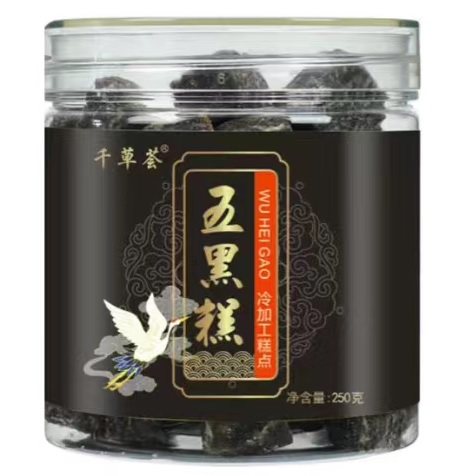
I am sharing a few more pictures of black products from the Eurasia Consult database without detailed information.
Black protein drink
Liziyuan has launched a vegetable protein drink made from: black sesame, black beans, black rice, black goji and black mulberry in 2024.
Balck yoghurt
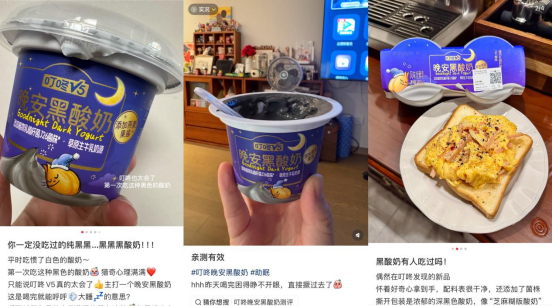
In 2025, the online platform Dingdong V5 launched a black yoghurt that helps you sleep. During fermentation a strain of Lactobacillus plantarum is added that produces GABA (gamma amino-butylic acid), a substance that makes you feel at ease and therefore promotes sleep. It is further coloured with cuttle fish ink, making the product’s colour in line with the recommended time of consumption.












 Peverelli on Chinese food and culture