Chinese advances in vegetable factories

Introduction

Plant factory is an advanced stage of the development in agricultural production on an industrial scale. It is a high-input, high-tech and well-equipped production system. It integrates biotechnology, engineering and system management, so that agricultural production can be freed from the shackles of the whims of nature. A factory-based agricultural system enables a government to plan fruit and vegetable production with a precision close to that of other industries.

In recent years, the overall market size of China’s plant factory industry has shown an upward trend. In 2025, the market value of China’s plant factory business was RMB 2.248 billion, an increase of 13.8% year-on-year.
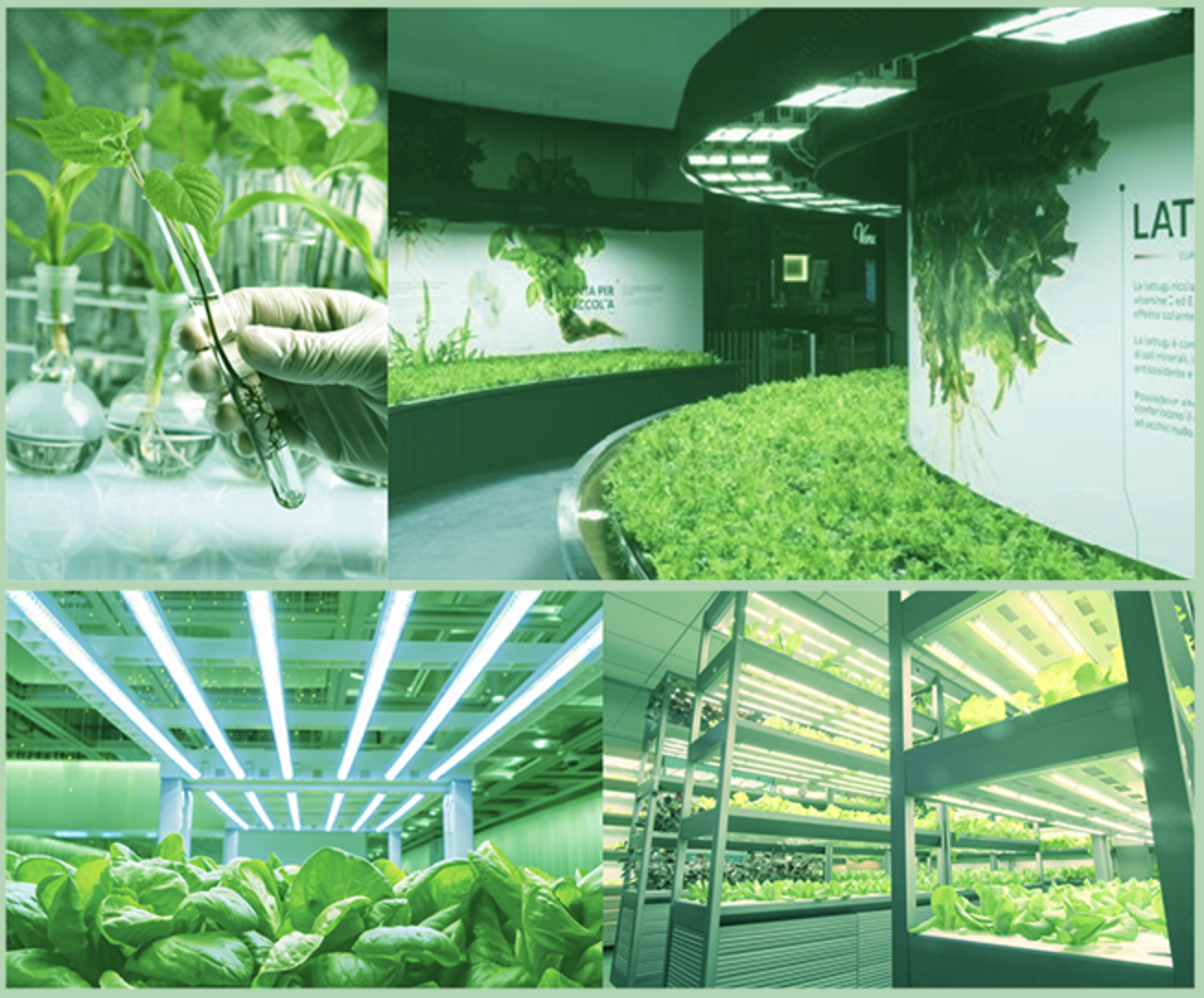
Foto’s of Pulante in Hebei province

In addition to being affected by national policies, this development is also inseparable from technological innovation. The deep integration of the Internet of Things, artificial intelligence and automation has realised a high-precision coordinated regulation of the planting environment and the unmanned operation of the whole process, which has greatly improved the consistency of production efficiency and product quality, and strongly promoted the continuous growth of the industry.

In terms of demand, the improvement of health awareness has promoted consumers’ preference for agricultural residue-free, zero-pollution and high-fresh agricultural products, and the closed production and traceable product attributes of plant factories accurately match this consumption trend.

Overview of the plant factory industry

The plant factory is an efficient agricultural system that realises the annual continuous production of crops through high-precision environmental control in the facility. It uses computers and electronic sensing systems to automatically control the temperature, humidity, light, CO2 concentration and nutrient solution and other environmental conditions of plant growth.

  • According to different divisions, plant factories can be divided into the following categories: according to the construction scale, they can be divided into large (more than 5000m), medium-sized (1000~5000m), small (100~1000m), and micro (less than 100m).
  • According to the production function, they can be divided into plant seedling factories, leafy vegetables, melons and fruits, flower plant factories, as well as some field crops, medicinal plants, edible fungi, etc..
  • In terms of the organisational scale of production and research objects, plant factories can be divided into plant production plant factories, group culture plant factories, cell production plant factories (photobioreactors).
  • According to light energy The utilisation method can be divided into three types, namely solar light utilisation plant factories, all-artificial light utilisation plant factories, and comprehensive plant factories that combine sunlight and artificial light.
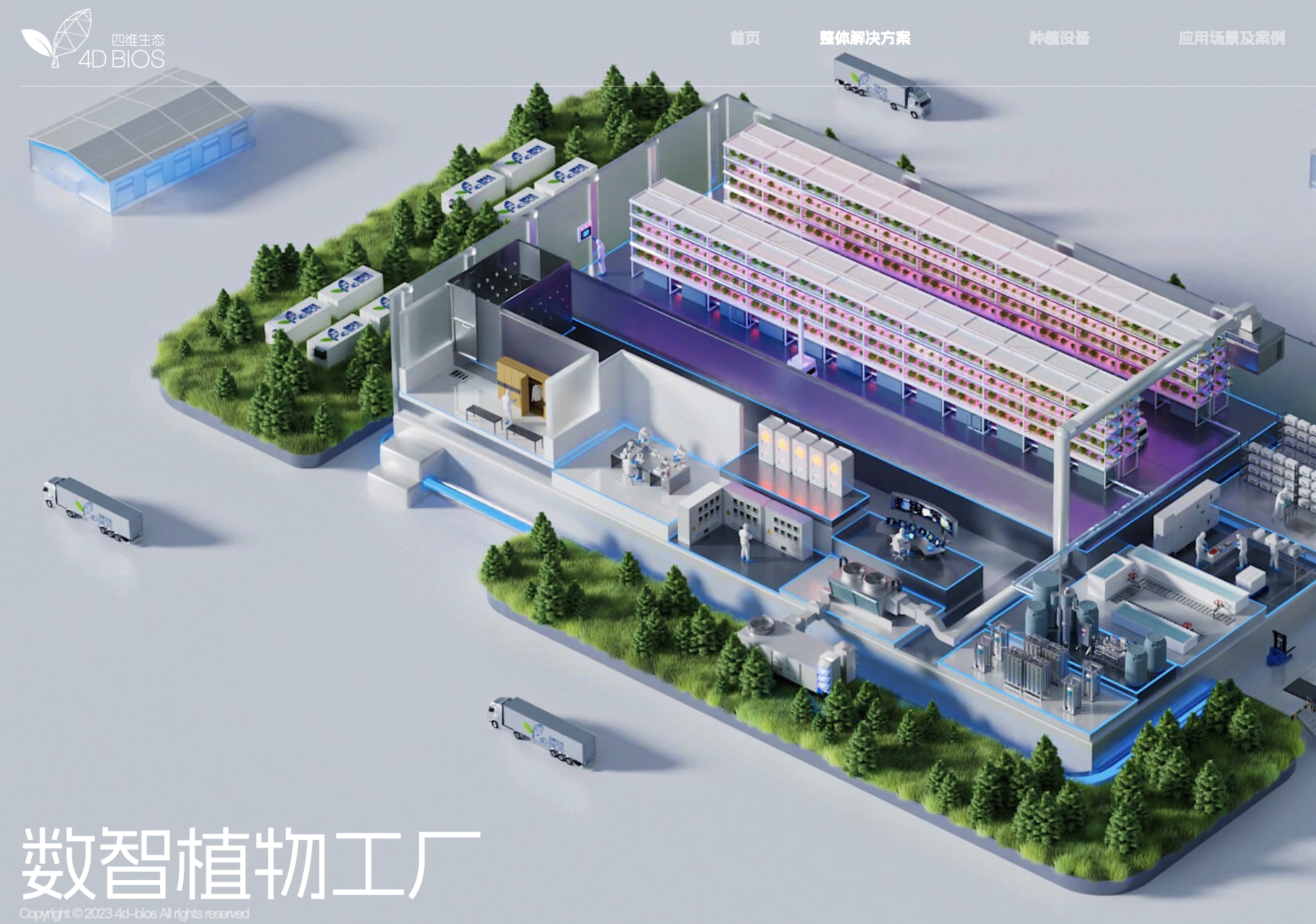
A design by 4D-Bios in Hangzhou, specialised in vertical farming

China

In recent years, the Chinese government has introduced a number of policies to actively promote the development of plant factories.

For example, in June 2023, the ‘Guidance on the Development of Modern Facility Agriculture’ issued by the Ministry of Agriculture and Rural Affairs proposed to support the development of connected greenhouses, plant factories and other advanced production facilities around large and medium-sized cities according to local conditions, strengthen demonstration and guidance, and improve the stable production and supply of fresh agricultural products such as vegetables.

In September 2024, in the ‘Opinions on Practising the Concept of Big Food and Building a Diversified Food Supply System‘ issued by the General Office of the State Council, it is proposed to actively develop daylight greenhouses and plastic greenhouses, promote the transformation and upgrading of old facilities, accelerate the development of intensive seedling breeding, and develop soilless cultivation such as matrix and hydroponics. Plant factories are built around the city.

In April 2025, in the ‘Plan to Accelerate the Construction of a Strong Agricultural Country (2024-2035)’ issued by the Central Committee of the Communist Party of China and the State Council, it is proposed to implement the modernisation of facilities and agriculture, build modern cultivation facilities with standards, advanced equipment and high output, and develop new forms such as agricultural factories.

Peter Peverelli is active in and with China since 1975 and regularly travels to the remotest corners of that vast nation. He is a co-author of a major book introducing the cultural drivers behind China’s economic success

China’s Food Industry Parks

China’s central and local governments have invested significantly in the development of food industry parks, designated areas that facilitate the efficient collaboration of regional food companies. These parks have received a series of supportive policies to foster their growth. In 2024, China’s food industry parks generated RMB 270.78 billion in sales revenue, representing a 13.20% increase. Notably, food industry parks actively share new technologies and equipment to enhance production, product quality, and distribution.

Overview of the Food Industry Park

Screenshot of the Laiyang Food Park from Baidu Maps

A food industrial park comprises a cluster of food industry, related supporting industries, and service institutions within a specific geographical area. It integrates the functions of food production, processing, sales, research and development, and possesses the advantages of industrial clustering efficiency, infrastructure, policy support, and other benefits. Depending on the industry type, food industrial parks can be categorised into comprehensive food industrial parks and specialised food industrial parks.

Development Stages

The beginning

The development of China’s food industry in industrial parks has progressed through four distinct stages. Initially, during the early 1980s, China’s economic system reform paved the way for agricultural industrialisation, creating the foundation for the emergence of food industrial parks. In the early stages, food industrial parks primarily focused on the processing of primary agricultural produce, including grain, oil, meat, poultry, and aquatic products. This led to the formation of regional industrial clusters based on resource advantages. At this stage, park construction was centred around the primary production area of agricultural products, characterised by low industrial concentration and small enterprise scale. While the government initiated efforts to support the development of food industrial parks through policy guidance, overall support was limited.

Reform Phase

The subsequent reform phase marked a significant transformation in China’s food industry. During this phase, the government implemented comprehensive reforms aimed at enhancing the development of food industrial parks. These reforms encompassed policy guidance, targeted support, and other measures designed to foster the growth and prosperity of these parks.

Reform Phase

The subsequent reform phase marked a significant transformation in China’s food industry. During this phase, the government implemented comprehensive reforms aimed at enhancing the development of food industrial parks. These reforms encompassed policy guidance, targeted support, and other measures designed to foster the growth and prosperity of these parks.

In the transformation stage of the 1990s, with the gradual establishment and improvement of the market economy system, food industrial parks began to standardise. The government strengthened the planning and management of industrial parks and improved their standardisation. The industrial park began to develop towards the comprehensive industrial chain. From the beginning of the 21st century to the stage of rapid development from 2015, China’s economy entered a stage of rapid growth, people’s living standards greatly improved, and the requirements for food quality and safety continuously improved. As an important platform for industrial agglomeration and upgrading, food industrial parks entered a stage of rapid development. The food industry park gradually formed a complete industrial chain from raw material cultivation, through processing to sales. At the same time, the number of high-tech food processing projects, such as biological engineering, nutrition and health food, etc., increased.

Today

In the stage of innovation and development from 2015 to now, China’s economy has entered a new normal, and food industry parks are facing the need for transformation and upgrading. Food industrial parks actively introduce new technologies and processes, such as intelligent production lines, automated warehousing systems, big data analysis platforms, etc., to improve food processing efficiency, quality control and supply chain management capabilities. At the same time, the national government promotes green transformation and intelligent upgrading, and supports food industrial parks to move towards high-quality development. In 2024, the sales revenue of China’s food industry parks was RMB 270.78 billion, an increase of 13.20% year-on-year.

The industrial chain

The upstream participants of the industrial chain of the food industrial park are food enterprises, investors, real estate developers, etc. There are various types of food enterprises, including dairy, aquatic products, meat, alcoholic beverages, leisure food, etc. The participants in the middle of the industrial chain mainly include food industrial park operation and management enterprises. The downstream of the industrial chain consists of sales channels, logistics distribution, brand promotion, product marketing, etc.

Current issues

In 2024, the industrial capacity utilisation rate of China’s food manufacturing industry was 69.8%, down 0.46 percentage points year-on-year. From the background, the global economic downturn and the tight trade environment have weakened the growth momentum of food exports. Although domestic consumer demand has gradually recovered under the policy boost, the growth is still weak. Structural contradictions within the industry are prominent, and the supply of production capacity in some areas exceeds market demand, resulting in a decline in capacity utilisation. In addition, the increase in the number of enterprises but the expansion of losses also confirms the current situation of insufficient utilisation of production capacity. The decline in capacity utilisation has squeezed the profits of enterprises, and the operating pressure of some enterprises has increased. However, this change has also forced the industry to accelerate its transformation. The policy level may continue to promote the optimisation of production capacity, support technological innovation and green development, and guide enterprises to focus on high value-added areas. For enterprises, it is necessary to strengthen market research and judgement, optimise the layout of production capacity, improve competitiveness through technological upgrading, product innovation and refined management, gradually eliminate backward production capacity, and achieve a dynamic balance of supply and demand.

Relevant policies

In October 2024, the Ministry of Industry and Information Technology issued the Notice on the Key Cultivation of Traditional Advantageous Food Production Areas and Local Characteristic Food Industries, which proposed to focus on cultivating eligible traditional food production areas and local characteristic food industries, fully exploit the regional resource endowment, clarify the development direction and cultivate excellent At the first level, guide localities to accelerate the formation of local characteristic food industry advantages according to local conditions, release the vitality of traditional industrial development, build characteristic food industry clusters, promote the construction of a strong manufacturing country and a healthy China, cultivate new driving forces for economic development, and drive farmers’ employment and income growth and regional economic development. Through policy support, resource integration, industrial cluster creation and brand promotion and other measures, food industrial parks will achieve high-quality development, improve industrial competitiveness, promote farmers’ income increase and regional economic development, and help rural revitalisation and common prosperity.

Example

Shandong Laiyang Food Industrial Park was established in 2001 and is an important food industry agglomeration area in Shandong Province. The total area of the park is about 5.27 square kms, which is divided into two parts: Food Industrial Park (4.74 square kms) and Longda Industrial Park (0.53 square kms). After more than 20 years of development, it has formed a modern food industry cluster mainly focussing on beverages, juices, dairy, biscuits, canned food, and food additives. There are 68 processing enterprises in the park, including 2 leading national food enterprises (Longda Group and Chunxue Food, both meat processors) and 1 leading provincial enterprise (Longda Meat), which has cultivated 2 backbone enterprises, 8 potential enterprises and 7 growth enterprises. All these terms are officially recognised categories. The category of your organisation determines from which policies you may benefit.

Peter Peverelli has been actively involved in and with China since 1975 and frequently travels to the most remote regions of that vast nation. He is a co-author of a substantial book that explores the cultural factors that have contributed to China’s economic success. Peter has been involved in the Chinese food and beverage industries since 1985.