
During a recent excursion through Shanxi, Henan, and Hebei provinces, we extended our stay in Luoyang, a third-tier city in northern Henan province. Luoyang served as the capital of China during the Sui (581–618) and Tang (618–907) dynasties. One evening, as we journeyed to a restaurant, we encountered an intriguing bar en route, advertising with coffee-based cocktails. Given the early hour, we decided to explore this establishment. This proved to be an auspicious decision. We indulged in several highly innovative cocktails.
The name of the bar, Linshi, held intrigue, translating to “Temporary.” Founded by Ma Lekai, an award-winning Chinese barista, the establishment boasts diplomas and accolades adorning its walls.
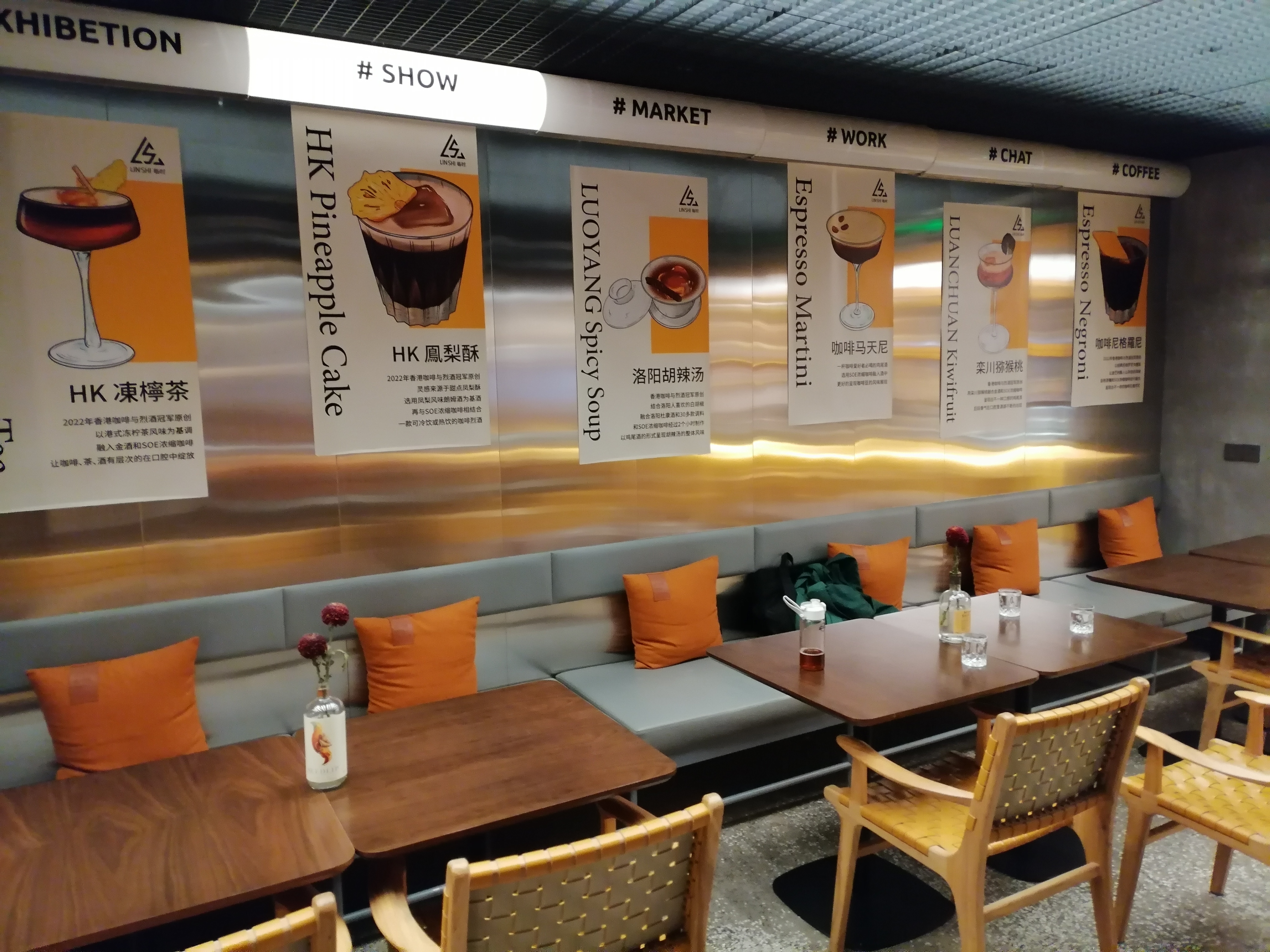
The colour scheme of the bar, predominantly yellow, is complemented by shades of orange and brown, creating a striking contrast with the greyish hues. We perused the menu with the intention of sampling some captivating cocktails.

Americano
Given my preference for Americanos, I opted for a cocktail bearing the same name. The Chinese translation, Meiguolao, translates to “Yankee,” likely a subtle reference. The recipe incorporates a martini base, complemented by exceptionally light coffee, even lighter than a traditional Americano. The light coffee imparted a slightly sour character, resulting in a martini with a bitter aftertaste of coffee. Personally, I found this combination to be an ideal match.
Kiwi
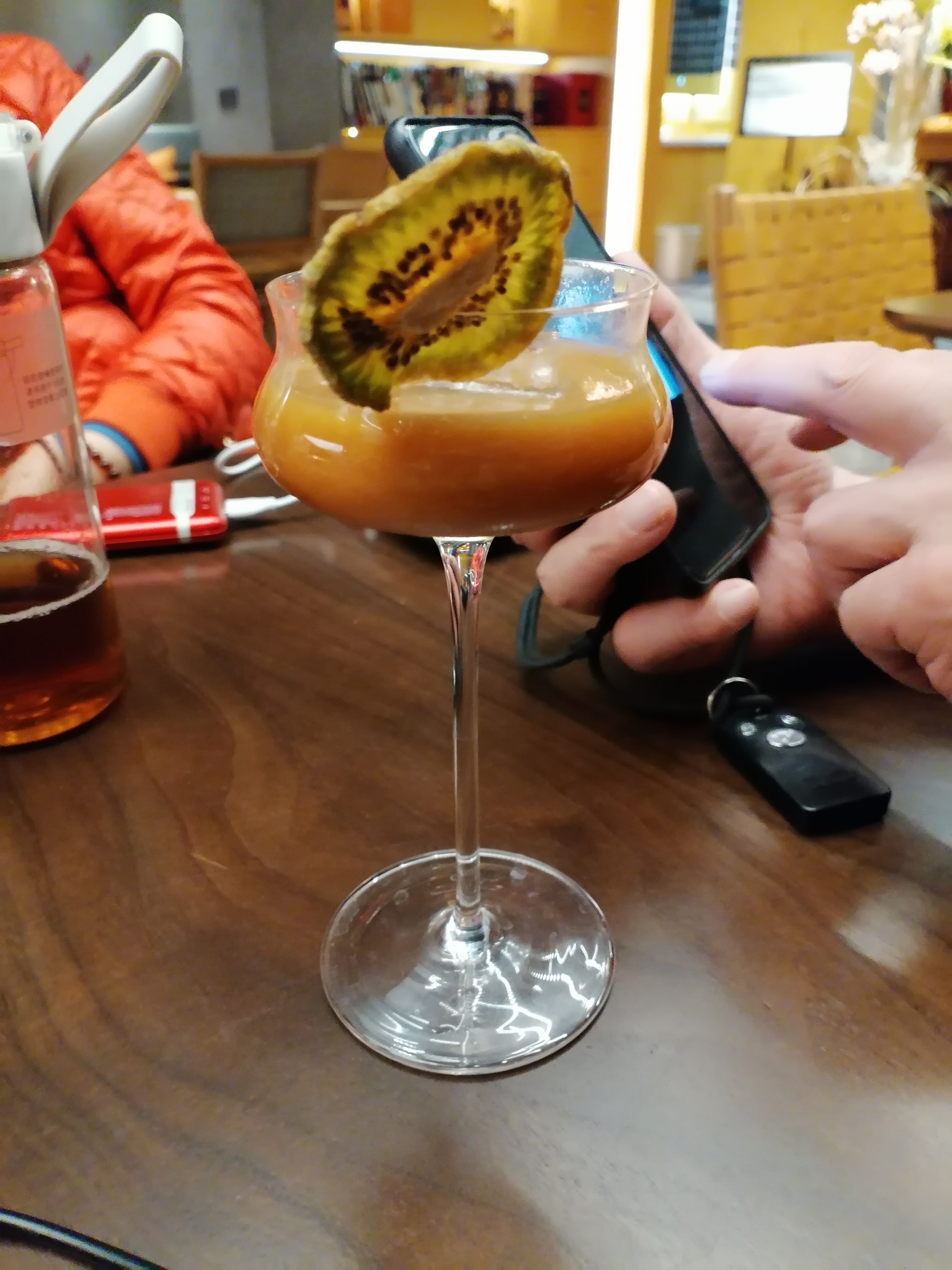
Another member of our party sampled a Luanchuan kiwi (Luanchan is a region in Northwest China where kiwis are cultivated): pureed kiwi infused with coffee and a touch of Luoyang’s local liquor, Dukang. This combination required some time to fully appreciate, but ultimately, it yielded a satisfactory taste experience.
Dish as inspiration

The staff is consistently experimenting with new recipes. As I was likely the first foreign visitor, they allowed our group to sample a newly designed cocktail: Hulatang, Hula Soup. Hulatang is a slightly sour and spicy soup, a traditional specialty of Luoyang. Linshi has once again utilised the sour undertone of soft coffee, combined with Dukang and a touch of pepper for the hot undertone. For me, this was also a potential success cocktail. It is also a remarkable example of recreating a traditional dish in a contemporary manner.
Clientele
Linshi operates in the high-end segment. However, according to the manager of this branch (one of four in Luoyang), the business is performing well. Linshi was established in 2014, making it exactly 10 years old when we visited. The relatively young clientele tends to visit later in the evening. Linshi is open until 1 a.m. When I return to Luoyang, I will certainly make a visit to this establishment.
If you like this post, you may also want to look at this post introducing medicinal cocktails in China.
Peter Peverelli has been actively involved in and with China since 1975 and frequently travels to the most remote regions of that vast nation. He is a co-author of a substantial book that explores the cultural factors that have contributed to China’s economic success. Peter has been involved in the Chinese food and beverage industries since 1985.
 Peverelli on Chinese food and culture