
China was the world’s second candy exporter in 2019 with a value of USD 910.8 mln (8.6% of the global exports)
I have already mentioned candy in some of my posts, like the huamei candy as an example of how a traditional sweet is used in China as an ingredient for a novel food, a company like Hsu Fu Chi that is one of China’s top biscuit producers, but also makes candy. As most Chinese have a sweet tooth, it is time to dedicate an entire post to the Chinese candy market.
Top 10 candy brands of 2016
| Brand | Share (%) |
| Hsu Fu Chi | 17.46 |
| Alpenliebe | 6.86 |
| Madajie | 5.22 |
| Golden Monkey | 4.73 |
| Extra | 4.35 |
| Yake | 3.77 |
| Wrigley | 3.52 |
| Big White Rabbit | 3.37 |
| Orion | 3.29 |
| Fujiya | 3.26 |
Hsu Fu Chi and Orion also rank among China’s top biscuit brands.
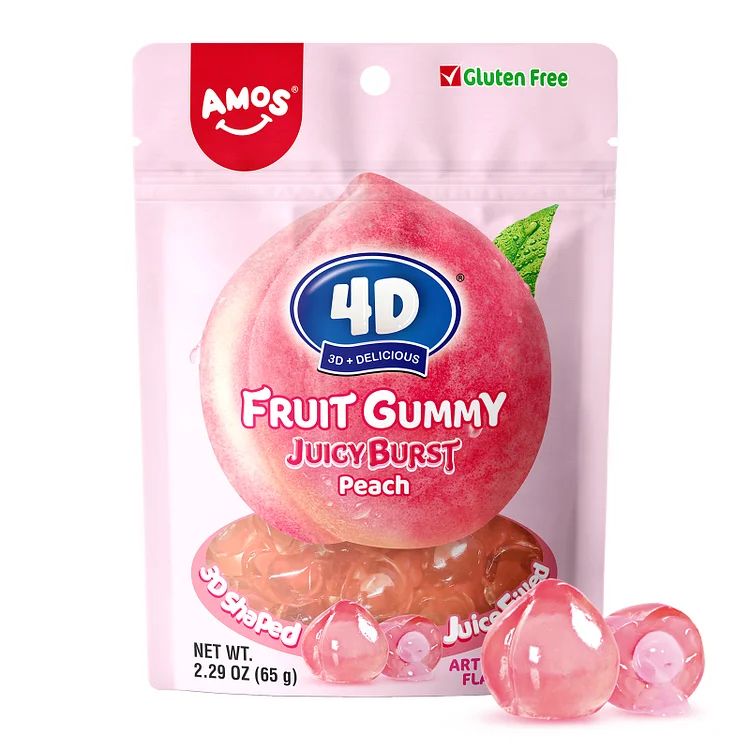
The global top 100 candy companies list for 2023 for the first time included a Chinese company: Shenzhen-based Amos Sweets. It came in at the 95th position, but after several food safety incidents in the past couple of decades, this is an accomplishment worthy for a congratulation.
Top regions
The following table shows the regional breakdown of candy production in China in 2017.
| Region | mt |
| National | 33,136,510,000 |
| Fujian | 8,081,420,000 |
| Guangdong | 6,684,470,000 |
| Hunan | 3,002,380,000 |
| Shandong | 1,880,940,000 |
| Hubei | 1,765,570,000 |
| Henan | 1,716,370,000 |
| Shanghai | 1,487,180,000 |
| Sichuan | 1,352,090,000 |
| Anhui | 1,267,100,000 |
| Jiangxi | 1,185,240,000 |
| Jiangsu | 1,061,970,000 |
| Hebei | 928,590,000 |
| Guizhou | 599,630,000 |
| Chongqing | 482,510,000 |
| Qinghai | 460,200,000 |
| Zhejiang | 261,020,000 |
| Beijing | 259,160,000 |
| Shaanxi | 209,500,000 |
| Yunnan | 164,630,000 |
| Hainan | 99,850,000 |
| Xinjiang | 78,870,000 |
| Tianjin | 62,500,000 |
| Shanxi | 33,800,000 |
| Liaoning | 9,040,000 |
| Guangxi | 1,440,000 |
| Ningxia | 5,60,000 |
| Inner Mongolia | 530,000 |
The first three regions alone are already good for more than half the national output. The regions not included in this table do not produce (significant volumes of) candy. The value of the Chinese candy market is expected to reach RMB 414.8 billion in 2020. The country has produced 1,062,252.2 mt of candy in the first 5 months of 2020; Fujian was the largest region good for 37.44%.
The most typical Chinese candy
Candy is a rather Western thing, but if you want me to identify a ‘traditional’ Chinese candy, my first choice will be dabaitu, ‘Big White Rabbit’ milk candy, produced by Guanshengyuan in Shanghai (est. 1918).

It is a white soft nougat-like candy. Before wrapping, each candy is wrapped in thin edible rice paper. This is meant to prevent the candy from sticking at your fingers and can be eaten along with the rest of the candy. The ingredients as listed on the packaging are:
Edible glutinous rice paper (edible starch, water, glycerin monostearate), liquid maltose, sugar, whole milk powder, butter, additives (gelatin, vanillin), corn starch, syrup, cane sugar, butter, and milk.
Each candy contains 20 calories. Older Chinese still remember Guanshangyuan’s original slogan: Seven White Rabbit candies is equivalent to one cup of milk. It is therefore positioned as a nutritional product. It is still extremely popular. This product alone generated a turnover of RMB 320 mln in 2013. For decades, there was only the original vanilla flavour, but new flavours, like: chocolate, coffee, toffee, peanut, maize, coconut, lychee, strawberry, mango, red bean, yogurt, and fruit have been added. An ‘extra creamy’ variety has also been launched. The latest addition is ‘ice cream flavour’. According to the packaging, the ingredients are:
Liquid maltose, sugar, whole condensed milk, whole milk powder, cream, additives (gelatine, vanillin, food flavours), edible glutinous rice paper (edible starch, water, glycerin monostearate).
The difference with the traditional candy seems to be small, and mainly in the use of flavours.
For more about the White Rabbit brand, see my special post on this topic.
Tradition slowly forgotten (?)
I don’t want to make northerners think that I have a special liking for Shanghai, so I would like to introduce another traditional candy, that is much older, but less well known outside China, that Big White Rabbit creamy candy: crispy shrimp candy. 
These are traditionally made by rolling a chunk of hot molten sugar into a thin sheet, covering one side with sesame paste, and rolling it up into a cylinder that is finally cut into candy-sized pieces. It is a traditional treat from North China that has been adapted to industrial production in the course of the 20th Century. They are being produced up to the present day, but many older consumers find that the flavour and texture of the current shrimp candy do not match that of the tradition product. Perhaps it has something to do with ingredients, but it can also be a matter of nostalgia, the feeling that nothing tastes as it did before.
Wedding candy – a typically Chinese category
A very Chinese type of candy is wedding candy, or as the Chinese put it: ‘happy candy (xitang)’. Handing out candy is part of every Chinese wedding ceremony. Newly weds often bring some to the workplace to hand out to colleagues who have not attended the ceremony. You can use any candy, but candy makers have started identifying wedding candy as a special market segment and have increased R&D efforts to develop special candy with suitable flavours and colours, and packaging, for this special moment in a couple’s life. Insiders estimate the #Chinese market for wedding at RMB 16 bln, with still considerable growth potential.

However, the candy industry indicates that the market for wedding candy has been decreasing since the 2020s.
Foreign markets
Chinese candy is finding its way to foreign market. A good example is Jinli Candy Co Ltd, a candy producer established in 1984 in Huairen county of Shanxi’s Shuozhou city. In 2010, the company began to export its candies to the Netherlands and in 2011, it established a cooperation relationship with the US Disney company. In 2015, it was listed among suppliers for the US-based Wal-Mart, becoming one of the few Chinese candy producers to enter the European and American markets. Over the years, the Jinli Candy Co has sold its middle-high-end candies to over 13 countries, including the United States, the United Kingdom, Canada, Australia, Russia, Spain, and Belgium. In 2014, the company’s exports reached $1.5 million.

China Candy in international limelight
Ever Maple Flavors and Fragrances Holdings, under control of Kelly Zong, daughter of Wahaha founder and chairman Zong QInghou, has acquire China Candy Holdings in May 2017. The mother company is based in Fujian province and manufactures and sells candies under the Holeywood brand in China, South East Asia, North America, Europe, and internationally. The company’s products include jelly drops candies, aerated candies, hard candies, and chocolate-made products. Rumours about this take over had been around for months. Ms. Zong is also chairman and executive president of Hongsheng Group, beverage producer recording turnover of RMB 5 bln per year. It looks as if she is following her father’s footsteps in building a food and beverage conglomerate, though focused on what Chinese like to refer to as leisure foods and drinks. This move also proves that the Chinese confectionery industry is currently maturing to a global level.
Peter Peverelli is active in and with China since 1975 and regularly travels to the remotest corners of that vast nation.




 Peverelli on Chinese food and culture