
The hamburger, a fast food originating in Europe and the United States, has gained global popularity. Typically composed of a halved bun, meat, vegetables, sauces, and other ingredients, it has become a cornerstone of Western fast food.
The hamburger industry in China emerged from Western fast food, initially introduced by brands like KFC and McDonald’s. In recent years, driven by the accelerated pace of life and the growing demand for fast food, Western fast food has experienced rapid development in China. Hamburgers serve as the defining component of Western fast food, attracting consumers through their status as a ‘signature product’.
Chinese hamburgers have demonstrated strong market appeal and substantial development potential, solidifying their position as one of the most dynamic categories within the Western fast food industry in China. Brands like Tastien, at the forefront of this development, promote a fusion of Western and Chinese flavours, effectively capturing the ‘Chinese stomach’ through the combination of Chinese flavour and Western standards.
Statistics indicate that in 2024, China’s Western fast food market generated approximately RMB 298.3 billion, with the hamburger market comprising approximately RMB 32 billion. It is projected that in 2025, the Western fast food market will expand to RMB 330 billion, while the hamburger market will reach RMB 44.5 billion. This growth trajectory is anticipated to persist in the subsequent years.
Classification of the Hamburger Industry
Chinese marketeers categorise hamburgers on the type of meat patty:
– Beef burgers
– Chicken burgers
– Fish burgers
– Plant-based burgers
– Other meat burgers; including (Peking) duck burgers; McDonald’s once offered a limited edition of a spam burger with Oreo crumbs in China.
And also by style or region:
– American classic burgers
– Japanese burgers
– Australian and New Zealand burgers
– Mexican-style burgers
– High-end gourmet burgers

The hamburger industry chain
The hamburger industry in China comprises several stages: upstream, middle, and downstream. The upstream sector primarily involves beef, chicken, fish, vegetable meat, and other meats, along with wheat flour, yeast, sugar, oil, lettuce, tomatoes, onions, sauce, cheese, food additives, and other raw materials. Additionally, cold chain transportation and other industries are included. The middle section comprises hamburger brand operators. The downstream sector comprises offline stores and online platforms.
Typically, beef is used in hamburgers, but many Chinese consumers prefer chicken. Furthermore, with the improvement of Chinese consumers’ living standards and the acceleration of their development, they have increasingly prioritised the quality of their diet. Consequently, chicken is perceived as healthier than beef. Chicken production has maintained a steady growth trajectory. In 2024, Chinese chicken production amounted to approximately 15 million metric tons.
The Chinese hamburger industry caters to a diverse consumer base, encompassing individuals of various ages and socioeconomic backgrounds. Notably, young people, particularly teenagers, constitute a significant consumer segment. In 2024, the total population of China was 140.28 million, comprising 943.5 million urban dwellers and 464.78 million rural citizens.
The competitive landscape in the Chinese hamburger market is characterised by several major enterprises. Notably, international fast food chains such as McDonald’s, KFC, and Burger King dominate the market. These leading international fast food brands have set the objective of accelerating the expansion of their stores and cultivating the Chinese market.
In response to the accelerated expansion of Western fast food, the development pace of local Western fast food brands in China has not been hindered. These brands continue to establish themselves in first- and second-tier cities, further intensifying their market presence. Currently, the prominent brands of Chinese hamburgers include Wallace, Tastien, Happy Star Hamburger, Pale Hamburger, Midberg Halal Burger, Malezi Burger, Manlido Fried Chicken Burger, and others.

Traditional ingredients adapted for hamburgers
An interesting spin-off of the development of Chinese-style hamburgers is that some manufacturer of traditional ingredients have note this a new business opportunity. China’s leading producer of fermented beancurd (furu), Wangzhihe, has developed a version of this condiment for the use on hamburgers. Indeed, shouldn’t Chinese hamburgers be seasoned with Chinese flavours? Follow the link in this paragraph to read more about furu.
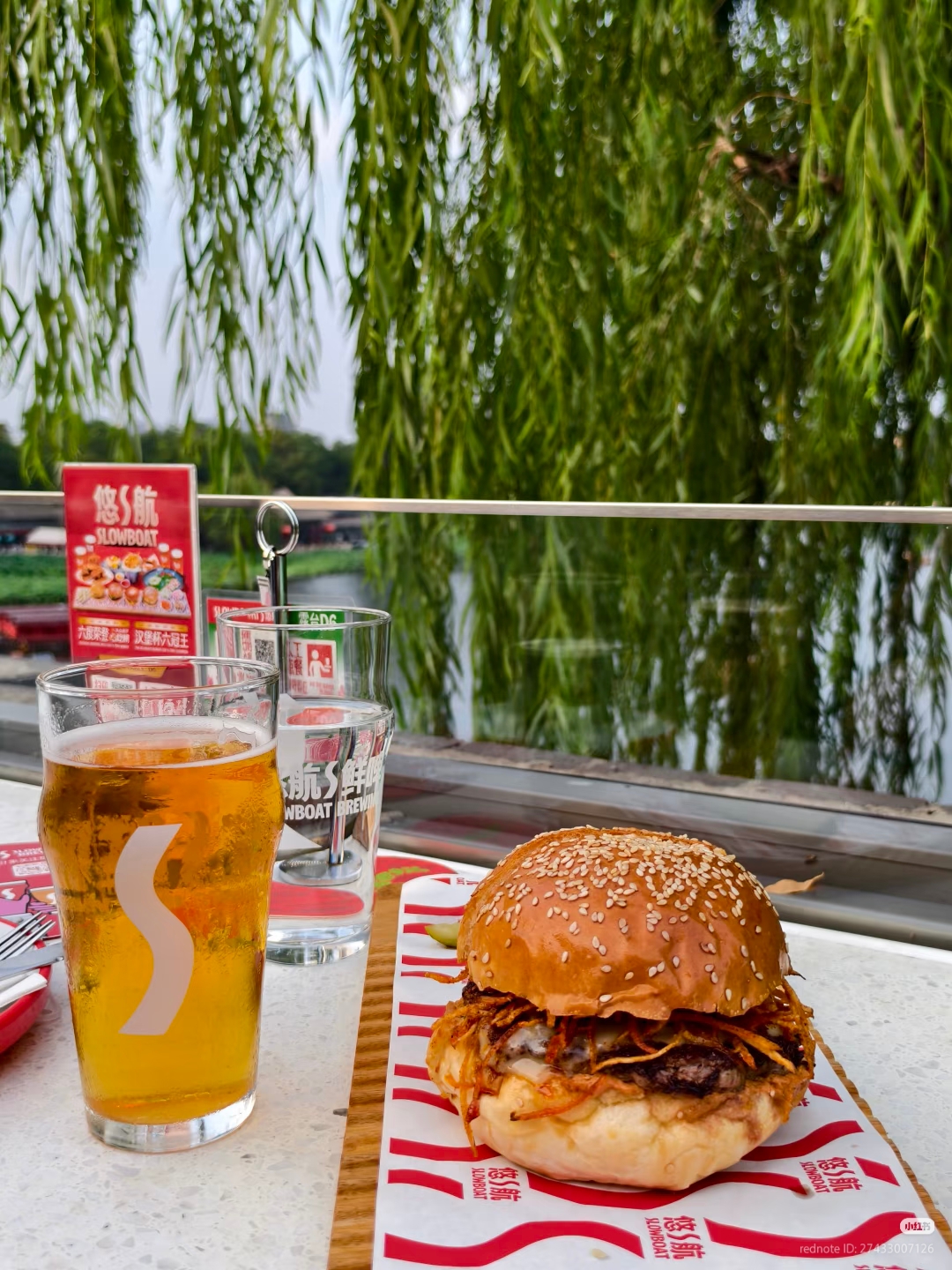
Slow Boat: beer + hamburgers
Slow Boat Brewery, a Beijing-based craft brewery, was founded in 2011 by Chandler Jurinka and Daniel Hebert. It started as a small pilot brewery in the mountains outside Beijing and has grown to become one of China’s largest craft brewers by production capacity. The brewery is known for its small-batch, creative beers and its dedication to promoting the Chinese craft beer movement. Its outlets also serve a broad range of hamburgers. Both the beer and the accompanying food tries to gear to the Chinese palate while also retaining a sufficient degree of foreignness.
Peter Peverelli has been actively involved in and with China since 1975 and frequently travels to the most remote regions of that vast nation. He is a co-author of a substantial book that explores the cultural factors that have contributed to China’s economic success. Peter has been involved in the Chinese food and beverage industries since 1985.
 Peverelli on Chinese food and culture